Affiliate Disclosure: VitalMove40 earns a commission from purchases made through affiliate links on this page, at no extra cost to you. See our full Affiliate Disclosure Policy.
Last updated: September 22, 2026 | By Richard Hale
Hume Body Pod available in: United States.
The best smart scale for tracking muscle and fat after 50 is one with a hand-to-foot electrode path, a clear trend view in the app, and no subscription attached to the useful data. On that brief, the Hume Body Pod is the top pick for most people, with the Renpho MorphoScan, Oxiline Scale MD Pro, and InBody Dial H30 each making sense for a more specific need.
This content is educational and not medical advice. Smart scales are consumer wellness devices, not diagnostic tools. Do not use a bioelectrical impedance scale if you have a pacemaker or other implanted electronic device without checking with your doctor.
Quick Picks
Best Smart Scales for Muscle and Fat Tracking After 50 — 2026
- #1 Best Overall: Hume Body Pod — 8-frequency segmental BIA, clean trend tracking, one-time purchase, no subscription
- #2 Best Segmental Detail: Renpho MorphoScan — 8-electrode limb-by-limb muscle and fat, 50+ metrics, mid-range price
- #3 Best Display and Warranty: Oxiline Scale MD Pro — large color screen with on-device trend graphs, free app, lifetime warranty
- #4 Best Accuracy Pedigree: InBody Dial H30 — the clinical and gym BIA name, brought home, around $340
Why the Hume Body Pod Leads
After 50, the job of a body composition scale is narrow: show whether muscle mass is holding and fat is trending the right way, month over month. The Hume Body Pod does that job with the least friction.
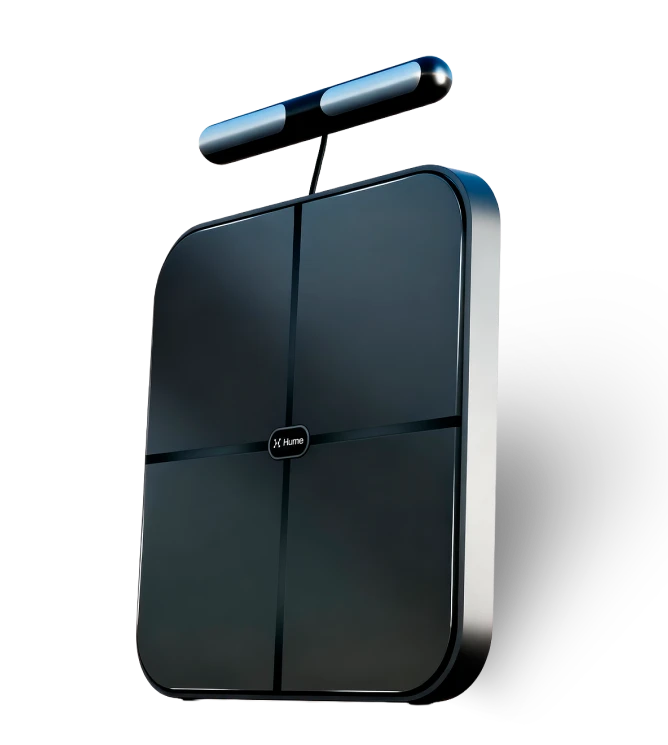
- 8-frequency segmental BIA using foot plates plus hand-grip handles, which routes the current through the upper body as well as the legs and is more accurate than foot-only scales.
- No subscription. The trend history, age- and sex-adjusted benchmarks, and all the core metrics stay free in the app after the one-time purchase.
- Trend-first app. The value is the muscle-mass and body-fat line over 6 to 12 months, not the single reading, and the app is built around that view.
It reports body fat, skeletal muscle mass, visceral fat, BMR, hydration, bone mass, and metabolic age. It does not do limb-by-limb breakdowns or any heart or metabolic screening. Full detail is in our Hume Body Pod review, and our Hume Body Pod vs Withings Body Scan 2 vs InBody comparison covers how it sits against the pricier options.
Rating: 4.2 / 5.
Check the Current Hume Body Pod Offer →
What Matters in a Smart Scale After 50
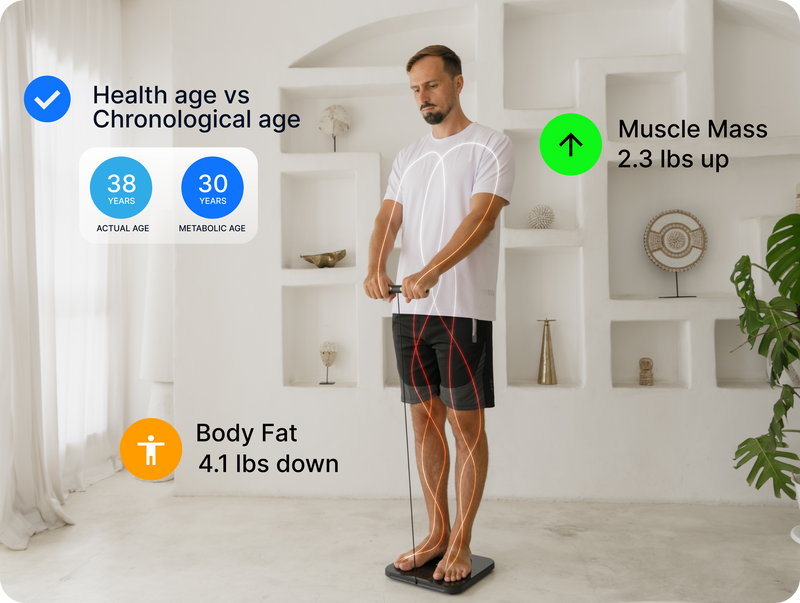
Electrode path. A hand-to-foot design (handles plus foot plates) measures the arms and torso directly instead of estimating them from the legs. Foot-only scales are cheaper but noticeably less accurate, especially if your legs are not representative of your whole body.
Trend tracking, not a single number. All BIA scales are a few points off a DEXA scan. A 2024 study in Frontiers in Nutrition found a multi-frequency device read body fat about 4 percent lower than DEXA on average, but with near-perfect test-retest reliability. The takeaway: pick a scale for how well it shows change over time, and measure under identical conditions every time.
No paywall on the basics. Some scales lock trend history or advanced metrics behind a subscription. For a device whose whole point is long-term tracking, that matters.
Muscle mass reporting. After 50, watching skeletal muscle mass hold or rise is often more important than body fat alone. See our guide to body composition after 40 for why.
Side-by-Side Comparison
| Scale | Electrodes | Segmental | Subscription | Approx. price |
|---|---|---|---|---|
| Hume Body Pod ★ | Hand + foot, 8-frequency | Whole-body | Not required | One-time (see offer) |
| Renpho MorphoScan | Hand + foot, 8-electrode | Limb-by-limb | Not required | ~$150–210 |
| Oxiline Scale MD Pro | Hand + foot, 8-electrode | Whole-body | Not required (free app) | ~$200 |
| InBody Dial H30 | Hand + foot, triple-frequency | Segmental | Not required | ~$340 ($280 refurb) |
Prices are approximate US figures and change often. Check each retailer for current pricing.
The Scales in Detail
#1 — Hume Body Pod (Best Overall)
The Hume Body Pod covers the core job most people over 50 need: a hand-to-foot segmental reading, a trend-focused app with age- and sex-adjusted benchmarks, and no subscription on the data. It is a one-time purchase, so the cost is known up front and does not recur. The trade-offs are a 30-day return window, which is short for a device that takes 8 to 12 weeks to show a real trend, and the lack of any limb-by-limb or health-scan extras. For most readers of this site, none of that outweighs the simplicity. Full review →
Check Current Price — Hume Body Pod →
#2 — Renpho MorphoScan (Best Segmental Detail)
Renpho’s premium line uses an 8-electrode hand-to-foot setup and reports limb-by-limb muscle and fat, so you can see whether, say, one leg is lagging after an injury. It covers 50-plus metrics and lands in the $150 to $210 range depending on model. Renpho markets a high DEXA-agreement figure; treat that as a manufacturer claim rather than an independent result, and use the scale for its trend, like any other BIA device. A strong choice if the per-limb breakdown genuinely matters to you.
#3 — Oxiline Scale MD Pro (Best Display and Warranty)
The Oxiline Scale MD Pro pairs an 8-electrode hand-to-foot design with a large color display that shows trend graphs on the scale itself, not just in the app. It reports around 31 metrics, the companion app is free, and it carries a lifetime warranty, which is unusual in this category. Priced around $200. Best if you want to glance at your trend without opening your phone, and want long-term hardware coverage.
#4 — InBody Dial H30 (Best Accuracy Pedigree)
InBody is the BIA name used in gyms and clinics, and the Dial H30 brings that lineage home with triple-frequency segmental measurement. No subscription, no health-scan extras, a deliberately plain app, and a price around $340 ($280 refurbished). Pick it if a long independent validation record behind the number is your priority and you are comfortable paying for it. Our three-way comparison goes deeper on how it stacks up against the Hume Body Pod.
The outlier: Withings Body Scan 2
If you want a scale that also runs a 6-lead ECG, flags hypertension risk, and does early metabolic screening, the Withings Body Scan 2 does all of that at $599.95. It is not really a body composition scale; it is a home health station. Only worth the premium if you would actually use the cardiovascular features.
How to Get a Reliable Trend From Any of Them
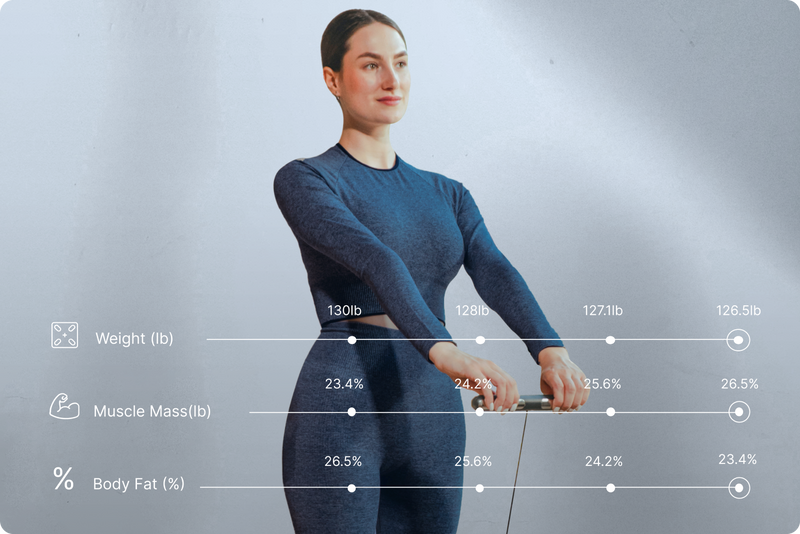
- Measure first thing in the morning, after the bathroom, before food, drink, and exercise, on bare dry feet.
- Weigh once or twice a week on the same day, not daily.
- Read the 30-day trend line, not the single reading. Expect a few points of day-to-day noise from hydration.
- Cross-check monthly with a waist tape measurement and photos in the same lighting.
For the full method, see our step-by-step guide to how to measure body composition at home and, for what the numbers should look like, a healthy body fat percentage after 40, 50, 60.
Frequently Asked Questions
What is the best smart scale for tracking muscle mass after 50?
For most people it is the Hume Body Pod: an 8-frequency hand-to-foot segmental scale with a trend-focused app and no subscription on the data, bought once. If you want per-limb muscle and fat readings, the Renpho MorphoScan is the better fit; if you want the longest accuracy track record, the InBody Dial H30.
Are smart scales accurate for body fat and muscle after 50?
They are accurate enough to track your own trend, not to give a true absolute number. Multi-frequency hand-to-foot scales can be a few points off a DEXA scan while staying highly consistent from reading to reading. Older adults with less limb muscle tend to get less accurate absolute figures, which is another reason to focus on the direction of change rather than the exact percentage.
Do I need a subscription to use a smart scale?
Not with the scales recommended here. The Hume Body Pod, Renpho MorphoScan, Oxiline Scale MD Pro, and InBody Dial H30 all include their core metrics and trend history in a free app. Some other brands lock history or advanced insights behind a paid plan, so check before buying.
Is a hand-to-foot scale worth it over a cheaper foot-only one?
Yes, if you care about accuracy. A foot-only scale measures through the lower body and estimates the rest, which adds error, especially if your legs are more or less muscular than your upper body. A hand-to-foot scale measures the arms and torso directly and is the better choice for tracking muscle and fat after 50.
Can a smart scale replace a DEXA scan?
No. DEXA is the reference standard for body composition. A smart scale is for frequent, low-cost tracking between occasional scans, or on its own if your goal is simply to see muscle and fat move the right way. The absolute number being a few points off does not change the decisions you make from the trend.
About the Author
Richard Hale writes about mobility, recovery, and evidence-based wellness strategies for adults over 40 at VitalMove40. He is an independent health writer, not a licensed medical professional. Content is educational and not a substitute for advice from a qualified healthcare provider.