Last updated: October 1, 2026 | By Richard Hale
Butterfly pillows are everywhere right now: in ads, in pharmacy aisles and in “best pillow for neck pain” lists. If you have never heard the term before, you are not alone. This guide explains what a butterfly pillow is, whether it actually helps neck pain, what it can and cannot do for snoring and sleep apnea, and how to choose one that fits your body.
This content is for educational purposes only and is not medical advice. Neck pain with arm numbness, tingling or weakness, or snoring with pauses in breathing or gasping at night, should be checked by a healthcare provider.
Do butterfly pillows work? The short answer
Butterfly pillows can help neck pain that comes from sleep position, because their higher side wings and lower center keep the neck closer to straight on your side and on your back. Research says pillow shape and height matter most for neck alignment. They can reduce snoring for some back sleepers, but they do not treat sleep apnea.
Table of Contents
- What Is a Butterfly Pillow?
- Does a Butterfly Pillow Help Neck Pain?
- Side, Back and Stomach Sleepers
- Butterfly Pillow for Snoring
- Butterfly Pillow for Sleep Apnea
- How to Use a Butterfly Pillow
- How to Choose One
- Frequently Asked Questions
What Is a Butterfly Pillow?
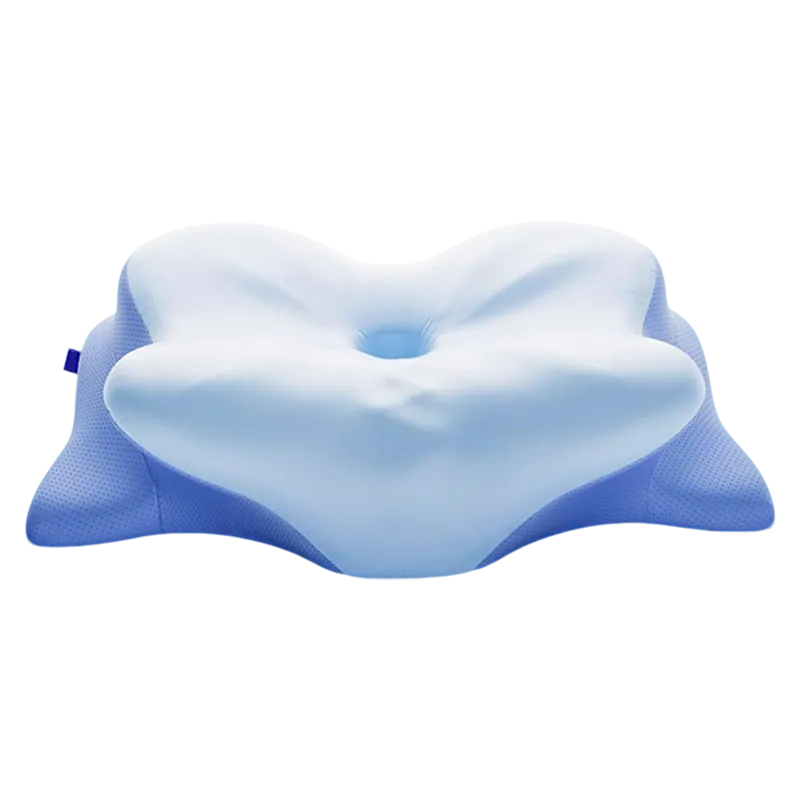
A butterfly pillow is a contoured pillow shaped like a butterfly seen from above: two raised wings on the sides, a lower dip in the middle for the back of your head, and a rolled front edge that supports the curve of your neck. Most are made of memory foam, and many have a small hole in the center.
The idea is simple. A normal pillow has one height. A butterfly pillow has two: a taller zone for side sleeping and a lower zone for back sleeping. You move between them by turning your head, without adjusting anything. You will also see them called butterfly cervical pillows, butterfly neck pillows or contour pillows. They are the same basic design.
Does a Butterfly Pillow Help Neck Pain?
It can, if your neck pain is linked to how you sleep. A butterfly pillow keeps your head from dropping toward the mattress on your side and from tipping forward on your back, which reduces the strain your neck holds for seven or eight hours. It does not treat a disc problem, arthritis or a pinched nerve on its own.
Here is what the research actually shows:
- Shape and height matter more than the material. A 2021 systematic review and meta-analysis of pillow trials found that pillows reduced neck pain, waking symptoms and neck disability in people with chronic neck pain, and that cervical alignment when lying on your side depends mostly on the pillow’s shape and height (Chun-Yiu et al., Clinical Biomechanics, 2021).
- Neck support plus the right height gave the most natural neck curve. In a small 2025 lab study of side sleepers, a pillow of medium height relative to each person’s shoulder width, with added neck support, produced the neck curve closest to natural standing posture and the lowest muscle strain (Tian et al., Medical & Biological Engineering & Computing, 2025). That combination is exactly what a butterfly pillow is built around.
- No single pillow type is a proven winner. A 2025 systematic review found only limited evidence for specific pillows in chronic neck pain, with no type (latex, foam or standard) clearly better than the others (Ghosh et al., Rehabilitación, 2025).
The honest takeaway: a butterfly pillow is not magic, but it is designed around the two things the evidence points to, height and neck support. If your current pillow is flat, lumpy or the wrong height for your shoulders, it is a reasonable upgrade. For daytime habits that affect neck pain just as much, see our guide to neck pain after 40.

Butterfly Pillows for Side, Back and Stomach Sleepers
Side sleepers get the most out of them. On your side, the gap between your ear and the mattress is roughly the width of your shoulder. The raised wing fills that gap so your neck stays level, and many designs curve inward so the shoulder can tuck under the pillow edge. This is the position where a flat pillow fails most often.
Back sleepers benefit from the lower center. A thick regular pillow pushes the chin toward the chest. The butterfly dip lets the back of the head sink while the front roll supports the neck curve.
Stomach sleepers are the exception. The usual advice for stomach sleeping is a very thin pillow or none, because any height turns the neck further. Most butterfly pillows are too tall for this position, even when the box says “all positions.”
If you are still working out which position suits your body, our guide to the best sleep positions for joint and back pain covers each one.
Does a Butterfly Pillow Help With Snoring?
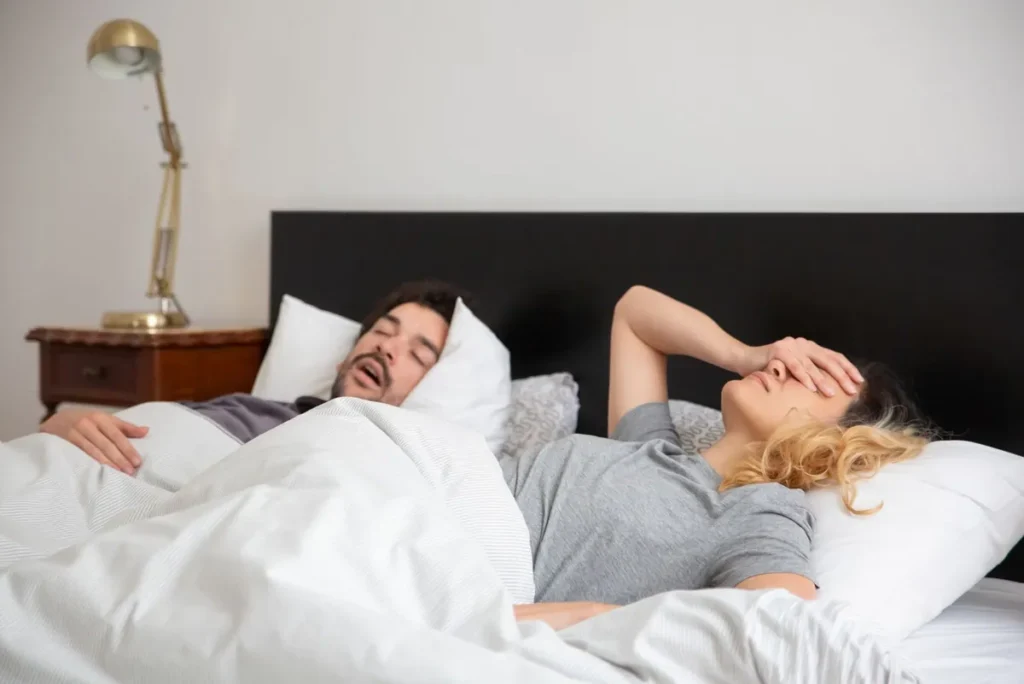
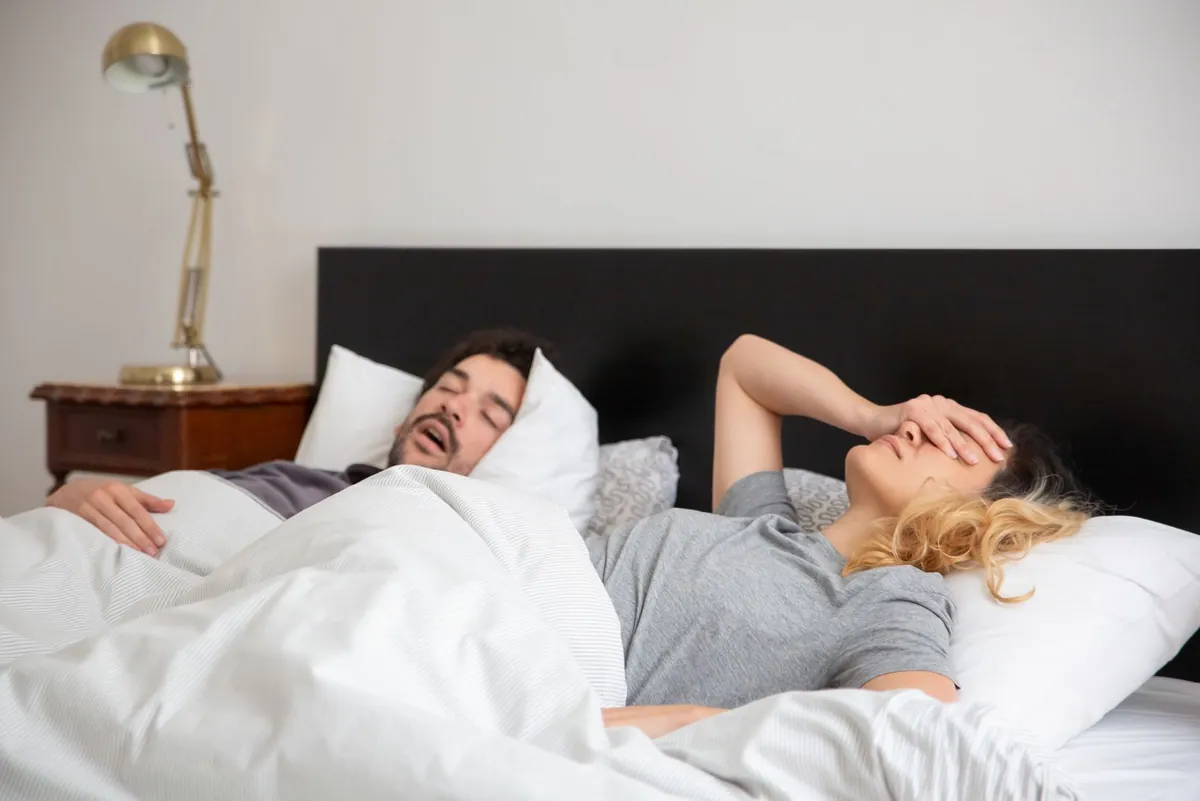
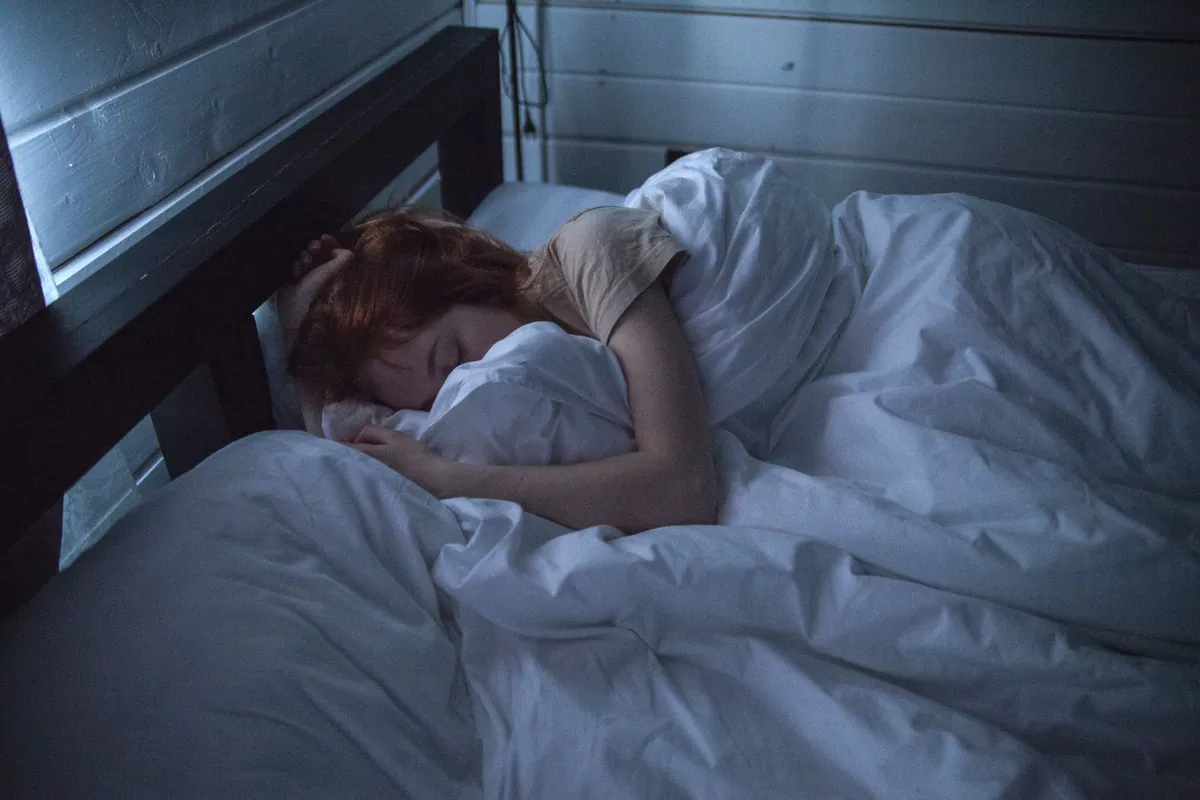
It can reduce snoring for some people, mainly those who snore on their back. Snoring is usually worst on the back because the tongue and soft tissue fall toward the throat. A pillow that keeps the head aligned and makes side sleeping comfortable can mean fewer and softer snores.
The evidence is encouraging but modest. A 2024 systematic review found that positional therapy devices, including anti-snoring pillows, reduce snoring by keeping the airway more open, and called for more head-to-head studies (Moffa et al., Journal of Personalized Medicine, 2024). In a small randomized study, adults with obstructive sleep apnea who slept part of the night on a memory foam pillow had about 47% fewer snoring events than on a standard lab pillow (Stavrou et al., Frontiers in Medicine, 2022).
What a pillow will not fix: snoring from a blocked nose, alcohol close to bedtime, weight gain around the neck, or the shape of your airway. If your partner is the one who snores, give any new pillow about two weeks of normal nights before judging it.
Is a Butterfly Pillow Good for Sleep Apnea?
A butterfly pillow is not a treatment for obstructive sleep apnea. It may help mild snoring and make side sleeping easier, but it does not replace CPAP, an oral appliance or anything your doctor has prescribed.
Keeping people off their back, called positional therapy, is a recognized option for apnea that happens mostly on the back. But a 2025 meta-analysis of 19 randomized trials found it was less effective than CPAP at lowering the overall number of breathing interruptions and did not improve oxygen levels (Gao et al., Frontiers in Medicine, 2025). If you snore loudly most nights, wake up gasping, or feel exhausted during the day despite a full night in bed, ask for a sleep evaluation before buying anything.
If you already use CPAP, some people find a contoured pillow makes side sleeping with a mask more comfortable. Check with your sleep clinic before changing your setup. Our guide to sleep tracking after 40 explains what home devices can and cannot tell you about your breathing at night.
How to Use a Butterfly Pillow
- Find the front. The thicker rolled edge goes toward your shoulders, under the curve of your neck, not under your head.
- On your back: rest the back of your head in the lower center. Your neck should feel supported by the front roll, with your chin level, not tipped up or down.
- On your side: roll onto one of the raised wings. Your nose should line up with the middle of your chest. If your head tilts down toward the mattress, the wing is too low for your shoulders. If it tilts up, it is too high.
- Tuck the shoulder in. Let your lower shoulder sit just below the pillow edge rather than on top of it.
- Give it a week. Contoured pillows feel odd for the first few nights after years on a flat one. The first night is not a fair test.
How to Choose a Butterfly Pillow
- Published heights. Look for the height of the side wings and the center, not just the overall size. Measure from the side of your neck to the edge of your shoulder and compare it with the wing height.
- Foam density. Low-density foam flattens within months. Brands that list density (for example 50D, around 50 kg per cubic meter) are giving you something to compare.
- Your mattress. A soft mattress lets your shoulder sink, so you need less pillow height. A firm one needs more.
- Removable, washable cover. You will sleep on it every night, so a zip-off cover matters.
- Return policy. Bedding return rules vary. Many only accept pillows in unused condition, so read the policy before ordering and decide on fit before you sleep on it.
If you want to see how one specific model measures up against this checklist, our Hewelth MaxBreath pillow review goes through its dimensions, foam, price and guarantee in detail. And if neck and back pain matter more to you than snoring, our guide to the best pillows for neck and back pain compares cervical pillows more broadly.
Frequently Asked Questions
What is a butterfly pillow used for?
A butterfly pillow is used to support the head and neck during sleep, mainly for people with neck stiffness, side sleepers and back sleepers who switch positions at night. Its raised wings support side sleeping and its lower center supports back sleeping. Some people also use it to make side sleeping easier when they snore on their back.
Are butterfly pillows good for you?
For most side and back sleepers, yes. They keep the neck closer to its natural alignment than a flat pillow of the wrong height. They are not ideal for stomach sleepers, and they are not a medical treatment for neck conditions or sleep apnea.
Can a butterfly pillow make neck pain worse?
It can if the height is wrong for you. A wing that is too high or too low bends the neck sideways, and a stomach sleeper on a tall pillow twists the neck further. Some stiffness during the first few nights of adjusting is common. Pain that keeps getting worse is a sign the fit is wrong.
How long does it take to get used to a butterfly pillow?
Most people need about a week of normal nights. A contoured shape feels unfamiliar after years on a flat pillow, so the first night is not a fair test.
Do butterfly pillows help with snoring?
They can for people who snore mainly on their back, because they make side sleeping more comfortable and keep the head aligned. Research on positional therapy and pillows shows real but modest effects. They do not help snoring caused by congestion, alcohol or anatomy.
Is a butterfly pillow good for sleep apnea?
It is not a sleep apnea treatment. It may help mild snoring and side sleeping, but positional approaches are less effective than CPAP in the research. Anyone with suspected or diagnosed sleep apnea should follow their doctor’s treatment plan.
Can stomach sleepers use a butterfly pillow?
Usually not comfortably. Stomach sleeping works best with a very thin pillow or none, and most butterfly pillows are too tall for that position, even when marketed for all positions.
About the author: Richard Hale is an independent health writer focused on mobility, joint health, and active aging research. He is not a licensed medical professional. All content on VitalMove40 is for educational purposes only and is not a substitute for advice from a qualified healthcare provider.