
Last updated: September 15, 2026 | By Richard Hale
A healthy body fat percentage after 40 is roughly 11 to 22 percent for men and 23 to 34 percent for women, rising by a few points per decade into your 60s and 70s. Those are broad, provisional ranges, not pass-or-fail lines, and where you sit inside them matters less than whether the number is stable over time and whether your waist measurement is in a healthy range.
This guide gives the age and sex breakdown, explains why the healthy range drifts upward with age, and covers why waist size is often the more useful number to watch.
Healthy Body Fat Percentage by Age and Sex
The most widely cited age and sex ranges come from a 2000 study in the American Journal of Clinical Nutrition by Gallagher and colleagues, which derived body fat ranges to match the healthy BMI band for each group. The authors call these provisional guidelines, not diagnostic cutoffs.
| Age | Healthy range, women | Healthy range, men |
|---|---|---|
| 20–39 | About 21–32% | About 8–19% |
| 40–59 | About 23–33% | About 11–21% |
| 60–79 | About 24–35% | About 13–24% |
Ranges are approximate and were designed to correspond to a healthy BMI for each age and sex group. Individual healthy values vary.
Below the healthy range sits the athletic and then the essential-fat zone; above it sits the overfat and then obese range. But treat the whole table as orientation, not a scorecard. A man at 22 percent at age 55 and a woman at 30 percent at age 50 are both squarely in normal territory.
Why the Healthy Range Goes Up With Age
Two things drive the upward drift. First, it is partly a measurement artifact: these ranges were mapped to the healthy BMI band, and body composition at a given BMI shifts toward more fat and less muscle as people age, so the “healthy” fat figure moves with it. Second, a modest fat reserve is genuinely protective in older age, providing an energy buffer during illness and some cushioning against injury and bone loss.
What the rising range does not mean is that gaining fat through your 40s and 50s is harmless. The extra few points of headroom are small, and where the fat sits matters more than the total. Fat gained around the abdomen, the visceral kind packed around the organs, carries far more metabolic risk than the same amount stored under the skin on the hips and thighs. For why muscle mass, not just fat, belongs in this picture, see our guide to body composition after 40.
Body Fat Percentage vs Waist Size vs BMI
Each of these numbers answers a slightly different question:
- BMI is a height-to-weight ratio. It is useful for populations and misleading for individuals, especially muscular people, who read as overweight, and older adults who have lost muscle, who can read as normal while carrying too much fat.
- Body fat percentage tells you how much of your body is fat. It is the better personal metric, but home methods are a few points off lab measurement, so it is most useful as a trend rather than an exact figure.
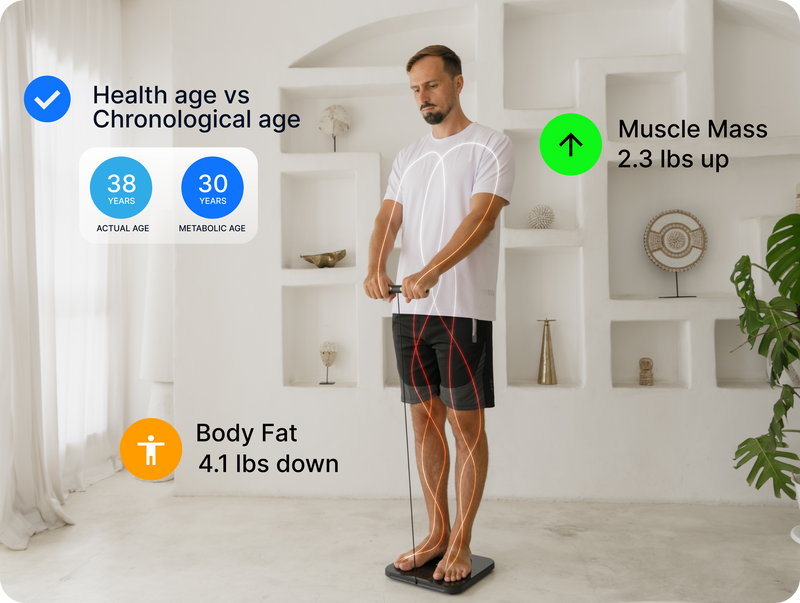
- Waist circumference and waist-to-height ratio are the simplest proxies for visceral fat and the associated health risk. A common rule of thumb is to keep your waist under half your height. This is the number to check if you only track one.
A practical combination after 40: use body fat percentage from a home device as your trend line, and a monthly waist measurement as the health check. If both are stable and in range, the exact body fat figure is not worth stressing over.
The Risks at Both Ends After 40
Too high. Body fat consistently above the healthy range, particularly with a large waist, is linked to insulin resistance, higher blood pressure, unfavorable cholesterol, and added load on weight-bearing joints. For how that last part plays out, see how weight loss affects joint pain.
Too low. This gets less attention but matters more with age. Very low body fat in older adults is associated with frailty, weakened immune response, reduced bone density, poor recovery from illness, and loss of the energy reserve that helps during a hospital stay. The essential-fat floor, around 3 to 5 percent for men and 10 to 13 percent for women, is a survival minimum seen in lean athletes, not a goal. After 60, being at the lower edge of the healthy range is not automatically better than being in the middle of it.
How to Read Your Own Number
- Find your age and sex range in the table above and see roughly where you sit. Anywhere inside the band is fine.
- Watch the trend, not the daily figure. Home devices vary by a few points; a reading that holds steady or moves slowly in the direction you want is the useful signal.
- Pair it with waist size. A stable body fat percentage and a waist under half your height is a better picture of health than either number alone.
- Do not chase a single ideal number. There is no one perfect body fat percentage. Stable, in-range, and combined with decent strength and fitness is the target.
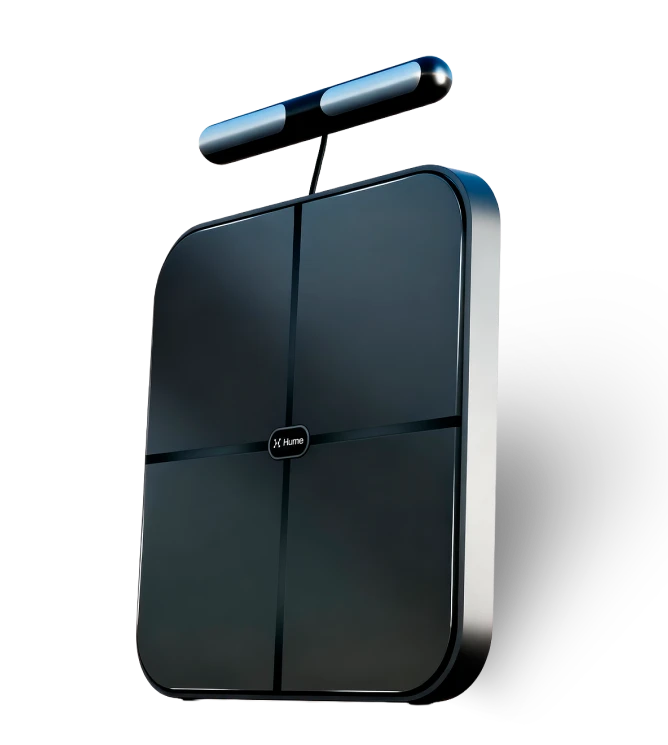
To actually measure and track these numbers at home, see our step-by-step guide to how to measure body composition at home and our Hume Body Pod review for one home device option.
Frequently Asked Questions
What is a healthy body fat percentage for a 50-year-old woman?
Roughly 23 to 33 percent, based on the Gallagher ranges mapped to a healthy BMI for women aged 40 to 59. Anywhere in that band is normal, and where you sit within it matters less than whether the figure is stable over time and your waist measurement is healthy. Values a few points outside the range are common and not a cause for alarm on their own.
What is a healthy body fat percentage for a 50-year-old man?
Roughly 11 to 21 percent for men aged 40 to 59. As with women, the range is a broad guideline rather than a target, and a stable reading paired with a waist under half your height is a better health picture than hitting a specific number.
Is 30 percent body fat bad?
For a woman over 40, 30 percent is within the normal range. For a man over 40, 30 percent is above the healthy band and, especially if the extra fat is around the abdomen, is worth addressing through strength training, activity, and diet. Context matters: waist size, blood markers, fitness, and the trend over time all inform whether a given number is a concern.
Can body fat percentage be too low after 60?
Yes. Very low body fat in older adults is linked to frailty, weakened immunity, lower bone density, and poor recovery from illness, because the body loses its energy reserve and often muscle along with the fat. After 60, sitting in the middle of the healthy range is generally preferable to being at the bottom edge of it.
Is body fat percentage or BMI more accurate?
Body fat percentage is the more informative number for an individual because it distinguishes fat from muscle, which BMI cannot. BMI misclassifies muscular people as overweight and older adults with low muscle as normal. That said, home body fat measurements are a few points off lab methods, so the most reliable approach is to track your body fat trend and pair it with waist circumference.
About the Author
Richard Hale writes about mobility, recovery, and evidence-based wellness strategies for adults over 40 at VitalMove40. He is an independent health writer, not a licensed medical professional. Content is educational and not a substitute for advice from a qualified healthcare provider.