
Last updated: July 14, 2026 | By Richard Hale
Posture correctors are one of the most marketed wellness products of the past decade. They come in dozens of designs, shoulder harnesses, back braces, adhesive patches, electronic posture trainers, and are sold with promises ranging from “fix forward head posture in weeks” to “eliminate back pain permanently.” The evidence supports none of those specific claims.
What the evidence does support is more modest and more useful: under the right conditions, posture correctors can serve as an effective proprioceptive training tool when used in combination with corrective exercises. This guide covers what they can realistically do, when they help, and when they are a waste of money or actively counterproductive.
This content is for educational purposes only and is not medical advice. For chronic back or neck pain, consult a physical therapist for a targeted assessment before using any brace or corrector.

Table of Contents
- What Posture Correctors Actually Do
- What the Research Shows
- When They Can Help
- When They Don’t Help (or Make Things Worse)
- The Right Way to Use One
- Alternatives With Stronger Evidence
- Frequently Asked Questions
What Posture Correctors Actually Do
A posture corrector is a mechanical reminder, not a structural fix. When you round your shoulders or drop your head forward, the device creates resistance or discomfort that prompts you to move back toward a more upright position. This is called proprioceptive feedback, the same mechanism that makes standing on a balance board improve ankle stability, or taping a wrist after a sprain prompt protective movement patterns.
This distinction matters: the corrector is not holding your spine in position. You are holding your spine in position in response to the feedback it provides. Take the corrector off, and the feedback disappears. If your muscles have not been trained to maintain the position independently, they will not.
What the Research Shows
Clinical research on posture correctors is limited and mixed, which reflects their heterogeneous nature, “posture corrector” covers vastly different products with different mechanisms. The findings that are reasonably consistent:
- Proprioceptive feedback devices (shoulder harnesses, back braces with sensory alerts) can improve postural awareness during wear and in the short period immediately after removal
- Passive bracing (wearing a rigid brace that mechanically forces position without active muscle engagement) is associated with muscle atrophy of the muscles being passively supported over time
- Electronic posture trainers (vibration alerts when you slouch) have shown improvement in screen-based sitting posture in several short-duration studies, though long-term sustained benefit is less established
- Posture correctors alone, without corrective exercise, do not produce durable postural change in most studies
When They Can Help
A posture corrector is most useful as a temporary training tool to build awareness of a position you are trying to achieve but have difficulty feeling consistently. The sequence that works:
- Start corrective exercises that target the weak and tight muscles driving the postural problem (see the guide on posture problems after 40 for the specific exercises)
- Use the corrector during desk work or activities where you have historically slouched, as a reminder to maintain the position your exercises are teaching
- Gradually reduce corrector use over weeks as the position becomes more automatic
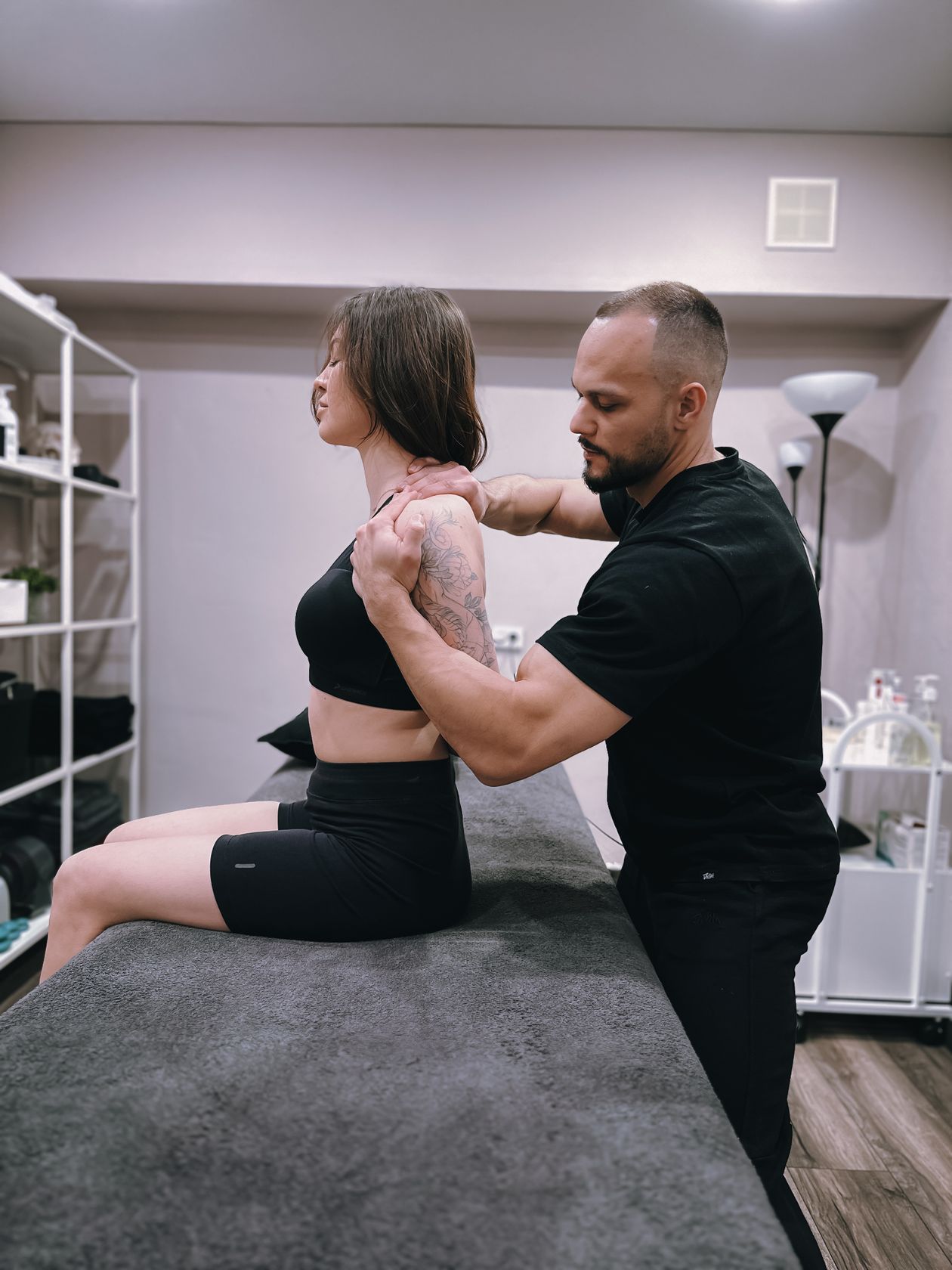
This use case is legitimate. The problem is that most people use posture correctors as a passive intervention (putting them on and expecting the brace to do the work) rather than as a proprioceptive training tool in an active correction program.
When They Don’t Help (or Make Things Worse)
Passive all-day wear without exercise. If a brace is holding your shoulders back while your rhomboids and lower trapezius remain weak and inactive, those muscles are not being trained. When the brace comes off, nothing has changed except that you have been wearing a brace all day. Over time, passive bracing of healthy muscles can actually reduce their endurance capacity.
When the wrong muscles are being addressed. Forward head posture is driven primarily by weak deep neck flexors and tight suboccipitals, a shoulder brace does not directly address either. Rounded shoulders from thoracic kyphosis need thoracic extension mobility and posterior shoulder strengthening, a lumbar back brace addresses neither. The specificity of the intervention has to match the specificity of the problem.
As a replacement for professional assessment. If you have chronic neck or back pain, a posture corrector from a wellness retailer is not a substitute for a physical therapist who can identify the specific imbalances driving your symptoms and prescribe targeted correction. Generic bracing is inherently imprecise.
The Right Way to Use One
If you decide to use a posture corrector:
- Wear it for 20 to 30 minutes at a time, not all day, you want the feedback, not passive holding
- Use it while actively practicing good posture, not as a substitute for it
- Combine it with the corrective exercises for your specific pattern (rhomboid rows + thoracic extension for rounded shoulders; chin tucks + deep neck flexor work for forward head posture)
- Plan to reduce usage over 4 to 8 weeks as awareness improves
- Stop if it causes new pain, restriction, or skin irritation

Alternatives With Stronger Evidence
The interventions with the strongest and most consistent evidence for improving posture and reducing postural pain:
- Targeted exercise: specifically, the exercises that address the weak muscles (mid and lower trapezius, rhomboids, deep neck flexors, glutes) and stretch the tight ones (pectorals, hip flexors, suboccipitals). This is the only approach that produces durable, brace-independent improvement.
- Ergonomic setup: raising the monitor to eye level and adjusting chair height so hips and knees are at 90 degrees removes the structural driver of the problem during the hours when it is being reinforced most.
- Movement breaks: standing up every 30 to 45 minutes disrupts postural loading patterns more effectively than any product.
Frequently Asked Questions
How long does a posture corrector take to work?
Used correctly, as a proprioceptive training tool combined with corrective exercises, noticeable awareness improvement typically appears within two to four weeks. Structural postural change, where the improved position holds without constant conscious effort, takes three to six months of consistent work. A posture corrector used alone, without exercise, is unlikely to produce changes that persist beyond its removal.
Can a posture corrector fix a hunchback?
A posture corrector cannot fix established thoracic kyphosis on its own. Structural curvature changes require a combination of thoracic extension mobility work, posterior chain strengthening, and in some cases, professional input. A posture corrector may help with postural awareness but will not change the mobility limitation driving a pronounced kyphosis.
Are electronic posture trainers better than passive braces?
For the purpose of building awareness without passively holding muscles, yes, electronic trainers that vibrate when you slouch require you to actively correct position in response to the alert, which is the mechanism that builds the habit. Passive braces that hold position mechanically do not engage that active correction loop and carry more risk of muscle dependency with extended use.
Can I wear a posture corrector while sleeping?
No. Sleep positions change throughout the night, and wearing a brace during sleep creates abnormal pressure points and restricts the natural movement that occurs during rest. Posture correctors are for use during waking activity where you can respond actively to the feedback they provide.
How long should I wear a posture corrector each day?
Two to three sessions of 20 to 45 minutes each is more effective than wearing a posture corrector all day. Short focused sessions where you actively engage the upper back muscles in response to the proprioceptive feedback build postural awareness faster than continuous passive wear, which the muscles learn to ignore. Remove it during meals, sleep, and exercise. As postural endurance improves, sessions can extend, but most users find diminishing returns beyond 3 to 4 cumulative hours per day. The goal is to progressively extend periods of maintaining good posture without the device, the corrector is a training tool, not a permanent support structure.
About the author: Richard Hale is an independent health writer focused on mobility, joint health, and active aging research. He is not a licensed medical professional. All content on VitalMove40 is for educational purposes only and is not a substitute for advice from a qualified healthcare provider.