Last updated: July 14, 2026 | By Richard Hale
Tracking physical activity is not about surveillance or hitting arbitrary numbers. Used well, it addresses one of the most consistent patterns in exercise research: people systematically underestimate how sedentary they are and overestimate how active they are. A device that provides accurate, ongoing feedback on movement closes that gap, and for adults over 40, where maintaining consistent activity is one of the highest-leverage health behaviors available, that feedback has real value.
This guide covers what activity tracking actually measures, what metrics matter for health after 40, how to use tracking data without becoming obsessive about it, and what to look for in a device if you decide to use one.
This content is for educational purposes only and is not medical advice. Metrics like heart rate, blood oxygen, and ECG readings from consumer devices are not equivalent to medical monitoring and should not replace clinical assessment for any health condition.
Table of Contents
- What Activity Trackers Actually Measure
- Metrics That Matter After 40
- The 10,000 Steps Myth
- Heart Rate and Recovery
- Sleep Tracking
- How to Use the Data Without Obsessing
- What to Look For in a Device
- Frequently Asked Questions
What Activity Trackers Actually Measure
Modern consumer activity trackers measure movement (via accelerometers), heart rate (via optical sensors on the wrist), and in many devices: blood oxygen saturation, skin temperature, GPS location, and in some cases electrocardiogram signals. Steps, distance, and calorie estimates are derived from the raw accelerometer data using algorithms, they are estimates, not precise measurements, and accuracy varies by device and activity type.
Understanding this distinction matters: a tracker that tells you 8,432 steps is giving you an estimate, not an exact count. The value of activity tracking is in the trends and relative comparisons over days, weeks, and months, not in treating each daily number as a precise measurement.
Metrics That Matter After 40
Not every metric a tracker provides is equally useful. The ones with the strongest evidence for meaningful behavioral feedback after 40:
- Daily movement volume: total steps or active time, which flags sedentary patterns before they become entrenched habits
- Sedentary time: hours spent sitting without movement breaks, many devices alert you after a defined period of inactivity, which is more useful than aggregate step count alone
- Resting heart rate: a declining resting heart rate over weeks indicates improving cardiovascular fitness; a sudden spike can indicate overtraining, illness, or insufficient recovery
- Sleep duration and quality: the pattern of sleep over days and weeks, which affects joint recovery, inflammation levels, and next-day energy for activity
- Active minutes in a target heart rate zone: not just total steps, but whether activity includes periods that actually challenge the cardiovascular system
The 10,000 Steps Myth
The 10,000-step daily target is not evidence-based, it originated as a Japanese marketing campaign for a pedometer in 1965. The actual research on step count and health outcomes shows diminishing returns well below 10,000 steps: most of the mortality risk reduction from walking accumulates between 4,000 and 7,500 steps per day, with smaller additional benefits beyond that, according to a large prospective cohort study published in JAMA Internal Medicine.
For practical purposes, a more useful goal than “10,000 steps” is: how many hours in the day involved zero intentional movement? Reducing sedentary hours by standing, taking brief walks, and incorporating movement breaks produces health benefits independent of total step count. A tracker that monitors both steps and sedentary time provides more complete behavioral feedback than one that only counts steps.
Heart Rate and Recovery
Resting heart rate is one of the more reliable biometric signals available from consumer wrist-based trackers. Measured consistently at the same time each morning (most trackers do this automatically during sleep), it reflects cardiovascular fitness and recovery status. A resting heart rate that declines by 5 to 10 beats per minute over months of consistent training indicates meaningful cardiovascular adaptation.
Heart rate during exercise tells you whether activity is actually challenging the cardiovascular system or simply generating step counts. For adults over 40 pursuing cardiovascular health, spending at least 150 minutes per week with heart rate elevated to 50-70% of maximum (moderate intensity) is the evidence-based target from the American College of Sports Medicine. A tracker with heart rate monitoring makes this verifiable rather than estimated.
Sleep Tracking
Sleep quality directly affects joint recovery, inflammation levels, and the hormonal environment for muscle maintenance, all of which matter more after 40. Consumer sleep tracking is less accurate than clinical sleep studies (polysomnography), but it is useful for identifying patterns: consistently short sleep, high movement during the night indicating restlessness, or irregular sleep schedules that disrupt circadian rhythm.
The actionable insight from sleep tracking is usually simple: whether you are consistently getting less than seven hours, whether sleep is highly fragmented, and whether patterns correlate with how you feel and perform. Using that data to prioritize sleep as a recovery component of an exercise program is more useful than optimizing for a specific “deep sleep percentage.”
How to Use the Data Without Obsessing
Activity tracking data has a well-documented downside: for some people, it produces anxiety about metrics, an overemphasis on hitting daily targets regardless of context, and a tendency to view every day below the goal as a failure. These effects are counterproductive.
A better relationship with tracking data: use it to identify trends over weeks and months, not to judge individual days. Look for patterns that inform behavior changes rather than numerical targets to hit. A week where the average active time drops significantly is useful information; a single day below 8,000 steps on a rest day is noise.
What to Look For in a Device
For adults over 40 specifically:
- Continuous heart rate monitoring: both at rest (for resting HR trends) and during activity (for zone tracking)
- Sleep tracking: duration and basic sleep staging (light, deep, REM)
- Sedentary alerts: prompts to move after extended inactivity
- Battery life: a device that needs daily charging creates friction that reduces compliance; 5+ day battery life is a practical threshold for consistent wear
- Comfort for all-day wear: size and band material matter for whether the device is worn consistently
- Clear health data display: a companion app that presents trends clearly over weeks, not just daily snapshots
Frequently Asked Questions
Do activity trackers actually improve health outcomes?
Multiple randomized controlled trials find that wearing an activity tracker increases physical activity levels in sedentary and moderately active adults, particularly when the device provides goal-setting features and feedback. The improvement is modest in absolute terms but meaningful: consistent modest increases in daily activity produce real long-term health benefits. The evidence is strongest for step count increases in previously sedentary people.
How accurate are smartwatch heart rate monitors?
For resting heart rate, consumer optical wrist sensors are reasonably accurate (typically within 3-5 beats per minute of clinical measurements). During high-intensity exercise or activities with wrist movement, accuracy decreases. For tracking trends in resting heart rate over weeks, the level of accuracy is more than sufficient. For precise heart rate zone training during exercise, a chest strap monitor is more accurate.
Can a consumer smartwatch detect heart problems?
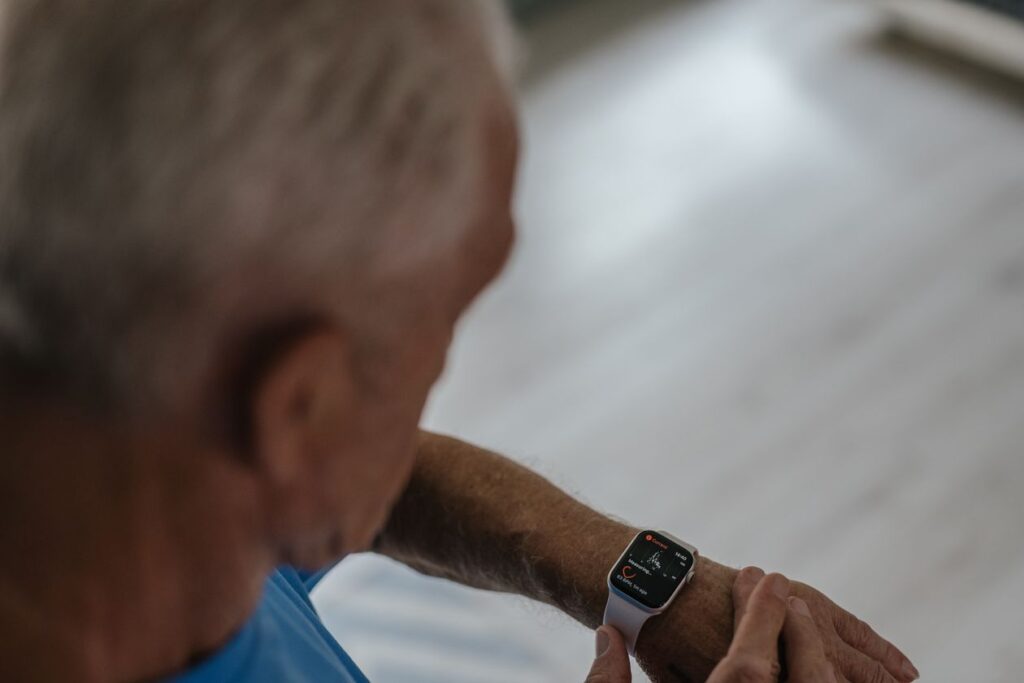
ECG-capable smartwatches (those with the electrical sensor on the back case that you complete by touching the crown) can detect atrial fibrillation with reasonable accuracy in adults who already have some risk factors, several FDA-cleared consumer devices have been validated for afib detection specifically. They cannot diagnose heart conditions, and any finding that suggests an arrhythmia should be followed up with a 12-lead ECG and clinical assessment. They are a screening alert tool, not a diagnostic device.
What health metrics should adults over 40 track with a smartwatch?
After 40, the most clinically meaningful metrics to track are resting heart rate (a reliable indicator of cardiovascular fitness trends), heart rate variability (reflecting autonomic nervous system recovery), sleep duration and quality, and daily step count. Blood oxygen saturation is relevant for adults with respiratory or circulatory concerns. ECG monitoring for irregular rhythms becomes increasingly relevant from the mid-40s, where atrial fibrillation prevalence rises. Trends over weeks matter more than individual readings, the most useful function of a wearable is identifying patterns, not any single data point.
How many steps per day is enough after 40?
The 10,000 steps target originated from a Japanese pedometer marketing campaign rather than clinical research. More recent evidence suggests health benefits plateau at approximately 7,000 to 8,000 steps per day, with each additional 1,000 steps associated with lower mortality risk up to that threshold. For adults over 40 managing joint pain, 6,000 to 8,000 steps per day of low-impact walking (distributed across the day rather than done in one session) is a realistic and evidence-grounded target. Walking pace matters: a pace that slightly elevates breathing adds cardiovascular benefit beyond slow ambulation.
Looking for a recovery wearable? The Hume Band 2.0 tracks HRV, sleep stages, and blood pressure trends 24/7, with no screen and a 14-day battery. See our full Hume Band 2.0 review to find out if it fits your recovery routine.
About the author: Richard Hale is an independent health writer focused on mobility, joint health, and active aging research. He is not a licensed medical professional. All content on VitalMove40 is for educational purposes only and is not a substitute for advice from a qualified healthcare provider.