Affiliate Disclosure: VitalMove40 earns a commission from purchases made through affiliate links on this page, at no extra cost to you. See our full Affiliate Disclosure Policy.
Last updated: August 12, 2026 | By Richard Hale
The Back Restore is a lumbar decompression device designed for at-home use. If you have chronic lower back pain from disc compression, facet joint loading, or the accumulated stress of years of sitting, and you have been looking for a structured at-home approach to reducing that load, this review covers how the Back Restore works, what the evidence base for its approach says, and whether it is a reasonable addition to a back pain management program.
This content is for educational purposes only and is not medical advice. New or worsening back pain, pain radiating into the legs, or any neurological symptoms should be evaluated by a healthcare provider before starting self-treatment.
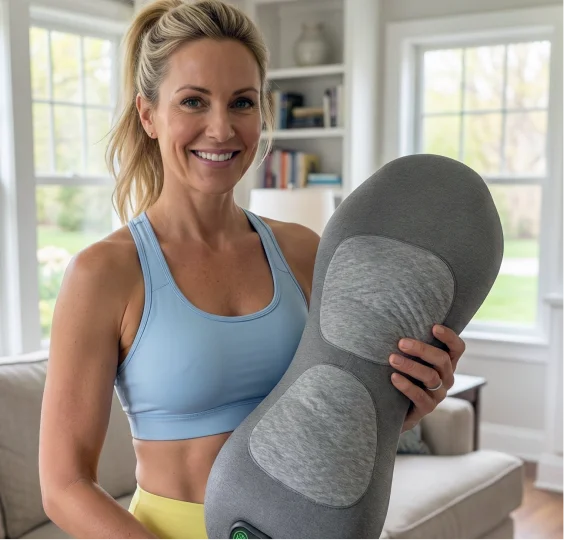
Back Restore, 4.5/5
A passive lumbar decompression device for at-home use, reduces disc compression and lower back pressure through body-weight traction. A practical alternative to inversion tables for adults with chronic lower back pain.
- Uses body weight for lumbar decompression with no power required
- More accessible than inversion tables for people with balance concerns
- Designed for daily 10-15 minute decompression sessions
Table of Contents
- Who the Back Restore Is For
- How Lumbar Decompression Works
- What the Evidence Says
- What It Offers
- Who It Is Not For
- Putting It in Context
- Verdict
- Frequently Asked Questions
Who the Back Restore Is For
The Back Restore targets people with chronic lower back pain who have not found adequate relief from passive rest or standard exercises, and who want a structured decompression approach they can use daily at home. The ideal candidate is someone with disc-related or facet joint lower back pain, particularly pain that is worse after prolonged sitting and better with lying down or gentle traction.
People whose lower back pain is primarily from muscle weakness, poor movement patterns, or hip mobility restrictions are better served by targeted exercise than by decompression. A device that reduces compressive loading does not address those causes, and using one in place of the appropriate exercise program is a common mistake.
How Lumbar Decompression Works
Lumbar decompression applies a longitudinal force to the spine in the direction that elongates it, separating the vertebrae slightly and reducing the compressive load on the intervertebral discs and facet joints. In clinical settings, this is done with motorized traction tables. At home, decompression devices typically use positioning, inversion, or a targeted mechanical mechanism to achieve a similar effect at lower intensity.
The proposed mechanism of benefit: reduced disc pressure allows fluid to re-enter the disc nucleus (which loses hydration under constant compression), reduces direct pressure on nerve roots, and relaxes the surrounding musculature. Whether home devices produce sufficient decompressive force to achieve meaningful changes in disc hydration is the key question the evidence addresses imperfectly.
What the Evidence Says
The evidence for mechanical traction and decompression in lower back pain is genuinely mixed, which is consistent with most back pain interventions. The most relevant findings:
- Traction produces short-term pain relief for some people with radicular lower back pain (pain radiating into the leg from nerve compression), the response is not universal but is consistent enough to be considered a valid option
- For non-specific lower back pain without nerve involvement, the evidence for traction over other conservative treatments is weaker
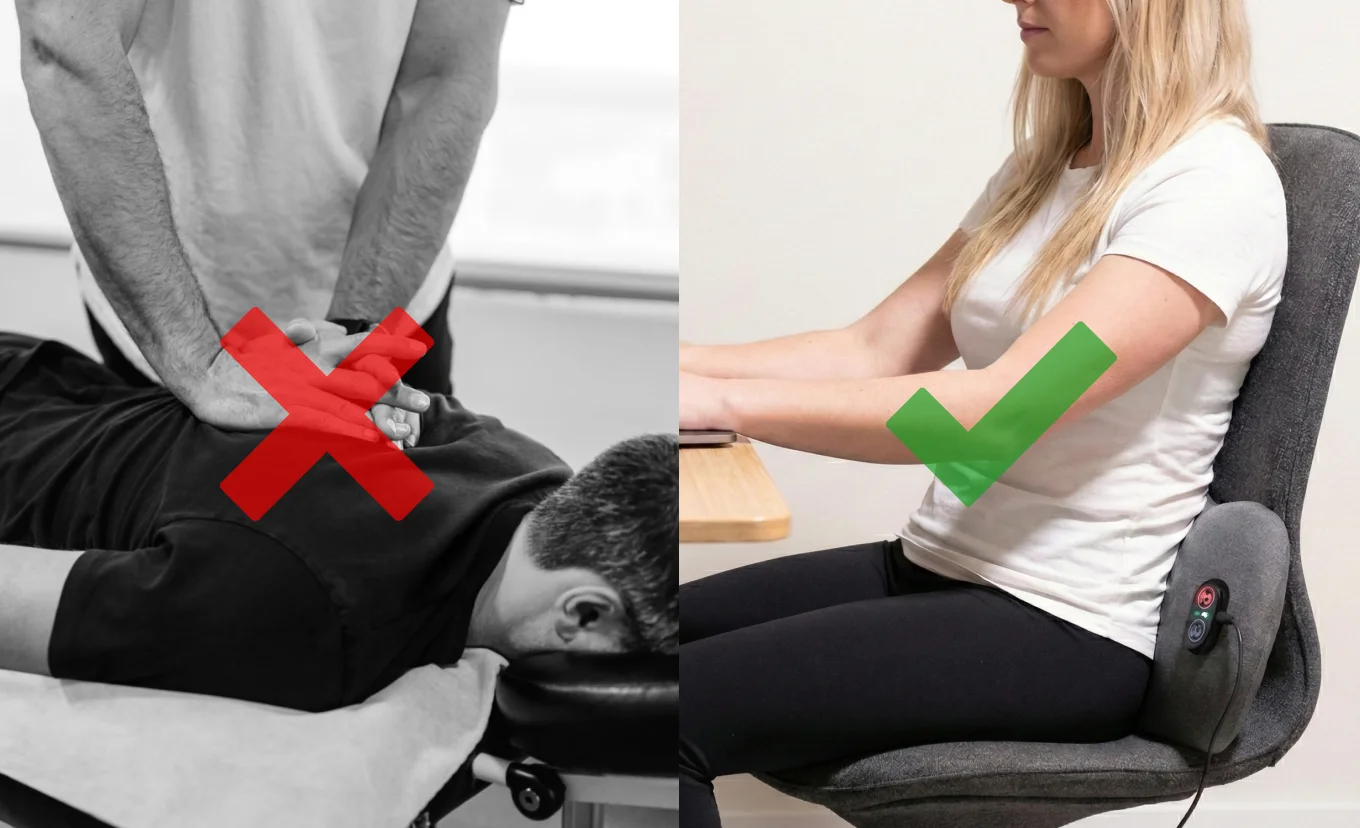
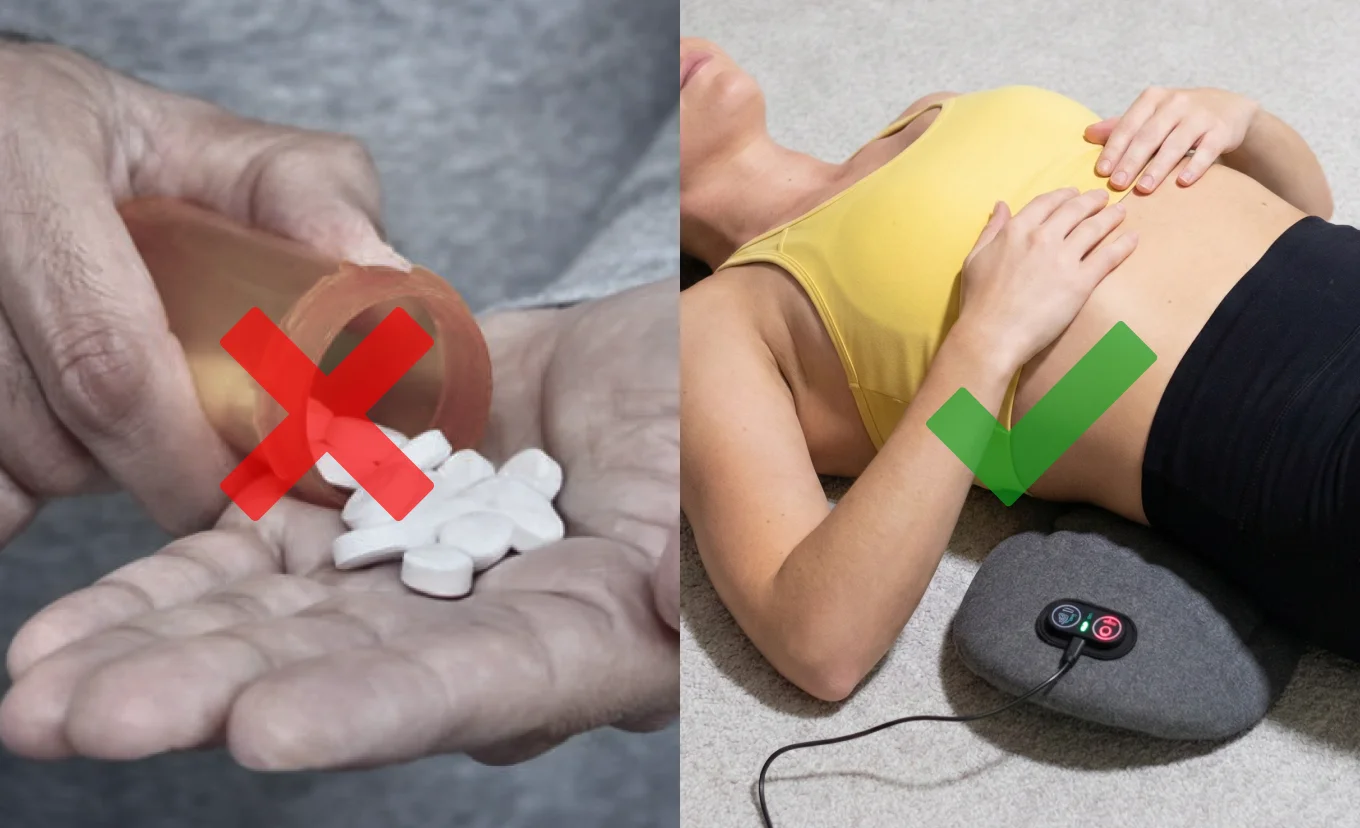
- Passive decompression positions (knees at 90 degrees, lower back flat) produce measurable reductions in lumbar disc pressure at no cost, this is the reference comparison for any decompression device
What It Offers
Structured daily decompression routine. For people who respond to traction, having a consistent, low-friction way to do a daily decompression session at home (rather than relying on expensive clinical visits) has real practical value. Consistency is what produces the cumulative benefit that traction research documents.
Addresses compression from prolonged sitting. The disc pressure that accumulates during a day of desk work is a genuine contributor to lower back pain in sedentary adults. A daily decompression session that reverses some of that loading before it accumulates into chronic symptoms is a reasonable maintenance approach for people with disc-related conditions.
Complement to exercise, not replacement. The Back Restore is best used as a component of a program that also includes core strengthening, hip mobility work, and posture correction, not as a standalone treatment. In that context, it addresses one specific component (compressive loading) that the other elements do not directly target.
Who It Is Not For
The Back Restore is available for US, Australian, Canadian, New Zealand, and UK markets. It is not appropriate for people with spinal fractures, tumors, severe osteoporosis, or any condition where spinal movement is contraindicated. For people with significant disc herniation causing acute radicular symptoms, clinical supervision of any traction approach is the appropriate first step rather than home use.
Putting It in Context
At-home decompression devices occupy a legitimate place in back pain management, not as the primary treatment, but as a tool that addresses compressive loading in a way that exercise and stretching alone do not. For people with chronic disc-related lower back pain who have already done the foundational work (core strengthening, hip mobility, movement habits) and still deal with daily compression-related discomfort, a structured decompression device adds something that the rest of the program is not providing.
For people who have not done that foundational work, starting with the decompression device while skipping the exercise is the common sequence that produces temporary relief without durable change.
Verdict
The Back Restore is a reasonable tool for the specific population it targets: adults with disc-related or facet joint lower back pain who respond to traction, have already built the foundational exercise habits, and want a consistent at-home approach to managing daily compressive loading. For that use case, the daily decompression routine it enables is genuinely useful.
For people with back pain from other causes, primarily muscle weakness, hip restrictions, or postural loading patterns, this device does not address the root cause and is a poor substitute for targeted exercise.
Check current price and availability →
Available in the US, Canada, Australia, New Zealand, and UK.
Pros and Cons at a Glance
| Pros | Cons |
|---|---|
| Addresses mechanical root cause of disc-related back pain through decompression | Effective primarily for disc-related and facet joint pain, not all lower back pain responds to decompression |
| Passive daily sessions require low time commitment | Not suitable for acute disc herniation with neurological symptoms without clinical supervision first |
| Research-supported mechanism, lumbar decompression reduces intradiscal pressure | Only ships to US, Australia, Canada, New Zealand, and UK |
| Can provide relief without medication for disc-related pain | Results require consistent daily use over several weeks |
| Useful complement to physiotherapy and core strengthening programmes |
Frequently Asked Questions
How long does it take for back decompression to work?
People who respond to traction typically notice pain reduction within two to four weeks of consistent daily sessions. The research trials that find benefit typically use sessions of 15 to 30 minutes, five to seven times per week. If there is no improvement after four to six weeks of consistent use, decompression is unlikely to be the appropriate tool for that particular cause of pain.
Can back decompression make a herniated disc worse?
In most cases, gentle decompression does not worsen herniation. For acute, severe herniation with significant nerve compression causing neurological symptoms (numbness, weakness in the legs), clinical supervision of any traction approach is appropriate before using home devices. For chronic disc-related pain without acute neurological symptoms, home decompression at recommended intensity levels is generally safe.
How is the Back Restore different from an inversion table?
Inversion tables decompress through body weight in an inverted position, which also increases intracranial pressure and is contraindicated for several conditions including hypertension. A dedicated lumbar decompression device applies force in a more targeted manner and can be used in a more upright or supported position, which avoids the inversion-related contraindications. For people who cannot use an inversion table due to blood pressure or other concerns, alternative decompression devices are a relevant option.
What is the Back Restore device and how does it work?
The Back Restore is an at-home lumbar decompression device that uses a traction or inversion-based mechanism to reduce the compressive load on the intervertebral discs of the lower spine. When compressive pressure on a disc is reduced, the disc’s nucleus pulposus can rehydrate and the pressure on adjacent nerve roots decreases. This is the mechanism behind the pain relief that lumbar decompression produces. It is most effective for pain that is disc-related: central lower back pain that may refer into the buttocks or legs.
Is spinal decompression safe to do at home?
Gentle passive lumbar decompression at home is appropriate for most adults with chronic disc-related lower back pain who do not have acute neurological symptoms. It is not appropriate for adults with osteoporosis, fractures, severe scoliosis, or recent spinal surgery without medical clearance. If back pain is new, severe, or accompanied by leg weakness, numbness, or bladder and bowel changes, see a healthcare provider before using any decompression device.
Who should not use a back decompression device?
Avoid home decompression devices if you have: acute disc herniation with significant neurological symptoms (leg weakness, foot drop, bladder or bowel changes); osteoporosis with vertebral fragility; recent spinal surgery or spinal fusion; active spinal infection or tumour; severe scoliosis or spinal instability. If in doubt, physiotherapy assessment before beginning decompression at home is the appropriate first step.
Is Back Restore the same as the Restore Ultimate Back Reliever?
“Back Restore” and “Restore Ultimate Back Reliever” refer to the same passive lumbar decompression device. The name variations appear in different marketing contexts and ad copies. “Back Restore” is the primary product name used in most listings and on the official product page. If you searched “restore ultimate back reliever,” this review covers the product you are looking for.
About the author: Richard Hale is an independent health writer focused on mobility, joint health, and active aging research. He is not a licensed medical professional. All content on VitalMove40 is for educational purposes only and is not a substitute for advice from a qualified healthcare provider.