Affiliate disclosure: VitalMove40 earns a commission if you buy through links on this page, at no extra cost to you. See our full affiliate disclosure.
Last updated: September 22, 2026 | By Richard Hale
This content is for educational purposes only and is not medical advice. Body composition readings are not a diagnosis. Speak to your doctor before acting on any number from a consumer device.
Short answer: the Hume Body Pod is accurate enough to track how your body changes month to month, and not accurate enough to treat any single reading as a clinical number. Hume says third-party testing put the Pod within 2 percent of a DEXA scan. Independent research on this class of device usually finds a gap of 3 to 5 percentage points against DEXA, but a very stable reading from one day to the next, which is exactly what trend tracking needs.
Use it for: direction of change in body fat and muscle over weeks. Do not use it for: a one-off number you plan to quote to a doctor.
What Hume Claims About Accuracy
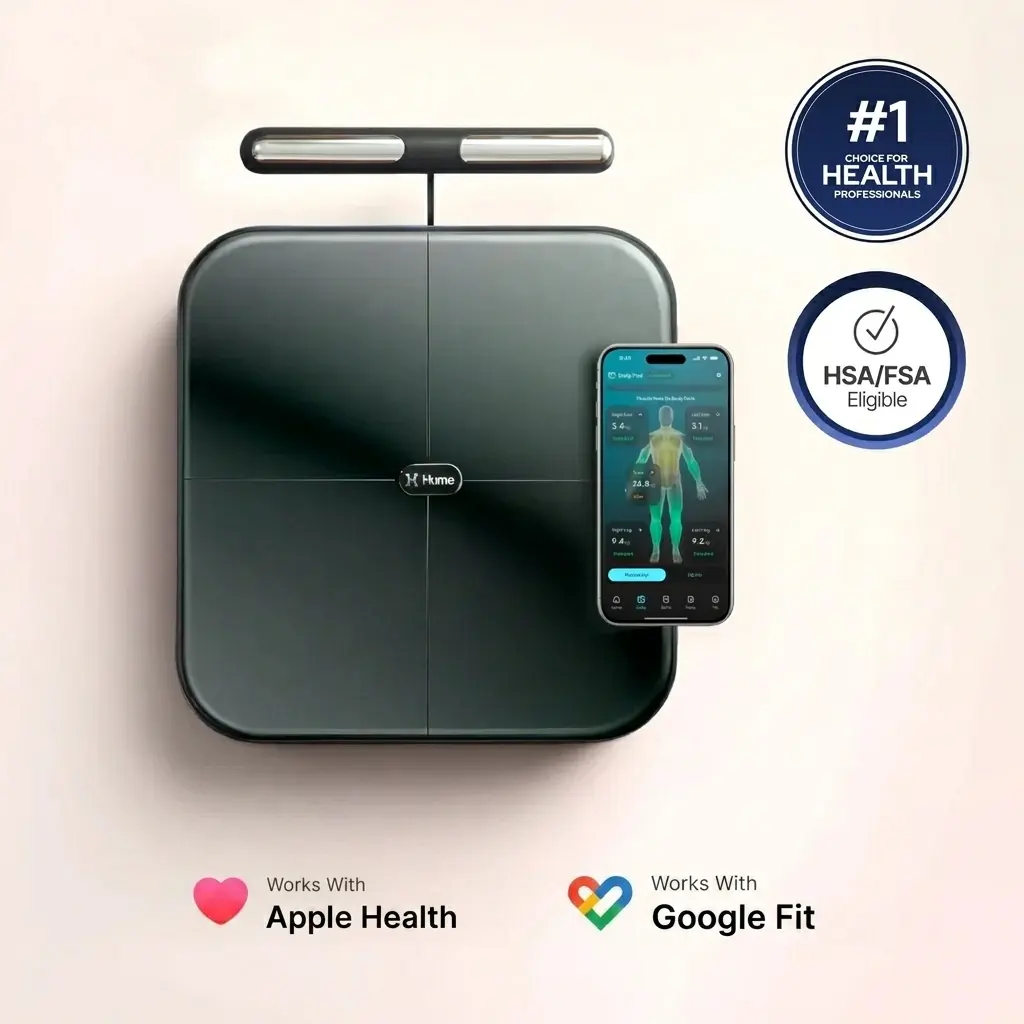
Hume Health sells this device as “The Hume Pod,” and markets it as having “98% DEXA-level accuracy” across 45 body composition metrics. The supporting claim on the official product page is that an independent laboratory, Socotech, tested the device against DEXA.
A headline number from a brand page is a starting point, not the whole answer. What tells you whether the device will do the job you want is the published research on the technology behind it, which is what the rest of this guide covers.
What Independent Research Says About Home Bioimpedance
The Body Pod uses multi-frequency segmental bioelectrical impedance analysis, usually shortened to BIA. It sends a small current through the body and estimates fat, muscle and water from how that current is slowed down. DEXA, by contrast, images the tissue directly with low-dose X-ray, which is why it is the reference standard.
Two findings from the literature tell you what to expect. They apply to the Hume Pod the same way they apply to every other multi-frequency scale in this price range.
The absolute number tends to sit a few points away from DEXA. A 2024 study in Frontiers in Nutrition tested a multi-frequency BIA system against DEXA and found it underestimated body fat percentage by roughly 3 to 4 points while overestimating fat-free mass. The same study found the device’s reliability from one measurement to the next was near perfect, with intraclass correlations above 0.99.
How far off it is depends on who you are. A trial published in PLOS ONE in 2013 measured 189 adults aged 41 to 74 with both methods. Bioimpedance read about 4.6 percentage points below DEXA in the men and 5.1 points below in the women, and the range across individuals was wide, from roughly 2 points in one direction to 13 in the other. When the same people were measured again six months later, both methods agreed on the direction of the change.
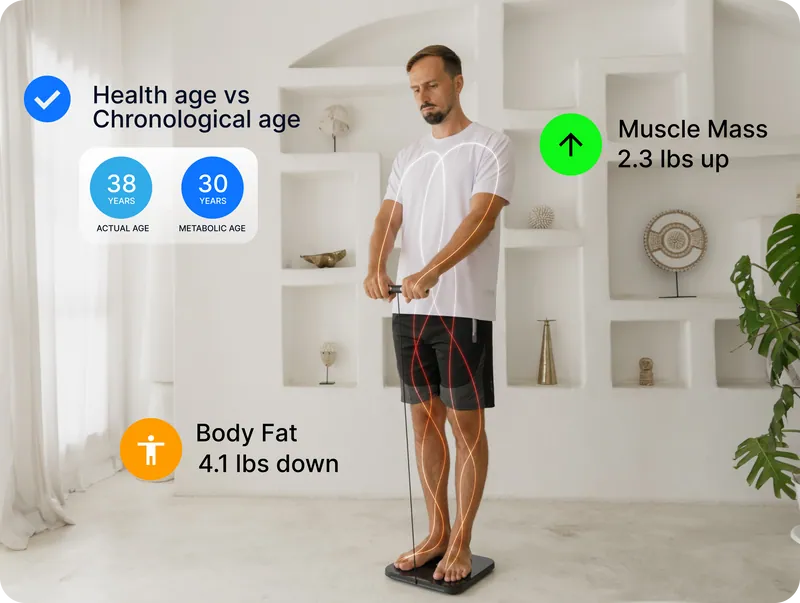
Put those together and you get the honest summary: the offset is real, it is personal to you, and it is consistent. A consistent offset cancels itself out the moment you start comparing your own readings to each other instead of to a clinic.
Is It Accurate Enough for What You Want to Do?
Accuracy is not one question, it is four. Here is where a device like this holds up and where it does not.
| What you want | Is the Body Pod up to it? |
|---|---|
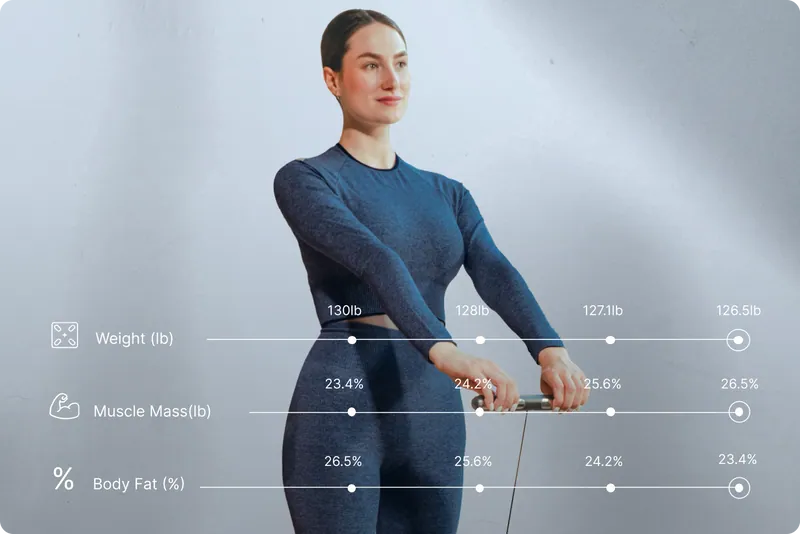
| See whether body fat is trending down over 8 to 12 weeks | Yes. This is the job it does well. |
| Check you are holding muscle while losing weight, including on GLP-1 medication | Yes, with the same caveat. Watch the trend line, not the daily figure. |
| Know your true body fat percentage to the decimal | No. Expect a gap of several points against DEXA. |
| Produce a number for a medical decision | No. That is what a clinical scan is for. |
If your goal is one of the first two, a home device is the right tool and a scan is overkill. If it is one of the last two, no consumer scale on the market will satisfy you, and that is true of every brand in this category, not just this one.
See the Hume Body Pod on the official store →
How to Stop Your Own Readings From Drifting
Most of the variation people blame on the device comes from how the measurement was taken. Bioimpedance follows water, so anything that moves your hydration moves the reading.
- Measure first thing in the morning, after the bathroom, before food, drink and exercise.
- Bare feet, dry, every time. Damp skin changes conductivity.
- Same day of the week, same cadence, once or twice weekly rather than daily.
- Read the 30 day line, not the morning number.
We wrote a full guide on this: why your smart scale body fat reading looks wrong, and a wider comparison of home body composition devices against DEXA.
Do You Need the Hume Plus Subscription?
No. Hume states on the product page that the app is free and that a premium subscription is not required to use the scale. The premium tier exists for coaching and deeper personalised insight, and it is optional.
This matters more than it sounds, because the main competitor in this price range ties some of its features to a paid plan. If you buy the Pod and never pay another cent, you still get the metrics and the trend history in the app.
Body Pod or a DEXA Scan: Where Should Your Money Go?
A DEXA scan gives you the most accurate snapshot available outside a research lab, and you pay for each one, book it, and travel to it. A home device gives you a slightly offset number that you can take as often as you like, at no extra cost, in your own bathroom.
For most adults over 40, the useful pattern is both: one scan to set an honest baseline if you want it, then a home device to watch the line between scans. If you only want one, pick the one that matches your goal, using the table above.
The Verdict
The Hume Body Pod is accurate in the way this category is accurate: dependable for change, approximate for absolutes. The “98% DEXA accuracy” headline is the brand’s shorthand, and the fair way to judge the device is by the job it is for. On that test the technology holds up, and Hume backs the purchase with a 45-day return window, which is longer than most of the category.
If you want the full breakdown of the device itself, the app, the metrics and the price, read our Hume Body Pod review, or see how it lines up against the alternatives in Hume Body Pod vs Withings Body Scan 2 vs InBody. For the bigger picture, start with our guide to body composition after 40.
Check the current price and 45-day return terms →
Frequently Asked Questions
Is the Hume Pod accurate?
It is accurate for tracking change and approximate for absolute values. Hume cites third-party testing placing it within 2 percent of DEXA. Published research on multi-frequency bioimpedance more commonly finds a 3 to 5 percentage point gap against DEXA, alongside very high repeatability, which is why the trend is the part you can rely on.
Is the Hume Body Pod as accurate as a DEXA scan?
No, and no consumer scale is. DEXA images tissue directly, while the Pod estimates it from electrical resistance. Expect your Pod reading to sit a few percentage points away from a scan, in the same direction each time.
Is the Hume Pod reliable for tracking progress?
Yes. In validation work on this class of device, repeatability between measurements is excellent, with intraclass correlations above 0.99 reported in a 2024 Frontiers in Nutrition study. A consistent offset does not interfere with seeing whether your body fat is falling and your muscle is holding.
Is the Hume Body Pod accurate for women?
The gap differs by person rather than being a flaw specific to women. In a 2013 PLOS ONE trial of 189 adults, bioimpedance read about 5.1 percentage points below DEXA in women and 4.6 points below in men, with a wide range between individuals. Both sexes saw the two methods agree on the direction of change six months later.
Do I need to pay for a Hume subscription?
No. Hume states that the app is free and that a premium subscription is not required to use the scale. The paid tier adds coaching and deeper insights and is optional.
Why does my Hume reading change from day to day?
Because bioimpedance follows body water, and hydration shifts with sleep, food, salt, alcohol and exercise. Measure every time under identical conditions, first thing in the morning on dry bare feet, and judge the month rather than the morning.
About the author: Richard Hale is an independent health writer focused on mobility, joint health and active aging research. He is not a licensed medical professional. All content on VitalMove40 is for educational purposes only and is not a substitute for advice from a qualified healthcare provider.