Last updated: September 22, 2026 | By Richard Hale
If your smart scale body fat reading looks too high, too low, or jumps several points from one day to the next, it is usually behaving exactly as designed. A bioelectrical impedance (BIA) scale estimates body fat from body water, which shifts through the day, and it fills in the rest of the calculation with your age, height, and sex. The number is a few points off a lab measurement by design. It is a trend tool, not a truth machine.
This guide explains the common reasons a reading seems off, when to trust it anyway, and when the scale genuinely cannot give you a useful answer.
How a Smart Scale Gets the Number
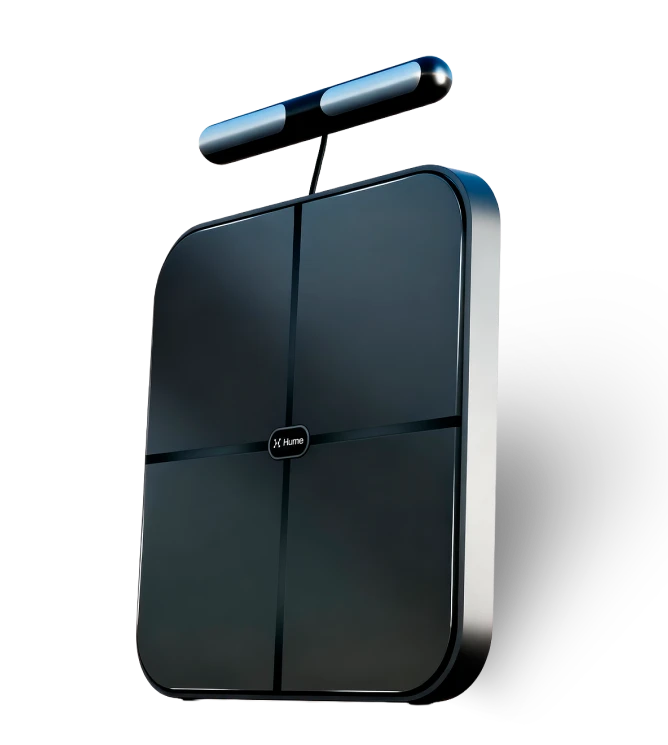
A BIA scale sends a small, imperceptible current through your body. Muscle holds a lot of water and conducts the current well; fat holds little and resists it. The scale measures that resistance, then runs it through an equation that also includes your weight, height, age, and sex to estimate fat mass, lean mass, and body water.
Two things follow from this. First, anything that changes your body water, hydration, food, alcohol, exercise, room temperature, changes the reading without any real change in fat. Second, because the formula leans on population averages, it fits some people better than others. Very muscular and very lean bodies, and older adults with less limb muscle, tend to get the least accurate absolute numbers.
“My Reading Is Way Higher Than I Expected”
Common reasons a smart scale reads high:
- Foot-only scale plus muscular or long legs. A four-electrode foot scale measures through the lower body and extrapolates the rest. If your legs are not representative of your whole body, the estimate skews.
- Cold feet or a cold room. Cool skin raises impedance, which the scale can read as more fat.
- Evening measurement. Fluid pools in the legs through the day, changing the reading versus a morning baseline.
- Dry skin or heavy calluses on the soles, which weaken contact with the electrodes.
- Recent low-carb eating. Lower glycogen stores mean less stored water in muscle, which can nudge the fat estimate up.
“My Reading Is Way Lower Than I Expected”
- Warm room or just out of a hot shower. Warm skin lowers impedance, which reads as less fat.
- Measured right after eating or drinking, when body water is temporarily higher.
- Straight after a workout, when fluid has shifted into the muscles you trained.
- An “athlete mode” in the app applying a different equation than the standard one.
“It Jumps 3 to 5 Points Day to Day”
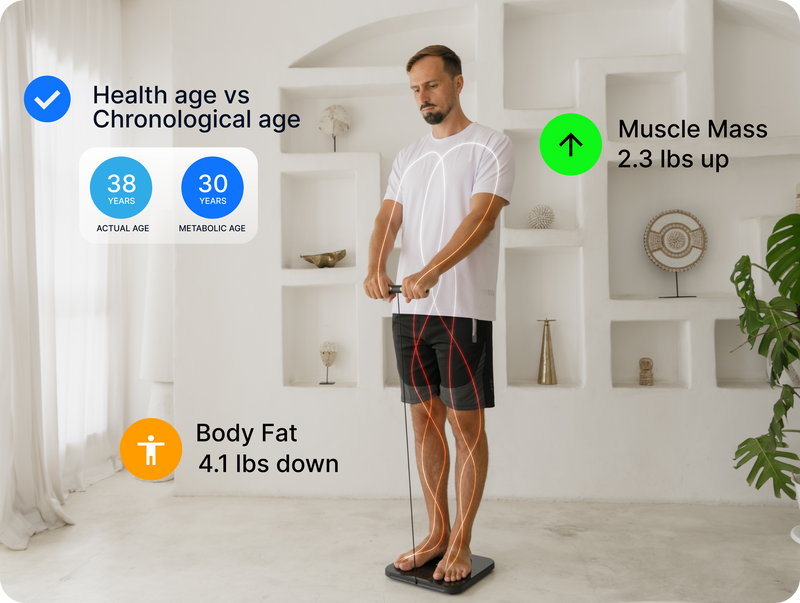
Day-to-day swings of a few points are normal and almost always hydration, not fat. The usual triggers: a salty meal the night before, alcohol, a hard training session, the point in the menstrual cycle, dehydration, or an illness coming on. None of these represents real body composition change, which happens slowly over weeks.
This is the key thing about BIA. A 2024 study in Frontiers in Nutrition found a multi-frequency device read body fat around 4 percent lower than a DEXA scan on average, but with near-perfect test-retest reliability. In plain terms: the number may be a few points off the truth, but it is very consistent from reading to reading when conditions are held constant. That is what makes the trend trustworthy even when the single figure is not.
“My Weight Is the Same but Body Fat Changed a Lot”
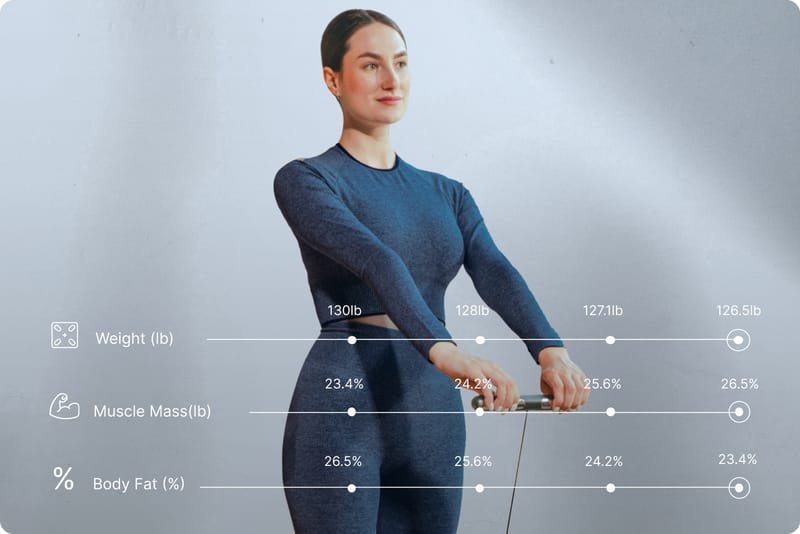
This is the formula responding to a shift in impedance or body water, not evidence that you gained or lost fat overnight. If you drank less water, ate less salt, trained hard, or measured at a different time, the body water term in the equation changes and the fat estimate moves with it, even though the scale weight barely budged. Real recomposition, losing fat while holding or gaining muscle at a stable weight, takes 8 to 12 weeks to show clearly.
When to Trust It
- Measure under identical conditions: first thing in the morning, after the bathroom, before food, drink, and exercise, bare dry feet.
- Use a fixed cadence, once or twice a week, and read the 30-day trend line rather than the daily number.
- Trust the direction, not the absolute. A reading that moves steadily the way you want over a month is real information; the exact percentage is not.
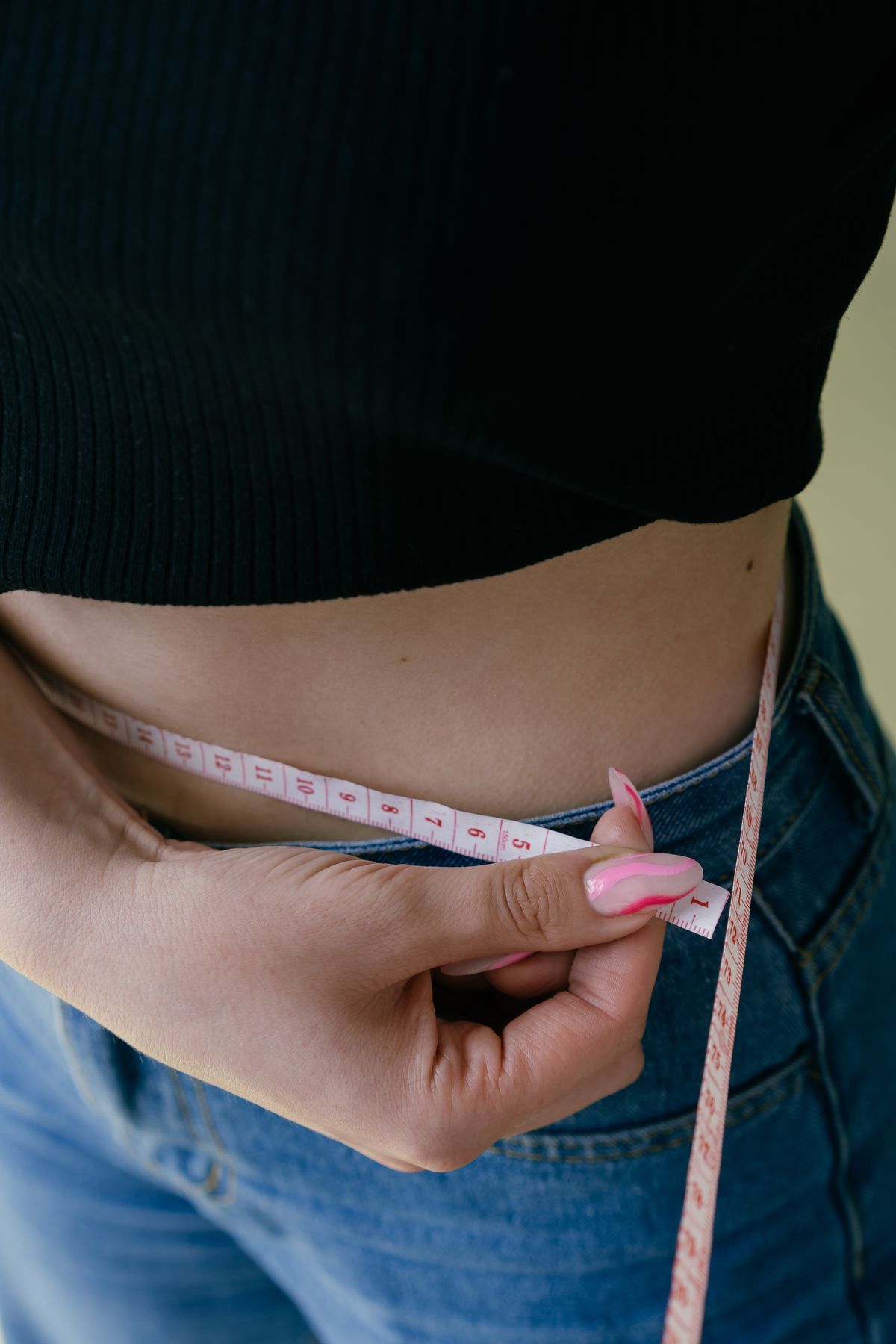
- Cross-check with a monthly waist measurement and progress photos in the same lighting. If all three agree, the scale is doing its job.
- If you need one accurate absolute number, get a DEXA scan to set a baseline, then go back to the scale for the trend. See our guide to home body composition devices vs a DEXA scan.
When the Scale Genuinely Cannot Help You
BIA is unreliable or unsafe in some situations:
- Pacemakers and other implanted electronic devices. Do not use a BIA scale; the current is contraindicated. Check with your doctor.
- Pregnancy, where body water changes make the estimate meaningless.
- Significant fluid retention from heart, kidney, or liver conditions, or noticeable swelling in the legs.
- Dialysis, where fluid status swings dramatically around treatment.
- Very high or very low BMI, where the population equations fit worst.
- Limb amputation, which the standard whole-body model does not account for.
For the full picture on measuring at home, see our step-by-step guide to how to measure body composition at home and our Hume Body Pod review for the device we recommend to adults over 40 who want this at home.
“Is It Different for Women, or If I Am Already Lean?”
Short answer: yes, and knowing by how much takes the panic out of the number. A 2013 PLOS ONE trial measured 189 adults aged 41 to 74 with both a bioimpedance device and a DEXA scan. The bioimpedance reading landed about 5.1 percentage points below DEXA in the women and 4.6 points below in the men, and the spread between individuals was wide, from roughly 2 points one way to 13 points the other.
So a reading that sits several points away from what a clinic would tell you is normal behaviour for this type of device, not a defect. What made the data useful in that trial is that when the same people were measured again six months later, both methods agreed on the direction of the change.
If you are lean, the disagreement tends to be larger, because there is less fat for the current to detect and the device leans harder on its built-in formula. Same rule applies: measure at the same time of day, under the same conditions, and read the month, not the morning.
Frequently Asked Questions
Why is my smart scale body fat reading so high?
Usually a mix of measurement conditions and formula fit: a cold room, evening measurement, a foot-only scale that does not match your build, dry or callused soles, or recent low-carb eating that reduced stored muscle water. Multi-frequency scales that also use hand electrodes tend to read more accurately than foot-only models. Compare a morning reading under consistent conditions before concluding the number is truly high.
Why does my body fat percentage change every day on my scale?
Because BIA estimates fat from body water, and body water shifts daily with food, salt, alcohol, exercise, hydration, and the menstrual cycle. Swings of three to five points day to day are normal and do not reflect real fat change. Read the weekly or monthly trend, not the daily figure.
Are smart scale body fat readings accurate?
They are accurate enough to track your own trend and not accurate enough to give a true absolute number. Research shows multi-frequency BIA can be a few points off a DEXA scan while still being highly consistent from reading to reading. Keep conditions identical each time and trust the direction of change rather than the exact percentage.
Should I measure body fat in the morning or evening?
Morning, before eating, drinking, or exercising, and after using the bathroom. Fluid pools in the legs through the day and food and drink raise body water, so evening readings differ from morning ones on the same person. Whichever time you pick, use it every session.
Why did my body fat go up when my weight stayed the same?
The scale’s equation responded to a change in body water or impedance, not to real fat gain. Drinking less, eating less salt, training hard, or measuring at a different time all shift the body water term and move the fat estimate even when scale weight is unchanged. Genuine recomposition at a stable weight takes months to show.
Is a smart scale body fat reading accurate for women?
It is accurate enough to track change, not to give a clinical number. In a 2013 PLOS ONE trial, bioimpedance read about 5.1 percentage points below a DEXA scan in women (4.6 points in men), with a wide range between individuals. Both methods agreed on the direction of change six months later, so the trend is the part you can act on.
Why is my reading so far from my DEXA scan?
A gap of several percentage points between a home device and a DEXA scan is expected, and it is larger for leaner people. The home device estimates fat from electrical resistance and fills the rest in with a formula, while DEXA images the tissue directly. Keep using the same device under the same conditions and compare it against itself.
About the Author
Richard Hale writes about mobility, recovery, and evidence-based wellness strategies for adults over 40 at VitalMove40. He is an independent health writer, not a licensed medical professional. Content is educational and not a substitute for advice from a qualified healthcare provider.