
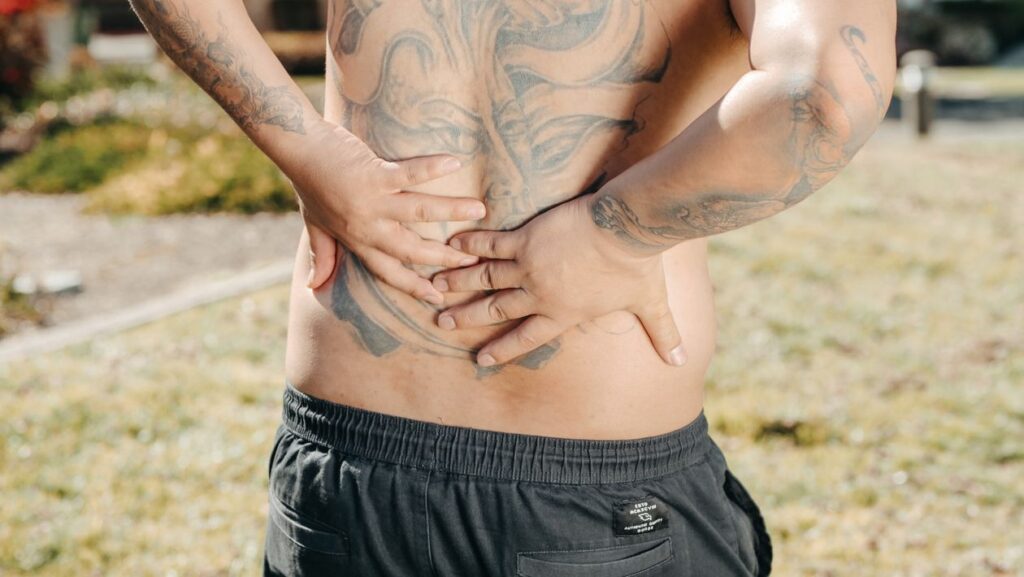
Lower Back Pain After 40: Causes, Exercises and Real Solutions
Lower back pain after 40 most commonly comes from disc degeneration, weakened core muscles and accumulated posture strain. The good news: for 90% of people, targeted exercises, movement habits and the right support tools resolve it without surgery.
At some point in your 40s, your back stops feeling like an afterthought and starts demanding attention. Maybe it is the morning stiffness that takes 20 minutes to shake off. Maybe it is the dull ache after sitting through a long meeting, or the sharp catch when you bend to pick something up off the floor.
You are not imagining it. Lower back pain genuinely becomes more common after 40, and there are specific biological reasons for that. Understanding them is the first step toward addressing the problem rather than just managing flare-ups.
Why Lower Back Pain Increases After 40
The lumbar spine bears most of the body’s load throughout the day. Between each vertebra sits an intervertebral disc, a structure made of a tough outer ring (annulus fibrosus) and a gel-like center (nucleus pulposus) that absorbs impact and allows movement.
After 40, several things change simultaneously:
Disc Dehydration and Height Loss
Discs are about 80% water at birth. By your 40s, they begin losing water content. This reduces their height and cushioning ability. The spine compresses slightly, nerve exits narrow, and the discs become more prone to tears and herniations under load. This process is called degenerative disc disease, though the word “disease” is misleading since it is a normal aging change, not a pathology in most people.
Core Muscle Decline
The multifidus and transverse abdominis are the deep stabilizers of the lumbar spine. Research shows these muscles begin to atrophy with age, and the process accelerates when back pain first occurs. The brain essentially “turns off” the multifidus during a pain episode as a protective response, but the muscle does not automatically turn back on when pain resolves. This is why back pain tends to recur: the root weakness persists.
Hip Flexor Tightness
Tight hip flexors pull the pelvis into an anterior tilt (forward rotation), which increases the lumbar curve and loads the facet joints in the lower back. After decades of sitting, most adults over 40 have significant hip flexor tightness without realizing it. You can test this with the Thomas test: lie on your back, pull one knee to your chest. If the opposite leg rises off the table, your hip flexors on that side are tight.
Reduced Posterior Chain Strength
The glutes, hamstrings and erector spinae work together to support the lower back during movement. As these muscles weaken with age and reduced activity, the lower back muscles compensate by working harder, leading to faster fatigue and strain.
Common Causes by Type
| Cause | Typical Pattern | Age 40+ Prevalence |
|---|---|---|
| Muscle strain / spasm | Sudden onset, improves in days to weeks | Very common |
| Disc degeneration | Chronic ache, stiffness, worse sitting | Common (radiographic changes in 40% at 40) |
| Disc herniation | Pain radiating to leg, worse with flexion | Common (L4/L5 and L5/S1 most affected) |
| Facet joint arthritis | Stiffness in morning, worse with extension | Increases from 40 onward |
| Spinal stenosis | Leg heaviness or numbness when walking, relieved by sitting | More common after 50 |
| Sacroiliac dysfunction | One-sided lower back or buttock pain | Common, especially in women |
If your pain radiates down the leg rather than staying in the lower back, that pattern points toward nerve involvement rather than a muscular or joint cause. See our dedicated guide to sciatica after 40 for what drives it and what actually helps.
The Role of Posture and Sitting
The average adult sits for 9 to 12 hours per day. In a seated position, disc pressure in the lumbar spine is about 40% higher than standing. Over years, this sustained compression damages the discs and trains the surrounding muscles to remain in a shortened or lengthened position, depending on where in the kinetic chain they sit.
You cannot always fix the chair you are stuck with, but you can change what you sit on. A contoured cushion with a tailbone cutout offloads the coccyx and cues a more upright pelvis, which reduces how much the lower back rounds through a long sitting day. Our Hewelth LumboCare Pro review covers one seat-and-back cushion of that type and where it does and does not help.
Poor posture does not mean “you slouch.” It means your body has adapted to the posture you repeat most. A forward head position, rounded thoracic spine and flattened lumbar curve are common desk-sitting patterns that progressively load the lower back unevenly.
Corrective tools can interrupt these patterns. The Wellaback Posture Corrector and the True Form Posture Corrector work by providing haptic and mechanical cues that remind you to adjust alignment. They are most useful during the learning phase of retraining posture, not as permanent supports.
Evidence-Based Exercises for Lower Back Pain
Research consistently shows that active rehabilitation outperforms passive rest for lower back pain. A 2021 Cochrane review found that exercise therapy reduced chronic lower back pain by 10 to 20 points on a 100-point pain scale versus no treatment, with effects sustained at 12 months.
The following 6 exercises are low-risk, evidence-based and appropriate for most adults over 40. They target the multifidus, transverse abdominis, glutes and hip flexors.
1. Pelvic Tilt
Lie on your back with knees bent. Gently flatten your lower back against the floor by tightening your abdominals. Hold 5 seconds, release. 3 sets of 10 repetitions. This activates the transverse abdominis without loading the spine.
2. Dead Bug
Lie on your back, arms pointing to the ceiling, hips and knees at 90 degrees. Slowly lower your right arm and left leg toward the floor while keeping your lower back pressed down. Return and switch sides. 3 sets of 8 per side. Excellent multifidus and deep core activator.
3. Bird Dog
From hands and knees, extend your right arm and left leg simultaneously, keeping your spine neutral and hips level. Hold 5 seconds, return. 3 sets of 8 per side. One of the best-researched exercises for lumbar stabilization.
4. Glute Bridge
Lie on your back, knees bent, feet flat. Push through your heels to lift your hips until your body forms a straight line from shoulders to knees. Squeeze glutes at the top. 3 sets of 12. Strengthens glutes and reduces the load transferred to the lumbar spine during movement.
5. Hip Flexor Stretch (Kneeling Lunge)
Kneel on your right knee with left foot forward. Push your hips forward gently until you feel a stretch in the front of your right hip. Hold 30 seconds per side, 3 times. Essential for releasing anterior pelvic tilt.
6. Thoracic Extension on Foam Roller
Place a foam roller under your mid-back (not the lower back). Let your head drop back gently. This opens the thoracic spine and reduces the compensatory overload on the lower back. 60 to 90 seconds daily.
Important: If any exercise causes radiating pain down the leg or worsens symptoms, stop and consult a physical therapist. These exercises are appropriate for non-specific lower back pain, not for acute disc herniations or fractures.
The Sleep Factor
Sleep quality directly affects back pain. During deep sleep, the discs rehydrate (they lose fluid during the day through compression and regain it overnight when load is reduced). Poor sleep disrupts this cycle and also lowers the pain threshold through its effect on the central nervous system.
Your sleep surface matters. A medium-firm mattress is generally recommended for lower back pain, with a pillow between the knees if you sleep on your side, or under the knees if you sleep on your back. A poor pillow that keeps your neck at an angle also creates a chain reaction of tension down to the lumbar spine. The right cervical pillow, like those reviewed in our sleep support content, can reduce this cascade.
Support Tools: When They Help, When They Don’t
Back braces and support devices are appropriate in two contexts: acute injury (reducing movement during the first days to allow tissue healing) and prolonged physical tasks (like lifting or standing for hours). Used outside these contexts, braces reduce the workload on supporting muscles and can lead to further weakness.
The Back Restore device offers an alternative approach: passive lumbar decompression, allowing the spine to lengthen and disc pressure to reduce over 10 to 15 minute sessions. This is a recovery tool, not a substitute for strengthening.
For sleeping support, the Melara Max Pillow is designed to maintain cervical alignment that prevents the tension chain from building overnight.
What the Research Says About Long-Term Management
A landmark 2016 study published in The Lancet (the Global Burden of Disease report on low back pain) identified lower back pain as the leading cause of disability worldwide. It also found that the vast majority of chronic cases are driven not by structural damage visible on imaging, but by psychosocial factors, deconditioning and central sensitization.
This means: the disc bulge on your MRI may look alarming, but it is often not the primary driver of your pain. Many people have disc bulges on imaging with zero symptoms. The approach that produces the best long-term outcomes combines targeted exercise, sleep optimization, ergonomic adjustments and sometimes brief courses of manual therapy or physical therapy.
Anti-inflammatory nutrition also plays a role. Omega-3 fatty acids reduce systemic inflammation that can amplify musculoskeletal pain signals. See our guide on omega-3 and joint inflammation for dosage evidence.
Red Flags to Watch For
Most lower back pain is benign and resolves with the strategies above. However, some patterns require prompt medical evaluation:
- Pain radiating below the knee (sciatic nerve involvement)
- Numbness or weakness in the leg or foot
- Loss of bladder or bowel control (rare but emergency)
- Pain that wakes you from sleep consistently
- Night sweats, fever or unexplained weight loss alongside back pain
- Pain following a fall or car accident
Frequently Asked Questions
Why does lower back pain get worse after 40?
After 40, intervertebral discs lose water content and height, reducing their shock-absorbing capacity. Muscle mass declines (sarcopenia), core muscles weaken, and decades of posture habits compound. Hormonal changes in women around menopause also lower pain threshold and affect connective tissue.
What is the fastest way to relieve lower back pain?
For acute flare-ups, ice for the first 48 hours (20 minutes on, 40 off), then heat. Gentle movement like walking outperforms bed rest. Over-the-counter NSAIDs reduce inflammation. For ongoing relief, strengthening the core and hip flexors over 6 to 8 weeks is the most evidence-based approach.
Is walking good for lower back pain?
Yes. Walking is one of the best activities for lower back pain. It activates the erector spinae and multifidus muscles, promotes disc nutrition through movement, and reduces stiffness without high load. Aim for 20 to 30 minutes daily at a comfortable pace.
When should I see a doctor for back pain?
See a doctor if pain radiates below the knee, if you have numbness or tingling in the legs, if pain wakes you at night consistently, if you have unexplained weight loss, or if pain follows a fall or trauma. These are red flags that need imaging.
Do posture correctors actually help lower back pain?
Posture correctors can reduce muscle fatigue during long sitting or standing sessions by providing external cue and light support. They work best when combined with strengthening exercises. Used alone without strengthening, they can create dependency and weaken postural muscles over time.
What exercises should I avoid with lower back pain?
Avoid sit-ups and crunches, which create high disc pressure. Double leg raises, heavy deadlifts with poor form, and toe touches with rounded spine should also be skipped during a flare. Once pain subsides, gradually reintroduce deadlifts with a neutral spine and proper coaching.