

Affiliate Disclosure: VitalMove40 earns a commission from purchases made through affiliate links on this page, at no extra cost to you. See our full Affiliate Disclosure Policy.
Last updated: August 12, 2026 | By Richard Hale
The Melara Max is a cervical support pillow designed for people who wake up with neck stiffness, upper back tension, or interrupted sleep from positional discomfort. If you consistently wake up feeling less rested than when you went to bed, and standard pillows have not solved it, this review covers what the Melara Max offers, who it is designed for, and what to realistically expect from it.
This content is for educational purposes only and is not medical advice. Persistent neck pain or sleep disruption should be evaluated by a healthcare provider.

Table of Contents
- Who the Melara Max Is For
- Design and Materials
- How Cervical Support Works
- What It Does Well
- Considerations Before Buying
- Verdict
- Frequently Asked Questions
Who the Melara Max Is For
The Melara Max is designed for adults dealing with neck pain, shoulder tension, or upper back stiffness that is connected to their sleep position. The target user is someone who already wakes up with discomfort and suspects their pillow is contributing, either because it is too flat, too thick, or fails to maintain the neck’s natural curve through the night.
It is particularly relevant for side and back sleepers over 40, where natural changes in muscle tone and disc hydration make cervical positioning during sleep increasingly relevant to how they feel in the morning. For stomach sleepers, pillow modifications help but the position itself is the primary issue, see the guide on best sleeping positions for back and joint pain for a full breakdown.
Design and Materials
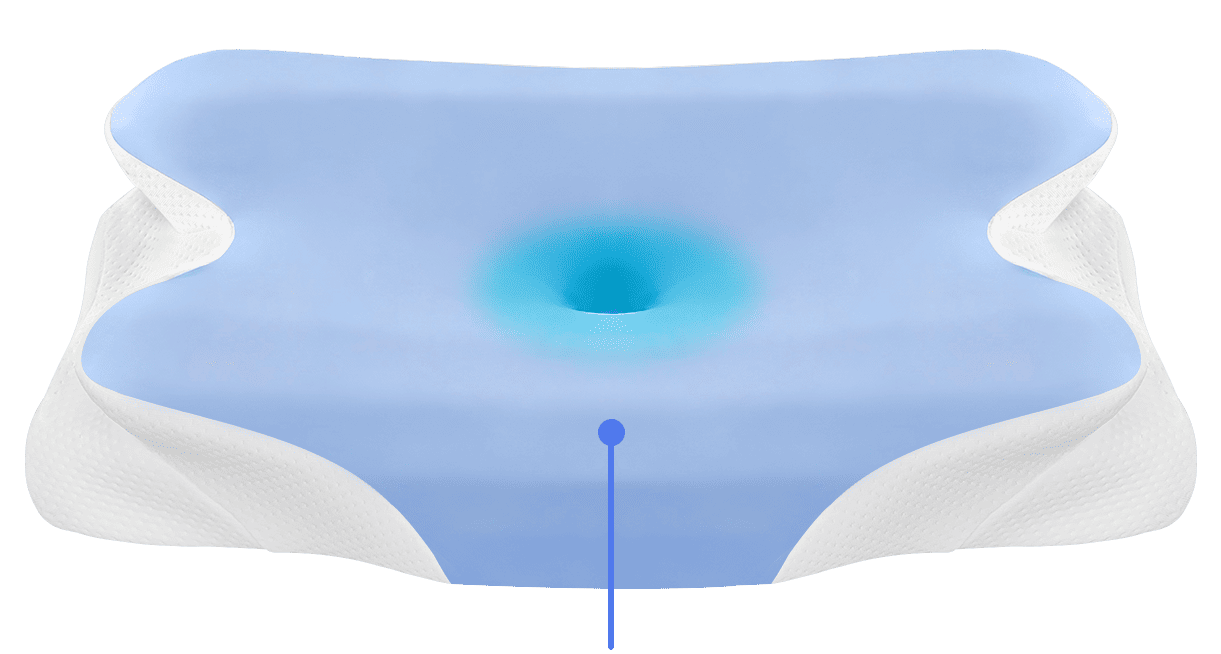
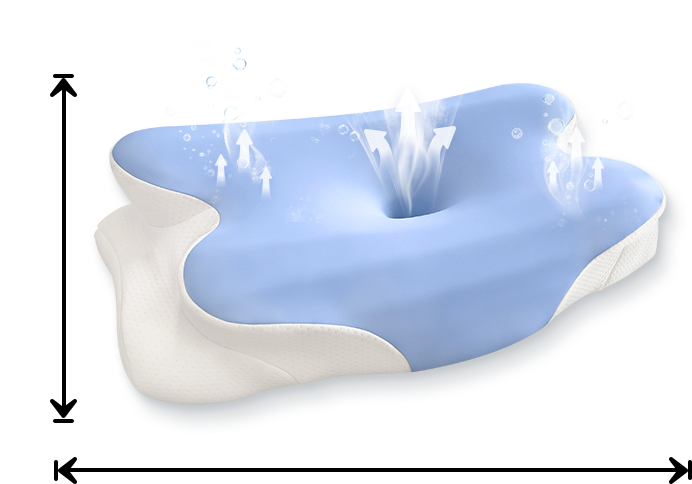
The Melara Max uses a cervical contour design, a pillow with a higher loft where the neck rests and a lower profile where the head rests. This shape is designed to fill the gap between shoulder and ear in side sleeping, and to support the natural cervical lordosis in back sleeping, without pushing the head upward or letting the neck drop into the mattress.
The fill material provides enough pressure relief to prevent the kind of pressure-point buildup that wakes some people during side sleeping, while maintaining enough support that the neck position does not drift during the night.
How Cervical Support Works
During side sleeping, the shoulder creates a gap between the neck and the mattress. If the pillow does not fill this gap at the correct height, the neck either drops toward the mattress (too thin) or is pushed upward (too thick). Both positions load the cervical spine asymmetrically through the hours of sleep, which produces the stiffness and tension that many people attribute to “sleeping on it wrong.”

For back sleeping, the cervical spine has a natural inward curve (lordosis). A standard flat pillow pushes the chin toward the chest, straightening this curve. A cervical contour pillow supports the curve rather than flattening it, which reduces loading on the facet joints and intervertebral discs of the cervical spine during the hours of back sleeping.
What It Does Well
For people whose neck and upper back stiffness is genuinely driven by poor pillow support during side or back sleeping, a cervical contour pillow addresses the mechanical cause. The improvement in the morning can be significant, less neck tightness, less upper trapezius tension, and better actual sleep quality from fewer position changes during the night.
The Melara Max is designed for durability, it does not flatten or lose shape in the way that standard polyester-fill pillows do after a few months, which is relevant because a pillow that provided the right height when new but compresses to a different loft six months later is no longer doing the same job.
Considerations Before Buying
Pillow height varies by body type. The gap between shoulder and ear in side sleeping varies with shoulder width. Broader shoulders require more height; narrower shoulders require less. Cervical contour pillows work well when the contour height matches the wearer’s shoulder-to-ear gap, a mismatch still produces neck loading even with an ergonomic design.
Adjustment period. Switching to a cervical support pillow after years of standard pillows requires an adjustment period of one to two weeks. Initial discomfort from a new position is normal. If discomfort persists beyond two weeks, the pillow height may not match your needs.
Sleep position matters too. A cervical pillow addresses the support component of neck positioning during sleep, but it cannot compensate for a sleep position that is itself a driver of neck pain. Stomach sleeping with any pillow design is hard to fix at the pillow level.
Verdict
For side and back sleepers dealing with neck stiffness and upper back tension, the Melara Max addresses a real mechanical cause with a well-designed cervical support approach. If your current pillow is contributing to morning neck pain, a cervical contour pillow is a reasonable and relatively low-cost intervention to try before seeking other solutions.
The key is ensuring the pillow height matches your shoulder width, this determines whether the cervical contour works for your anatomy or simply creates a different misalignment.
Check current price and availability →
Pros and Cons at a Glance
| Pros | Cons |
|---|---|
| Contoured shape maintains cervical spine neutral alignment during sleep | 1-2 week adjustment period is normal but some find it uncomfortable initially |
| Reduces morning neck stiffness associated with poor sleep positioning | Pillow height and firmness may not match all body proportions, particularly shorter or taller adults |
| Suited to both back and side sleepers | Stomach sleepers should avoid cervical pillows entirely, increases cervical strain in this position |
| Addresses a mechanical cause of neck pain that standard flat pillows ignore | Not a medical device and does not treat diagnosed cervical conditions such as disc herniation |
| Available across US, UK, Europe, Australia, and Canada |
Frequently Asked Questions
What is the best pillow for neck pain?
For side sleepers, a pillow that fills the gap between ear and shoulder at the correct height for their shoulder width, typically a medium to firm memory foam or latex pillow. For back sleepers, a lower-profile cervical contour pillow that supports the natural cervical curve without pushing the chin forward. The “best” pillow is always the one that keeps the cervical spine in neutral alignment for your specific body dimensions and sleep position.
How long does it take to get used to a cervical pillow?
Most people need one to two weeks to adjust to a cervical contour pillow after sleeping on standard pillows. Initial stiffness or unusual pressure is common and typically resolves as the body adapts to the new position. If discomfort persists past two weeks or worsens, the pillow height may not match your anatomy.
Can a pillow cause shoulder pain?
Yes. In side sleeping, a pillow that is too firm or too thick can push the head upward, which creates lateral flexion stress on the cervical spine and can refer tension into the shoulder. A pillow that is too soft causes the head to drop, which does the same through the opposite mechanism. Both produce shoulder tension that people often attribute to other causes.
Does pillow fill material matter for neck pain?
Fill material affects how well a pillow maintains its height and support through the night. Memory foam and latex maintain their loft consistently; standard polyester fill compresses over months and changes the effective support height. For cervical support specifically, a fill that holds its shape reliably through the night and across months of use is more important than feel preference.
About the author: Richard Hale is an independent health writer focused on mobility, joint health, and active aging research. He is not a licensed medical professional. All content on VitalMove40 is for educational purposes only and is not a substitute for advice from a qualified healthcare provider.