Affiliate Disclosure: VitalMove40 earns a commission from purchases made through affiliate links on this page, at no extra cost to you. See our full Affiliate Disclosure Policy.
Last updated: September 10, 2026 | By Richard Hale
The WellaBack is a shoulder harness-style posture corrector aimed at adults who want to reduce the upper back and neck discomfort that builds from desk work, phone use, and years of accumulated postural habits. This review covers how the WellaBack is designed, what it can realistically deliver, who it fits best, and what to expect if you use it as intended versus using it passively.
This content is for educational purposes only and is not medical advice. For chronic back or neck pain, consult a physical therapist before using any posture corrector.
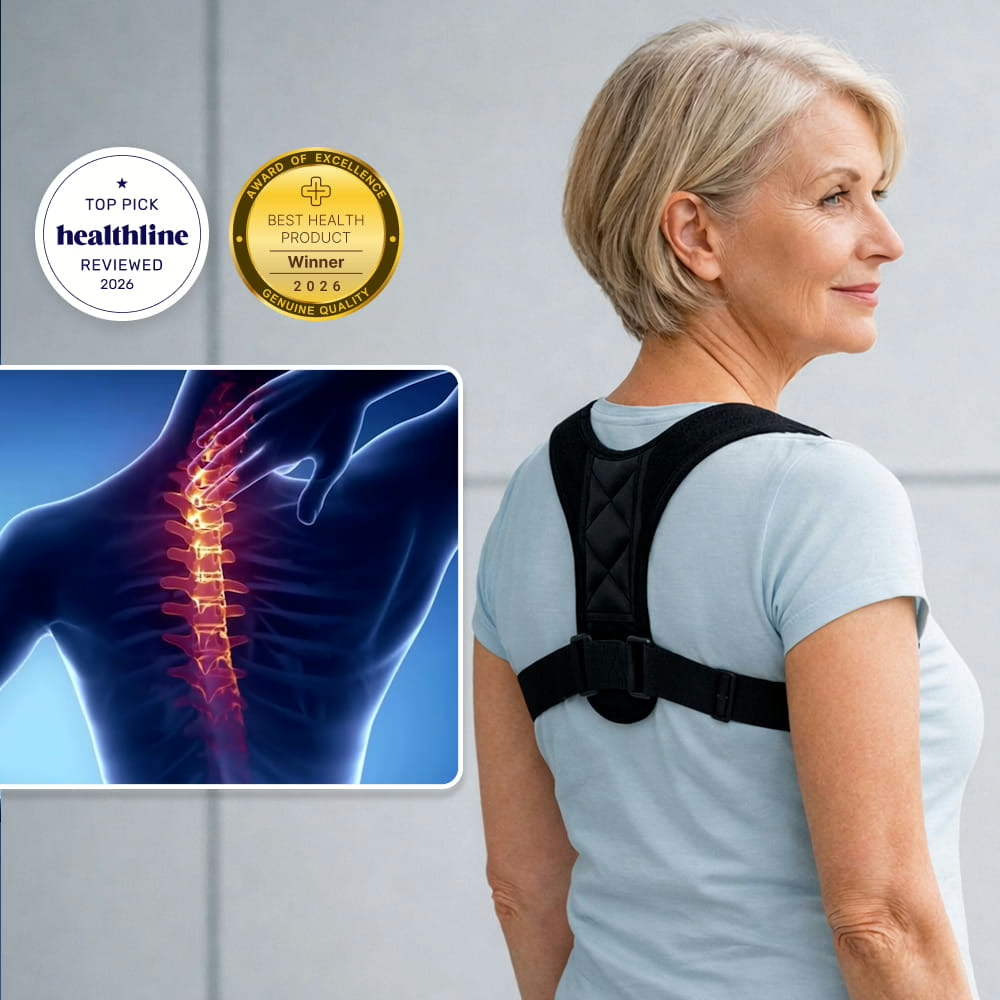
Table of Contents
- Who the WellaBack Is For
- Design and Construction
- How It Works
- What It Does Well
- Limitations to Know Before Buying
- How to Use It Effectively
- Verdict
- Frequently Asked Questions
Who the WellaBack Is For
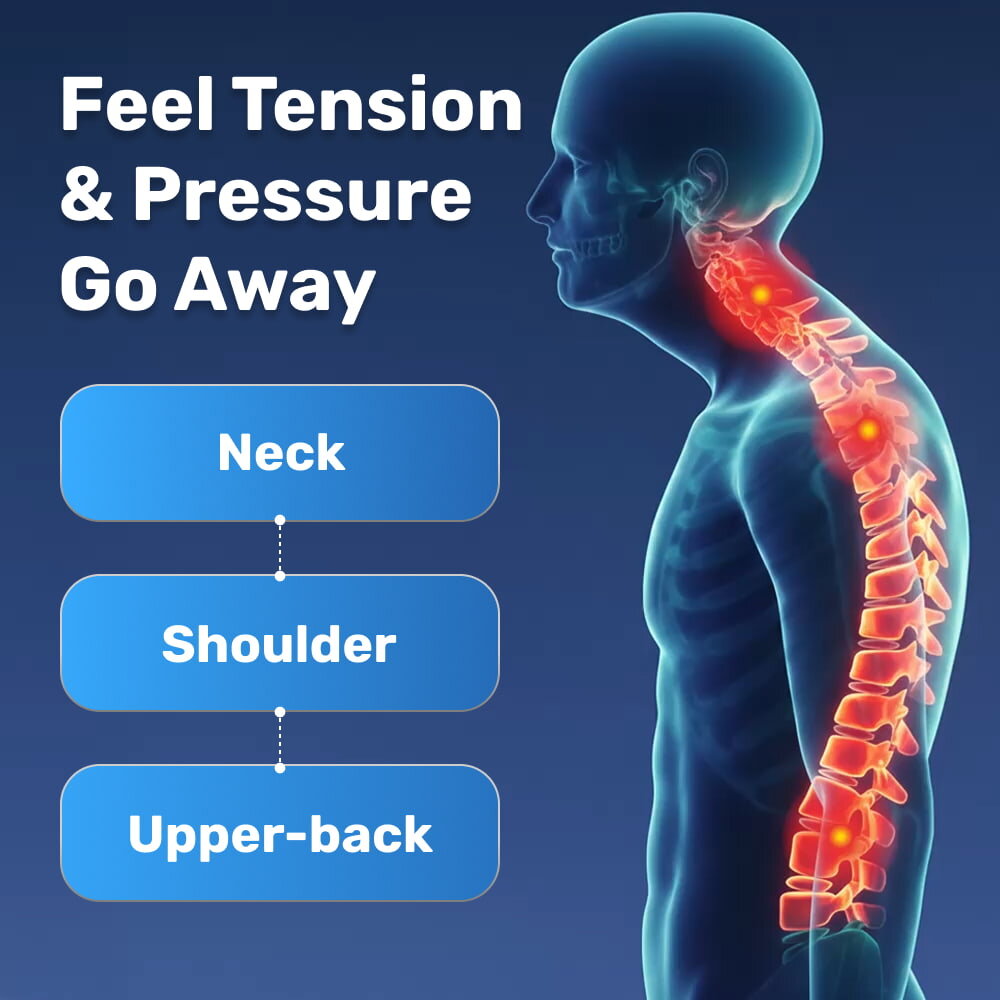
The WellaBack targets the most common postural complaint in desk workers and adults over 40: rounded shoulders and forward head posture from habitual forward-slumping. Its design, a shoulder harness that loops under the armpits and crosses the upper back, applies gentle backward tension to the shoulder girdle when you round forward, prompting a return to a more neutral position.
It is best suited for people who are already starting corrective exercises and want a proprioceptive reminder during desk work or reading. It is not suitable as a substitute for exercise, not appropriate for people with acute shoulder injuries or thoracic spine pathology, and not a structural support device for significant spinal conditions.
Design and Construction
The WellaBack uses an elastic back-cross design that runs across the upper back and over the shoulders without rigid components. The adjustment is through two shoulder straps with fasteners at the front, allowing independent adjustment of each side. The elastic material is described as washable and intended to be worn under clothing, though visibility under fitted shirts is a practical consideration.

The construction is genuinely lightweight compared to structured braces, it weighs very little and does not create the bulk that rigid alternatives do. The trade-off is that this lightness means the feedback is gentle rather than forceful, which is appropriate for its intended use as a training tool but insufficient as structural support for any meaningful load.
How It Works
When the shoulders round forward, the cross-back design creates increasing resistance and a gentle pull that prompts the wearer to move back toward a more neutral position. This is proprioceptive feedback, the device is not holding your posture for you, it is reminding you when you drift out of the position you are trying to maintain.
The WellaBack’s materials do not mechanically prevent shoulder rounding with any significant force. For the feedback mechanism to produce results, the wearer needs to be actively practicing better posture in response to the cue, not relying on the garment to hold the position.
What It Does Well
Wearability during focused tasks. For sitting at a desk, reading, or attending a meeting, the WellaBack is comfortable enough that you can wear it for 30 to 45 minutes without distraction. This is the window in which proprioceptive feedback is most useful, enough time to repeatedly practice the target position during an activity that typically drives the posture you are trying to correct.
Adjustability. The independent shoulder adjustment allows the tension to be set differently on each side, which is useful for people whose postural imbalances are asymmetric (common in people who consistently lean toward one monitor or hold a phone on one side).
Discretion under clothing. For people who want to use a corrector in a professional environment, the low-profile design works better than bulkier structured alternatives.
Limitations to Know Before Buying
It does not work passively. Putting on the WellaBack and going about your day while ignoring the cues it provides is not an effective use. The feedback mechanism requires active response to work as a training tool. People who wear it passively and expect it to produce results will be disappointed.
It does not provide structural support. For any situation where structural support matters, acute injury, significant thoracic kyphosis that limits your range of motion, or joint instability, the WellaBack’s elastic design is insufficient. A structured brace or physical therapy is appropriate for those situations.
Sizing requires care. The product is sized by chest circumference. Getting the sizing right is important, too loose and the feedback is minimal; too tight and the underarm pressure becomes uncomfortable during wear.
How to Use It Effectively
The combination that produces results with the WellaBack or any similar device:
- Begin the corrective exercises for your postural pattern before or at the same time as starting the corrector (see the posture problems after 40 guide for the specific exercises)
- Wear the WellaBack for 20 to 45 minute sessions during desk work or reading, not all day
- Actively respond to the feedback: when you feel the resistance, consciously move back to the upright position
- Reduce usage gradually over four to eight weeks as the position becomes more automatic
Verdict
The WellaBack is a reasonably designed proprioceptive training tool for adults managing rounded shoulder posture from desk work and habitual slumping. It does what it is designed to do: provide gentle feedback that prompts more upright positioning during the activities where the postural problem is being reinforced.
Its value depends almost entirely on how it is used. Combined with corrective exercise and used as a training tool, it is a practical accessory that costs less and is more wearable than most structured alternatives. Used passively as a replacement for exercise, it will produce little lasting benefit.
Check current price and availability →
Pros and Cons at a Glance
| Pros | Cons |
|---|---|
| Provides real-time proprioceptive feedback that builds postural awareness during wear | Passive tool only, postural muscles must do the work; the corrector provides feedback, not force |
| Adjustable for most body sizes, works under clothing for discrete use | Does not address forward head posture directly, chin tucks and deep neck flexor exercises are needed separately |
| Effective tool for desk workers and screen users who slump forward | Benefits reduce if worn continuously without active postural engagement |
| Complements postural exercise programmes rather than replacing them | Not a replacement for a structured postural strengthening programme |
| Wide international availability including US, UK, Europe, and Australia |
Frequently Asked Questions
How long should I wear the WellaBack each day?
Two to three sessions of 20 to 45 minutes each is more effective than wearing it all day. Short, focused sessions where you are actively responding to the feedback build postural awareness faster than continuous passive wear. Most people see the most benefit using it during the specific activities that drive their postural problems, desk work, reading, or phone use.
Can I wear the WellaBack under my shirt at work?
Yes, the design is low-profile enough to wear under most shirts and light jackets. The shoulder straps may be visible under very fitted or sheer fabrics. The material is thin enough that it does not create visible bulk under standard dress shirts or sweaters.
Will the WellaBack fix forward head posture?
Not on its own. Forward head posture is driven primarily by weak deep neck flexors and tight suboccipital muscles, the WellaBack provides shoulder-level proprioceptive feedback but does not directly address the neck muscle imbalances. For forward head posture, chin tucks and deep neck flexor strengthening are the exercises that produce direct results. The WellaBack is useful for the associated rounded shoulder pattern that often accompanies it.
How is the WellaBack different from a back brace?
A back brace provides structural support to the spinal column, it limits movement and holds position mechanically. The WellaBack provides proprioceptive feedback without structural support. It is much lighter and more wearable, but it cannot substitute for structural support in any situation where that is what is actually needed.
About the author: Richard Hale is an independent health writer focused on mobility, joint health, and active aging research. He is not a licensed medical professional. All content on VitalMove40 is for educational purposes only and is not a substitute for advice from a qualified healthcare provider.