

Last updated: July 14, 2026 | By Richard Hale
Vitamin D deficiency is more common after 40 than most people realize, and its effects on muscle function, inflammation, and pain sensitivity are more direct than the calcium-and-bone story most people learned in school. For adults with joint pain or muscle weakness, checking vitamin D status is one of the most straightforward and potentially impactful steps available.
This content is for educational purposes only and is not medical advice. Vitamin D supplementation at doses above 4,000 IU/day should be discussed with a healthcare provider, and blood level monitoring is recommended for anyone supplementing long-term.

Table of Contents
- What Vitamin D Actually Does in the Body
- Why Deficiency Is Common After 40
- What the Evidence Shows for Joint Health
- Vitamin D and Muscle Function
- Optimal Blood Levels
- How to Supplement Effectively
- Frequently Asked Questions
What Vitamin D Actually Does in the Body
Vitamin D is technically a hormone precursor rather than a traditional vitamin. It is produced in the skin from cholesterol when ultraviolet B (UVB) radiation is present, transported to the liver and then the kidneys where it is converted into its active form (calcitriol), and then acts on vitamin D receptors (VDR) found in nearly every tissue in the body, including muscle, joint cartilage, the immune system, and the nervous system.
The classical role is calcium absorption in the gut and bone mineralization, the basis of the traditional focus on vitamin D for bone health. But the discovery of VDR receptors in muscle, immune cells, and synovial tissue (the lining of joints) expanded the picture significantly. Vitamin D does not just support bones; it modulates muscle contraction efficiency, immune function, and inflammatory signaling throughout the body.
Why Deficiency Is Common After 40
Several factors compound to make vitamin D deficiency increasingly common with age:
- Reduced skin synthesis efficiency: the skin’s capacity to produce vitamin D from UV exposure declines with age, adults over 65 produce approximately 25-50% of the vitamin D from the same UV exposure as young adults
- Reduced sun exposure: indoor work and lifestyle, sun avoidance for skin protection, and reduced outdoor activity accumulate to significantly less UVB exposure in most adults over 40
- Latitude effects: at latitudes above approximately 35-40 degrees North (which includes most of the northern US, Canada, and the UK), UVB radiation is insufficient for meaningful skin synthesis from October through March, meaning northern populations rely on dietary and supplement sources for 4-6 months of the year
- Obesity and fat tissue distribution: vitamin D is fat-soluble and is sequestered in adipose tissue; higher body fat correlates with lower available vitamin D in circulation
- Reduced dietary intake: very few foods are naturally rich in vitamin D (fatty fish, egg yolks, mushrooms exposed to UV light); dietary intake alone rarely achieves adequacy without supplementation or fortified foods
Estimates of deficiency prevalence vary by the cutoff used, but multiple population studies suggest 40-70% of adults in Northern latitudes have suboptimal vitamin D levels, making it one of the most prevalent micronutrient deficiencies in the population.
What the Evidence Shows for Joint Health
The evidence connecting vitamin D status to joint health is complex, the direct mechanistic evidence is strong, but the intervention trial results are more mixed than the mechanistic data would suggest:
Osteoarthritis: observational studies consistently find lower vitamin D levels in OA patients and associations between deficiency and faster OA progression. Randomized trials have been less consistent, a large 2019 RCT (VITAL study) found vitamin D supplementation did not reduce the overall rate of OA progression. However, subgroup analyses suggest benefit in people with significant deficiency at baseline. The current interpretation: vitamin D does not appear to reverse established OA, but correcting deficiency may reduce the rate of progression and reduce associated pain.
Rheumatoid arthritis: stronger associations here. Low vitamin D levels are associated with higher RA disease activity scores, and several small trials find supplementation reduces disease activity markers (CRP, DAS28). The mechanistic explanation is clearer, vitamin D is a significant regulator of immune function, and RA is an autoimmune condition.
Non-specific musculoskeletal pain: multiple studies find significant reductions in diffuse musculoskeletal pain scores when vitamin D deficiency is corrected. The association between deficiency and chronic widespread pain is one of the most consistent findings in vitamin D research. Some proportion of what presents as “fibromyalgia-like” diffuse pain resolves with vitamin D repletion, which is why checking vitamin D status is increasingly routine in pain clinic assessments.
Vitamin D and Muscle Function
The role of vitamin D in muscle function is distinct from its role in bones and joints but directly relevant for mobility after 40. Vitamin D receptors in muscle tissue regulate calcium signaling in muscle contraction and protein synthesis in muscle cells. Deficiency is associated with:
- Proximal muscle weakness (difficulty rising from chairs, climbing stairs, overhead lifting), this is the classic symptom of severe deficiency but occurs in attenuated forms at suboptimal levels
- Reduced type II muscle fiber (fast-twitch) function, relevant for balance and fall prevention
- Impaired balance and increased fall risk, multiple systematic reviews confirm that vitamin D supplementation reduces fall risk in deficient older adults
The fall prevention evidence is among the strongest for any single intervention in geriatric medicine. For adults over 50 with vitamin D deficiency, supplementation combined with resistance exercise produces significantly larger reductions in fall risk than either alone.

Optimal Blood Levels
Vitamin D status is measured by a blood test for 25-hydroxyvitamin D (25(OH)D). The debate about optimal levels has become more nuanced than the simple “above 30 ng/mL” threshold often cited:
- Deficiency: below 20 ng/mL (50 nmol/L), universally agreed
- Insufficiency: 20-30 ng/mL (50-75 nmol/L), the lower end of the “may be inadequate for many people” range
- Sufficiency: 30-60 ng/mL (75-150 nmol/L), most research suggests benefits up to this range
- Toxicity threshold: above 150 ng/mL (375 nmol/L), essentially impossible from sun exposure alone; only from extremely high supplementation
Many practitioners now target 40-60 ng/mL for adults with musculoskeletal concerns, a level achievable with moderate supplementation and is well within the safe range. Getting a blood test first (rather than supplementing blindly) allows you to know where you start and to verify that supplementation is achieving adequate levels.
How to Supplement Effectively
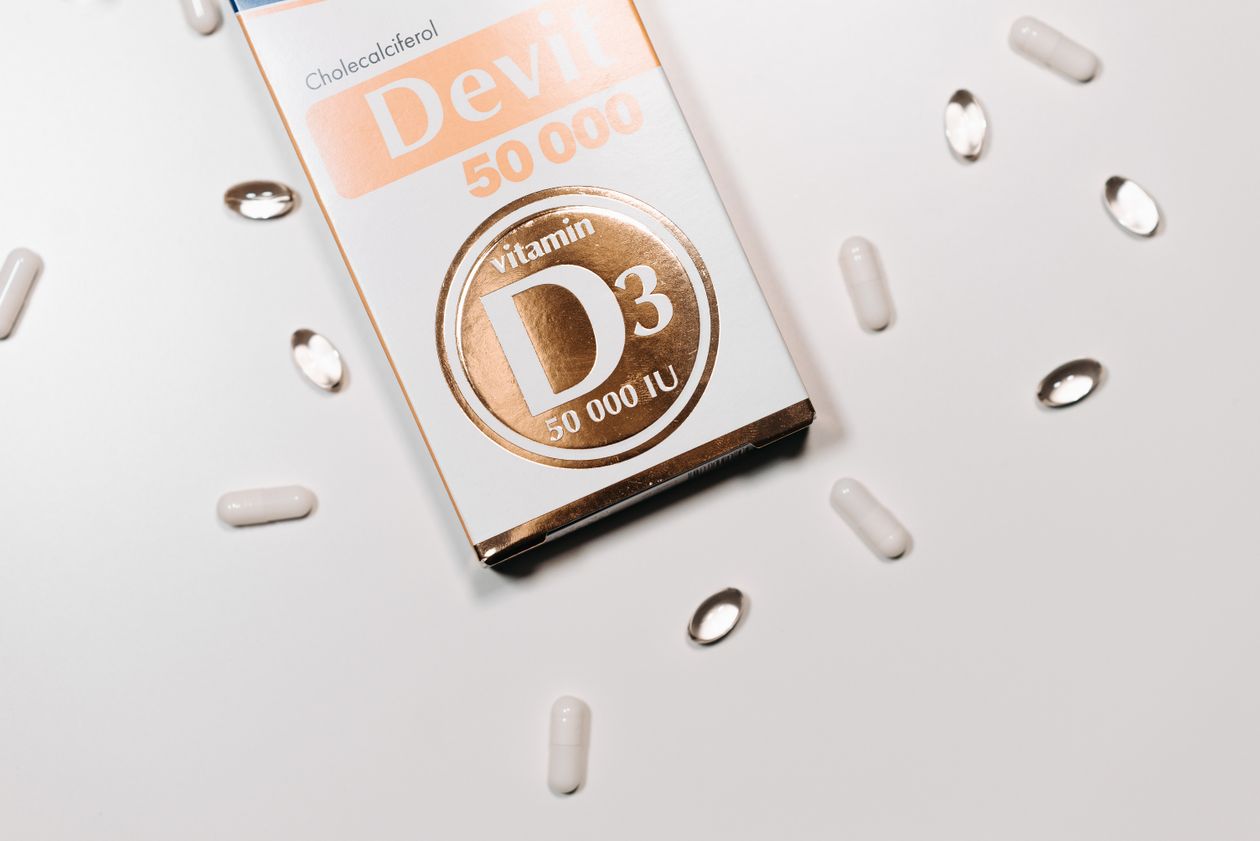
D3 vs. D2: vitamin D3 (cholecalciferol, the form produced by skin) raises blood levels more effectively and maintains them longer than vitamin D2 (ergocalciferol, the plant-derived form). Choose D3.
Dose: for adults starting from deficiency (below 20 ng/mL), 2,000-4,000 IU/day of vitamin D3 for 3-4 months typically achieves sufficiency. For maintenance of adequate levels, 1,000-2,000 IU/day covers most adults in Northern latitudes who have baseline insufficiency. Doses up to 4,000 IU/day are considered safe for most adults by the Institute of Medicine.
Cofactors: vitamin D works with vitamin K2 (specifically MK-7) for directing calcium into bone rather than soft tissue, and with magnesium (which is required for vitamin D metabolism). A D3 supplement combined with K2-MK7 (100-200mcg) and ensuring adequate magnesium intake covers the relevant cofactors.
Take with fat: vitamin D is fat-soluble and is absorbed most efficiently when taken with the largest meal of the day (which typically contains the most fat).
Frequently Asked Questions
Can low vitamin D cause joint pain?
Yes, through multiple mechanisms. Vitamin D deficiency is associated with increased inflammatory cytokines, reduced muscle support for joints, and lower pain threshold. Correcting deficiency in people with chronic musculoskeletal pain produces significant pain reduction in multiple studies, in some cases, diffuse pain attributed to fibromyalgia or non-specific arthritis responds substantially to vitamin D repletion. This does not mean vitamin D deficiency causes all joint pain, but it is a factor worth ruling out with a simple blood test.
How long does it take for vitamin D to work?
Blood levels of 25(OH)D typically stabilize at the new equilibrium within 3-4 months of consistent supplementation. Clinical improvements in musculoskeletal pain, if related to deficiency, tend to appear within 8-12 weeks. Fall risk reduction from supplementation has been demonstrated in trials over 3-6 months. Checking blood levels 3-4 months after starting supplementation verifies that the dose is achieving the target range.
What foods are high in vitamin D?
Very few foods are naturally rich in vitamin D. The practical high-vitamin D foods are: fatty fish (salmon 450-570 IU per 3oz serving, mackerel, sardines), UV-exposed mushrooms (a unique plant source), egg yolks (40-50 IU each), and cod liver oil. Fortified foods (milk, orange juice, cereal) typically provide 100-200 IU per serving. For most adults over 40 in Northern climates, food sources alone cannot maintain optimal vitamin D levels without supplementation.
What is the best form of vitamin D supplement for joint health?
Vitamin D3 (cholecalciferol) is the preferred form over D2 (ergocalciferol) for supplementation. D3 is the form produced by skin in sunlight and raises blood 25-hydroxyvitamin D levels more effectively and sustainably than D2. For adults taking vitamin D for bone and joint health, taking D3 alongside vitamin K2 (as MK-7) is increasingly recommended, K2 helps direct calcium to bone rather than soft tissue. A daily maintenance dose of 1,000 to 2,000 IU D3 is appropriate for most adults in northern latitudes during winter months, though therapeutic doses for documented deficiency should be guided by a GP based on blood test results.
How long does it take for vitamin D supplements to affect joint health?
Blood levels of 25-hydroxyvitamin D typically rise meaningfully within 2 to 3 months of consistent supplementation at 1,000 to 2,000 IU per day. For musculoskeletal symptoms related to deficiency (diffuse muscle pain, bone tenderness, fatigue) improvement is typically noticeable within 6 to 8 weeks when deficiency was severe. For joint pain without confirmed deficiency, vitamin D supplementation has a more modest expected effect. Testing blood levels before and after supplementation is the most accurate way to confirm whether supplementation has achieved adequate levels and whether vitamin D was a contributing factor.
About the author: Richard Hale is an independent health writer focused on mobility, joint health, and active aging research. He is not a licensed medical professional. All content on VitalMove40 is for educational purposes only and is not a substitute for advice from a qualified healthcare provider.