Last updated: August 23, 2026 | By Richard Hale
This content is for educational purposes only and is not medical advice. Consult a qualified healthcare provider for guidance specific to your health situation.
Grip strength is quietly becoming one of the most closely watched numbers in aging research. It is not a vanity metric, and it is not only about opening jars. A simple squeeze of a hand dynamometer can say more about how well your body is aging, and how long it is likely to keep functioning well, than several of the tests done at a typical annual physical.
This guide explains what grip strength actually measures, why researchers keep finding it tied to long-term health outcomes, how your own numbers compare to general reference ranges for your age and sex, and what you can do, starting this week, to build a stronger grip. By the end, you will understand why this one simple test has earned a permanent place in aging research, and you will have a practical plan for improving your own number.
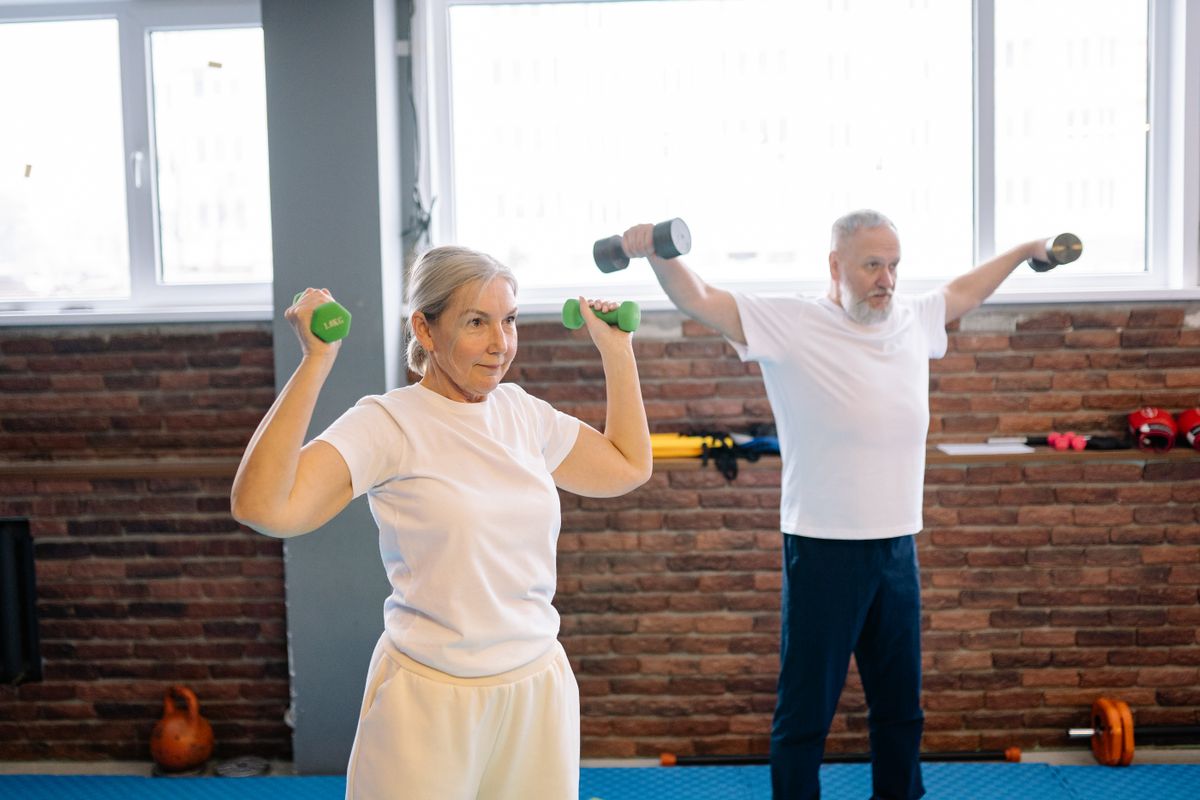
Table of Contents
- What Is Grip Strength and How Is It Measured?
- Why Grip Strength Predicts Long-Term Health
- What Grip Strength Reveals About Your Whole Body
- How Does Your Grip Strength Compare?
- How to Improve Your Grip Strength
- Signs You Should Talk to a Doctor
- Frequently Asked Questions
What Is Grip Strength and How Is It Measured?
Grip strength is the maximum force your hand and forearm muscles can produce when squeezing, usually measured in kilograms or pounds with a handheld device called a dynamometer. It reflects the combined output of the muscles, tendons, and nerves that control your hand, so it works as a quick, low-cost snapshot of overall neuromuscular function.
The standard clinical test uses a Jamar-style hydraulic dynamometer. You sit with your shoulder relaxed, elbow bent at roughly 90 degrees, and wrist in a neutral position, then squeeze the handle as hard as you can for a few seconds. Most protocols take three attempts per hand and record either the best single reading or an average. Some researchers test the dominant hand only, while others test and compare both hands, since a large gap between sides can itself be a useful clue.
Grip strength testing shows up in physical therapy clinics, geriatric assessments, sports performance labs, and, increasingly, in longevity-focused research studies, precisely because it is fast, inexpensive, and reliable to repeat over time. Unlike a lab panel, you can track it at home with an inexpensive hand dynamometer or a spring-loaded hand gripper and watch the trend over months and years.
Why Grip Strength Predicts Long-Term Health
Grip strength is one of the strongest simple predictors researchers have found for long-term health outcomes, including all-cause mortality. Multiple large population studies have found that people with weaker grip strength face meaningfully higher risks of chronic disease and earlier death, even after accounting for age, activity level, and other health factors.
The most widely cited evidence comes from the Prospective Urban Rural Epidemiology (PURE) study, which followed more than 140,000 adults across 17 countries. Researchers found that every 5-kilogram drop in grip strength was linked to a 16 percent higher risk of death from any cause and a 17 percent higher risk of cardiovascular death, and that grip strength was a stronger predictor of death and cardiovascular events than systolic blood pressure, one of the most standard measures used in medicine today (Leong et al., The Lancet, 2015). National Geographic’s coverage of this research field summarizes why grip strength has earned the label of a genuine biomarker of aging rather than just a fitness stat.
Newer research goes a step further and links grip strength to biological age itself. A 2023 study published in the Journal of Cachexia, Sarcopenia and Muscle found that people with weaker grip strength tended to show more advanced “epigenetic age,” a measure of biological aging based on patterns of DNA methylation, compared to their actual chronological age (Peterson et al., 2023). In plain terms: people with weaker grips tended to be biologically older than their birth certificate suggested, while stronger grip was associated with a younger biological profile. Related work has also connected handgrip strength to markers used in standard aging-related lab panels (Wang et al., 2025).
None of this means grip strength directly causes longevity, or that a weak grip guarantees poor health. Researchers view it as a marker of overall physiological reserve, the body’s general capacity to handle stress, recover from illness, and maintain independence, rather than a stand-alone diagnosis. That is exactly what makes it useful: it is an easy, five-second window into something much bigger than the hand itself.
What Grip Strength Reveals About Your Whole Body
Grip strength works as a proxy for overall muscle health, general physical resilience, and functional independence, not just hand and forearm power. That is why researchers keep returning to it as a practical stand-in for harder-to-measure aspects of healthy aging.
Muscle mass and sarcopenia risk. Grip strength correlates closely with total lean muscle mass throughout the body. Since sarcopenia, the age-related loss of muscle mass and strength, tends to affect the whole body rather than just one muscle group, a declining grip is often one of the earliest and easiest-to-notice signals that broader muscle loss may be underway. This is part of why grip strength is included in several clinical definitions of sarcopenia. For more on how muscle mass affects your overall health profile after 40, see our guide to body composition after 40.
Metabolic and immune resilience. Skeletal muscle is metabolically active tissue that helps regulate blood sugar and supports immune function. Research linking handgrip strength to standard aging-related laboratory markers suggests that a stronger grip tends to track with a more favorable overall metabolic and inflammatory profile (Bohannon, 2019).
Functional independence and fall risk. Grip strength predicts everyday physical capability: the ability to open a stubborn jar lid, carry groceries in one trip, catch yourself on a railing, or push up out of a chair without using your hands. These small tasks depend on the same muscular and neurological systems that grip strength measures, which is why weaker grip strength is also associated with a higher risk of falls. If this is a concern for you or a family member, our guides to fall prevention at home after 60 and balance training after 40 go deeper into building that kind of everyday stability.
How Does Your Grip Strength Compare?
Average grip strength peaks in your 20s and 30s and declines gradually from there, with the pace of decline accelerating in your 60s and beyond. The table below shows general population reference ranges by age and sex, based on data from a large population study using a standard hand dynamometer, so you can get a rough sense of where your own number falls.
| Age Range | Average Grip Strength, Men (kg) | Average Grip Strength, Women (kg) |
|---|---|---|
| 20 to 29 | 47 | 30 |
| 30 to 39 | 47 | 31 |
| 40 to 49 | 47 | 29 |
| 50 to 59 | 45 | 28 |
| 60 to 69 | 40 | 24 |
| 70 and older | 33 | 20 |
Source: dominant-hand values, adapted from population normative data in Massy-Westropp et al., 2011. Reference values vary somewhat between studies and dynamometer types, so treat these as general benchmarks rather than a precise cutoff.
These figures are general population averages, not a diagnostic test, and individual results vary with height, hand size, dominant versus non-dominant hand, and the specific device used. A single low reading is far less informative than a downward trend measured the same way every few months. If you want an objective number to track your own progress against, testing every one to three months under the same conditions, same hand, same time of day, same device, gives you a far more useful picture than comparing yourself to a chart. Pairing that with general activity tracking, discussed in our guide to activity tracking after 40, gives a fuller picture of how your training is paying off.
How to Improve Your Grip Strength
Grip strength responds well to consistent, progressive training, and it is rarely too late to start. Most adults can measurably improve their grip within a few months of regular, targeted practice, because the forearm and hand muscles adapt to resistance training the same way any other muscle group does.
Farmer’s carries. Pick up a heavy dumbbell or kettlebell in each hand, stand tall with your shoulders back, and walk for 20 to 40 meters. This single exercise trains grip endurance, core stability, and posture at the same time, and it closely mirrors the real-world task of carrying groceries or luggage. Two to three sets, two or three times a week, is a reasonable starting point.
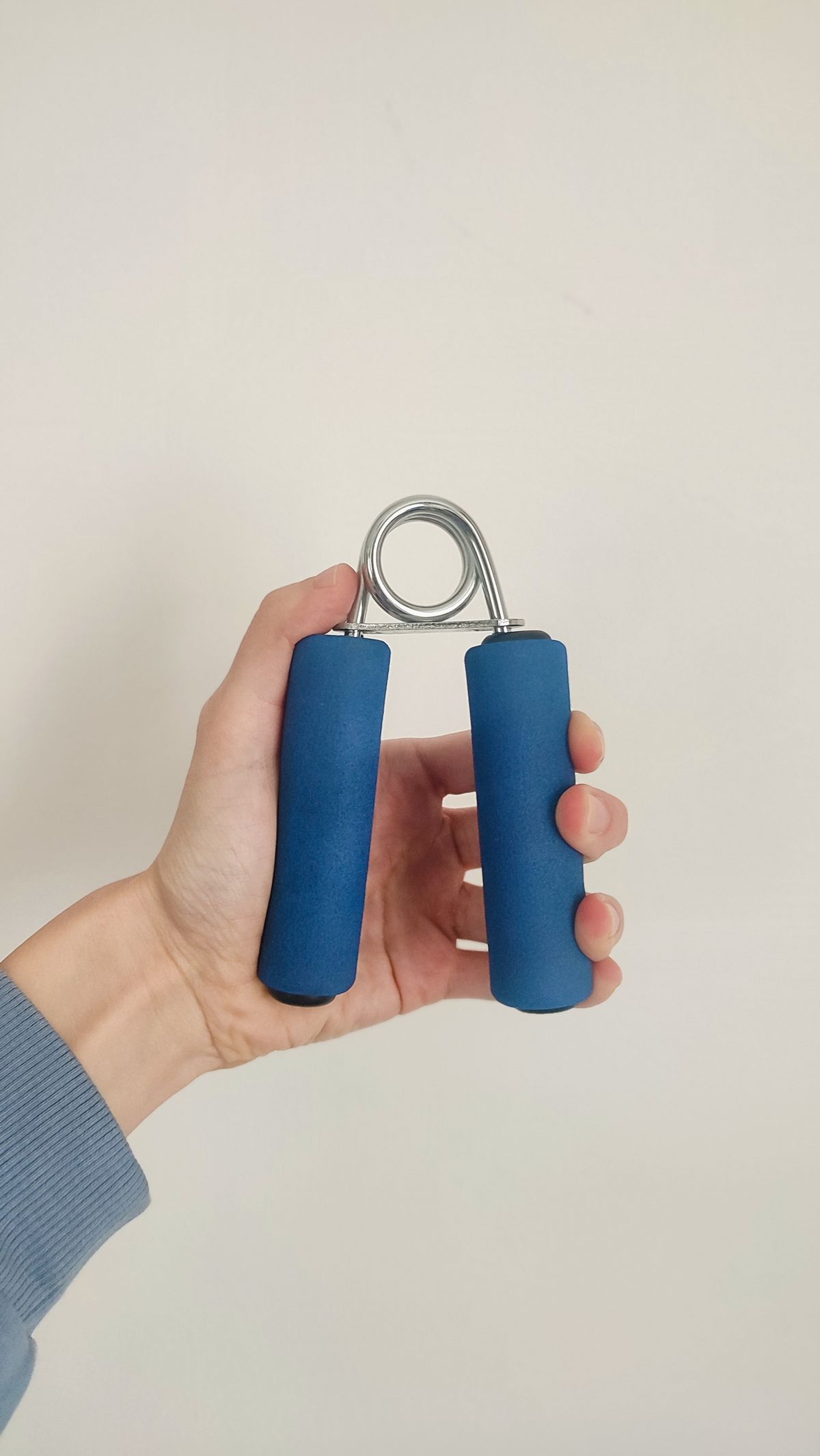
Hand grippers. A simple spring-loaded hand gripper lets you train grip strength almost anywhere: at your desk, in front of the television, or while waiting in line. Start with a resistance level you can close for 8 to 12 repetitions with control, and progress gradually as it gets easier.
Dead hangs. Hanging from a sturdy pull-up bar with an overhand grip builds raw grip endurance while also gently decompressing the shoulders and spine. Even 10 to 20 seconds at a time, worked up gradually, is a meaningful starting point for most adults over 40.
Wrist curls and reverse wrist curls. Using a light dumbbell, curl your wrist up and down through its full range of motion, working both the palm-side and back-of-hand muscles of the forearm. This builds the smaller stabilizer muscles that a farmer’s carry or dead hang does not isolate as directly.
Compound lifts done without straps. Exercises like deadlifts, rows, and pull-ups already challenge your grip as a side effect, since you have to hold onto the weight through the whole movement. Skipping lifting straps when it is safe to do so turns any of these into grip work without adding extra time to your routine. If you are setting up a space to train at home, our guide to a joint-friendly home gym after 40 covers equipment that supports this kind of training without unnecessary strain.
Everyday functional practice. Carry groceries in one trip instead of two, open jars by hand before reaching for a jar opener, and use your hands actively in gardening or household tasks. These small choices add up to real, functional grip training over time.

Two supporting habits make this kind of training more effective. Adequate protein intake supports the muscle repair and growth that resistance training stimulates, which our guide to protein needs after 40 explains in more detail. And because muscle adapts during rest, not just during the workout itself, giving your hands and forearms real recovery time between sessions matters too, covered in our guide to muscle recovery after 40.
Signs You Should Talk to a Doctor About Grip or Hand Strength
Gradual, symmetrical grip strength decline over years is a normal part of aging and generally responds well to training. Sudden, one-sided, or rapidly progressing weakness is different and deserves a conversation with a healthcare provider.
Consider scheduling a check-up if you notice: a sudden drop in grip strength over days or weeks rather than years, weakness that affects only one hand or one side of the body, numbness or tingling accompanying the weakness, frequently dropping objects you used to hold without difficulty, joint pain or swelling alongside the weakness, or unexplained weight loss occurring at the same time as declining strength. None of these signs are cause for alarm on their own, but they are worth having evaluated, since a range of treatable conditions, from nerve compression to thyroid issues to joint problems, can affect grip strength and respond well to early attention. If hand or wrist pain specifically is part of the picture, our guide to wrist and hand pain after 40 covers common causes in more depth.
Putting It Into Practice
Grip strength is a small, easy test that reflects something much larger: your overall muscular reserve, metabolic health, and capacity to stay independent as the decades go on. The encouraging part is that, unlike your chronological age, it is a number you have real influence over. A few focused sessions a week, built around carries, hangs, and simple grip work, can move that number in the right direction at any age.
If you are building out a broader routine to support strength and independence after 40, our guide on how to stay active after 40 without making pain worse is a natural next read.
Frequently Asked Questions
What is a good grip strength for my age?
There is no single universal cutoff, since grip strength varies by age, sex, height, and hand size, but general population data can offer a rough benchmark. For example, average dominant-hand grip strength for men is around 45 to 47 kg through midlife, declining to roughly 33 kg by age 70 and older, while average grip strength for women runs from about 28 to 31 kg through midlife, declining to roughly 20 kg by age 70 and older. Tracking your own trend over time is more useful than comparing a single reading to a chart.
Can grip strength really predict how long I’ll live?
Large population studies have found that lower grip strength is associated with a higher risk of death from any cause and from cardiovascular disease specifically, even after adjusting for other health factors. Researchers view grip strength as a marker of overall physiological reserve and resilience rather than a direct cause of longer or shorter life. It is one useful signal among many, not a standalone prediction of your future.
Can you improve grip strength as you get older?
Yes. Grip strength responds to resistance training at any age, including in adults in their 60s, 70s, and beyond. Exercises like farmer’s carries, hand grippers, dead hangs, and compound lifts done without straps can produce measurable improvement within a few months of consistent practice.
What does weak grip strength mean?
Weak grip strength for your age and sex can reflect reduced overall muscle mass, general deconditioning, or in some cases an underlying medical condition affecting the nerves, joints, or muscles of the hand. A gradual decline over years is common with aging and often responds well to targeted training. A sudden or one-sided change is different and is worth discussing with a healthcare provider.
How is grip strength connected to sarcopenia?
Grip strength is used as a practical screening marker in several clinical definitions of sarcopenia, the age-related loss of muscle mass and strength, because it correlates closely with total lean muscle mass and is far easier to measure than a full body composition scan. A declining grip is often one of the earliest noticeable signs that broader muscle loss may be underway.
How often should I train my grip?
Two to three short sessions a week is a reasonable starting point for most adults, whether through dedicated grip exercises like hand grippers and dead hangs, or simply by skipping lifting straps during regular strength training. Consistency over months matters more than the intensity of any single session.
Is a strong handshake actually a sign of good health?
There is truth behind the old idea. A firm handshake reflects real muscular and neurological function, and researchers have formally studied handgrip strength as a genuine, measurable proxy for overall physical health and resilience. It is not a complete health assessment on its own, but it is far from just a social nicety.
About the author: Richard Hale is an independent health writer focused on mobility, joint health, and active aging research. He is not a licensed medical professional. All content on VitalMove40 is for educational purposes only and is not a substitute for advice from a qualified healthcare provider.