

Last updated: July 14, 2026 | By Richard Hale
Staying active after 40 is not the same challenge it was at 25. Recovery takes longer. Joints need more warm-up time. The exercises that worked at 30 may not be the right ones at 50. Injuries that seemed minor take longer to clear. And the stakes are higher, because the physical capacity built or lost in your 40s and 50s shapes what you are able to do in your 60s, 70s, and beyond.
The goal is not to find a way to train as hard as possible in spite of these changes. It is to find a sustainable approach that keeps you capable and independent for decades, not just for the next training block. This guide covers the principles and practical strategies for staying consistently active after 40 without creating the pain and setbacks that cause people to stop.
This content is for educational purposes only and is not medical advice. If you are returning to exercise after a significant gap or managing a specific health condition, consult a healthcare provider before starting a new program.

Table of Contents
- Why Activity After 40 Is Different
- The Core Principles
- Consistency Over Intensity
- Reading Pain Signals Correctly
- Why Strength Training Belongs in Every Program
- Mobility: The Missing Piece
- Playing the Long Game
- Frequently Asked Questions
Why Activity After 40 Is Different
The biological reality is that several things change after 40 that affect how training and activity need to be approached.
Recovery is slower, because growth hormone output declines and protein synthesis rates drop. Connective tissue, including tendons and ligaments, becomes less elastic and more prone to overuse injury if load is increased too quickly. Muscle mass declines at roughly 3 to 5 percent per decade without deliberate effort to maintain it. Joint cartilage is less resilient. Hormonal changes, particularly in the perimenopausal and menopausal transition for women, affect muscle retention, bone density, and connective tissue health.
None of this means activity becomes less important. If anything, the research makes the opposite case: the benefits of regular physical activity are greater, and more urgently needed, after 40 than before. The adults with the best functional capacity in their 70s are those who maintained consistent activity in their 40s and 50s, according to research from the National Institute on Aging.
The Core Principles
Four principles separate sustainable activity after 40 from the approaches that lead to injury, burnout, or extended gaps in training.
Prioritize Function Over Performance
Performance metrics (how fast, how heavy, how far) are less relevant after 40 than functional outcomes: can you move through your full range of motion? Can you carry what you need to carry? Can you get up off the floor? Can you take a long hike without pain? Orienting activity around functional capability rather than performance goals produces better long-term outcomes and is far more motivating over decades.
Recovery Is Part of Training
Sleep, nutrition, and rest days are not optional additions to an exercise program after 40. They are part of the program. An activity plan that does not account for recovery will produce diminishing returns, increased injury risk, and eventually forced rest. Building recovery in deliberately, adequate sleep, protein intake, rest days, and periodic deload weeks, is what allows consistent training to compound over years.
Gradual Progression
The connective tissue adaptations that protect joints from injury (tendon strength, ligament resilience) take longer to develop than cardiovascular fitness or muscle strength. Starting a new activity or returning after a gap requires more patience after 40. A general principle: increase training load by no more than 10 percent per week for any single activity, whether that is distance walked, weight lifted, or time spent.
Variety Protects Joints
Doing the same activity every day stresses the same joints in the same way repeatedly. Cross-training, alternating between walking, cycling, swimming, strength work, and mobility training, distributes load across different tissues and reduces overuse injury risk. It also maintains broader physical capacity than single-activity specialization.
Consistency Over Intensity
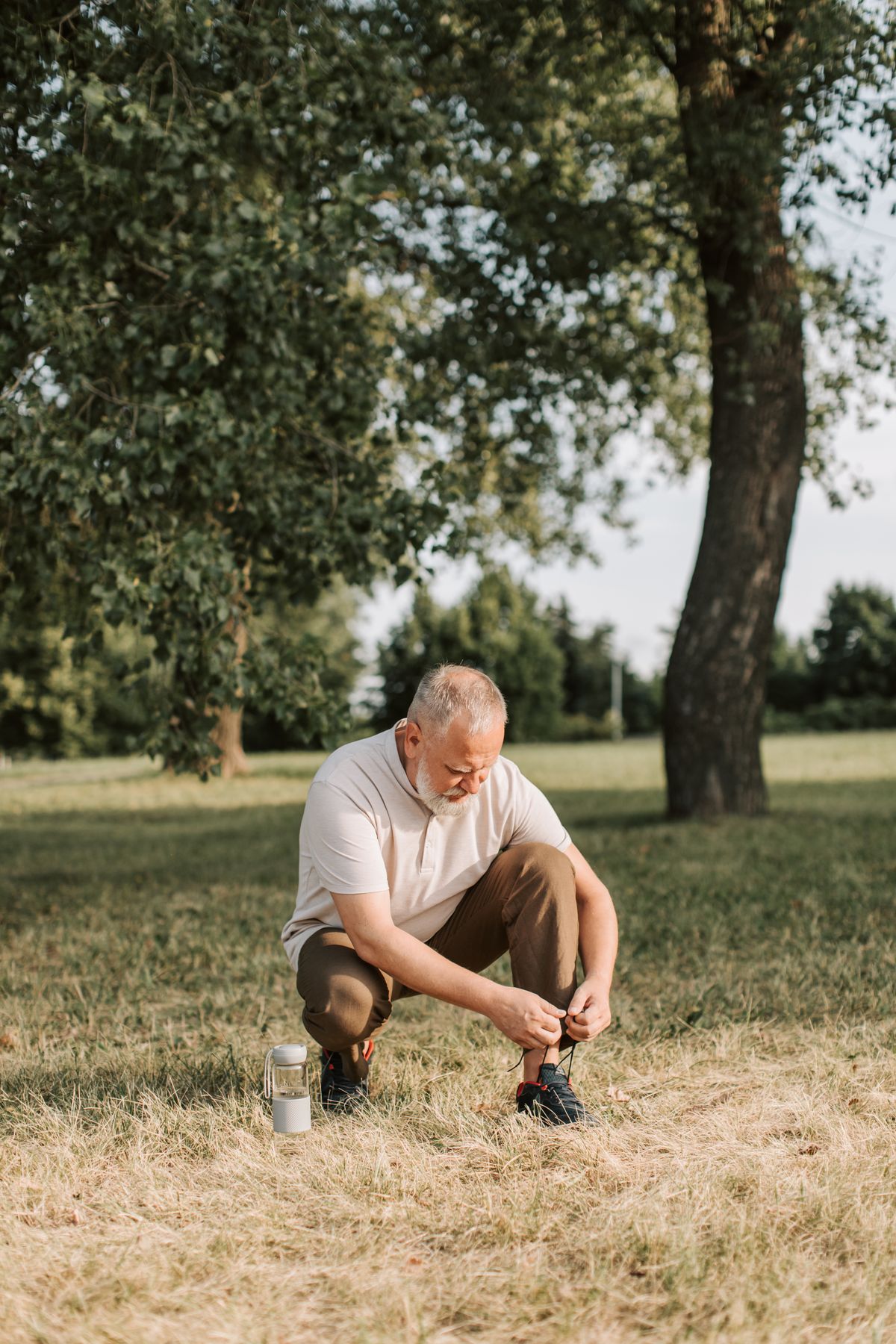
The most common mistake adults over 40 make with exercise is intensity cycling: periods of high effort followed by forced rest from pain or fatigue, followed by another burst of high effort. This pattern produces inconsistent training stimulus, repeated joint overload, and poor long-term outcomes.
Moderate, consistent activity produces better joint health, better metabolic outcomes, and better long-term functional capacity than peak intensity followed by long breaks. A 30-minute walk five days a week does more for joint health than an intense Saturday workout followed by five days of sitting.
This applies to strength training as well. Two consistent resistance training sessions per week, every week, for years produces far better outcomes than six sessions per week for two months followed by a complete stop.
Reading Pain Signals Correctly
Pain management is more nuanced after 40, because the response to pain determines whether someone maintains activity or stops. Two common errors:
Ignoring Pain
Pushing through significant pain (particularly sharp, localized pain during movement) causes injury. Acute pain during exercise that is above a 4 or 5 on a 10-point scale, or that significantly alters movement mechanics, is a signal to stop and assess, not to push through.
Stopping Too Much
The opposite error is more common: stopping all activity at the first sign of discomfort, leading to deconditioning that makes pain worse. Mild to moderate general soreness (2-3 out of 10), fatigue, and muscle aches are normal responses to activity and should not cause complete rest. Moving gently through mild discomfort is usually the right approach.
The distinction that matters: pain that is sharp, localized to a joint, worsens with continued movement, or is accompanied by swelling warrants stopping. General muscle soreness and fatigue do not.
Why Strength Training Belongs in Every Program
Many adults over 40 focus their activity on walking, cycling, and other cardiovascular activities and skip resistance training. This is a significant gap. Muscle mass declines at 3 to 5 percent per decade without resistance training. The muscles around joints are their primary protection. Bone density, which peaks in the late 20s and declines afterward, is maintained most effectively by weight-bearing and resistance exercise.
Two resistance training sessions per week are the minimum for maintaining muscle mass after 40, according to the American College of Sports Medicine. These do not need to be long or complicated. A 30-minute session targeting the major muscle groups (legs, back, shoulders, and core) covers the essentials. See the guide to low-impact exercises for starting points.
Mobility: The Missing Piece
Most exercise programs emphasize cardiovascular fitness and strength. Mobility (the ability to move through your full joint range of motion) is often neglected and becomes progressively more limiting after 40 if not actively maintained.
Tight hips restrict walking gait and increase low back load. Reduced shoulder mobility limits overhead capacity and contributes to neck and shoulder pain. Reduced ankle mobility affects knee and hip mechanics during every step. Ten to fifteen minutes of dedicated mobility work most days of the week addresses these limitations and maintains the functional range that makes other activity more effective and less painful.
Playing the Long Game
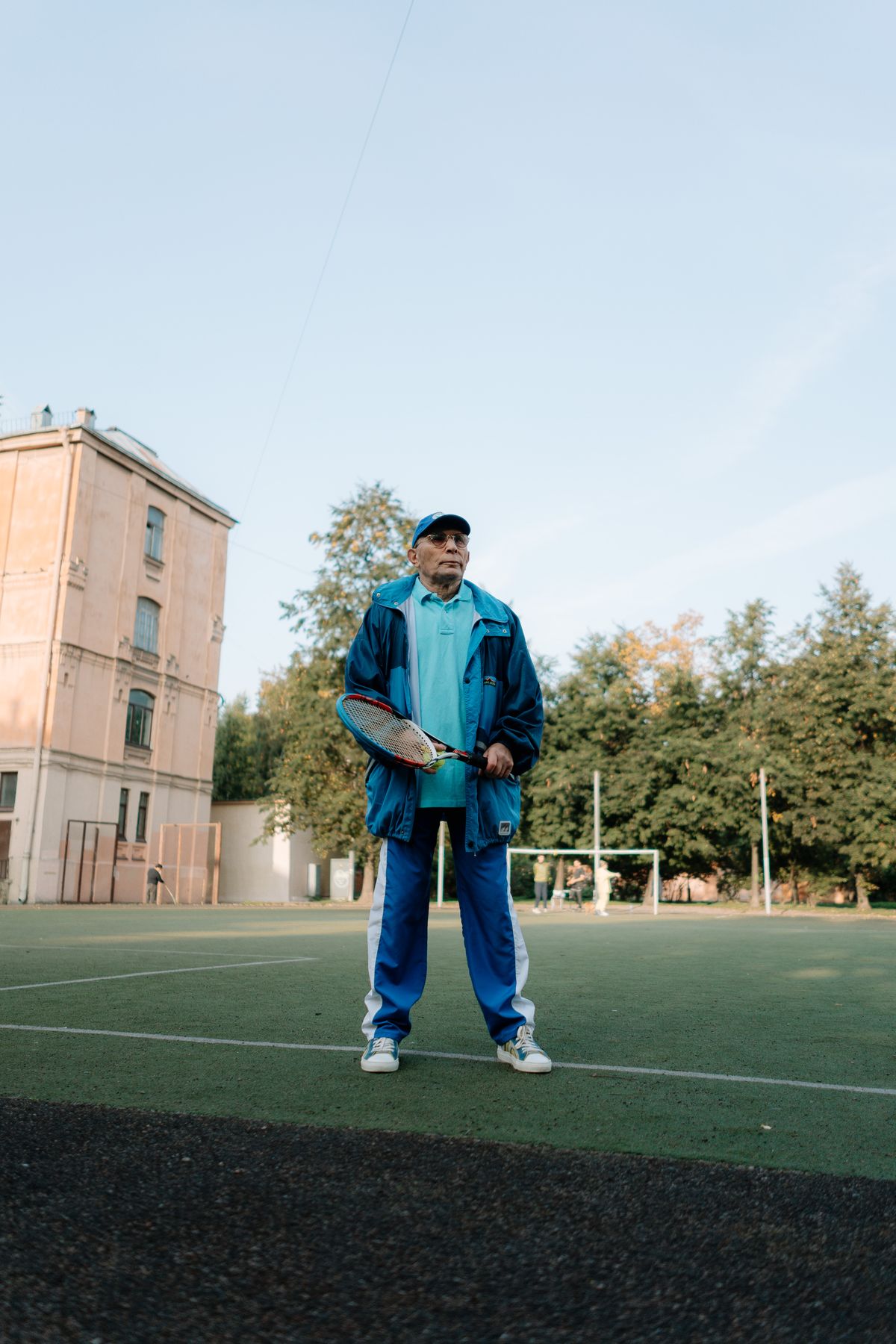
The real case for staying active after 40 is not about how you feel this week. It is about what you are able to do at 65, 70, and 80.
Research on aging consistently shows that physical function in later life is strongly predicted by physical activity habits in middle age. The adults who maintain their independence, travel, engage with family, and live without significant disability in their 70s and 80s are overwhelmingly those who maintained regular physical activity through their 40s and 50s, not those who trained the hardest, but those who were most consistent.
The habits built now are investments with compounding returns measured not in months but in decades. A 30-minute walk, a twice-weekly strength session, ten minutes of daily mobility work, these are not grand gestures. Over twenty years, they are the difference between capability and limitation.
Frequently Asked Questions
How do I start exercising again after a long break?
Start significantly lower than you think you need to. The cardiovascular system often recovers quickly, but connective tissue takes longer to adapt, and the overconfidence of feeling fit quickly is a common cause of early injuries. Begin at 50 to 60 percent of what you could handle at your previous fitness level and increase by no more than 10 percent per week for the first six to eight weeks.
What is the best time of day to exercise after 40?
The time that fits your schedule consistently is the best time. That said, many adults over 40 find morning exercise more problematic because joints are stiffer after sleep. A brief warm-up or a hot shower before morning exercise, and a 10-15 minute warm-up period before full exertion, reduces injury risk and improves performance in the morning.
Should I work out every day after 40?
Daily activity at moderate intensity is fine and beneficial. Daily high-intensity or heavy resistance training, without adequate variation and recovery, is not sustainable. The most effective approach is daily movement of varying intensity: some hard days, some moderate days, and some easy or active recovery days, rather than either daily maximal effort or a standard five-days-on, two-days-off structure.
How important is warming up after 40?
More important than before 40. Tendons and cartilage are less elastic when cold, and the risk of injury from starting hard activity without warm-up increases with age. A 10 to 15 minute dynamic warm-up, light movement that gradually increases heart rate and takes joints through their range of motion, before any vigorous activity is a practical measure, not optional.
Is it too late to start exercising at 50 or 60?
No. Research consistently shows that adults who begin regular exercise in their 50s and 60s achieve substantial improvements in muscle mass, bone density, cardiovascular fitness, and joint function. The rate of improvement is somewhat slower than for younger adults, but the benefits are real and clinically meaningful. Starting at any age is better than not starting.
About the author: Richard Hale is an independent health writer focused on mobility, joint health, and active aging research. He is not a licensed medical professional. All content on VitalMove40 is for educational purposes only and is not a substitute for advice from a qualified healthcare provider.