Last updated: July 26, 2026 | By Richard Hale
The best drinks for joint health are green tea, tart cherry juice, bone broth, and water, in that order of evidence for direct joint-relevant effects. Turmeric milk (golden milk) is a practical daily vehicle for curcumin, which has strong anti-inflammatory evidence. What you drink every day matters as much as what you eat, both for direct joint effects and for systemic hydration that affects synovial fluid quality.
This guide covers which drinks have clinical evidence behind them, what the active compounds are, how much matters, and which common beverages to limit if joint pain is a concern.
This content is for educational purposes only and is not medical advice.

Table of Contents
- Water: The Foundation
- Green Tea
- Tart Cherry Juice
- Bone Broth
- Golden Milk (Turmeric Drink)
- Collagen Drinks
- Drinks to Limit
- Frequently Asked Questions
Water: The Foundation
Synovial fluid (the lubricating fluid inside joint capsules) is approximately 80% water. Cartilage itself is 70–80% water by composition, and its ability to absorb and distribute mechanical load depends on this hydration. Chronic mild dehydration reduces synovial fluid volume and viscosity, increasing the friction and compressive stress that joints experience during movement.
There is no specific trial testing increased water intake against a joint pain endpoint, but the physiology is well-established: joints require adequate hydration to function mechanically, and most adults over 40 are in a state of mild chronic dehydration due to reduced thirst sensation. The general guideline of 8 glasses per day is approximate; urine color is a more reliable indicator, pale yellow is adequate, dark yellow or amber indicates dehydration.
Practical note: if you are taking glucosamine, collagen, or other joint supplements, adequate hydration supports their distribution to joint tissue through the bloodstream and synovial fluid.
Green Tea
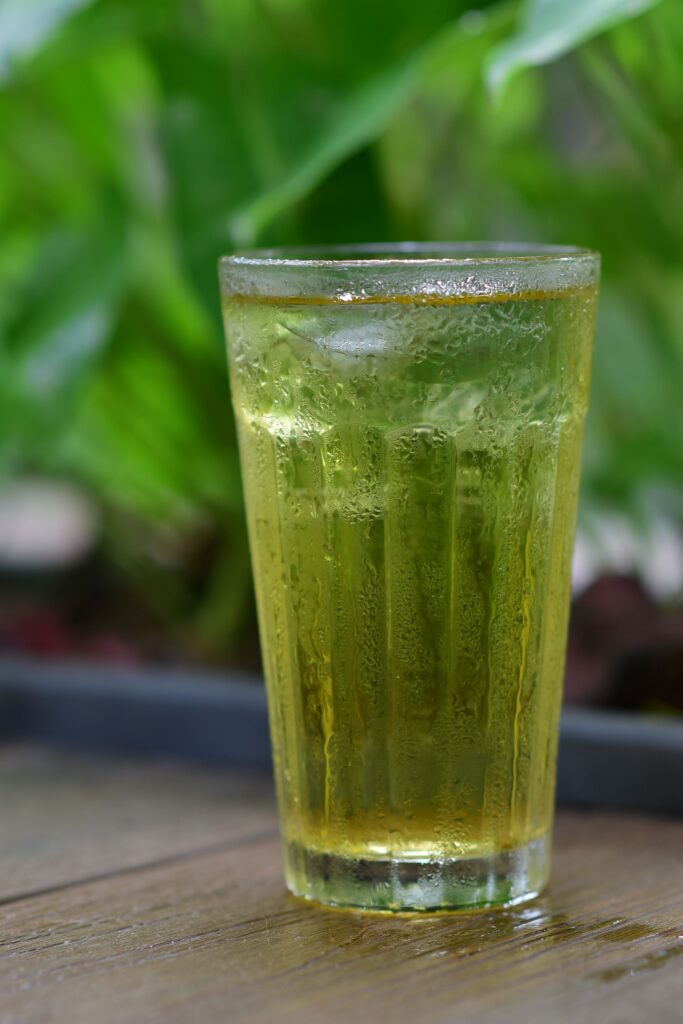
Green tea contains EGCG (epigallocatechin gallate), a catechin polyphenol that is one of the most extensively studied anti-inflammatory and chondroprotective plant compounds. EGCG inhibits matrix metalloproteinases (MMPs), enzymes that degrade collagen and proteoglycans in joint cartilage. This is a direct cartilage-protective mechanism that goes beyond general anti-inflammation.
Laboratory studies show EGCG blocks the signaling pathways that activate inflammatory gene expression in synovial tissue. Human epidemiological data from populations with high green tea consumption show lower rates of osteoarthritis and rheumatoid arthritis severity, though these are observational and confounded by broader dietary patterns.
For clinical effect, most evidence involves 3–5 cups of brewed green tea per day, or standardized EGCG supplements (400–800 mg EGCG daily). Brewed green tea provides roughly 50–100 mg of EGCG per cup, so the upper range of dietary intake approaches but does not reach supplement doses. Matcha (powdered whole green tea leaf) provides significantly more EGCG per serving than steeped green tea (roughly 3x per gram of dry leaf).
Green tea contains caffeine, approximately 30–50 mg per cup, compared to 90–120 mg for coffee. For adults sensitive to caffeine, decaffeinated green tea retains most of its EGCG content, as decaffeination removes caffeine without significantly degrading catechins.

Tart Cherry Juice
Tart cherries (Montmorency variety) are one of the richest food sources of anthocyanins, the polyphenols responsible for dark red and purple pigmentation in fruits. Anthocyanins inhibit COX-1 and COX-2 enzymes (the same enzymes that NSAIDs block) and suppress inflammatory cytokine production.
Tart cherry juice has the most controlled trial evidence of any fruit juice for joint-relevant outcomes. A 2012 randomized trial in the journal Osteoarthritis and Cartilage found that tart cherry juice significantly reduced inflammatory markers (CRP) and improved pain scores in adults with knee osteoarthritis compared to a placebo drink. Multiple trials in athletes have shown that tart cherry juice reduces post-exercise muscle and joint soreness and speeds recovery, an effect relevant to any adult with activity-related joint pain.
Gout-specific evidence is also meaningful: tart cherry consumption is associated with a 35% lower risk of gout attacks in epidemiological studies, and a pilot trial showed that cherry intake reduced serum uric acid levels over time, the underlying biochemical cause of gout crystal deposition.
Tart cherry juice is available as regular juice (high natural sugar) or concentrate (lower volume, more practical). The dose used in most trials is approximately 240–480 mL of juice per day, or 30–60 mL of concentrate. The sugar content of regular tart cherry juice is a consideration for adults managing blood glucose, the concentrate form allows a much smaller volume with equivalent anthocyanin content.
Bone Broth
Bone broth made from slow-simmered animal bones contains hydrolyzed collagen peptides, glycine, proline, and hydroxyproline, the amino acids that are the building blocks of cartilage collagen. It also contains glucosamine and chondroitin leached from cartilage and connective tissue during cooking.
The evidence for bone broth specifically is weaker than for isolated hydrolyzed collagen supplements, because the collagen content per serving varies widely depending on preparation time, bone type, and water ratio. A well-prepared bone broth (simmered 12–24 hours with a knuckle or foot bone that contains cartilage) can contain meaningful collagen peptide levels; a quickly prepared stock does not. For a consistent collagen dose, supplemental hydrolyzed collagen (10–15 g/day) is more reliable, see our guide on collagen for joints.
Bone broth is nonetheless a practical, whole-food source of joint-relevant amino acids and makes a useful base for soups, stews, and cooking liquids. Its glycine content also supports sleep quality, a secondary benefit for adults whose joint pain disrupts sleep.
Golden Milk (Turmeric Drink)
Golden milk is a warm drink made from turmeric powder, milk or plant milk, black pepper, and typically a fat source (whole milk, coconut oil). It is a practical daily delivery vehicle for curcumin, the anti-inflammatory compound in turmeric that inhibits NF-κB and COX-2 enzymes.
The critical preparation detail: black pepper increases curcumin bioavailability by approximately 2,000% through piperine inhibiting first-pass metabolism. A fat source further enhances absorption, as curcumin is fat-soluble. Golden milk prepared with these elements delivers significantly more bioavailable curcumin than simply cooking with turmeric alone.
A standard preparation, 1 teaspoon turmeric powder, ¼ teaspoon black pepper, 240 mL whole or plant milk, optionally 1 teaspoon coconut oil, provides roughly 200–400 mg of curcumin per serving. This is below the therapeutic doses used in clinical trials (500–1,500 mg curcumin/day), but as a daily consistent addition alongside dietary turmeric it accumulates meaningful anti-inflammatory intake. Adults wanting reliable therapeutic curcumin levels are better served by standardized curcumin supplements, our guide on turmeric and curcumin for joint pain explains the dosing and bioavailability options.

Collagen Drinks
Collagen drinks, powdered hydrolyzed collagen mixed into water, juice, or a smoothie, are a convenient way to reach the 10–15 grams of hydrolyzed collagen per day used in trials showing joint pain and function benefits. Unlike intact collagen (which is poorly absorbed), hydrolyzed collagen (collagen peptides) survives digestion and accumulates in cartilage tissue within hours of ingestion.
Adding collagen powder to a morning smoothie or juice is one of the simplest ways to reach clinical doses without changing eating habits significantly. Collagen peptides are tasteless in most formats and dissolve easily in both hot and cold liquids.
Taking collagen with vitamin C enhances its effectiveness, vitamin C is a cofactor required for collagen cross-linking and synthesis. A collagen drink with fruit juice, or collagen powder added to a vitamin C-rich smoothie, covers both substrate and cofactor together.
Drinks to Limit
Sugary drinks (soda, fruit drinks, sweetened juice). Liquid sugar produces the fastest blood glucose spikes of any dietary source, faster than solid food because liquid is absorbed more rapidly. Elevated blood glucose drives inflammatory cytokine production and increases AGE (advanced glycation end-product) formation in joint tissue. Regular sugary drink consumption is one of the most consistently documented drivers of systemic inflammation in dietary research.
Alcohol (above one drink per day). Moderate consumption (one standard drink per day) is not strongly linked to increased inflammatory markers in most populations. Above this level, alcohol disrupts sleep architecture (which amplifies inflammatory signaling), depletes B vitamins required for joint metabolism, and directly suppresses cartilage-producing cell function at higher doses. Beer specifically increases uric acid levels and is the alcoholic drink most consistently associated with gout flares. Our full article on alcohol and joint pain covers the evidence on type, dose, and risk in depth.
Excessive coffee (above 4 cups per day for some adults). Moderate coffee consumption is not generally pro-inflammatory and may have anti-inflammatory properties via polyphenols. However, very high caffeine intake can disrupt sleep (a significant driver of inflammatory signaling) and some adults experience increased joint pain with high caffeine intake, possibly through cortisol-related pathways. Two to three cups per day appears neutral to mildly beneficial for most adults; individual sensitivity varies considerably.
Frequently Asked Questions
Does coffee cause joint pain or inflammation?
At moderate consumption (2–3 cups per day), coffee is not associated with increased joint inflammation in most adults and may have mild anti-inflammatory effects through its polyphenol content. Very high consumption (5+ cups per day) can disrupt sleep quality, which amplifies inflammatory signaling broadly. Individual sensitivity varies, some adults notice joint pain correlates with high coffee intake; others do not. If you suspect coffee is contributing, a 2-week trial of reduced intake is a practical test.
How much green tea should I drink for joint benefits?
The evidence for green tea’s EGCG content in joint health comes primarily from studies using 3–5 cups per day or standardized EGCG supplements at 400–800 mg daily. Drinking 2–3 cups per day is a practical starting point that delivers meaningful EGCG intake without the caffeine load that higher amounts would provide. Matcha (whole-leaf powdered green tea) delivers roughly three times the EGCG of steeped tea per gram of leaf, making one to two servings of matcha roughly equivalent to three to five cups of steeped green tea for catechin content.
Is tart cherry juice the same as regular cherry juice for joint health?
No, Montmorency tart cherries (used in most studies) have significantly higher anthocyanin concentrations than sweet cherries. Regular sweet cherry juice or other dark fruit juices contain anthocyanins but in different types and concentrations than tart cherry. The gout and osteoarthritis studies specifically use Montmorency tart cherry. Sweet cherry juice is not an equivalent substitute for the evidence-based effects. Tart cherry concentrate is available in health food stores and online as a practical way to get consistent anthocyanin doses without the sugar volume of regular juice.
About the author: Richard Hale is an independent health writer focused on mobility, joint health, and active aging research. He is not a licensed medical professional. All content on VitalMove40 is for educational purposes only and is not a substitute for advice from a qualified healthcare provider.