
Last updated: July 27, 2026 | By Richard Hale
Glucosamine supplements come in two formats (capsules and powder) and the format question is worth understanding before you choose one. Capsules dominate US retail because they are cheaper to produce and easier to standardize. Powder formulas are less common but increasingly available, particularly in multi-ingredient joint products that combine glucosamine with collagen, MSM, and other compounds where capsule volume is a real constraint.
The clinical evidence for glucosamine centers on the compound itself (specifically glucosamine sulfate at 1,500 mg/day) not on delivery format. This guide covers what to look for in a glucosamine powder, how doses translate across label formats, and who does best with powder versus capsules.
This content is for educational purposes only and is not medical advice. Consult a physician before starting any supplement, particularly if you have a diagnosed joint condition or take medication.
Table of Contents
- Does Format Affect What Reaches Your Joints?
- The Dose Question: What 1,500 mg Looks Like in Powder Form
- What to Look For Beyond Glucosamine
- Who Does Best with Powder vs Capsules
- Reading a Glucosamine Powder Label
- Frequently Asked Questions
Does Format Affect What Reaches Your Joints?
For glucosamine itself, no. Glucosamine is water-soluble. Whether it starts as a capsule that dissolves in your stomach or powder you mixed into water before drinking, the glucosamine molecule arriving at joint tissue is chemically identical. Capsule or powder is irrelevant to the glucosamine dose that your cartilage receives.
The format question gets more interesting when you look at what else a joint supplement contains. Fat-soluble compounds like curcumin absorb poorly without a fat source, phospholipid carrier, or piperine. A powder dissolved in plain water (without food) can underdeliver curcumin compared to a capsule with enhanced lipid delivery technology. Collagen peptides, on the other hand, are water-soluble and absorb efficiently in either format.
The practical conclusion: when choosing a glucosamine supplement, format matters less than dose and form. The evidence-supported form is glucosamine sulfate (not hydrochloride) at 1,500 mg/day, and this holds whether it is delivered in a capsule or a powder scoop. If a powder formula includes additional ingredients, check whether those ingredients have format-specific absorption requirements.
The Dose Question: What 1,500 mg Looks Like in Powder Form
Three-year randomized trials, Reginster et al. (2001, Lancet) and Pavelka et al. (2002, Archives of Internal Medicine), established 1,500 mg/day of glucosamine sulfate as the dose associated with both pain reduction and slowed joint space narrowing. This dose benchmark applies regardless of format.
In powder formulas, label reading is slightly more involved than with single-ingredient capsules. Glucosamine is frequently listed as “Glucosamine Sulfate 2KCl”, a stabilized potassium chloride salt of glucosamine sulfate, commonly used in powder formulas because it is more stable in humid conditions than pure glucosamine sulfate. This form is approximately 75% elemental glucosamine by weight.
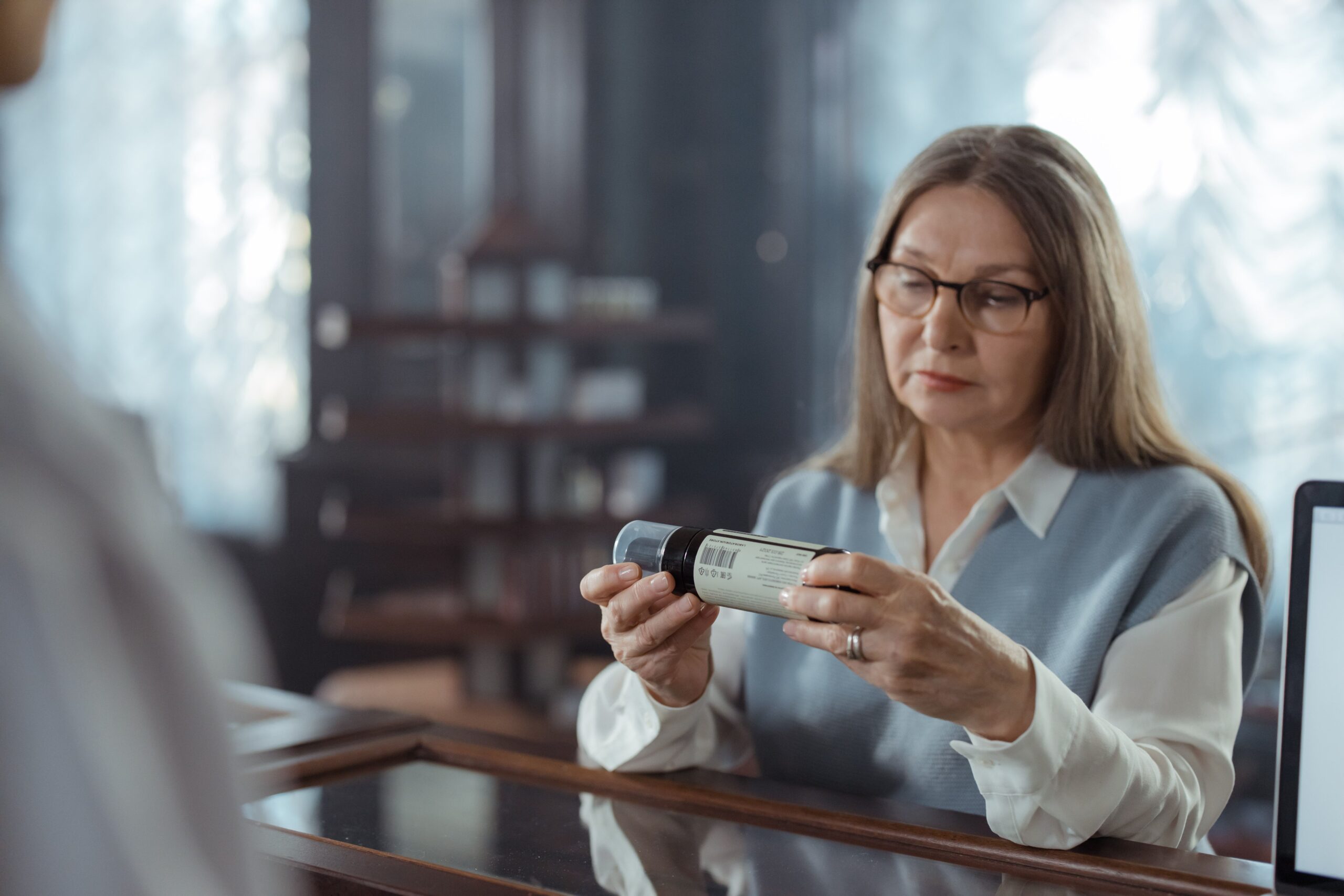
What this means in practice: a label reading “Glucosamine Sulfate 2KCl: 2,000 mg per serving” is delivering approximately 1,500 mg of elemental D-glucosamine, the right dose. The extra 500 mg is the weight of the potassium chloride counterion, not a discrepancy. Labels that list “Glucosamine Sulfate: 1,500 mg” and labels that list “Glucosamine Sulfate 2KCl: 2,000 mg” are delivering essentially the same amount of active glucosamine.
What to confirm on a powder label:
- Compound name includes “sulfate”, not “HCl” or “hydrochloride”
- Per-serving amount: 1,500 mg glucosamine sulfate, OR approximately 2,000 mg Glucosamine Sulfate 2KCl
- Serving size: most joint powders use one scoop (10–15 g). If the serving is smaller and claims to include multiple therapeutic-dose ingredients, check whether the math adds up
For the full breakdown of why form matters, and why the GAIT trial’s use of glucosamine HCl produced weaker results than the European sulfate trials, see our article on glucosamine sulfate vs glucosamine HCl.
What to Look For Beyond Glucosamine in a Joint Powder
The main practical advantage of a powder format is ingredient capacity. A single 11–15 g powder scoop can carry what would require 8–12 capsules to match, making powder the only practical format for combining full-dose glucosamine with meaningful collagen and MSM amounts in one daily serving.
Hydrolyzed Collagen (Collagen Peptides)
The dose used in trials showing joint and cartilage support is 10–15 g of hydrolyzed collagen (collagen peptides) per day. This is essentially impossible to deliver in capsule form without requiring more than a dozen large capsules, which is why most capsule-based joint formulas either omit collagen or include a token amount that does not reflect the trial dose. A powder formula dissolving in a glass of water can deliver 2.5–5 g per scoop, and if the serving is one or two scoops, this approaches meaningful range. For collagen specifically, look for hydrolyzed type II or patented peptide forms like Tendoforte® (studied specifically for tendon and cartilage tissue).
MSM (Methylsulfonylmethane)
The dose range showing anti-inflammatory and pain-reduction effects in trials is 1,000–3,000 mg/day. Below 500 mg is unlikely to produce the effects seen in research. MSM is easy to dose in either capsules or powder, the practical difference is smaller here than for collagen.
Curcumin
Curcumin is the compound where label literacy matters most. A label might list “Curcuma extract: 200 mg”, but without knowing the curcuminoid percentage, you cannot evaluate the active dose. At 10% curcuminoids, 200 mg of extract delivers 20 mg of curcumin, well below the therapeutic range. At 85% curcuminoids, the same 200 mg delivers 170 mg, closer to useful. Look for either a high standardization percentage or a named, high-bioavailability form (C3 Complex®, BCM-95®, Meriva®). BioPerine® (piperine) in the same formula significantly increases curcumin absorption.
Boswellia
Boswellia serrata extract shows consistent anti-inflammatory effects in joint trials, primarily through 5-LOX inhibition rather than COX inhibition (a different but complementary pathway to NSAIDs). Dose in trials: 100–300 mg of extract at 30–70% boswellic acid content. The active compound concentration matters as much as the total extract weight.
Who Does Best with Powder vs Capsules
Powder formulas are better suited for adults who:
- Already have a morning drink or smoothie routine, adding a scoop adds no extra step
- Want collagen at dose-relevant amounts alongside glucosamine, only achievable in powder
- Have difficulty swallowing multiple capsules, which is common when managing several medications
- Prefer a flavored daily supplement over tasteless tablets
Capsule formulas are more practical for adults who:
- Travel frequently, bottles are more portable and there is no mixing required
- Want to keep their supplement routine as fast as possible, two to three capsules with water takes under ten seconds
- Prefer to control each ingredient separately by combining individual-ingredient products
- Are sensitive to the taste of supplement powders or have difficulty with sweeteners added to flavored powders
Neither format is clinically superior for joint outcomes. Glucosamine sulfate reaches joint tissue in either case. The choice that matters most is the one you will maintain consistently for the 8–12 weeks minimum needed before the first meaningful assessment of effect, see our guide on how long glucosamine takes to work for what to expect at each phase.
Reading a Glucosamine Powder Label: What Numbers Matter
When comparing glucosamine powder supplements, evaluate in this order of priority:
| What to Check | What to Look For | Red Flag |
|---|---|---|
| Glucosamine form | Glucosamine Sulfate or Glucosamine Sulfate 2KCl | “HCl” or “Hydrochloride” after glucosamine |
| Glucosamine daily dose | ~1,500 mg elemental glucosamine (or ~2,000 mg 2KCl) | Below 1,000 mg/day |
| Collagen amount | 5 g+ per serving (10–15 g/day is clinical range) | Below 1 g, cosmetic labeling |
| MSM dose | 1,000 mg+ per serving | Below 500 mg/day |
| Curcumin: extract % | 50%+ curcuminoids, or named bioavailable form | 10% curcuminoids, underdosed |
| Proprietary blends | All ingredients listed with individual doses | Blend weight only, no individual amounts |
For a joint health powder that checks the dose and form criteria, glucosamine sulfate at 1,500 mg (as Glucosamine Sulfate 2KCl 2,000 mg), Tendoforte® collagen, MSM, and Boswellin®, see our Flexomore review for a specific product assessment against these criteria.
Frequently Asked Questions
Is glucosamine powder absorbed better than capsules?
No meaningful absorption difference exists for glucosamine itself between the two formats. Glucosamine is water-soluble and is absorbed similarly whether delivered in a capsule or a powder dissolved in water. The format advantage for powders lies in what other ingredients can be co-delivered at full doses, particularly collagen peptides, which are impractical in capsule form at the 10–15 g/day evidence-supported range.
What is the difference between Glucosamine Sulfate 2KCl and plain glucosamine sulfate?
Glucosamine Sulfate 2KCl is a potassium chloride salt of glucosamine sulfate, a stabilized form commonly used in powder supplements because it resists moisture better than unsalted glucosamine sulfate. Functionally, both deliver glucosamine sulfate once metabolized. The practical difference is weight: 2,000 mg of Glucosamine Sulfate 2KCl delivers approximately 1,500 mg of elemental glucosamine, accounting for the weight of the potassium chloride counterion. Both forms are glucosamine sulfate, the 2KCl designation simply specifies the stabilized salt version.
Can I mix glucosamine powder with hot drinks?
Most glucosamine powder formulas are heat-stable and can be mixed with warm liquids. The primary concern is whether other ingredients in a multi-ingredient formula are heat-sensitive, some enzymes (bromelain, papain) degrade at temperatures above 70°C. For pure glucosamine sulfate powder, hot water is fine. For multi-ingredient formulas, check whether the product guidance specifically addresses hot liquids, or mix into room-temperature water to avoid any degradation risk.
Do glucosamine powders need to be taken with food?
Glucosamine sulfate itself does not require food for absorption. However, taking any supplement with food generally reduces the risk of gastrointestinal discomfort, a minor but occasionally reported side effect of glucosamine. If a formula contains curcumin, taking it with a meal that includes some fat improves curcumin bioavailability. Practically, mixing a glucosamine powder into a morning shake or taking it alongside breakfast covers both of these bases.
About the author: Richard Hale is an independent health writer focused on mobility, joint health, and active aging research. He is not a licensed medical professional. All content on VitalMove40 is for educational purposes only and is not a substitute for advice from a qualified healthcare provider.