
EMS Therapy for Pain Relief: What the Research Actually Says
EMS (Electrical Muscle Stimulation) and TENS (Transcutaneous Electrical Nerve Stimulation) therapy use low-level electrical currents to reduce pain and improve muscle function. Clinical evidence supports their use for joint pain, muscle recovery and chronic musculoskeletal pain, with the strongest evidence for TENS in osteoarthritis and post-surgical rehabilitation.
Electrical stimulation therapy has been used in clinical settings for decades. Physical therapy clinics have offered TENS and EMS treatments routinely since the 1970s. What has changed is that consumer-grade devices have made these therapies accessible at home, at a fraction of the clinic cost, and with sufficient quality to produce meaningful results.
For adults over 40 managing joint pain, muscle weakness from reduced activity, or recovering from injury, understanding the difference between device types and how to use them correctly makes the difference between a useful recovery tool and a gadget that collects dust.
EMS vs. TENS: Two Different Mechanisms
EMS: Electrical Muscle Stimulation
EMS devices deliver electrical impulses at frequencies typically between 1 and 120 Hz that stimulate motor nerves, causing involuntary muscle contractions. This can be used to:
- Maintain or rebuild muscle mass when voluntary exercise is limited (post-surgery, injury recovery)
- Improve muscle endurance and strength as an adjunct to active exercise
- Reduce muscle spasm and tension
- Improve local blood circulation
TENS: Transcutaneous Electrical Nerve Stimulation
TENS targets sensory nerves rather than motor nerves, using frequencies between 1 and 250 Hz depending on the mode. It reduces pain through two mechanisms:
Gate control theory: Electrical stimulation at higher frequencies (80 to 150 Hz) activates large-diameter non-pain nerve fibers (A-beta fibers). These fibers effectively block the transmission of pain signals from smaller pain fibers (C and A-delta fibers) at the dorsal horn of the spinal cord. This is the “gate” that can be closed to pain signals.
Endorphin release: Lower frequency TENS (1 to 10 Hz) stimulates the release of endogenous opioids (endorphins and enkephalins) from the brain and spinal cord, providing systemic analgesia that can outlast the treatment session.
What the Research Shows
Osteoarthritis Pain
2019 Cochrane Review: Analyzed 24 randomized controlled trials involving TENS for knee osteoarthritis. Conclusion: TENS provided clinically meaningful pain reduction compared to sham treatment in 79% of trials. Average pain reduction was 22% on standardized scales, which is comparable to oral NSAIDs in short-term use without the gastrointestinal side effects.
Muscle Recovery and Strength
2016 Meta-analysis (Journal of Strength and Conditioning Research): EMS increased muscle strength by an average of 11% in healthy untrained adults. When combined with voluntary exercise, average strength gains were 24%, significantly higher than exercise alone (17%). EMS was most effective for quadriceps, hamstrings and calf muscles.
Chronic Lower Back Pain
2017 systematic review (Pain Medicine): TENS reduced chronic lower back pain intensity by an average of 14 to 25 points on a 100-point visual analog scale. Effects were most pronounced in the first 3 months of treatment. Response rates were highest in patients with mechanical low back pain (vs. radiculopathy or stenosis).
Device Types Available for Home Use
| Device Type | Primary Mode | Best Application | Session Time |
|---|---|---|---|
| TENS unit (pad-based) | TENS (pain relief) | Joint pain, back pain, nerve pain | 20 to 30 min |
| EMS unit (pad-based) | EMS (muscle stim) | Muscle recovery, rehab | 15 to 20 min |
| Combo TENS/EMS | Both | Pain relief + muscle recovery | Varies by mode |
| Massage gun with EMS | Percussion + EMS | Muscle tension, soreness | 5 to 10 min per area |
| Wearable TENS band | TENS (continuous) | Ongoing knee or shoulder pain during activity | Up to 60 min |
| EMS body suit | Full-body EMS | Whole-body conditioning | 20 min (supervised) |
Products We Have Tested
We have reviewed three electrical stimulation devices across different use cases for adults over 40:
Neuromat EMS Massager: A combination EMS and percussion massager targeting large muscle groups. Designed for post-exercise recovery and muscle tension relief. See the full Neuromat EMS Massager review.
TheraOne Pro: A professional-grade device combining TENS and EMS modes with multiple pad placement options. Suitable for both pain relief sessions and active muscle rehabilitation. See the full TheraOne Pro review.
Hewelth ReliefChain Therapy Device: A targeted therapy device designed for localized pain relief in joints, combining thermal therapy with electrical stimulation. See the full Hewelth ReliefChain review.
How to Use EMS and TENS Safely at Home
Home devices are safe for most adults when used correctly. Follow these guidelines:
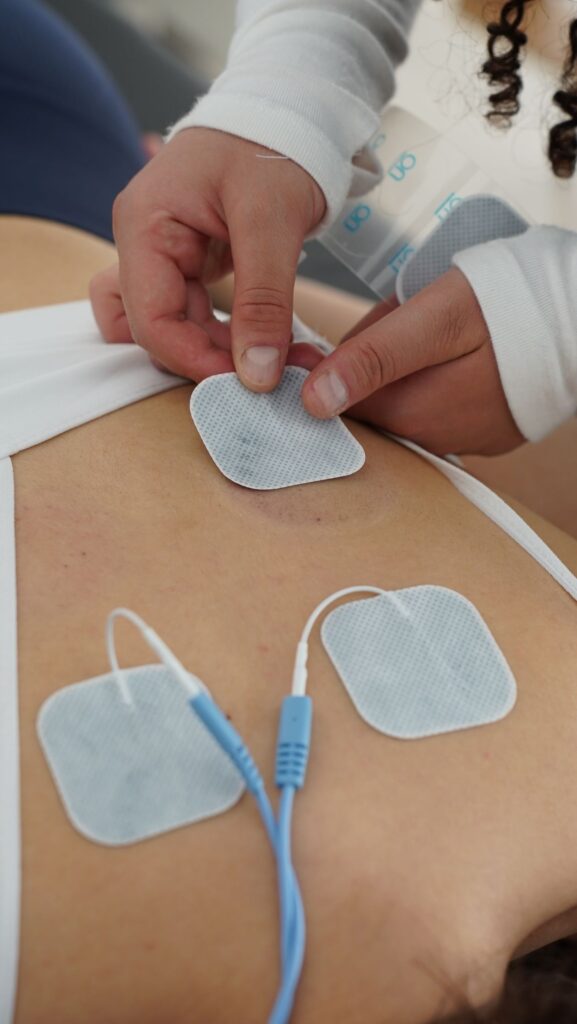
- Electrode placement matters. Place pads on the muscle belly or around the joint, not directly over bony prominences, the spine, or the front of the neck. For knee pain, place pads above and below the kneecap rather than directly on it.
- Start at the lowest intensity. You should feel a tingling or pulsing sensation. Increase until it is strong but not painful. Muscle twitching (EMS mode) is normal; pain is not.
- Session duration. TENS for pain: 20 to 30 minutes. EMS for muscle work: 15 to 20 minutes. Longer sessions do not provide more benefit and can cause skin irritation.
- Frequency for pain management. Up to 3 times daily for TENS. For EMS muscle training, every other day on the same muscle group.
- Keep skin clean and dry. Electrode gel or pre-gelled pads ensure consistent conductivity. Dry skin increases resistance and reduces effectiveness.
Safety first: Never use EMS or TENS over the chest, across the heart, directly on the head or neck, or while driving. Do not use if you have a pacemaker, implanted defibrillator or are pregnant without medical guidance.
EMS and Joint Health: Indirect Benefits
For people with knee or hip osteoarthritis, EMS offers an important indirect benefit: it can maintain or rebuild quadriceps and hip muscle strength when exercise is painful or limited. Quadriceps weakness is one of the most consistent predictors of worsening knee osteoarthritis and pain. EMS allows muscle stimulation even during flare-ups when active exercise is not tolerable.
This makes EMS a useful tool in the months following a knee injury or during an OA flare, bridging the gap between complete rest and return to active exercise. See our guide on exercises to strengthen knees with arthritis for the exercise progression that pairs well with EMS-based muscle maintenance.
Topical agents like the Arthrovit Cream and TheraWolf Pain Relief Balm can be used before or after EMS sessions (not during, as they can affect electrode adhesion) to complement the analgesic effect.
Frequently Asked Questions
What is the difference between EMS and TENS therapy?
EMS causes muscles to contract by delivering electrical impulses to motor nerves. TENS targets sensory nerves to block pain signals using the gate control mechanism. EMS is primarily used for muscle strengthening and recovery; TENS is primarily used for pain relief. Many home devices combine both modes.
Does EMS therapy actually reduce pain?
Yes. TENS mode has the strongest evidence for acute and chronic pain reduction. A 2019 Cochrane review found TENS provided clinically meaningful pain relief for osteoarthritis of the knee. EMS mode is more effective for muscle atrophy and functional strength. Both have an analgesic effect through increased blood flow and endorphin release.
How often should you use EMS for pain relief?
For chronic pain management, most protocols use TENS sessions of 20 to 30 minutes, 1 to 3 times daily. For muscle recovery and strengthening with EMS, 3 to 5 sessions per week on the targeted muscle group. Allow at least 24 hours between EMS sessions on the same muscle group.
Who should not use EMS devices?
EMS and TENS devices should not be used by people with pacemakers, implanted defibrillators or other electronic implants. Avoid using over open wounds, broken skin, tumors or areas with reduced sensation. Do not use during pregnancy without medical supervision.
Can EMS build muscle without exercise?
EMS alone produces modest muscle strength gains, particularly in sedentary or post-surgical patients. A 2016 meta-analysis found EMS increased leg strength by 11% in healthy adults without accompanying exercise. Combining EMS with active exercise consistently produces larger strength gains than either alone.
Is EMS therapy safe to use at home?
Consumer-grade EMS and TENS devices are generally safe for home use when used according to manufacturer instructions. Start at the lowest intensity and increase gradually. The sensation should be noticeable but not painful. Stop if you experience skin irritation, excessive muscle cramping, or dizziness and consult a healthcare provider.