Last updated: July 21, 2026 | By Richard Hale
Disclosure: This page contains affiliate links. If you purchase through our link, we may earn a commission at no extra cost to you. This does not affect our editorial assessment.
Finding a topical pain relief product that is genuinely worth the investment, rather than another jar of mentholated petroleum jelly with an inflated price, is harder than it should be. TheraWolf Pain Relief Balm takes a different approach: a beeswax-and-oil anhydrous base formulated with a blend of TCM-inspired botanicals alongside the better-known cooling and warming compounds that anchor most topical analgesics. After thoroughly reviewing the ingredients, the published evidence for each active, and the product’s positioning relative to other topicals in this category, here is an honest assessment of what it does well, where the evidence is thinner, and who is likely to find it most useful.
Content is educational and not a substitute for advice from a qualified healthcare provider. Individual responses to topical products vary.
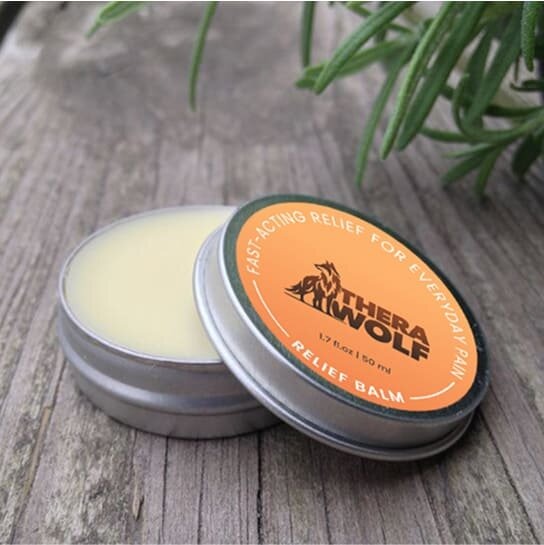
Table of Contents
- Quick Overview
- Who This Is Designed For
- Ingredients: What Is in It and What the Evidence Shows
- How It Works in Practice
- Pricing and Guarantee
- Pros and Cons
- Verdict
- Frequently Asked Questions
Quick Overview
| Feature | TheraWolf Pain Relief Balm |
|---|---|
| Format | Anhydrous balm (beeswax + plant oils) |
| Size | 1.7 fl oz / 50 ml |
| Key actives | Peppermint oil, camphor, arnica, Chuanxiong, Sichuan pepper, angelica root, MSM, magnesium |
| Target applications | Joints (knee, hip, shoulder, wrist), post-exercise muscles, stiff areas |
| Guarantee | 60-day money-back |
| Where to buy | Official website; ships to 200+ countries |
| Rating | 4.2 / 5 |
→ Check Pricing and Order TheraWolf Pain Relief Balm
Who This Is Designed For
TheraWolf Pain Relief Balm is designed for adults dealing with joint discomfort, post-activity muscle soreness, and chronic stiffness in specific areas (knees, hips, shoulders, wrists) who want a targeted topical option alongside (not instead of) a broader joint support routine. The formulation makes most sense for people who:
- Have tried standard menthol rubs and found the effect too superficial or short-lived
- Are interested in a botanical formula that goes beyond single-ingredient counterirritant products
- Prefer overnight application where a balm format is more practical than a gel or cream
- Want a longer return window to properly evaluate whether the product helps
It is not a substitute for oral anti-inflammatory support (omega-3, boswellia) or structural supplements (collagen, glucosamine). It works best as a complementary targeted approach on top of a broader joint health strategy.
Ingredients: What Is in It and What the Evidence Shows
Peppermint oil, strong evidence
The counterirritant mechanism of peppermint oil is well-established. Menthol, the primary active in peppermint oil, activates TRPM8 cold receptors in cutaneous nerve fibres, producing the cooling sensation that competes with and modulates pain signal processing in the dorsal horn of the spinal cord. Clinical studies on topical menthol preparations consistently outperform placebo for acute muscle and joint pain. This is the most evidence-backed active in the formula.
Camphor, strong evidence
Camphor complements peppermint oil by activating TRPV1 warming channels at the concentrations used in topical analgesics. The combination of TRPM8 (cooling) and TRPV1 (warming) stimulation produces a more sustained analgesic effect than either compound alone. Camphor has OTC analgesic recognition in the US at 3 to 11%. The sequential cool-then-warm sensation that characterises quality analgesic balms comes from this combination.
Arnica montana extract, good evidence for soft tissue
Arnica has the best evidence profile of any botanical topical analgesic for soft tissue applications. A Cochrane-reviewed analysis found topical arnica comparable to ibuprofen gel for hand osteoarthritis pain reduction. Evidence is stronger for post-exercise soreness and soft tissue bruising than for deep joint inflammation. A reasonable expectation is that arnica contributes meaningfully to the overall analgesic effect, particularly for post-activity applications.
Chuanxiong (Ligusticum chuanxiong), TCM evidence, limited RCT data
Chuanxiong is a staple of Traditional Chinese Medicine for pain and circulation-related applications. Its active constituents (ligustilide, ferulic acid) have documented vasodilatory and analgesic properties in vitro and in TCM literature. Western RCT evidence specifically on topical Chuanxiong for joint pain is limited, but its inclusion here is coherent with the formula’s botanical approach and is unlikely to be inert. It contributes to what differentiates this product from formulae that use only Western botanicals.
Sichuan pepper extract, plausible mechanism, limited topical data
Sichuan pepper (Zanthoxylum piperitum) produces a distinctive tingling-numbing sensation through activation of TRPV1 and TRPA1 channels, similar to, but distinct from, capsaicin. Its bioactive hydroxy-alpha-sanshool compounds activate sensory fibres that can modulate pain perception. Topical RCT data for joint pain specifically is sparse, but the mechanism is documented and relevant to the counterirritant profile of this formula.
Angelica root, traditional anti-inflammatory
Angelica species have been used across Asian and European traditional medicine for pain and inflammation. Coumarins and polysaccharides in angelica root have documented anti-inflammatory and analgesic activity in vitro. As with other botanical extracts in this formula, controlled topical trials are limited; its inclusion adds to the overall anti-inflammatory botanical rationale without being the formula’s primary evidence anchor.
MSM and magnesium chloride, supportive inclusions
Both are more thoroughly evidenced in oral form. Topical MSM has plausible transdermal absorption for fat-soluble sulphur compounds. Transdermal magnesium absorption remains debated in the literature, with effects likely local (muscle fibre relaxation at the application site) rather than systemic. These are reasonable inclusions that complement the primary actives without being the main reason to select this product.
For a deeper discussion of how these ingredient categories compare in the broader topical pain relief space, see our guide on natural pain relief balms.
How It Works in Practice
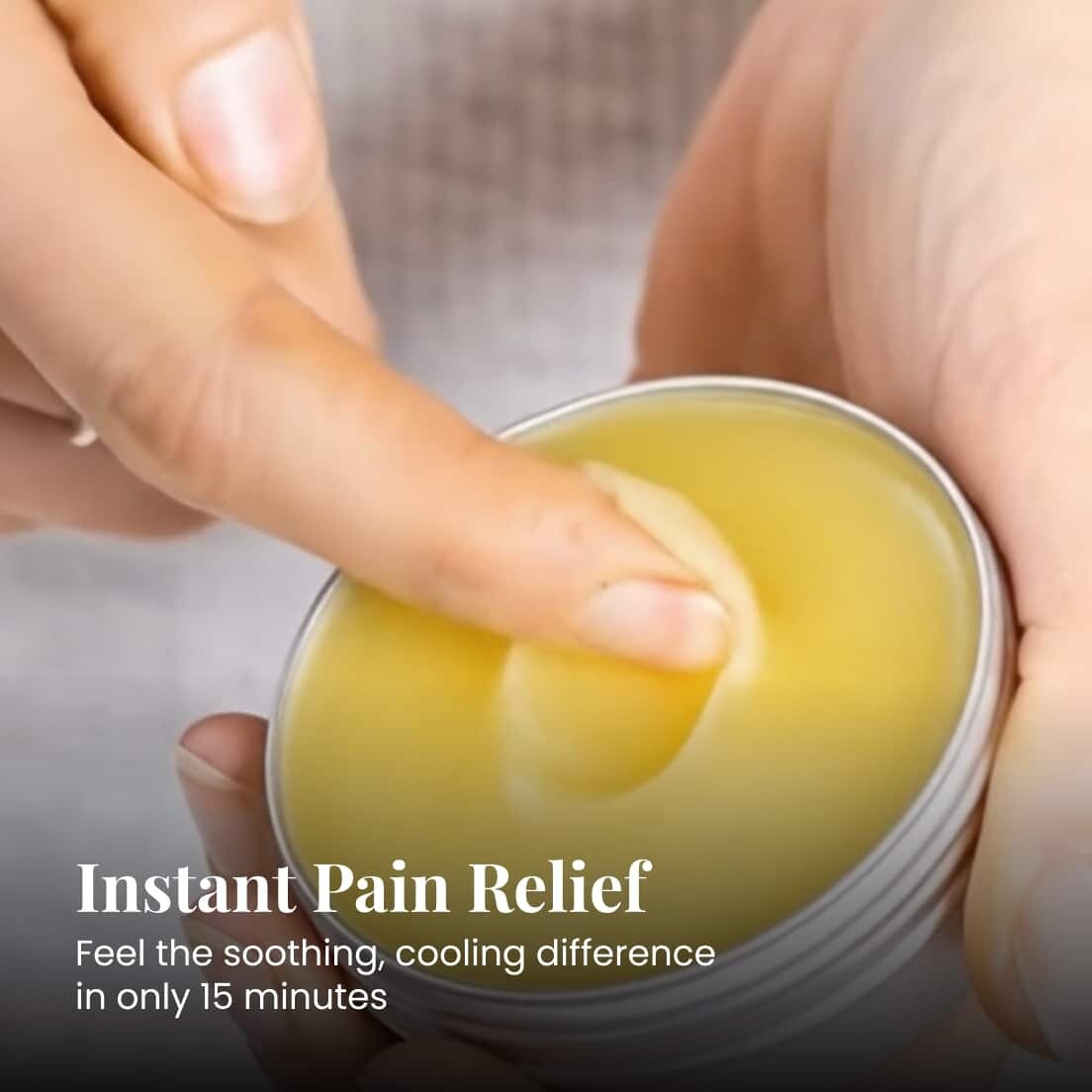
The onset is consistent with what the ingredient profile predicts: a noticeable cooling sensation within 5 to 10 minutes, transitioning to a diffuse warmth over 20 to 30 minutes, with the peak combined effect typically around the 30 to 45 minute mark. The manufacturer’s “15 minutes” claim for initial relief is broadly consistent with the counterirritant pharmacology.
The balm format means the product warms on the palms before application and needs to be massaged in rather than simply spread, this is not a drawback but a practical characteristic of anhydrous formulas. The beeswax base creates a semi-occlusive layer that extends active ingredient contact time compared to cream or gel formats, which is most relevant for overnight applications. Residue is present but manageable with proper application quantity, a small amount (pea to marble size) is typically sufficient for a knee or shoulder area.
Scent is noticeable, peppermint, camphor, and the herbal botanicals combine into a distinctive clean-herbal profile that most users will find pleasant but that is present enough to be relevant in shared living spaces or before professional settings.
Pricing and Guarantee
TheraWolf Pain Relief Balm is available through the official website in two purchasing formats: one-time purchase (all tiers listed below) and a subscription option at a further reduced rate. Both formats come with the same 60-day money-back guarantee.
One-time purchase pricing
| Package | Price per tin | Savings | Best for |
|---|---|---|---|
| 1x TheraWolf | $39.95 | 50% off | First trial |
| 2x TheraWolf | $29.99 | 60% off | Home + travel |
| 3x TheraWolf (Best Seller) | $25.90 | 65% off | 3-month supply |
| 4x TheraWolf (Best Value) | $22.99 | 70% off | Stock up |
The 60-day money-back guarantee is the longest return window I have seen in this product category, most competitors offer 14 to 30 days, which is genuinely insufficient to assess a topical product for chronic joint pain that requires weeks of consistent use to evaluate properly. This is a meaningful practical advantage. The company distributes to 200+ countries, so availability is broad.
For a 3-month assessment of a topical product, the 3x package at $25.90 per tin represents a reasonable trial investment with the guarantee removing the financial risk if it does not deliver.
→ See One-Time Purchase Pricing (Official TheraWolf Website)
→ See Subscription Pricing (Lower Per-Unit Rate)
Pros and Cons
Pros
- Anhydrous balm format maintains higher active concentration and extends residence time versus cream or gel
- Combines the two primary evidence-backed counterirritant categories (cooling and warming) rather than relying on a single mechanism
- TCM botanical blend (Chuanxiong, Sichuan pepper, angelica) offers a distinct formulation approach not found in mainstream topical analgesics
- 60-day guarantee is the longest in this product category, provides a genuine trial period for chronic pain assessment
- Ships to 200+ countries
- Free from major allergens listed on label
Cons
- Active ingredient concentrations are not disclosed on the public label, makes direct comparison to evidence benchmarks more difficult
- Topical MSM and magnesium have weaker transdermal evidence than oral forms; their contribution is secondary
- The TCM botanical ingredients have limited Western RCT data specifically for topical joint applications, mechanism is plausible but evidence is not at the same level as peppermint and camphor
- Balm texture requires more careful application than gel formats; not ideal for on-the-go use before activity
- Scent is present and noticeable, relevant for users in shared or professional environments
Verdict: 4.2 / 5
TheraWolf Pain Relief Balm is a well-designed topical analgesic that combines the two most evidence-backed mechanisms in this category (TRPM8 and TRPV1 counterirritant activation) with a botanical profile that goes meaningfully beyond a standard menthol rub. The anhydrous beeswax base is a deliberate formulation choice that provides practical advantages for extended application. The 60-day return policy is genuinely the best in the category and removes the financial risk of trialling a product for chronic pain management.
The main limitations are concentration opacity (which the company should address) and the expectation-setting issue common to all topical analgesics: this modulates pain perception effectively and can be a valuable part of a joint health routine, but it does not address structural or inflammatory causes at the systemic level. Users who understand topical products as targeted, localised relief rather than as a replacement for oral anti-inflammatory support will get the most value from it.
For adults over 40 dealing with recurring joint discomfort in specific areas, particularly those who have found standard gel-format topicals too short-lasting or who want an overnight application option, TheraWolf Pain Relief Balm is worth a serious look.
→ Try TheraWolf Pain Relief Balm (60-Day Money-Back Guarantee)

For comparison across other topical and oral approaches to joint pain, see our complete guides on MSM for joint pain, boswellia, and omega-3 fish oil for joints. For an overview of what separates effective topical formats, see our guide to natural pain relief balms.
Frequently Asked Questions
How quickly does TheraWolf Pain Relief Balm work?
Most users notice the initial cooling sensation from peppermint oil and camphor within 5 to 10 minutes. The combined cooling-and-warming effect that characterises the full experience typically develops over 15 to 30 minutes. The manufacturer’s 15-minute claim for initial relief is consistent with the counterirritant pharmacology. Deeper or chronic joint pain may require consistent daily use over one to two weeks to assess the full effect.
Can I use TheraWolf Pain Relief Balm every day?
Yes. Most topical counterirritant products can be applied two to four times daily. The receptor populations responsible for the counterirritant effect do adapt with very high-frequency application, so more-is-better past four daily applications is not supported by the pharmacology. Once or twice daily (particularly an evening application before sleep) is a practical approach for chronic joint pain management.
Is TheraWolf Pain Relief Balm suitable for older adults?
The ingredient profile is appropriate for adults over 40. The camphor and peppermint concentrations at standard topical analgesic levels are well-tolerated by most adults without specific sensitivities. Individuals with sensitive skin should patch-test before full application. Anyone with circulatory conditions in the application area should consult a healthcare provider before using topical products that include vasodilatory botanical extracts (including Chuanxiong).
Can I use TheraWolf alongside oral supplements?
Yes. Topical and oral joint support approaches work through different mechanisms and are complementary rather than competing. Using TheraWolf for localised symptom management alongside oral omega-3, MSM, or collagen supplements for systemic anti-inflammatory and structural support is a logical approach for adults with ongoing joint concerns.
What is the return policy?
TheraWolf offers a 60-day money-back guarantee. This is the longest return window in the natural topical pain relief category, providing a genuine trial period to assess effectiveness for chronic conditions. Standard 14 to 30 day return windows are insufficient for evaluating topical products for chronic joint pain, making this a meaningful practical advantage.
About the author: Richard Hale is an independent health writer focused on mobility, joint health, and active aging research. He is not a licensed medical professional. All content on VitalMove40 is for educational purposes only and is not a substitute for advice from a qualified healthcare provider.