Last updated: September 10, 2026 | By Richard Hale
Topical pain relief products have been around for decades, but the category has expanded considerably beyond the menthol-heavy rubs that have been a medicine cabinet staple since the 1970s. Natural balms formulated around botanical oils, plant extracts, and mineral compounds represent a distinct approach to managing joint and muscle discomfort, one that works through mechanisms that are genuinely different from oral anti-inflammatory supplements. This guide covers what the science says about how topical pain relief actually works, which ingredient categories have the strongest evidence, and what separates a well-formulated balm from a product that is mostly marketing.
Content is educational and not a substitute for advice from a qualified healthcare provider.
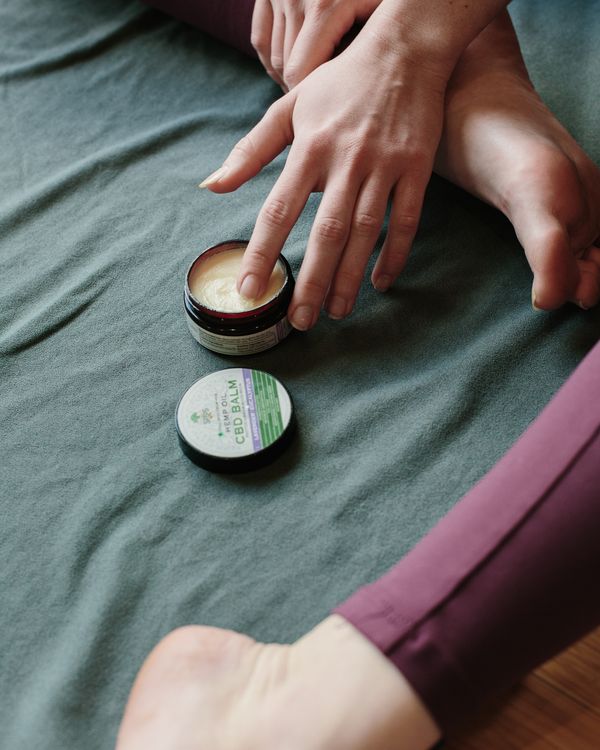
Table of Contents
- How Topical Pain Relief Actually Works
- Balm, Cream, or Gel: What Is the Difference?
- Key Ingredients and What the Evidence Shows
- When Topical Relief Works Best
- How to Apply for Maximum Effect
- What to Look for When Buying
- Frequently Asked Questions
How Topical Pain Relief Actually Works
Most people assume topical pain products work by delivering active ingredients through the skin into the underlying tissue. In some cases that is partly true, but the primary mechanism for the majority of topical analgesics is actually neural rather than pharmacological. Understanding this distinction changes how you evaluate what a product can and cannot realistically do.
The dominant mechanism is called counterirritant action. When cooling or warming compounds are applied to the skin, they activate specific receptors in cutaneous nerve fibres, primarily TRPM8 receptors (activated by cooling sensations like menthol and peppermint) and TRPV1 receptors (activated by warming sensations like camphor and capsaicin). These receptors compete with pain signals for attention in the dorsal horn of the spinal cord. The competing sensation effectively reduces the perceived intensity of the underlying pain without eliminating the tissue cause of that pain. This is the same mechanism that explains why rubbing a bumped elbow reduces the pain: the competing mechanical sensation modulates pain signal processing.
This is a legitimate and well-documented analgesic mechanism. It is also worth being clear about what it does not do: counterirritant action does not reduce actual joint inflammation, rebuild cartilage, or address the underlying causes of chronic pain. For acute flare management, post-exercise soreness, and localised discomfort, it is genuinely effective. For long-term joint protection, it works best alongside rather than instead of oral supplements and other approaches.
A second mechanism applies to certain active ingredients that do have meaningful transdermal penetration. Arnica montana extracts, diclofenac (in prescription and OTC gels), and to a lesser extent some volatile oils have been shown to achieve local tissue concentrations above background when applied topically, though this varies significantly with the vehicle (the carrier base the active is dissolved in) and the integrity of the skin barrier.
Balm, Cream, or Gel: What Is the Difference?
The format of a topical product affects how active ingredients are delivered to skin and underlying tissue, how long the product remains at the application site, and the practical experience of using it.
Gels (usually aqueous or alcohol-based) absorb quickly, leave minimal residue, and are preferred for acute injury sites where cooling effect is the priority. The rapid evaporation of the carrier also contributes to the cooling sensation. The tradeoff is shorter residence time on the skin, which may limit exposure duration for ingredients that require sustained contact.
Creams are emulsions of water and oil. They absorb well without leaving the heavy residue of ointments, making them practical for daytime use on joints that will be covered by clothing. The water phase dilutes active concentration slightly compared to anhydrous formats.
Balms are typically anhydrous (no water), using a wax or butter base (beeswax, shea butter) with carrier oils (jojoba, coconut, safflower). This creates a semi-occlusive layer on the skin surface that slows evaporation, maintains a higher concentration of fat-soluble actives at the application site, and extends the duration of contact between ingredients and the skin. The tradeoff is a heavier texture that requires warming between palms before application and may feel greasy if over-applied. For overnight use on chronically painful joints, a balm format can be particularly appropriate.
None of these formats is universally superior. The right choice depends on the target area, the timing of application, and which active ingredients are delivering the benefit.
Key Ingredients and What the Evidence Shows
Menthol and peppermint oil
Menthol is the most thoroughly studied topical analgesic active in the counterirritant category. It activates TRPM8 cold receptors with high specificity, producing the characteristic cooling sensation. Clinical studies on topical menthol preparations for muscle and joint pain consistently show meaningful pain reduction versus placebo, and at concentrations of 3 to 10%, it has OTC approval as a counterirritant analgesic in the United States. Peppermint oil achieves similar receptor activation through its high menthol content. This is one of the few categories in natural topical products where the mechanism is clearly established and the evidence is robust.
Camphor
Camphor activates both cooling (TRPM8 at low concentrations) and warming (TRPV1 at higher concentrations) channels, creating the dual sensation that is characteristic of combination analgesic balms. Like menthol, camphor has FDA OTC recognition as a counterirritant analgesic at concentrations between 3 and 11%. Its combination with menthol or peppermint produces a sequential sensation (cooling followed by a diffuse warmth) that many users find more effective for sustained pain relief than either compound alone.
Arnica montana
Arnica has one of the better evidence profiles of any botanical topical analgesic. A Cochrane-reviewed systematic analysis found topical arnica gel comparable to ibuprofen gel for reducing osteoarthritis pain in the hand, and several randomised trials have shown reductions in post-exercise muscle soreness and bruising. The active compounds (sesquiterpene lactones, particularly helenalin) have documented anti-inflammatory activity in vitro. Arnica is most useful for soft tissue inflammation, post-exercise soreness, and localised bruising rather than chronic deep joint pain.
MSM (Methylsulfonylmethane)
The evidence base for topical MSM is considerably weaker than for oral MSM supplementation. Most of the documented anti-inflammatory and sulphur-donation effects of MSM come from oral RCTs at doses of 3 to 6g per day. Transdermal absorption of MSM is plausible (sulphur compounds do penetrate the skin barrier), but controlled trials specifically on topical MSM for joint pain are limited and generally small. It is a reasonable inclusion in a topical formula but should not be the primary reason for selecting a product.
Magnesium chloride
Transdermal magnesium has been actively debated in the scientific literature. Some studies show measurable increases in red blood cell magnesium after topical magnesium application; others show minimal systemic absorption through intact skin. For topical joint applications, any benefit from magnesium is likely to be local, relaxation of muscle fibres around the application site through local mineral availability, rather than systemic supplementation. The evidence is not strong enough to select a product primarily for its magnesium content, but it is not implausible as a contributing factor in a well-designed formula.
Ginger oil and blue chamomile extract
Ginger compounds (gingerols and shogaols) have documented COX-1 and COX-2 inhibitory activity in vitro and some clinical evidence for anti-inflammatory effects at oral doses. Topical evidence is more limited. Blue chamomile (azulene-rich Matricaria chamomilla extract) has anti-inflammatory properties with reasonable in vitro evidence but limited topical RCT data for joint pain specifically. Both are appropriate inclusions in a botanical formula and contribute to the anti-inflammatory rationale, but neither should be evaluated independently of the overall product design.
When Topical Relief Works Best
The clearest evidence for topical analgesics is in three scenarios: post-exercise muscle soreness (acute, within 24 to 48 hours of activity), localised joint flare management (applying directly to the painful joint during a flare), and as a complement to oral supplements for chronic pain where the combination of systemic and local action provides more complete coverage than either approach alone.
Topical products are particularly practical for situations where oral anti-inflammatory options are limited, for adults who cannot tolerate NSAIDs due to gastric sensitivity, who prefer to minimise systemic medication load, or who need faster localised relief than oral supplements can provide. The onset of counterirritant action is typically within 15 to 30 minutes, much faster than the hours-to-weeks timeline of oral supplements building anti-inflammatory effects.

Topical products are less appropriate as a standalone solution for chronic progressive joint conditions like moderate to severe osteoarthritis, where structural support (glucosamine, UC-II collagen) and systemic anti-inflammatory management (omega-3, boswellia, MSM orally) address mechanisms that topical products cannot reach. The two approaches are complementary, not interchangeable.
How to Apply for Maximum Effect
Application technique matters more than most product instructions acknowledge. Warming a small amount of balm between the palms before applying (rather than pressing cold product directly onto the joint) begins activating the essential oils and improves initial absorption. Massaging in small circular motions for 30 to 60 seconds rather than just spreading the product increases local circulation and extends the contact time between active ingredients and the skin surface.
Applying to clean, dry skin (before any moisturiser or sunscreen) ensures nothing interferes with absorption. For joint application, concentrating product on the tissue around the joint capsule rather than directly over the bony landmark delivers actives closer to the relevant tissue. Wrapping the joint loosely with a cloth after application (particularly for overnight use) creates mild occlusion that can extend residence time and enhance penetration.
Frequency depends on the product: most topical analgesics can be applied two to four times daily, with diminishing returns beyond that frequency as the receptor populations responsible for counterirritant relief adapt to sustained stimulation.
What to Look for When Buying
The most important factors when evaluating a natural pain relief balm are the active ingredient categories (not just names), whether concentrations are disclosed, the quality of the carrier base, and the return policy.
A product that lists “peppermint oil” and “camphor” without specifying concentration percentages cannot be evaluated against the evidence, the clinical doses for these compounds are well-established, and a product delivering 0.1% menthol is meaningfully different from one delivering 5%. Transparency on active concentrations is a basic quality signal.
The carrier base matters for both residence time and bioavailability of fat-soluble actives. A beeswax and plant oil base (jojoba, shea, coconut) creates a more occlusive layer than an aqueous cream, which is advantageous for extended overnight application. An alcohol-based gel absorbs faster but may over-dry skin with repeated use.
A meaningful return policy (at minimum 30 days, ideally 60 days) is essential for a product category where individual response varies considerably. A 10-day return window provides no useful trial period for a topical product whose effectiveness for chronic joint pain can only be assessed over weeks of consistent use. For our review of a current natural balm with one of the longest guarantees in this category, see our TheraWolf Pain Relief Balm review.
For comparison with other topical approaches, including topical creams with different active ingredient profiles, see our complete guide to topical joint creams. For adults interested in addressing joint pain through both topical and oral routes, our guides on MSM for joint pain and heat versus ice for joint pain cover the complementary approaches.
Our Kinzeno massage gel review works through a specific example of a menthol-and-botanical gel, from the ingredient list to what the cooling effect actually does.
Frequently Asked Questions
Do natural pain relief balms actually work?
Yes, for specific types of pain and through specific mechanisms. The counterirritant mechanism, where cooling and warming compounds activate skin nerve receptors to modulate pain signal processing, is well-documented and explains why menthol, camphor, and peppermint-based products consistently outperform placebo in clinical trials. Natural botanicals like arnica have additional evidence for soft tissue and post-exercise applications. Topical products work best for localised, surface-accessible pain rather than deep structural joint conditions, where oral supplements and physical approaches are more appropriate.
How long do topical pain relief balms take to work?
Counterirritant compounds (menthol, peppermint, camphor) typically produce noticeable sensation within 5 to 15 minutes of application, with the peak analgesic effect occurring over the following 30 to 60 minutes. Effects generally last 2 to 4 hours depending on the product concentration and application technique. Anti-inflammatory botanical ingredients (arnica, ginger) act more slowly and their contribution builds with consistent use over days rather than producing an immediate effect.
Can I use a pain relief balm with other topical treatments?
Combining multiple counterirritant products in the same application is generally not recommended, as overlapping stimulation of the same receptors does not produce additive benefit and can cause skin irritation. Spacing applications of different products by several hours is advisable. Topical balms can be used alongside heat therapy (a heating pad, for example) with some caution: the combination of warming topical compounds and external heat can intensify the sensation beyond comfortable levels. If using heat, apply the balm first, allow it to absorb fully, and then apply moderate heat rather than starting both simultaneously.
Are natural ingredients in topical balms safe for long-term use?
The main safety considerations for topical analgesics with natural ingredients are skin sensitivity and irritation rather than systemic effects. Camphor at concentrations above 11% and menthol at very high concentrations can cause skin irritation with repeated daily use. Arnica is not appropriate for application to broken skin. Individuals with known allergies to plants in the Asteraceae family (ragweed, chrysanthemum) may react to arnica or chamomile-containing products. For adults without specific sensitivities, regular use of well-formulated natural balms at standard concentrations is generally well-tolerated.
What is the difference between a balm and a topical cream for joint pain?
Balms use an anhydrous (water-free) wax and oil base, which creates a semi-occlusive layer on the skin that extends the residence time of fat-soluble active ingredients. Creams are emulsions of water and oil that absorb faster and leave less surface residue, making them more practical for daytime use. For overnight joint applications where extended ingredient contact is beneficial, balms have a practical advantage. For applications before physical activity or during the day, creams or gels are generally more comfortable. The choice between formats is practical rather than a quality signal, both can deliver equivalent active ingredients.
About the author: Richard Hale is an independent health writer focused on mobility, joint health, and active aging research. He is not a licensed medical professional. All content on VitalMove40 is for educational purposes only and is not a substitute for advice from a qualified healthcare provider.