Affiliate Disclosure: VitalMove40 earns a commission from purchases made through affiliate links on this page, at no extra cost to you. See our full Affiliate Disclosure Policy.
Last updated: September 4, 2026 | By Richard Hale
Availability note, updated September 4, 2026: the retailer link for Sanoflex is currently offline, so we have taken its buy buttons down rather than send you to a page that does not work. Every other product on this page is unaffected. Nothing else in this article has changed. We will put a working link back as soon as Sanoflex is available through a retailer we can verify.
The UK joint supplement market has changed significantly. The NHS no longer recommends glucosamine or chondroitin for osteoarthritis, guidance that shifted in 2020 after NICE reviewed the evidence and found the average effect too small to justify routine prescribing. That decision pushed millions of UK adults toward the private supplement market, where the quality range is enormous and the marketing is reliably optimistic. This guide is for those adults: people managing joint pain independently, trying to separate what has reasonable evidence from what does not.
This content is for educational purposes only and is not medical advice. Consult a GP or rheumatologist before starting joint supplements, particularly if you take blood thinners or have been diagnosed with a specific joint condition.
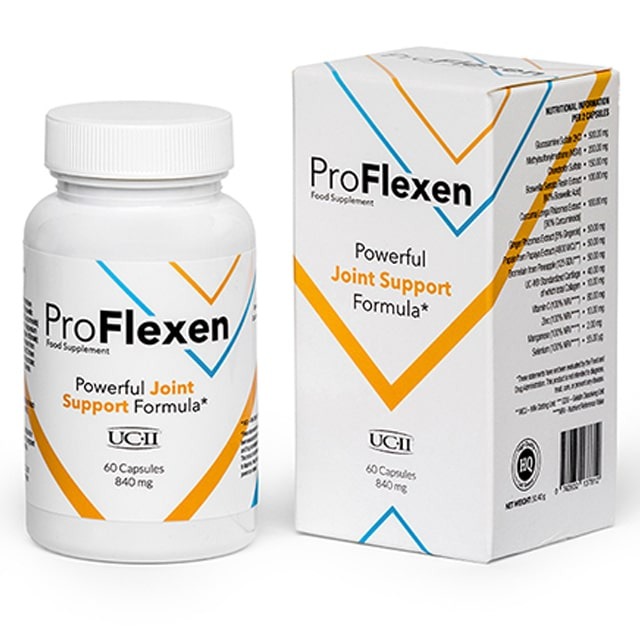
Table of Contents
- Ingredients That Have Evidence
- What to Avoid in UK Joint Supplements
- ProFlexen, Best All-Round Formula
- Sanoflex, Best Herbal Anti-Inflammatory Formula
- Side-by-Side Comparison
- How to Choose Between Them
- How Long Before You See Results
- Frequently Asked Questions
Ingredients That Have Evidence
The joint supplement category is crowded with ingredients that have varying levels of clinical support. For UK adults buying independently, understanding which components work (and at what doses) is the foundation of a sensible purchasing decision.
Glucosamine sulphate
The most-researched joint supplement ingredient. At 1,500mg per day, a consistent body of evidence (including a Cochrane systematic review) supports modest reductions in knee OA pain and stiffness over 6 to 12 months. Glucosamine sulphate (not HCl) at this dose is where the strongest data sits. For the detail, see our evidence review on glucosamine and our comparison of glucosamine sulphate vs HCl.
UC-II Collagen (undenatured type II)
A patented collagen form that works differently from hydrolysed collagen. At 40mg per day (notably lower than typical collagen supplement doses) UC-II works through oral tolerization: it trains the immune system to reduce its inflammatory attack on joint cartilage, rather than providing collagen as a structural building block. RCTs show reductions in knee pain and improved joint function comparable to or better than glucosamine and chondroitin combinations in some trials. See our collagen supplement guide for how to read collagen labels correctly.
Boswellia serrata
A resin extract with AKBA as the primary active compound. Clinical trials show reductions in knee OA pain over 8 to 12 weeks. Bioavailability varies significantly between extract types, branded extracts like AprèsFlex demonstrate superior absorption compared to generic Boswellia powder. Our Boswellia guide covers the evidence in detail.
MSM (methylsulfonylmethane)
An organic sulphur compound studied at 1,000 to 3,000mg per day. Evidence supports modest reductions in joint pain and oxidative stress markers. Commonly combined with glucosamine, the mechanisms are complementary. Our MSM supplement guide covers dosing and what to look for on labels.
Devil’s Claw (Harpagophytum procumbens)
A Southern African medicinal plant with well-documented anti-inflammatory activity. Multiple RCTs support short-term pain reduction in lower back pain and knee osteoarthritis. Works by inhibiting inflammatory pathways rather than providing structural support, a useful inclusion for pain-focused formulas, particularly for adults whose primary complaint is pain and stiffness rather than structural cartilage loss.
Turmeric / Curcumin
Curcumin is the active compound in turmeric. Evidence for joint pain is mixed, curcumin has poor inherent bioavailability, and trials using bioavailability-enhanced forms show better results than standard turmeric powder. Our turmeric for joint pain article covers what to look for in UK products.
What to Avoid in UK Joint Supplements
- Proprietary blends without disclosed doses: If a label says “Joint Blend, 750mg” without listing each ingredient’s individual dose, you cannot assess whether any active is present at a clinically relevant amount.
- Glucosamine HCl when sulphate is the studied form: Glucosamine hydrochloride is cheaper to manufacture and appears in many budget products. The evidence base is primarily for glucosamine sulphate, the two are not interchangeable for research purposes.
- Unrealistically short guarantee windows: Joint supplements require 8 to 12 weeks to show measurable effects. A 10-day return window closes before any fair evaluation is possible.
- Collagen products conflating hydrolysed and UC-II mechanisms: Hydrolysed collagen at 10g works as a substrate for collagen synthesis. UC-II collagen at 40mg works through oral tolerization. These are different mechanisms requiring different doses, a product claiming both at the wrong doses is misrepresenting both. See our collagen for joints guide.
One more thing to watch: some joint formulas advertised to UK shoppers actually ship from the United States, with delivery of four to six weeks and pricing in US dollars. JointReliveX is a current example. Its glucosamine dose is reasonable, but for a UK buyer the formulas below are far more practical to run for the three months a fair trial needs.
ProFlexen, Best All-Round Formula for UK and Europe
VitalMove40 Verdict, ProFlexen: 4.1 / 5
Best for: Adults who want broad joint health coverage, structural support, anti-inflammatory action, and micronutrients, in a single daily supplement
✓ Only formula in its class with UC-II collagen at the clinically validated 40mg dose
✓ AprèsFlex Boswellia for superior anti-inflammatory bioavailability
✓ Ships to UK, Ireland, most of Europe, US, Canada, and Australia
✗ 10-day guarantee is the weakest in the category, most competitors offer 30 to 90 days
✗ Individual ingredient doses are below single-ingredient therapeutic ranges in some cases
ProFlexen is a 13-ingredient joint supplement covering four distinct mechanisms: cartilage structural support (UC-II collagen 40mg, glucosamine sulphate 500mg, chondroitin, MSM 500mg), anti-inflammatory action (AprèsFlex Boswellia, curcumin, ginger), enzymatic recovery support (bromelain, papain), and bone and connective tissue micronutrients (Vitamin C, zinc, manganese, selenium).
The standout differentiator for UK buyers is UC-II collagen at 40mg, the exact dose and form validated in RCTs for knee joint pain. This is not commonly found in UK supplement products, most of which use hydrolysed collagen at gram-level doses (a different mechanism entirely) or skip collagen altogether. The AprèsFlex Boswellia is the second meaningful distinction: a patented, bioavailability-enhanced extract rather than generic Boswellia powder.
The limitation to acknowledge: a 13-ingredient formula means most individual ingredients are present below the doses studied in single-ingredient trials. MSM at 500mg is below the 1,000 to 3,000mg range studied independently. Glucosamine at 500mg is below the 1,500mg threshold. This is a common trade-off in multi-mechanism formulas, broader coverage at the cost of individual dose potency.
ProFlexen ships to the UK, Ireland, Germany, France, Netherlands, Spain, Italy, Sweden, Belgium, and most of Europe, plus the US, Canada, and Australia. For the full ingredient breakdown, see our ProFlexen review.
Sanoflex, Best Herbal Anti-Inflammatory Formula
VitalMove40 Verdict, Sanoflex: 3.5 / 5
Best for: Adults whose primary complaint is inflammatory joint pain and stiffness, and who want a herbal-led formula without glucosamine
✓ Devil’s Claw + Boswellia + turmeric provide three distinct herbal anti-inflammatory mechanisms
✓ Hyaluronic acid for synovial fluid support
✓ Bone-supportive micronutrient stack (D3, K2, calcium, zinc)
✗ Individual ingredient doses not fully disclosed on label
✗ Does not provide glucosamine-based structural cartilage support
✗ Higher per-bottle cost requires multi-bottle commitment for best value
Buy link temporarily unavailable. See the availability note near the top of this article.
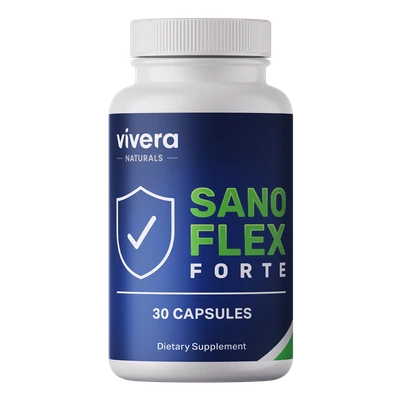
Sanoflex takes a different approach from most joint supplements: it skips glucosamine entirely and builds instead around three herbal compounds with RCT evidence for joint pain, Devil’s Claw, Boswellia serrata, and turmeric extract. These work primarily by suppressing inflammatory pathways rather than providing structural cartilage support.
This distinction matters for who the formula fits. If your joint pain has a significant inflammatory component, morning stiffness that improves with movement, pain that responds to anti-inflammatories, the Sanoflex mechanism directly targets that pathway. If structural cartilage support is the primary goal, glucosamine-based formulas like ProFlexen are the more appropriate starting point.
The limitation is undisclosed individual ingredient doses. A product with multiple active ingredients and no per-ingredient dosing on the label cannot be independently verified for clinical relevance, the buyer cannot confirm whether each active is present at a meaningful amount. This is the primary reason for the 3.5/5 rating: credible ingredients, uncertain dosing transparency. For the full breakdown, see our Sanoflex review.
Buy link temporarily unavailable. See the availability note near the top of this article.
Side-by-Side Comparison
| Feature | ProFlexen | Sanoflex |
|---|---|---|
| Overall rating | 4.1 / 5 | 3.5 / 5 |
| Primary mechanism | Multi: structural + anti-inflammatory + enzymatic | Herbal anti-inflammatory (pain and stiffness focused) |
| Glucosamine sulphate | Yes, 500mg | No |
| UC-II Collagen | Yes, 40mg | No |
| Boswellia | AprèsFlex (enhanced bioavailability) | Standard extract |
| Devil’s Claw | No | Yes |
| Hyaluronic acid | No | Yes |
| Dose transparency | All doses disclosed | Partially undisclosed |
| Money-back guarantee | 10 days | Check product page |
| UK and Europe shipping | Yes, confirmed | Check product page for your country |
How to Choose Between Them
Choose ProFlexen if you want the broadest possible coverage from a single supplement, structural support via UC-II collagen and glucosamine, anti-inflammatory action from AprèsFlex Boswellia and curcumin, and a micronutrient stack covering connective tissue maintenance. It is the better option for dose transparency and confirmed UK and European shipping.
Choose Sanoflex if pain relief and inflammation reduction are your primary goals rather than structural cartilage support, you prefer herbal-led formulas, or you have not responded to glucosamine-based products in the past. The Devil’s Claw and Boswellia combination has its own solid evidence base specifically for joint pain.
For UK adults who found glucosamine helpful when it was previously prescribed, ProFlexen’s glucosamine sulphate and UC-II combination is the logical starting point. For adults who did not respond to glucosamine, or who prefer to approach from the anti-inflammatory angle first, Sanoflex addresses the inflammatory component through a different pathway entirely.
Also worth reading: our ProFlexen vs Flexomore comparison, which covers the choice between ProFlexen and a high-dose glucosamine powder alternative for adults who want to prioritise glucosamine dosing specifically.
How Long Before You See Results
Joint supplements work slowly. This is not a marketing caveat, it reflects the biology of joint tissue. Cartilage has limited blood supply and slow turnover. Anti-inflammatory effects from herbal compounds are faster (some people notice changes within 2 to 4 weeks) but structural effects take 8 to 12 weeks minimum for any meaningful assessment.
Practical guidance for UK buyers:
- Do not evaluate a joint supplement after one or two weeks. This timeframe captures only placebo effect and expectation, not biological change.
- A 3-month supply is the minimum realistic commitment for structural support formulas.
- Track a specific, measurable outcome: morning stiffness duration, how many stairs before discomfort, steps per day before pain. Subjective “feeling better” is harder to attribute than a measurable change.
- If there is no change after 10 to 12 weeks of consistent daily use, the supplement is likely not the appropriate tool for that specific cause of joint pain, other causes (muscle weakness, poor biomechanics, inflammatory arthritis) require different approaches.
Frequently Asked Questions
Does the NHS recommend joint supplements?
No, NICE updated its osteoarthritis guidelines in 2020 and no longer recommends glucosamine or chondroitin for knee OA on the NHS. The decision was based on population-level cost-benefit analysis, not evidence of harm. UK adults who found glucosamine helpful when it was prescribed can still purchase it privately, the evidence for individual benefit has not changed, only the routine prescribing policy.
Can I get joint supplements on prescription in the UK?
Glucosamine is no longer prescribed under NHS guidelines for osteoarthritis. Joint supplements in the UK are primarily self-purchased through pharmacies, health food shops, and online retailers. Vitamin D is the one supplement the NHS actively recommends for UK adults, particularly during autumn and winter months when sunlight exposure is insufficient for the body to synthesise adequate amounts.
Are joint supplements safe to take with common UK medications?
Most joint supplement ingredients are safe for adults not on anticoagulants. The notable interaction is between high-dose turmeric or fish oil and warfarin or newer anticoagulants (apixaban, rivaroxaban), these combinations can affect bleeding time and should be discussed with a GP or pharmacist first. Devil’s Claw may interact with some cardiac medications. If you take any prescribed medications, review supplement ingredients with a pharmacist before starting, particularly if taking anticoagulants, antidiabetics, or antihypertensives.
Is it worth paying more for branded ingredient extracts?
For specific ingredients, yes. AprèsFlex Boswellia and UC-II collagen are examples where the branded form has demonstrated meaningfully better absorption or clinical effect compared to generic equivalents, and the cost premium reflects a real difference. For straightforward water-soluble ingredients like glucosamine sulphate, MSM, or vitamin C, a generic equivalent at the same dose is generally equivalent to a branded version. The question to ask is whether the ingredient’s evidence base was built using the branded or generic form, the answer determines whether paying more is justified.
Can joint supplements replace exercise for joint pain?
No, and this is the most important point for UK adults managing joint pain. Exercise is the most evidence-supported intervention for osteoarthritis pain, with effect sizes larger than any supplement in the literature. Strength training and low-impact cardiovascular exercise reduce joint pain, improve function, and slow structural decline. Supplements address specific biological mechanisms but cannot replicate the mechanical loading benefit that keeps joint cartilage nourished and surrounding musculature strong. The appropriate role for supplements is alongside an exercise programme, not instead of one.
About the author: Richard Hale is an independent health writer focused on mobility, joint health, and active aging research. He is not a licensed medical professional. All content on VitalMove40 is for educational purposes only and is not a substitute for advice from a qualified healthcare provider.