Last updated: July 14, 2026 | By Richard Hale
This content is for educational purposes only and is not medical advice. Consult a qualified healthcare provider for guidance specific to your health situation.
Collagen is the most abundant protein in the human body and the primary structural component of cartilage, tendons, and ligaments, the tissues most directly involved in joint function. After 40, the body’s natural collagen production declines steadily, and the repair capacity of joint tissue slows. Collagen supplementation has emerged as one of the better-evidenced nutritional strategies for supporting joint health, but not all collagen supplements are the same. This guide explains the different types, what the evidence shows, what to look for on a label, and which formulations are most relevant to joint pain specifically.
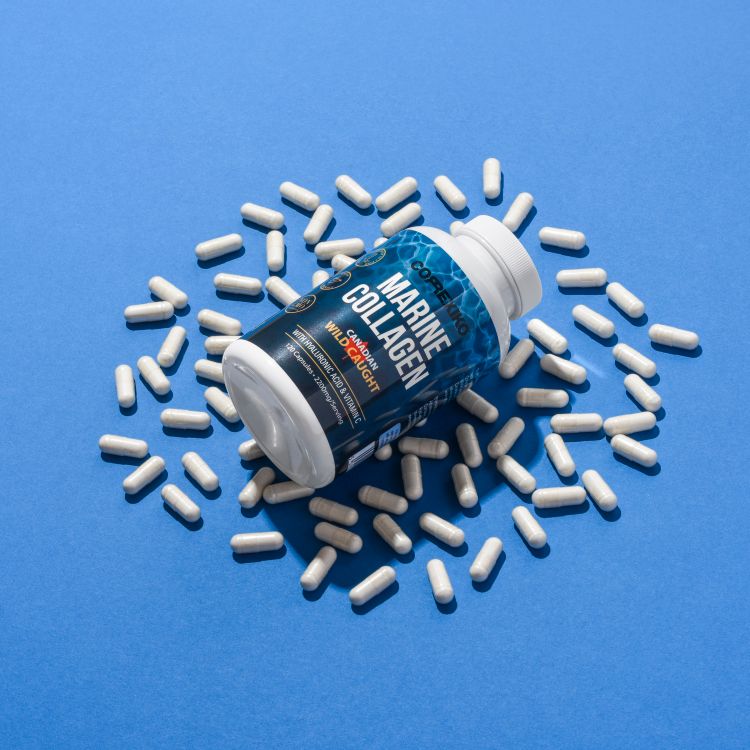
Table of Contents
- Types of Collagen: Which One Is for Joints?
- What the Evidence Shows
- What to Look For in a Collagen Supplement
- Getting Collagen Through Diet
- Realistic Expectations
- Frequently Asked Questions
Types of Collagen: Which One Is for Joints?
There are at least 28 types of collagen in the human body, but three are most relevant to supplements: Type I, Type II, and Type III.
Type I Collagen
The most abundant collagen in the body, found in skin, bones, tendons, and ligaments. Most hydrolyzed collagen supplements on the market are derived from Type I (typically bovine hide or marine sources). They are broken down into peptides that circulate and provide amino acid building blocks for connective tissue synthesis. Type I collagen supplements are the most widely studied in the context of skin and general connective tissue, and have growing evidence for tendon and ligament support.
Type II Collagen
The dominant collagen in articular cartilage, the tissue that lines joint surfaces. This is the most directly relevant type for joint pain. Type II collagen supplements come in two main forms:
- Hydrolyzed Type II collagen: broken down into peptides and absorbed as amino acids, providing building material for cartilage synthesis
- Undenatured Type II collagen (UC-II): processed to preserve the native molecular structure. Works via a different mechanism: oral tolerisation, where small doses presented to gut immune tissue train the immune system to reduce its attack on the body’s own cartilage. Requires much lower doses (40mg vs 10g for hydrolyzed) and has specific clinical evidence for osteoarthritis joint pain
Type III Collagen
Found alongside Type I in skin and blood vessels. Less relevant to joint pain specifically. Often included in multi-collagen supplements as a “completeness” addition rather than for targeted joint benefit.
What the Evidence Shows
Hydrolyzed Collagen Peptides
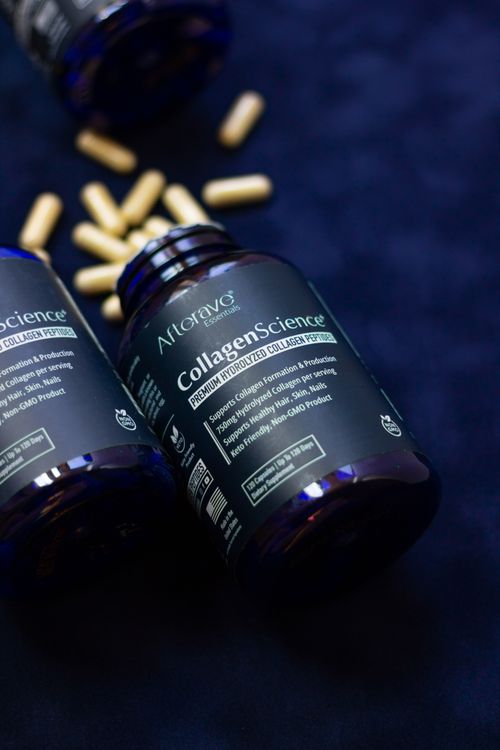
A 2019 systematic review in British Journal of Sports Medicine (Shaw et al.) found that hydrolyzed collagen supplementation combined with vitamin C and exercise increased collagen synthesis markers in tendons. A 2021 RCT in Nutrients (Martínez-Puig et al.) reported that 10g/day of hydrolyzed collagen reduced knee pain and stiffness scores (WOMAC) in adults with knee osteoarthritis versus placebo over 6 months. The evidence base is growing, though study quality varies considerably across the literature.
UC-II (Undenatured Type II Collagen)
UC-II has a more specific and better-controlled evidence base for joint pain. A 2009 RCT (Crowley et al., International Journal of Medical Sciences) compared UC-II at 40mg/day against glucosamine (1,500mg) plus chondroitin (1,200mg) in adults with knee osteoarthritis. UC-II produced statistically greater improvements in WOMAC pain, stiffness, and physical function scores at 90 and 180 days. A 2013 study (Lugo et al.) found UC-II reduced exercise-induced joint discomfort in healthy adults, relevant for active adults over 40 who experience joint pain during or after exercise rather than from diagnosed OA.
The mechanism difference matters: UC-II doesn’t require loading at high doses. 40mg per day is the clinically effective dose, making it practical to include in a multi-ingredient joint supplement rather than requiring a standalone high-dose powder. For a deeper look at the collagen evidence specifically, see our guide on collagen for joints.
What to Look For in a Collagen Supplement
For joint cartilage support (primary goal): Look for UC-II at 40mg or hydrolyzed Type II collagen at 5–10g. Avoid products that claim joint benefits primarily from Type I marine collagen at low doses, the Type I evidence is less specific to cartilage.
Vitamin C inclusion: Collagen synthesis requires vitamin C as a cofactor. Supplements that include 80mg+ of vitamin C alongside collagen peptides better support the synthesis pathway than collagen alone. This is the approach validated in the Shaw et al. tendon study.
Dose transparency: The label should specify the type of collagen and the amount per serving. “Proprietary blend” labeling that obscures individual doses prevents you from knowing whether the product delivers research-relevant amounts.
Additional ingredients: The best multi-ingredient joint supplements combine collagen with complementary compounds, hyaluronic acid (joint lubrication), Boswellia (anti-inflammatory, 5-LOX inhibition), or MSM (sulphur compound with inflammation-modulating effects). Products using patented, clinically validated forms of these ingredients, such as AprèsFlex® Boswellia or Hyaluronic Acid HA with confirmed bioavailability, are worth the premium over generic versions.

Getting Collagen Through Diet
The body synthesises collagen from glycine, proline, and hydroxyproline, amino acids concentrated in connective tissue. Dietary sources that support collagen synthesis include:
- Bone broth: rich in collagen peptides from simmered cartilage and connective tissue
- Skin-on poultry and fish: skin contains high concentrations of collagen
- Organ meats: particularly high in glycine and proline
- Vitamin C-rich foods: citrus, bell peppers, kiwi, essential for hydroxylation steps in collagen synthesis
- Zinc and copper: cofactors in collagen cross-linking, found in nuts, seeds, shellfish
Dietary collagen intake is significant for the general population, but research supporting supplemental collagen for joint pain used doses (40mg UC-II or 5–10g hydrolyzed) that are difficult to reliably achieve through diet alone. Supplementation is not a substitute for good dietary protein intake, but it adds a targeted dose of collagen-specific peptides beyond what diet typically provides.
Realistic Expectations
Collagen supplementation is not an acute pain intervention, it does not produce the immediate relief that NSAIDs, topical counterirritants, or heat therapy provide. The mechanism is slow and structural: collagen synthesis is a process that plays out over weeks to months. Clinical trials showing significant effects have run for 90–180 days. Adults who start a collagen supplement and assess it after two weeks will likely conclude it is not working, the relevant evaluation period is 3–6 months of consistent daily use.
Results are also most pronounced in adults with active joint tissue breakdown (those with cartilage wear, OA, or high physical loading) rather than in adults with purely muscular or postural pain sources. Collagen supplementation supports cartilage maintenance and repair; it is less relevant to pain whose origin is not cartilage-related.
Frequently Asked Questions
Is marine collagen good for joints?
Marine collagen is primarily Type I and is well-absorbed. It has good evidence for skin and general connective tissue support, and some evidence for tendons. For articular cartilage and joint pain specifically, Type II collagen (particularly UC-II) has a more targeted evidence base. Marine collagen is a reasonable general supplement but is not the most targeted choice if joint cartilage is the primary concern.
How long does collagen take to work for joints?
Clinical trials showing statistically significant joint pain reduction have measured outcomes at 90 and 180 days of consistent supplementation. Realistic minimum evaluation period is 3 months; 6 months is more appropriate for assessing full benefit. Do not judge efficacy at 2–4 weeks.
Can I take collagen with glucosamine?
Yes, there is no known interaction. They work through different mechanisms: glucosamine provides substrate for glycosaminoglycan synthesis (a component of cartilage matrix), while collagen peptides provide amino acid building blocks for collagen fibrils, and UC-II works via immune modulation. A product combining both addresses multiple cartilage maintenance pathways simultaneously.
What is the difference between UC-II and regular collagen?
Regular hydrolyzed collagen is digested into amino acids and used as building material. UC-II is not digested, it is absorbed intact in small amounts and presented to immune tissue in the gut, where it trains the immune system to reduce inflammatory attack on the body’s own cartilage. UC-II works at 40mg per day; hydrolyzed collagen requires 5–10g. They are not interchangeable and target different mechanisms.
About the author: Richard Hale is an independent health writer focused on mobility, joint health, and active aging research. He is not a licensed medical professional. All content on VitalMove40 is for educational purposes only and is not a substitute for advice from a qualified healthcare provider.