Last updated: September 10, 2026 | By Richard Hale
Affiliate disclosure: VitalMove40 earns a commission if you purchase through links on this page at no additional cost to you. We only review products we assess as relevant and useful for our readers. See our full affiliate disclosure.
The Grounded Evolve is a zero-drop casual shoe from Grounded Footwear, designed to deliver the foot mechanics benefits of barefoot movement in a shoe that looks like mainstream everyday footwear rather than a minimalist sports shoe. The zero-drop sole, flexible construction, and foot-hugging fit engage the foot’s natural movement patterns, but the leather-look upper and clean silhouette mean most people wearing them would not identify them as a “barefoot shoe” from appearance alone.
If you are not yet familiar with what zero-drop footwear does and why it matters for foot health, joints, and posture, our guide to barefoot shoes vs. traditional shoes covers the evidence and the key differences. This review focuses specifically on the Evolve model. Grounded Footwear also makes a more traditional minimalist barefoot shoe, our Grounded Footwear review covers that model separately.
This content is for educational purposes only and is not medical advice. Available in the United States only.
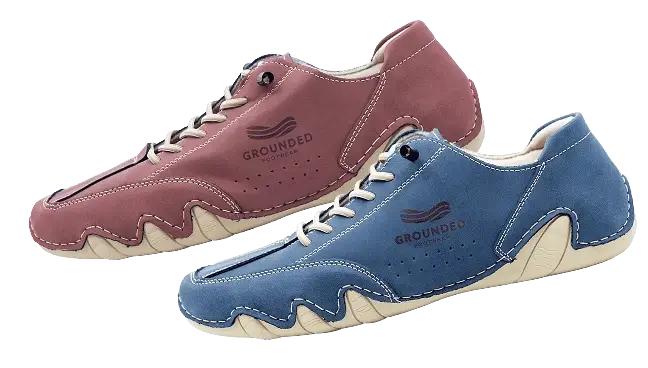
Table of Contents
- What the Grounded Evolve Is
- Design and Construction
- The Zero-Drop Mechanics
- Transitioning Into Zero-Drop Shoes
- Who It’s For
- Verdict
- Frequently Asked Questions
What the Grounded Evolve Is
The Grounded Evolve is positioned differently from most barefoot shoes on the market. The majority of minimalist footwear, thin-soled, wide toe box, obviously athletic or utilitarian in appearance, requires the wearer to visually commit to the barefoot aesthetic. The Evolve takes a different approach: the functional properties of zero-drop, flexible-sole footwear built into a shoe that reads as a casual everyday sneaker.
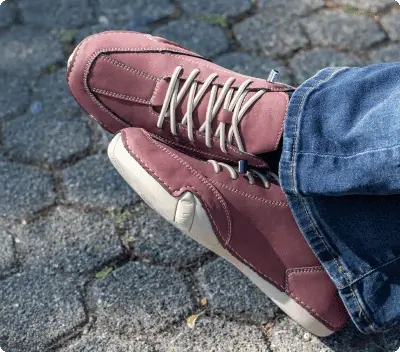
The result is available in blue, pink, and wine/burgundy colorways. The silhouette is a low-top lace-up casual shoe with visible hand-stitching detail and a FlexForm upper material that has a quality leather-look texture. The sole has a distinctive scalloped wave pattern along the lateral edge, visually distinctive but not overtly “athletic” or “orthopedic.” It is the kind of shoe that can be worn to a casual work environment, on errands, or for a walk without drawing attention as a therapeutic device.
Design and Construction
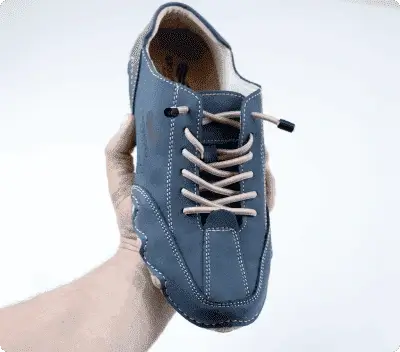
The upper is constructed from FlexForm, a synthetic leather-look material that provides structure without the rigidity of genuine leather. Hand-stitching is visible along the upper and around the toe box, contributing to the shoe’s quality appearance and providing reinforcement at high-stress seams.
The interior has a soft lining with a supportive heel cradle, a molded heel cup that cradles the calcaneus and helps control heel motion during the gait cycle. This is meaningfully different from the completely flat, minimal interior of hard-core minimalist shoes; the Evolve adds comfort and heel support while retaining the zero-drop and flexible sole properties.
The sole is the functionally significant component. The scalloped wave pattern along the edge is not purely cosmetic, it reflects the sole’s flex zones, the points where the shoe bends during the toe-off phase of walking. The sole is slip-resistant and flexible enough to allow the foot’s natural dorsiflexion (upward bending) during push-off without the rigid resistance of conventional shoe soles that restrict this motion.
The Zero-Drop Mechanics
Zero-drop means the heel and the forefoot sit at the same height above the ground, a 0mm heel-to-toe differential. Conventional shoes have heel elevations of 8-12mm in athletic shoes and considerably more in dress shoes. This elevation shifts body weight forward onto the forefoot, shortens the Achilles tendon and calf musculature over time, and alters the body’s natural standing posture.
Walking in a zero-drop shoe restores a more neutral foot strike position, engaging the foot’s intrinsic muscles more actively and allowing the Achilles and calf to work through a fuller range of motion. Over time, consistent zero-drop wear strengthens the foot’s intrinsic musculature, the small muscles that support the arch and control toe position, which conventional shoes largely allow to atrophy through passive support.
The flexible sole compounds this effect: a rigid sole prevents the foot from bending naturally through the toe-off phase of walking, transferring that bending stress to the ankle and knee instead. A flexible sole allows the foot to complete its natural rolling motion, engaging the plantar fascia and forefoot musculature appropriately rather than bypassing them.
The health claims associated with zero-drop footwear, plantar fasciitis relief, heel pain reduction, improved balance and posture, are consistent with these mechanical effects when the transition is managed correctly. The evidence is strongest for long-term users who have fully adapted, and for conditions where conventional heel elevation is a contributing factor to symptoms.
Transitioning Into Zero-Drop Shoes
This is the most practically important section for anyone considering zero-drop footwear for the first time.
The Achilles tendon and calf musculature shorten adaptively in adults who have worn elevated-heel footwear for years or decades. Switching immediately to full-time zero-drop wear places the Achilles and calf under a suddenly increased stretch load that the tissue is not conditioned for. Doing too much too soon is the most common cause of Achilles tendinopathy and calf strain in zero-drop shoe transitions.
The standard transition guidance from sports medicine and podiatry: begin wearing zero-drop shoes for 1-2 hours per day during the first week, increasing by 30-60 minutes per day per week over a 4-6 week period before wearing them as a primary shoe. During this period, continue using conventional footwear for the remainder of daily activity, including any running or extended walking.
Adults with existing Achilles tendinopathy should consult a physiotherapist before transitioning to zero-drop footwear, the increased Achilles load during transition may aggravate an already compromised tendon. For adults without existing lower limb conditions, the gradual transition approach is typically well-tolerated and completed without incident within 4-6 weeks.
Who It’s For
Best fit for:
- Adults who want the functional benefits of zero-drop footwear in a shoe that works for everyday casual settings (work, errands, social occasions) without a visually minimalist appearance
- Adults who have already successfully transitioned to zero-drop footwear and want a casual option beyond athletic styles
- People with plantar fasciitis or heel pain linked to conventional footwear mechanics who want to try addressing the mechanical root cause through footwear change
- Adults interested in improving foot strength and posture through more natural movement patterns over time
Less suitable for:
- Adults with existing Achilles tendinopathy, the increased Achilles load during zero-drop transition requires careful management with physiotherapy guidance
- People who need immediate foot pain relief rather than long-term biomechanical correction, insoles or bracing may be more appropriate for acute management while footwear transition proceeds gradually
- Anyone looking for a shoe with significant arch support built in, zero-drop shoes work by engaging the foot’s own support structures, not by providing passive arch support
Verdict
The Grounded Evolve fills a genuine gap in the zero-drop footwear category: a shoe that provides the functional mechanics of barefoot movement without the visual cues that make most minimalist footwear impractical for everyday non-athletic settings. The FlexForm construction, hand-stitching detail, and mainstream silhouette accomplish this credibly, these shoes do not read as “orthopedic” or “athletic” in a way that limits where they can be worn.
The functional zero-drop and flexible sole mechanics are real and consistent with what the evidence supports for natural foot movement and long-term foot health. The transition requirement is genuine, new zero-drop wearers who do not follow a gradual schedule are the primary source of negative reviews in this category, not the shoe itself.
For adults who have wanted to try zero-drop footwear but found the aesthetics of available options impractical for their daily life, the Evolve is worth considering as an entry point or as a casual complement to a zero-drop athletic option already in rotation.
Check Current Price, Grounded Evolve Shoes
Available in the United States only. Grounded Footwear’s published returns policy is a 30-day money-back window (some checkout offers show 90 days, confirm current terms at checkout before ordering).
Frequently Asked Questions
What is the difference between Grounded Evolve and the standard Grounded Footwear barefoot shoes?
The Grounded Evolve prioritizes everyday casual aesthetics, it is designed to look like mainstream footwear while delivering zero-drop mechanics. The standard Grounded Footwear model is more overtly minimalist in appearance, with design cues that identify it as a barefoot shoe. Both are zero-drop and flexible-soled; the choice between them is largely about which aesthetic fits your daily context. Our Grounded Footwear review covers the original model for a direct comparison.
Do the Grounded Evolve shoes have arch support?
No, zero-drop barefoot shoes do not include built-in arch support in the traditional sense. The design philosophy is that the foot’s own intrinsic muscles should provide arch support, and that passive arch support from the shoe prevents those muscles from developing that capacity. Adults transitioning from arch-supported footwear will notice the absence of passive support and may find the first weeks of wear requires a stronger foot engagement. If you need immediate arch support during this period, a removable insole can be added to the Evolve while the foot musculature gradually strengthens.
Are the Grounded Evolve shoes true to size?
The Evolve uses a foot-hugging fit design, closer to the foot contour than most conventional shoes with their wider toe boxes and generic lasts. Most users find their standard shoe size fits correctly, but adults with wide feet or high insteps may find the fit snug and should size up by half a size. If in doubt, the manufacturer’s sizing guidance and the money-back guarantee together make it reasonable to order, try, and exchange if the fit is not right without financial risk.
About the author: Richard Hale is an independent health writer focused on mobility, joint health, and active aging research. He is not a licensed medical professional. All content on VitalMove40 is for educational purposes only and is not a substitute for advice from a qualified healthcare provider.