Last updated: September 10, 2026 | By Richard Hale
Availability note, updated September 4, 2026: the retailer link for ArthroMD Plus is currently offline, so we have taken the buy buttons down rather than send you to a page that does not work. Nothing else in this article has changed. We will put a working link back as soon as ArthroMD Plus is available through a retailer we can verify.
Disclosure: This post contains affiliate links. If you purchase through our links, we may earn a commission at no extra cost to you. We only review products we believe are worth your consideration. Full disclosure here.
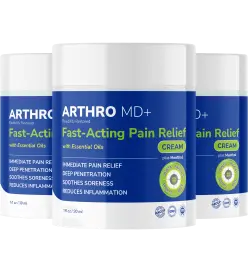
ArthroMD+ is a topical joint relief cream that combines fast-acting counterirritants (menthol and camphor) with several anti-inflammatory compounds including Boswellia, turmeric, MSM, and arnica, plus glucosamine for structural support. Unlike most topical creams that lean entirely on either fast-acting sensory relief or slower herbal anti-inflammatory effects, ArthroMD+ attempts to deliver both in a single product.
This review examines the formula ingredient by ingredient, looks at what the evidence suggests about each compound in topical form, and assesses whether the product makes sense for adults managing chronic joint pain, post-activity stiffness, or general mobility challenges.
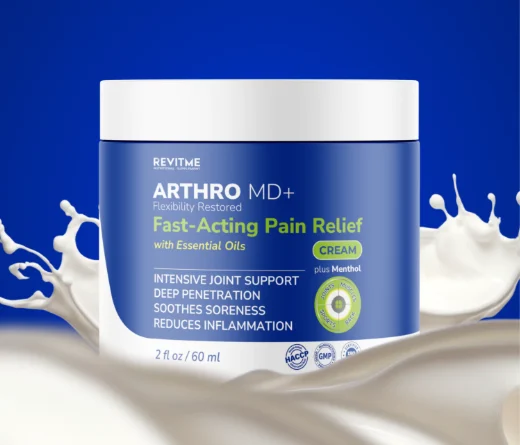
Table of Contents
- Formula at a Glance
- Ingredient-by-Ingredient Analysis
- What to Expect and When
- Pricing and Guarantee
- Pros and Cons
- Who ArthroMD+ Is For, and Who Should Pass
- Frequently Asked Questions
Formula at a Glance
ArthroMD+ contains eight active ingredients spanning three distinct mechanisms of action:
- Fast-acting counterirritants: Menthol, Camphor, alter pain perception within minutes
- Anti-inflammatory compounds: Boswellia serrata, Turmeric (Curcumin), MSM, Arnica montana, Eucalyptus oil
- Structural support component: Glucosamine
This three-tier approach is unusual in the topical joint cream category. Most products in this space are either counterirritant-heavy (Icy Hot, BioFreeze) or herbal-anti-inflammatory focused (many DTC wellness brands). Combining both in a single formula alongside glucosamine is a differentiated approach, though, as with most consumer topical products, individual ingredient concentrations are not disclosed. For a broader look at how this product category works, see our guide to topical joint creams.
Rating: 3.8 / 5, Broad and well-designed formula with genuine ingredient variety across mechanisms. The main limitation is undisclosed concentrations and a 30-day guarantee that is shorter than the time frame for herbal anti-inflammatory effects to develop.
Ingredient-by-Ingredient Analysis
Menthol
Menthol activates cold-sensitive TRPM8 receptors in the skin, creating a cooling sensation that competes with pain signals, a mechanism called counterirritation. Pain relief from menthol is rapid (within minutes) but temporary. It is particularly effective for acute stiffness, post-activity soreness, and as an immediate bridge while longer-acting anti-inflammatory compounds accumulate effect. Menthol is well-evidenced in OTC topical use and is FDA-approved as a topical analgesic active ingredient under the OTC External Analgesic monograph.
Camphor
Camphor produces a warming effect through TRPV1 receptor activation, the complementary counterirritant to menthol’s cooling. It also increases local blood flow (vasodilation), which can help with tissue recovery and nutrient delivery to stressed periarticular tissue. Like menthol, camphor provides relatively short-duration sensory relief. The combination of both creates the familiar “hot-cold” effect common in effective counterirritant formulas.
Boswellia serrata
Boswellia inhibits 5-lipoxygenase (5-LOX), reducing production of inflammatory leukotrienes in joint tissue. In oral form, this is well-evidenced, multiple RCTs show significant OA pain reduction. For topical Boswellia, the evidence base is smaller but growing, with penetration studies showing boswellic acids cross the skin barrier in lipid-rich carrier formulations. The anti-inflammatory effect takes consistent daily exposure over 2–4 weeks to accumulate meaningfully. See our full breakdown of Boswellia for joint pain for the oral evidence in more depth.
Turmeric extract (Curcumin)
Curcumin inhibits NF-κB transcription and COX-2 enzyme activity, addressing inflammation at multiple points in the cascade. Topical curcumin has a penetration challenge (it is a large, poorly water-soluble molecule) but studies with lipid-based carriers have shown measurable tissue levels with consistent application. The bioavailability concern that affects oral turmeric (requiring piperine or specialized delivery) is less prominent topically if the carrier base supports absorption. ArthroMD+ does not disclose the curcumin standardization percentage.
Arnica montana
Arnica is well-established in topical form for bruising, swelling, and post-trauma inflammation, this is actually where its evidence is strongest. For chronic joint OA, the data is thinner, but Arnica’s helenalin content has demonstrated anti-inflammatory activity in joint tissue models. It is a reasonable addition to a formula targeting post-activity joint soreness and acute stiffness, and it carries a long tradition of use in sports medicine topicals.
MSM (Methylsulfonylmethane)
MSM provides organic sulfur, which is involved in collagen synthesis and cartilage maintenance. In oral form at 1,000–3,000 mg/day, MSM has RCT evidence for reduced joint pain and stiffness. For topical MSM, absorption through intact skin is limited, some research suggests partial penetration, but it is not as well-characterized as for oral use. It is a lower-risk inclusion than a primary benefit driver in a topical formula. For more on the oral evidence base, see our guide to MSM for joint pain.
Glucosamine
Glucosamine in a topical cream raises a legitimate question about mechanism. The oral evidence for glucosamine is for systemic delivery at 1,500 mg/day of glucosamine sulfate, achieved through GI absorption and bloodstream transport to joints. Topical glucosamine penetration through the skin is not well-established in the literature. Its presence likely contributes to the product’s positioning rather than a clear pharmacological pathway, though skin-contact absorption has not been definitively ruled out in all joint sites. See our glucosamine sulfate guide for the oral evidence context.
Eucalyptus oil
Eucalyptus oil contains cineole (1,8-cineole), a compound with demonstrated anti-inflammatory and analgesic properties in both topical and inhalation forms. A 2013 randomized clinical trial (Jun et al.) found eucalyptus oil reduced pain and inflammatory markers in patients recovering from knee replacement surgery. It also functions as a mild penetration enhancer, eucalyptus oil is sometimes used in pharmaceutical topical formulations specifically because it helps other compounds cross the skin barrier more effectively. This dual role (active ingredient + penetration enhancer) makes it a thoughtful addition rather than just a fragrance ingredient.
What to Expect and When
ArthroMD+ delivers benefits on two different timelines:
Within the first 10–20 minutes: Menthol and camphor produce a noticeable warming-cooling sensation that partially suppresses pain perception. This counterirritant effect provides real but temporary relief, useful for immediately before activity, during a stiffness flare, or when acute discomfort needs short-term management.
After 2–4 weeks of consistent use: Boswellia, turmeric, and Arnica require sustained presence in periarticular tissue to reduce baseline inflammation. This is a different mechanism, not masking pain signals but reducing the inflammatory markers generating the pain. Users who stop after a week or two, before this accumulation phase completes, often miss the fuller benefit of the formula.
Applying ArthroMD+ 2–3 times daily (morning, midday (if needed), and evening) covers both timelines. The evening application in particular allows several hours of sustained anti-inflammatory compound contact while the joint is at rest.
Pricing and Guarantee
| Option | Price | vs. Original | Shipping |
|---|---|---|---|
| Single bottle | $39.95 | $69.95 regular price | Check at checkout |
| Multi-bottle | Varies, check at checkout | N/A | Often free on bundles |
ArthroMD+ carries a 30-day money-back guarantee. That window is shorter than ideal for a product whose herbal anti-inflammatory compounds (Boswellia, turmeric) take 2–4 weeks to show meaningful effect. Practically, you will be near the end of the guarantee window just as the slower anti-inflammatory mechanism starts producing results. This is a genuine drawback compared to products offering 60-day refund windows, which better align with the evidence-based timeline for herbal joint interventions.
Buy link temporarily unavailable. See the availability note near the top of this article.
Pros and Cons
| Pros | Cons |
|---|---|
| Dual-timeline formula: fast counterirritant + slower anti-inflammatory | Individual ingredient concentrations not disclosed |
| 8 active ingredients across 3 distinct mechanisms | 30-day guarantee is short for anti-inflammatory timelines (2–4 weeks to effect) |
| Eucalyptus oil may serve as penetration enhancer for other ingredients | Topical glucosamine evidence base is weak compared to oral delivery |
| Arnica well-suited for swelling and post-activity soreness | No third-party testing certification disclosed |
| Available in US, Canada, New Zealand | No ingredient standardization percentages listed (e.g., curcumin %) |
| Current price ($39.95) represents significant discount from regular price | N/A |
Who ArthroMD+ Is For, and Who Should Pass
Good fit for:
- Adults with knee, shoulder, elbow, or wrist pain who want both fast-onset and sustained anti-inflammatory relief in one product
- Adults who find counterirritant-only products (Icy Hot, BioFreeze) work briefly but don’t address underlying stiffness, ArthroMD+ adds the anti-inflammatory layer that pure counterirritants lack
- Post-activity recovery: the menthol + camphor combination is useful immediately after physical activity; the herbal compounds address the resulting inflammation over subsequent hours
- Adults managing morning joint stiffness, evening application sets up overnight anti-inflammatory exposure
Who should look elsewhere:
- Adults seeking deep-joint relief (hip OA, lower back), topical penetration to deep joints is limited regardless of the formula
- Adults who need a structural support approach, oral glucosamine sulfate at 1,500 mg/day has a much stronger evidence base than topical glucosamine. See our Flexomore review for an oral structural supplement evaluation
- Adults with camphor or menthol sensitivity, test a small area first
- Pregnant women, camphor has a traditional contraindication in pregnancy; discuss with your physician
Frequently Asked Questions
How quickly does ArthroMD+ work?
The menthol and camphor in ArthroMD+ produce a sensory cooling-warming effect within 10–20 minutes of application, providing short-term relief from acute pain and stiffness. The Boswellia and turmeric in the formula work more gradually, expect 2–4 weeks of consistent 2–3x daily use before the anti-inflammatory effect accumulates meaningfully. The product works on both timelines, but they are distinct and users expecting only the fast-acting effect may underestimate the full benefit available with consistent long-term use.
Can I use ArthroMD+ with oral joint supplements?
Generally yes. Combining a topical anti-inflammatory cream with an oral supplement like glucosamine sulfate (structural) addresses joint health through complementary mechanisms, topical for localized pain management, oral for systemic cartilage support. The main interaction to watch for is high-salicylate topicals combined with blood thinners, but ArthroMD+ does not contain salicylates. If you are on any prescription anticoagulant, check with your physician before adding any joint supplement.
Does topical glucosamine actually reach the joint?
The evidence for topical glucosamine penetrating to joint tissue is limited compared to the oral route. The well-established glucosamine mechanism (systemic delivery at 1,500 mg/day via GI absorption) does not directly apply to topical application. Topical glucosamine may provide some surface or periarticular benefit, but for the structural cartilage support that the clinical evidence supports, an oral glucosamine sulfate supplement is the appropriate format.
Can I use ArthroMD+ every day?
Yes. The formula is designed for 2–3 applications daily. For consistent anti-inflammatory benefit, daily use is recommended rather than occasional application. Applying once and expecting lasting results mirrors the logic of taking an oral anti-inflammatory once randomly, the mechanism requires consistent presence to affect baseline inflammation levels.
About the author: Richard Hale is an independent health writer focused on mobility, joint health, and active aging research. He is not a licensed medical professional. All content on VitalMove40 is for educational purposes only and is not a substitute for advice from a qualified healthcare provider.