Last updated: July 14, 2026 | By Richard Hale
Nordic walking, walking with two purpose-designed poles using a specific arm-and-pole technique, might look like something you do on ski slopes without snow. It is actually one of the most well-evidenced forms of exercise for adults over 40 with joint pain or reduced fitness, and it produces cardiovascular and functional gains that regular walking alone does not.
The evidence is more substantial than the profile of this activity in the English-speaking world would suggest. Nordic walking has been extensively researched in Europe for more than two decades, particularly for older adults and people with joint conditions.
This content is for educational purposes only and is not medical advice. If you have significant knee, hip, or shoulder conditions, speak with a physiotherapist about whether Nordic walking modifications are appropriate for you.
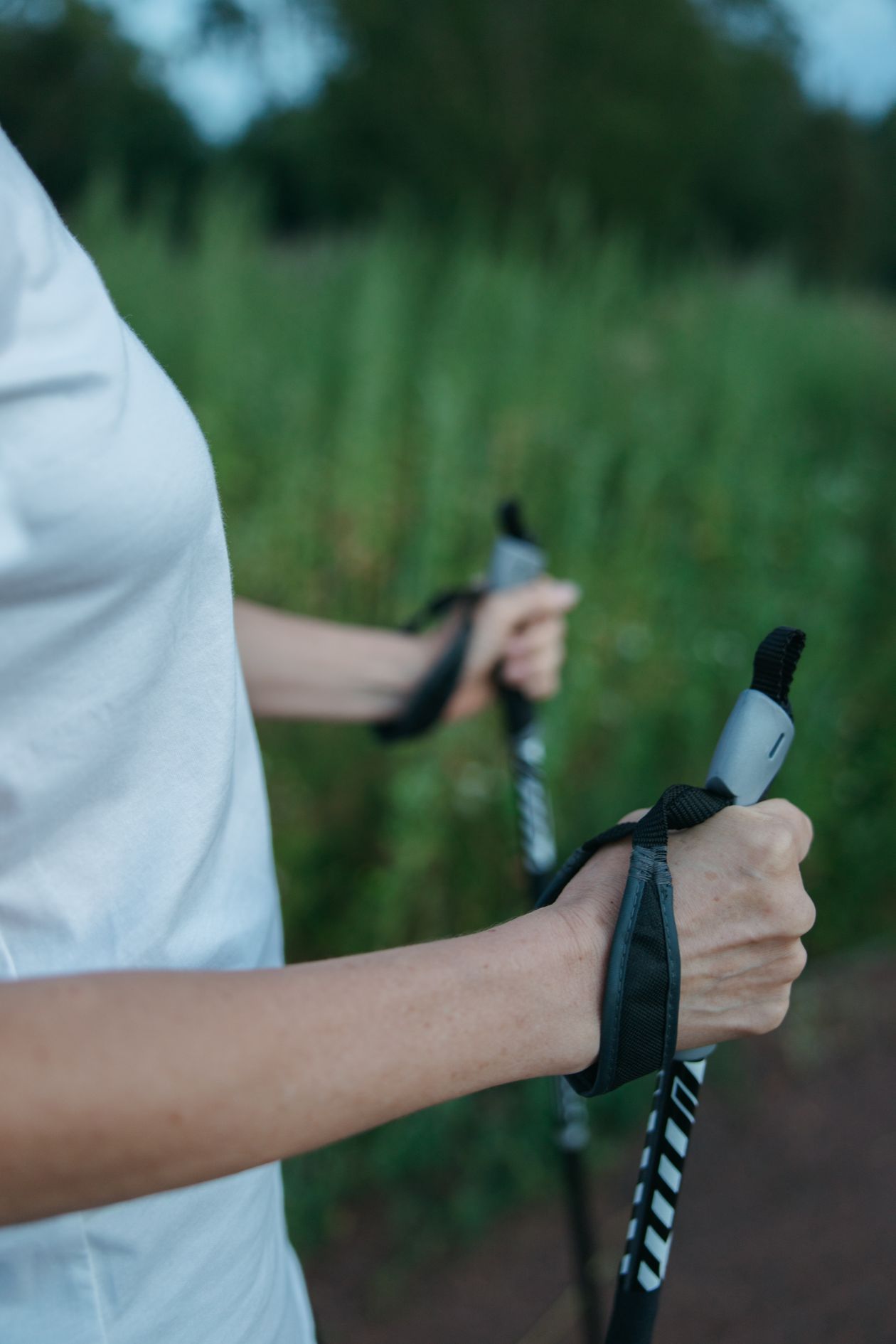
Table of Contents
- What Nordic Walking Is and How It Differs From Regular Walking
- What the Evidence Shows
- Benefits for Joint Health Specifically
- How to Start: Poles, Technique, and Progression
- Who Benefits Most
- Frequently Asked Questions
What Nordic Walking Is and How It Differs From Regular Walking
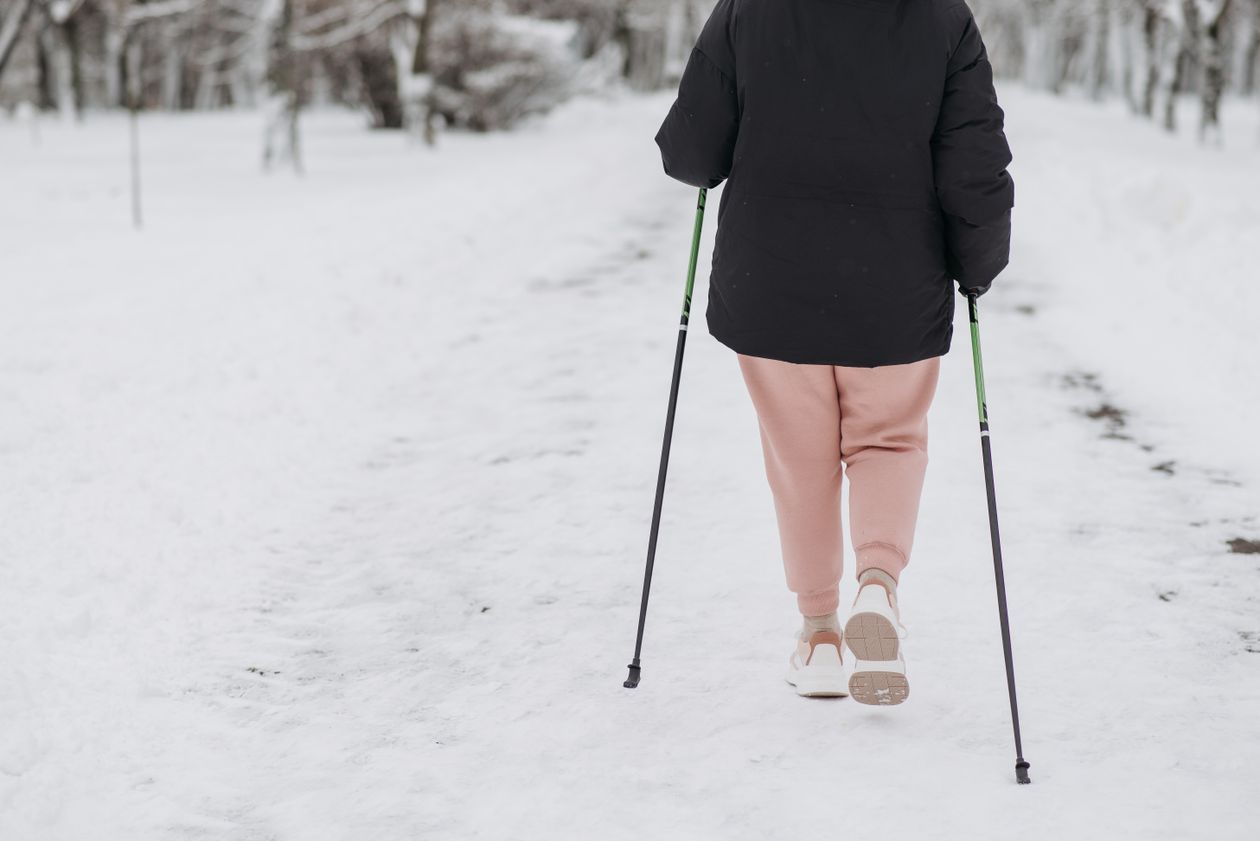
Regular walking uses the legs primarily, with the arms swinging passively for balance. Nordic walking uses purpose-designed poles (similar to ski poles, with a specific strap system for the hands) to actively plant and push off with each step, engaging the shoulders, chest, core, and triceps in a rhythmic movement that synchronizes with the stride.
The technique matters: the pole is planted behind the body (not in front, which would simply slow you down like a hiking stick), and the push-off drives the pole backward as the same-side leg steps forward. This creates the cross-body, diagonal pattern that activates the upper body musculature through the full range of motion with each step. Done correctly, it is whole-body exercise, not a walking aid.
The distinction from trekking poles (used for balance on uneven terrain) is important. Nordic walking poles are designed for active propulsion on flat surfaces; trekking poles are designed for stability on varied terrain. The technique and purpose are different.
What the Evidence Shows
The research base for Nordic walking in adults over 40 is extensive:
- Muscle engagement: EMG studies consistently find that Nordic walking activates 80-90% of the body’s skeletal muscles compared to 50-65% for regular walking, specifically adding latissimus dorsi, triceps, pectoralis major, and core musculature to the lower body activity of walking
- Calorie burn: metabolic studies show 20-46% higher energy expenditure in Nordic walking vs. regular walking at the same speed, because more muscle mass is working
- Cardiovascular conditioning: multiple RCTs find significant improvements in VO2 max (aerobic capacity) and resting heart rate in previously sedentary adults doing Nordic walking programs, with effects equal to or greater than jogging in some studies
- Functional fitness: A 2019 systematic review in the British Journal of Sports Medicine found Nordic walking superior to regular walking for upper limb strength, gait speed, and cardiovascular fitness in older adults
- Depression and quality of life: several RCTs find significant improvements in depression scores and health-related quality of life in adults with chronic conditions who participate in Nordic walking programs
Benefits for Joint Health Specifically
For adults with knee pain or knee osteoarthritis, the pole plant in Nordic walking transfers a portion of ground-reaction force from the knees to the arms and upper body. Studies measuring joint loading during Nordic walking find reductions of 10-15% in knee compressive forces compared to regular walking at the same speed. Over thousands of steps, this is a meaningful reduction in cumulative joint load.
The upper body engagement also reduces the degree to which people with knee pain alter their gait to protect the knee, a pattern called antalgic gait, which itself contributes to imbalances and compensatory pain elsewhere. Nordic walking tends to restore more normal stride patterns in people with mild to moderate knee OA.
For people with balance issues (a significant risk factor for falls after 40), the poles provide a wide, stable base of support during movement. This allows people who would otherwise reduce their activity due to balance concerns to maintain a consistent walking program, which itself is protective against further decline.
How to Start: Poles, Technique, and Progression
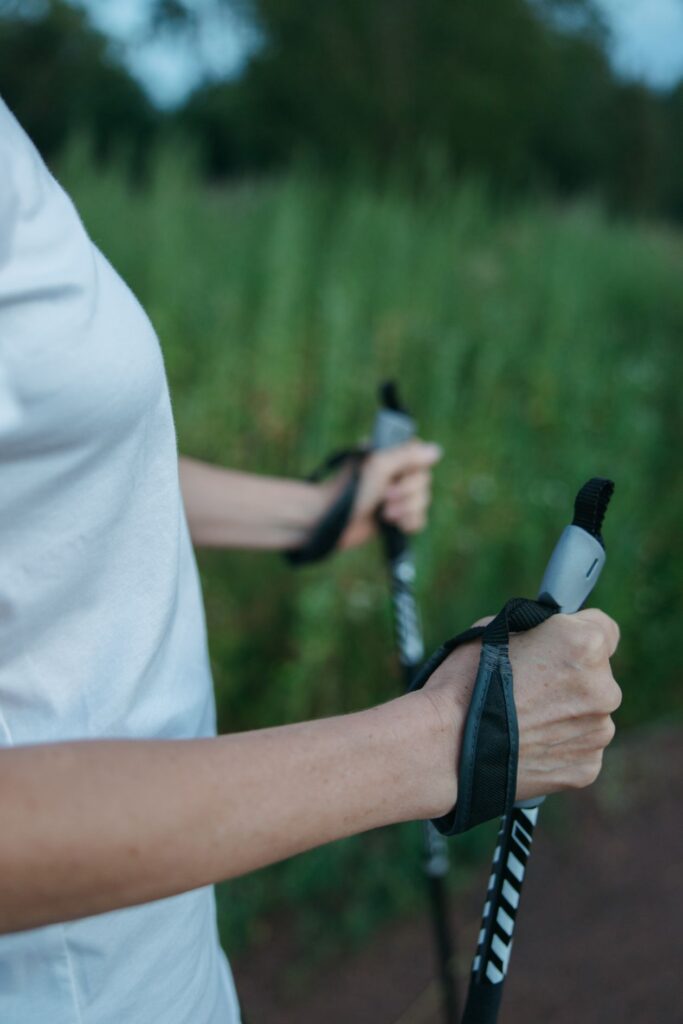
Selecting poles: Nordic walking poles should reach approximately 70% of your height when standing upright. The general formula: height in centimeters × 0.68 = recommended pole length in centimeters. Adjustable poles (which allow 5-10cm of adjustment) are a good starting point. Look for lightweight aluminum or carbon poles with Nordic walking-specific straps, not trekking pole straps, the strap design differs for the push-off technique.
Basic technique, four steps:
- Hold the poles loosely with the straps properly on (the strap supports the hand during the push; you are not gripping tightly)
- Plant the pole slightly behind you on the opposite side to your leading foot, if your left foot is forward, the right pole plants
- Push backward through the pole as your body passes it, extending the arm back
- Release the grip as the pole lifts off (the strap holds it) and swing the arm forward for the next plant
The common beginner mistake is planting the pole in front, which creates resistance rather than propulsion. A single lesson from a certified Nordic walking instructor, or 30 minutes with a good video guide, significantly accelerates technique acquisition.
Progression: Start with 20-minute sessions at a comfortable pace, 3 times per week. Focus on technique before speed. As technique becomes automatic (usually 2-3 weeks), gradually increase duration by 5-10 minutes per session. Most people are comfortable with 40-60 minute sessions within 4-6 weeks.
Who Benefits Most
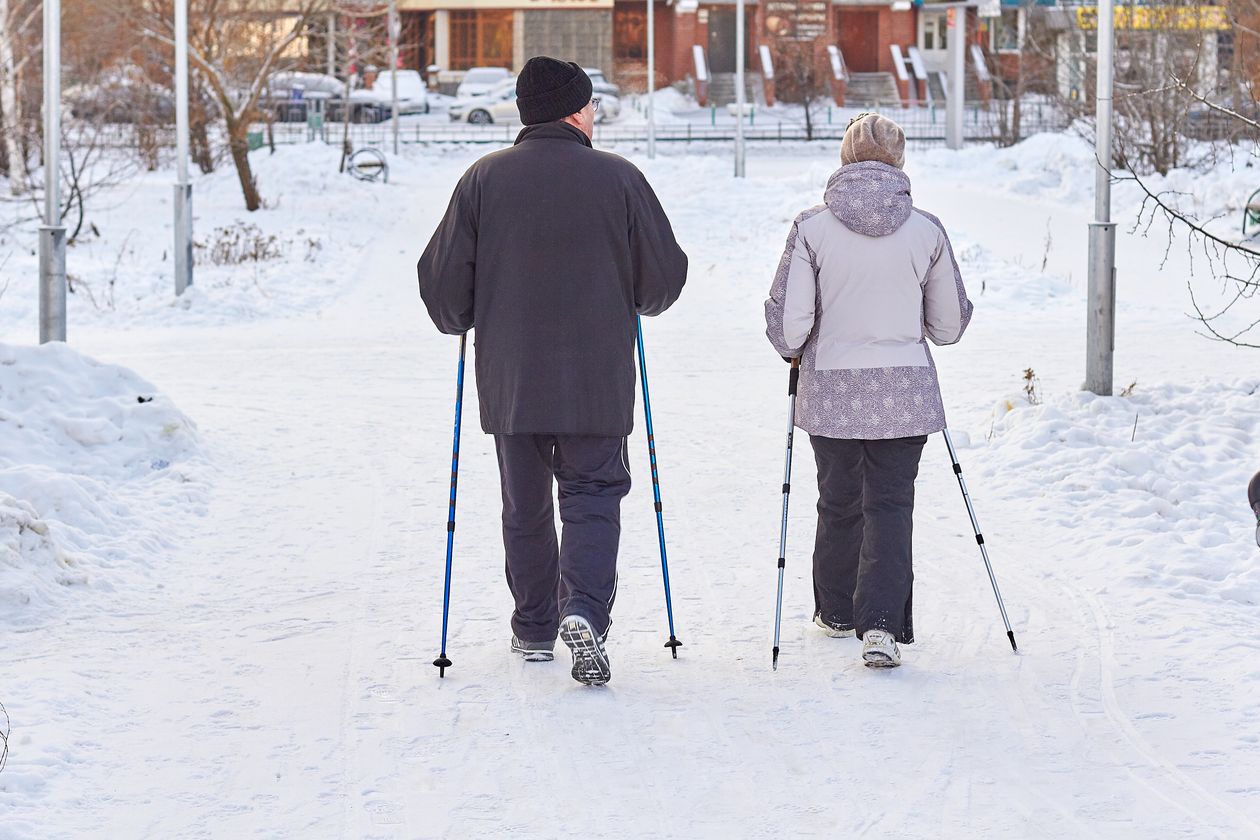
Nordic walking is particularly well-suited for:
- Adults with mild to moderate knee or hip osteoarthritis who want to maintain cardiovascular fitness with reduced joint loading
- People who have become deconditioned and want a low-barrier entry to regular exercise that is more effective than walking alone
- Adults with balance concerns who would benefit from the additional stability of poles without using them as a true walking aid
- People who want upper body conditioning as part of their fitness but find gym-based weights unappealing
- Anyone with a history of low back pain, the core engagement and upright posture that Nordic walking technique requires is actively therapeutic for the muscles that support the spine
Frequently Asked Questions
Is Nordic walking good for bad knees?
The evidence specifically supports Nordic walking for mild to moderate knee osteoarthritis. The poles reduce knee compressive loading by 10-15% compared to regular walking, and the whole-body movement maintains cardiovascular fitness and muscle strength that support joint function. Multiple trials in adults with knee OA show improved pain scores and walking speed after 8-12 week Nordic walking programs. It is a particularly good option for people who find regular walking painful but want to stay active.
What is the difference between Nordic walking poles and trekking poles?
The primary difference is the strap and the intended technique. Nordic walking poles have a specific glove-like strap designed to support the hand during the push-off release phase, you plant, push, and release your grip while the strap holds the pole for the swing. Trekking poles are designed for grip-based stability on trails. If you use trekking poles for Nordic walking, the technique and the propulsion mechanics will be compromised.
How does Nordic walking compare to jogging?
Nordic walking produces cardiovascular benefits comparable to jogging in research settings, while generating significantly lower joint impact forces. For adults over 40 with joint concerns who want jogging-level cardiovascular conditioning without jogging-level knee loading, Nordic walking is the most evidence-supported alternative. It also adds upper body strength training that jogging does not provide.
Does Nordic walking help with knee pain?
Yes. Nordic walking poles engage the upper body in the walking stride, distributing some load away from the lower limbs. Studies in adults with knee osteoarthritis show reductions in knee pain and improvements in walking speed compared to regular walking without poles. The poles also reduce ground reaction force through the knees on downhill and uneven surfaces. Nordic walking requires learning the correct technique, pushing back with the pole rather than planting it passively forward, and starting with flat terrain before progressing to hills. A lesson from an instructor is worth the investment for establishing correct technique from the start.
What is the correct technique for Nordic walking?
The key technique distinction from regular walking is the push: the pole is planted slightly behind the hip, and the push is backward and downward as the arm swings to full extension behind the body. Many beginners plant the pole in front of them, which converts it into a crutch rather than a propulsion tool. The arm on the same side as the forward foot swings back through full extension. The stride should lengthen as the poles engage, you should feel engagement through the chest, shoulder, and tricep on each push. Both poles contact the ground on each stride, alternating left-right in opposition to the feet.
About the author: Richard Hale is an independent health writer focused on mobility, joint health, and active aging research. He is not a licensed medical professional. All content on VitalMove40 is for educational purposes only and is not a substitute for advice from a qualified healthcare provider.