Affiliate disclosure: This article contains affiliate links. If you purchase through our links, we may earn a commission at no extra cost to you.
Last updated: September 5, 2026 | By Richard Hale
Available in: United States, United Kingdom, Australia, Canada, New Zealand, and Singapore.
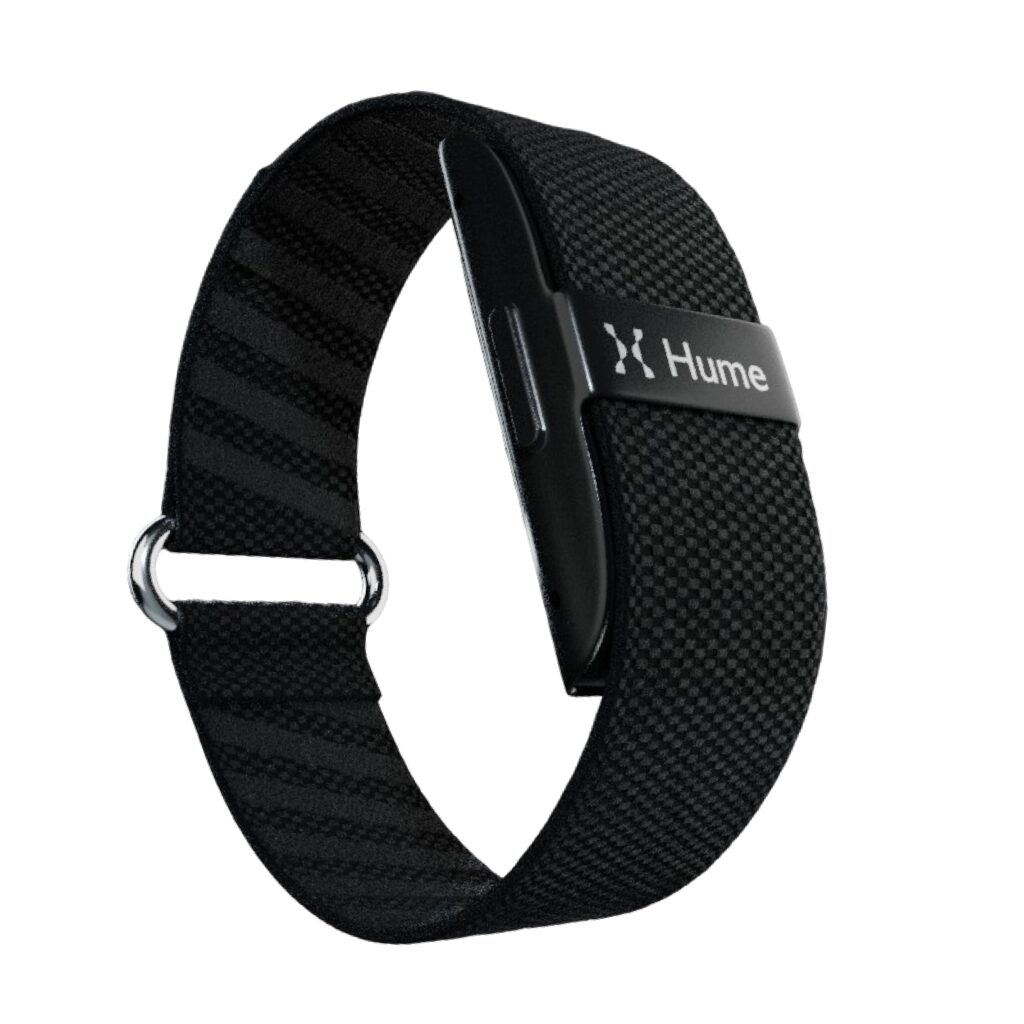
If you’re over 40 and wondering whether your body is actually recovering between workouts (or why you wake up exhausted after eight hours of sleep) the Hume Band 2.0 was built for exactly that question. This screenless wearable tracks heart rate variability, sleep stages, blood oxygen, skin temperature, and blood pressure trends 24/7, then surfaces insights through an app designed around long-term wellness patterns rather than real-time alerts.
In this review, I’ll cover what the Hume Band 2.0 does well, where it falls short, and whether it’s worth the investment for anyone in their 40s, 50s, or beyond who wants clearer data on recovery and sleep.
Medical disclaimer: The Hume Band 2.0 is a wellness device, not a medical instrument. It does not diagnose, treat, or monitor any medical condition. Consult a healthcare professional before making health decisions based on wearable data.
Quick Verdict
Hume Band 2.0, Overall Rating: 4.1/5
A capable screenless recovery tracker with strong HRV and sleep insights, 14-day battery, and a 45-day money-back guarantee. Best for adults over 40 who want long-term health trend data without the distraction of a smartwatch display.
Retail price: $199 | Guarantee: 45-day full refund (even opened)
What Is the Hume Band 2.0?
The Hume Band 2.0 is a wristband health tracker made by Hume Health, a company focused on longevity and recovery data for adults who want more signal and less noise from their wearable. Unlike a smartwatch, it has no screen. No notifications, no step alerts, no incoming calls. Just continuous biometric tracking, synced to the Hume Health app when you check in.
The 2.0 version is a significant upgrade over the original. Battery life doubled to 14 days. The strap was redesigned with UltraLux material, noticeably softer and less irritating for all-day wear. Blood pressure trend tracking was added. And the overall sensor accuracy improved through better signal processing.
For anyone over 40 dealing with sleep disruption, slower recovery, or chronic joint stress, this kind of passive tracking can surface patterns that are hard to notice in daily life, like a consistent HRV drop three days after intense activity, or sleep quality declining in correlation with certain lifestyle habits.
Already familiar with activity tracking for joint health? See our full guide: Activity Tracking and Health After 40, covering what metrics actually matter for mobility and recovery.
Hume Band 2.0 Technical Specs
| Spec | Detail |
|---|---|
| Form factor | Screenless wristband, 8.6g |
| Battery life | 14 days (manufacturer spec) |
| Sensors | 5 LEDs + 4 photodiodes (optical HR/HRV/SpO₂/temp) |
| Tracks | HR, HRV, sleep stages, respiratory rate, SpO₂, skin temp, blood pressure trends |
| Strap | UltraLux soft-touch (V2 exclusive) |
| App | Hume Health (iOS + Android) |
| Subscription | Not required, Premium AI coaching optional at $8.99/month |
| Guarantee | 45 days, full refund including opened units |
| Price | $199 |
| Markets | United States, United Kingdom, Australia, Canada, New Zealand, Singapore, Germany, Switzerland, Austria (German-language offer page for DE/CH/AT) |
Key Features Explained
HRV Tracking, the Recovery Signal That Matters Most After 40
Heart rate variability is the most actionable metric on the Hume Band 2.0 for people over 40. HRV reflects how well your autonomic nervous system is recovering, from exercise, stress, poor sleep, or inflammatory load tied to joint stress. A consistently low HRV is one of the earliest indicators that the body hasn’t recovered, even if you feel fine subjectively. This lines up with what published research on HRV as a recovery and overtraining marker has found in athletic and clinical populations.
The Hume Band measures HRV continuously, not just during a morning spot check. This produces a trend line that’s far more useful than a single daily number. Over weeks, you start to see patterns, which activities tank your recovery, and which habits improve it. For a broader look at how recovery windows work after 40, see our guide to muscle recovery after 40.
Sleep Stage Tracking
The band tracks light, deep, and REM sleep stages throughout the night. Third-party comparisons against WHOOP, including Wareable’s side-by-side testing, have noted some inconsistency in Hume’s sleep and recovery readings, a good reminder to treat the numbers as directional trend data rather than a clinically validated measurement. Deep sleep percentage and REM windows are still tracked consistently night to night, which matters because deep sleep is where the body does most of its tissue repair and inflammation regulation.
For anyone dealing with joint pain or post-workout stiffness, understanding your deep sleep quality gives you a lever to pull, because poor deep sleep amplifies pain sensitivity and slows cartilage recovery.
Blood Pressure Trend Monitoring
This is new in the 2.0 version and one of its most relevant features for adults over 40. The band doesn’t replace a medical-grade blood pressure cuff, it tracks trends over time. You’ll see if your average is creeping upward across a week, which is actionable information to bring to a doctor before it becomes a clinical issue.
Screenless Design, a Feature, Not a Limitation
The absence of a screen is intentional. For recovery-focused tracking, screen-based devices create a paradox: the constant buzzing and notification checking disrupts the calm nervous system state you’re trying to measure. The Hume Band collects data silently and surfaces it through the app when you choose to look, not when the device decides to demand your attention.
For adults over 40 who already carry enough mental load, this design choice is genuinely refreshing.
No Mandatory Subscription
All core tracking data (HRV, sleep, SpO₂, heart rate, blood pressure trends) is available in the free app. The optional Hume Premium ($8.99/month) adds AI-generated micro-coaching: personalized suggestions tied to your data patterns. It’s worth trying for a month to see if the coaching adds value for you, but the device is fully functional without it.
Who Is It For?
The Hume Band 2.0 is a strong fit if you:
- Are over 40 and want to understand your recovery patterns, not just count steps
- Deal with chronic joint stress, stiffness, or post-workout soreness and want data behind what’s actually happening
- Find smartwatch notifications distracting and want a tracker that disappears into the background
- Sleep poorly and want objective data on what’s happening across the night
- Want blood pressure trend awareness without a clinical device
It’s not ideal if you need medical-grade accuracy for a diagnosed condition, or if you want GPS, contactless payments, or any of the smartwatch functionality.
Recovery data like this works best as one part of a bigger picture, see our broader guide to staying active after 40 for the habits and movement patterns that make the biggest difference regardless of which tracker you use.
Pros and Cons
| Pros | Cons |
|---|---|
| 14-day battery life | Heart rate accuracy varies during intense movement |
| Screenless, no notification distraction | No GPS or smartwatch features |
| Continuous HRV tracking (not just morning check-in) | Premium AI coaching is an extra $8.99/month |
| Blood pressure trend monitoring (V2 new feature) | App required for all data, no on-wrist display |
| No mandatory subscription | Proprietary scoring metrics hard to benchmark |
| 45-day full money-back guarantee (even used) |
Hume Band 2.0 vs WHOOP 5.0: Which Should You Buy After 40?
WHOOP is the wearable most people cross-shop against the Hume Band 2.0, and “Hume Band vs WHOOP” has become one of the fastest-growing searches in this category. Both are screenless, wrist-worn recovery trackers with continuous HRV and, as of the WHOOP 5.0, roughly 14-day battery life. The real split is what each device is built for and how you pay for it.
| Hume Band 2.0 | WHOOP 5.0 | |
|---|---|---|
| Cost model | One-time device purchase (current offer $199). Optional AI coaching $8.99/month. | Subscription only — device included with membership. $199 to $359 per year, ongoing. |
| Works without a subscription | Yes — all core data in the free app | No — the band stops working if the membership lapses |
| Battery life | 14 days | 14 days (about 5 days on the older WHOOP 4.0) |
| Core tracking | HRV, sleep stages, SpO₂, skin temp, respiratory rate | HRV, sleep stages, SpO₂, skin temp, respiratory rate |
| Blood pressure trends | Yes | No |
| Built around | Long-term recovery, sleep, and healthspan trends | Daily strain scoring and training load for performance |
| Return window | 45 days, including opened and used units | 30 days |
| Coaching ecosystem | Newer and smaller; optional AI coaching add-on | More mature, larger community, deeper analytics |
Choose WHOOP if…
You train hard and want daily strain and training-load guidance, you value a mature analytics and coaching ecosystem, and a recurring yearly fee is not a dealbreaker. WHOOP’s recovery model is well established and it is the more proven platform for structured athletic training.
Choose the Hume Band 2.0 if…
You are over 40 and focused on recovery, sleep quality, and catching a blood pressure trend early rather than chasing performance numbers, and you would rather pay once than subscribe indefinitely. Over three years, a Hume Band 2.0 costs roughly $199, versus about $600 to $1,000 in WHOOP membership fees across the same period. The 45-day return policy on opened units also makes it the lower-risk device to try.
Bottom line: WHOOP is the better pick for performance-driven training. For adults over 40 who want recovery, sleep, and blood pressure trend data at the lowest long-term cost, the Hume Band 2.0 is the more sensible buy.
See the Current Hume Band 2.0 Offer →
Hume Band 2.0 Price and Guarantee
The Hume Band 2.0 is priced at $199, significantly below its full retail of $355.80.
45-Day Money-Back Guarantee
Hume Health offers a full refund within 45 days, including units that have been opened and used. This is one of the most generous return policies in the wearable space and removes all risk from trying the device. If it doesn’t work for your lifestyle, you get your money back.
Check Current Price, Hume Band 2.0 →
Germany / Switzerland / Austria, page in German →
Our Rating
| Category | Score |
|---|---|
| HRV & Recovery Tracking | 4.4/5 |
| Sleep Tracking | 4.2/5 |
| Comfort & Wearability | 4.3/5 |
| Battery Life | 4.5/5 |
| App & Insights | 3.9/5 |
| Value for Money | 4.0/5 |
| Overall | 4.1/5 |
Try Hume Band 2.0 Risk-Free for 45 Days →
Germany / Switzerland / Austria, page in German →
Frequently Asked Questions
Does the Hume Band 2.0 require a subscription?
No. All core tracking data, HRV, sleep stages, heart rate, SpO₂, blood pressure trends, and skin temperature, is available in the free Hume Health app. The optional Hume Premium subscription ($8.99/month) adds AI-generated personalized coaching based on your data patterns, but the device works fully without it.
How accurate is the Hume Band 2.0 for sleep tracking?
Third-party comparisons against WHOOP, including Wareable’s side-by-side testing, have found some variation in Hume’s sleep and recovery readings rather than an exact match. Sleep stage trends (deep sleep, REM, and light sleep distribution) are still useful for spotting patterns over time. Treat it as a tool for long-term trend analysis and lifestyle adjustments, not a clinical sleep study replacement.
Is the Hume Band 2.0 good for people over 40?
Yes, especially for recovery and sleep monitoring. After 40, HRV naturally declines and recovery slows, making objective data more valuable for avoiding overtraining and managing joint stress. The screenless design, 14-day battery, and blood pressure trend feature all address concerns relevant to this age group without the complexity of a full smartwatch.
What is the return policy for the Hume Band 2.0?
Hume Health offers a 45-day money-back guarantee, including units that have been opened and used. This is one of the most generous policies available for a wearable at this price point. If you try it and it doesn’t fit your lifestyle, you can return it within 45 days for a full refund.
How does the Hume Band 2.0 compare to WHOOP?
Both are screenless recovery wearables, and as of the WHOOP 5.0 both run about 14 days per charge. WHOOP is subscription-only: the band is bundled with a membership costing $199 to $359 per year, and it stops working if the membership lapses. The Hume Band 2.0 is a one-time purchase with an optional $8.99/month coaching add-on, adds blood pressure trend tracking that WHOOP does not offer, and gives a 45-day return on opened units versus WHOOP’s 30 days. WHOOP still has the more mature analytics and coaching ecosystem and is the stronger pick for performance-focused training. See the full breakdown in the Hume Band 2.0 vs WHOOP section above, or our roundup of the best fitness trackers for adults over 50.
Is the Hume Band 2.0 available in Germany, Switzerland, or Austria?
Yes. The Hume Band 2.0 is available in Germany, Switzerland, and Austria through a dedicated offer page in German, separate from the English-language ordering page used for the US, UK, Australia, Canada, New Zealand, and Singapore. Pricing for the DE/CH/AT market is shown in local currency on that page.
About the Author
Richard Hale writes about mobility, recovery, and evidence-based wellness strategies for adults over 40 at VitalMove40. His focus is on practical tools and habits that support joint health, sleep quality, and long-term physical independence.