Disclosure: VitalMove40 earns a commission if you buy through links on our site, at no extra cost to you. See our full affiliate disclosure.
Last updated: October 7, 2026 | By Richard Hale
This content is for educational purposes only and is not medical advice. A wearable is not a diagnosis. If you have chest pain, sudden weakness, trouble speaking or any symptom that worries you, call 911 or your local emergency number.
If you are looking at the Hume Band 2.0, there is a good chance the blood pressure feature is the reason. It is the one thing most screenless bands do not offer, and for adults over 40 it is often the number that matters most. So the questions are fair: does it really track blood pressure, how far can you trust it, and can it warn you about AFib, a heart attack or a stroke?
Short answer: yes, the Hume Band 2.0 tracks blood pressure, through a feature Hume calls Blood Pressure Insights. It follows how your blood pressure moves across days and habits, from your wrist, with no cuff. It is a trend tool, not a medical blood pressure monitor, and it does not diagnose AFib, a heart attack or a stroke.
Use it for: noticing early that your blood pressure, heart rate or recovery is drifting. Do not use it for: the exact number you give your doctor, or any emergency.
Table of Contents
- Does the Hume Band Track Blood Pressure?
- How Accurate Is the Hume Band Blood Pressure Reading?
- Does the Hume Band Detect AFib?
- Can the Hume Band Detect a Heart Attack or a Stroke?
- Who the Blood Pressure Feature Is For
- Price and Subscription
- Frequently Asked Questions
Does the Hume Band Track Blood Pressure?
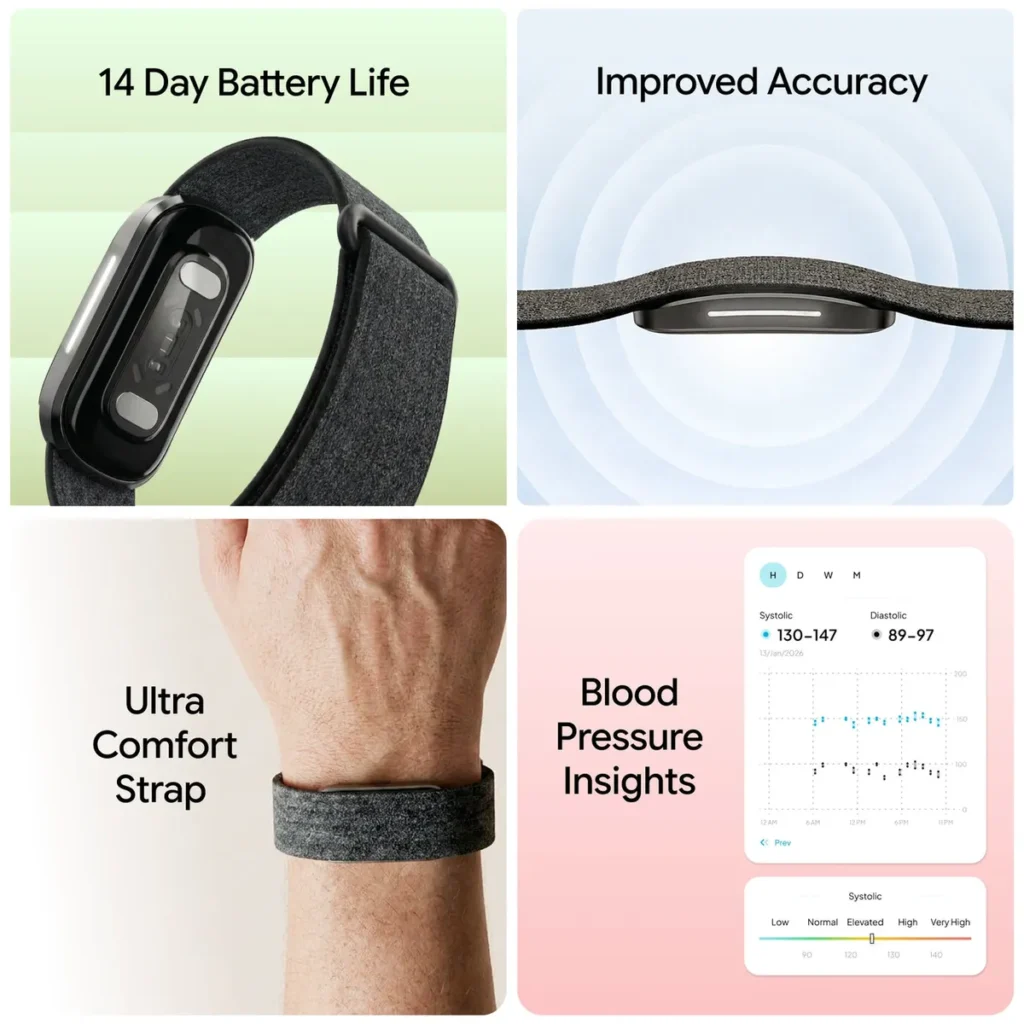
Yes. Blood Pressure Insights is new in the Hume Band 2.0, and it is one of the main differences from the first Hume Band. Hume describes it this way on its product page: instead of isolated readings, the Band 2.0 shows how your blood pressure changes across days and habits.
There is no cuff and nothing to inflate. The band reads from your wrist with optical sensors (Hume lists 5 LEDs and 4 photodiodes) and places your blood pressure pattern next to the rest of your data: heart rate, heart rate variability, blood oxygen, skin temperature, sleep stages, activity, strain and recovery.
That context is the useful part. A cuff reading tells you where you are in one moment. A daily trend can show you that your numbers climb after short nights, after stressful weeks, or after a change in routine. High blood pressure usually has no symptoms, according to MedlinePlus, the health library of the U.S. National Library of Medicine, so a signal you see every morning has real value.
How Accurate Is the Hume Band Blood Pressure Reading?
Accurate enough to follow a direction, not accurate enough to replace a cuff. Hume says the same thing in plain words. Its Blood Pressure Insights page states that the insights “are not a diagnosis and do not replace a blood pressure cuff, an ECG, or medical advice,” and tells users to confirm any concern with a cuff.
That is not a weakness specific to Hume. It is where the whole category stands. In 2022 the European Society of Hypertension reviewed cuffless blood pressure devices and concluded that they have considerable potential to improve awareness of hypertension, but that questions about their accuracy need to be answered before they can be recommended for diagnosis and treatment decisions (Stergiou et al., Journal of Hypertension, 2022).
In practice, this is how to get the most from it:
- Wear it every night in the first week. Hume’s setup guide explains that the band spends the first week learning your personal baseline, and that sleep gives it the cleanest data.
- Watch the trend, not the single reading. One high morning means little. Two weeks of a rising line is worth acting on.
- Keep a cuff at home. When the trend moves, take a cuff reading and write it down. The band tells you when to look. The cuff gives you the number.
- Bring both to your doctor. A few weeks of trend data plus cuff readings makes for a much better conversation than one reading in the office.
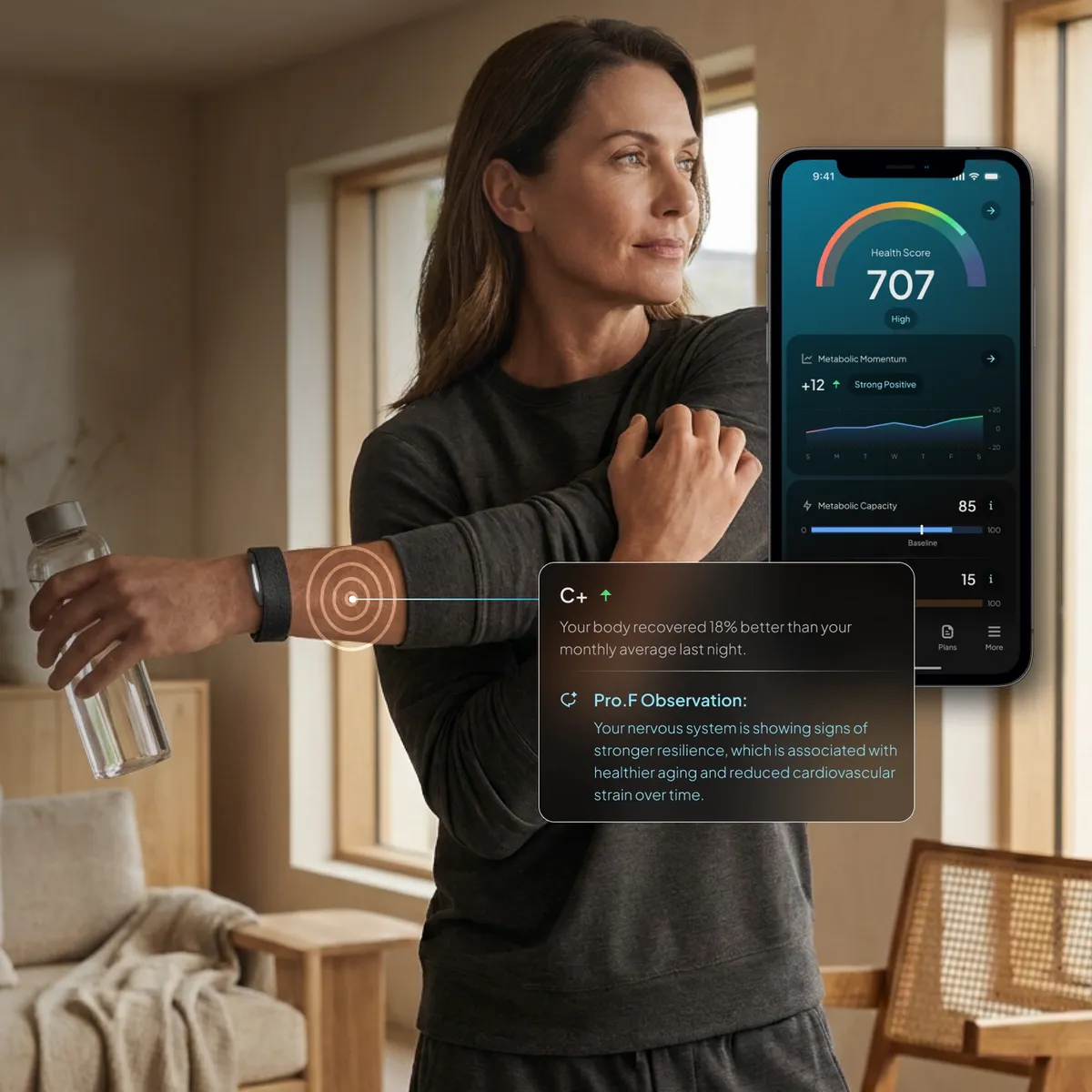
Want the full picture on the band? Our review covers what the Hume Band 2.0 tracks, the $249 price, the 45-day refund policy and where to order it.
Does the Hume Band Detect AFib?
Not as a diagnosis. The Hume Band 2.0 tracks your heart rate around the clock and scores how steady it is, but Hume does not list an AFib alert or an ECG sensor among its features, and its own page says the insights do not replace an ECG.
Atrial fibrillation is confirmed with an electrocardiogram, the test that records the electrical activity of the heart (see the MedlinePlus overview of AFib). An optical wrist sensor reads your pulse, which is a different measurement.
What the band does give you is the surrounding picture, every day:
- Continuous heart rate, including your resting heart rate during deep sleep.
- Heart rate variability (HRV), a marker of how well your body is recovering.
- Heart Rate Consistency, a Hume metric based on the spread between your lowest and highest heart rates in sleep and wake periods. Hume’s metrics guide notes that a poor score can point to poor cardiovascular stability, possible arrhythmias or autonomic dysfunction.
If you already live with AFib, the band keeps recording through an episode, but it will not tell you that you are in one. Treat it as a tool for sleep, recovery and trends, and keep following the monitoring plan your cardiologist gave you. If you have never been diagnosed and your heart rate data looks erratic for days, that is a good reason to ask your doctor for an ECG.
Can the Hume Band Detect a Heart Attack or a Stroke?
No, and no fitness band can. A heart attack and a stroke are emergencies that are diagnosed in a hospital. A wearable should never be the reason you wait.
The warning signs are worth knowing by heart. For a stroke, MedlinePlus lists sudden numbness or weakness of the face, arm or leg, especially on one side of the body, among the signs, and says to call 911 right away. For a heart attack the advice is the same: call 911 even if you are not sure.
Where the Hume Band fits is much earlier, in the months and years before an emergency. Hume says the band detects subtle changes in recovery, heart resilience and metabolic signals, and alerts you when your body may be under abnormal strain. Its early-warning feature looks for deviations linked to cardiovascular strain, such as abnormal HRV and resting heart rate trends. That is not a diagnosis. It is a prompt to book a checkup while there is still time to change the direction.
High blood pressure is one of the main risk factors for stroke, and it rarely announces itself. A band that shows you the trend every morning, with a cuff to confirm it, is a practical way to stop it from going unnoticed.
Who the Blood Pressure Feature Is For
The Hume Band 2.0 makes the most sense if you see yourself in one of these:
- You are over 40, you feel fine, and you want an early heads-up instead of a surprise at your next physical.
- Your doctor has said your blood pressure is “a little high” and you want to see what sleep, stress and exercise do to it day by day.
- You want blood pressure trends, HRV, sleep and recovery in one band, without paying a subscription every year.
- You will not wear a watch to bed, but you would wear a light band with no screen.
You need more than the band if you have diagnosed hypertension and adjust medication based on readings, or if you have a known heart rhythm condition. In both cases, use a validated cuff or the device your doctor recommends, and let the band fill in the daily context around it.
Price and Subscription
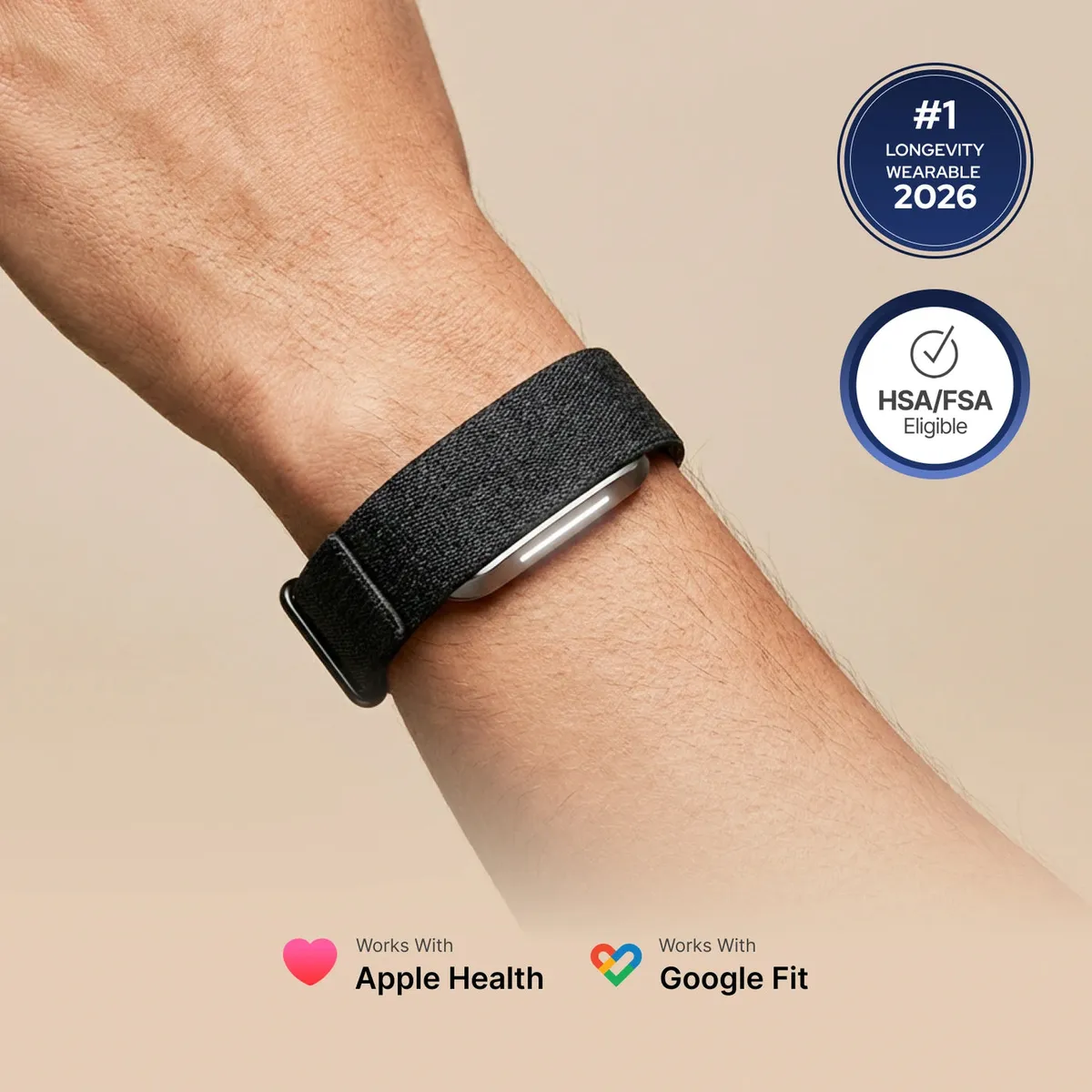
The Hume Band 2.0 is a one-time purchase, currently $249. The Hume Health app is free, and Hume states that no subscription is required to use the band or to access your raw data. Hume Premium, which adds AI coaching and deeper analysis, is optional and starts at $8.99 a month.
The battery lasts up to 14 days on a charge, which matters for a blood pressure trend, because the band is on your wrist at night instead of on the charger. Hume accepts returns within 45 days for a full refund, including opened and used products, so you have time to see whether the daily tracking habit works for you.
A note on price: prices change, and Hume runs promotions from time to time, so the amount you see today may be different from the one above. Check the current price before you order.
Ready to start watching your trends? See our full Hume Band 2.0 review for the details and the current offer: $249 once, no yearly bill, and 45 days to try it at home.
Comparing it with the subscription bands first? See Hume Band 2.0 vs WHOOP vs Oura Ring. For help reading the numbers once you have them, our guide to resting heart rate and HRV after 40 explains what is normal and what is worth a call to your doctor.
Frequently Asked Questions
Does the Hume Band measure blood pressure without a cuff?
Yes. The Hume Band 2.0 follows blood pressure from the wrist with optical sensors, with no cuff, and shows it as a trend across days. Hume says the feature does not replace a blood pressure cuff, so keep one at home to confirm any change you notice.
How accurate is the Hume Band for blood pressure?
It is built to show the direction of your blood pressure over time, not a clinical number. Hume states that Blood Pressure Insights are not a diagnosis. The European Society of Hypertension said in 2022 that cuffless devices are promising for awareness but are not yet recommended for diagnosing or managing hypertension.
Does the Hume Band detect AFib?
It does not diagnose AFib. The band tracks heart rate, HRV and a Heart Rate Consistency score that can reflect an unsteady rhythm, but Hume does not list an AFib alert or an ECG sensor. AFib is confirmed with an electrocardiogram ordered by a doctor.
Can the Hume Band detect a heart attack or a stroke?
No. No fitness band can diagnose a heart attack or a stroke. The Hume Band is designed to flag longer-term changes, such as abnormal HRV and resting heart rate trends. If you have symptoms of a heart attack or stroke, call 911 right away.
Can the Hume Band detect sleep apnea?
It does not diagnose sleep apnea. It tracks sleep stages, blood oxygen and heart rate patterns overnight, which can show that your nights look unusual. A sleep study ordered by a doctor is how sleep apnea is confirmed.
Does the Hume Band need a subscription for blood pressure tracking?
Hume states that no subscription is required to use the band or to access your raw data, and that the app is free. Hume Premium, from $8.99 a month, is an optional upgrade for AI coaching and deeper analysis.
About the Author
Richard Hale writes about mobility, recovery, and evidence-based wellness strategies for adults over 40 at VitalMove40. His focus is on practical tools and habits that support joint health, sleep quality, and long-term physical independence. Content is educational and not a substitute for advice from a qualified healthcare provider.