Affiliate disclosure: This article contains affiliate links. If you purchase through our links, we may earn a commission at no extra cost to you.
Last updated: September 5, 2026 | By Richard Hale
If you are over 40 and shopping for a recovery tracker that stays out of your way, three names come up again and again: the Hume Band 2.0, WHOOP, and the Oura Ring. None of them has a screen. All three track heart rate variability, sleep, and recovery around the clock. But they are built for different people, and the way you pay for each one is very different.
This comparison lays out where each device wins, what it costs over three years, and which one makes the most sense if your goal is recovery, sleep, and long-term health rather than chasing training numbers.
The Short Answer
Hume Band 2.0 is the best pick for most adults over 40: no required subscription, 14-day battery, and it is the only one of the three that tracks blood pressure trends. Lowest cost to own over time.
WHOOP is for people who train hard and want daily strain and training-load coaching, and who do not mind a yearly membership fee.
Oura Ring 4 is for people who want the most comfortable, discreet fit and a strong sleep and readiness app, and who are fine paying for the device plus a monthly membership.
Hume Band 2.0 vs WHOOP 5.0 vs Oura Ring 4
| Hume Band 2.0 | WHOOP 5.0 | Oura Ring 4 | |
|---|---|---|---|
| Worn as | Screenless wristband | Screenless wristband | Titanium ring |
| Device price | One-time purchase (current offer $199) | Included with membership | $349 (Silver/Black), $499 (Gold/Ceramic) |
| Subscription | Not required. Optional AI coaching $8.99/month | Required. $199 to $359 per year | Required for most features. $5.99/month or $69.99/year |
| Battery life | 14 days | 14 days | 5 to 8 days |
| Core tracking | HRV, sleep stages, SpO₂, skin temp, respiratory rate | HRV, sleep, SpO₂, skin temp, respiratory rate, daily strain | HRV, sleep, readiness, activity, temp, SpO₂ |
| Blood pressure trends | Yes | No | No |
| Return window | 45 days, opened units included | 30 days | 30 days |
| Roughly 3-year cost | About $199 (about $523 with coaching) | About $600 to $1,080 | About $560 (Silver/Black + annual plan) |
Prices are US figures at the time of writing and change often. Check each brand’s site for current pricing before buying.
Hume Band 2.0: Best for Recovery and Lowest Long-Term Cost
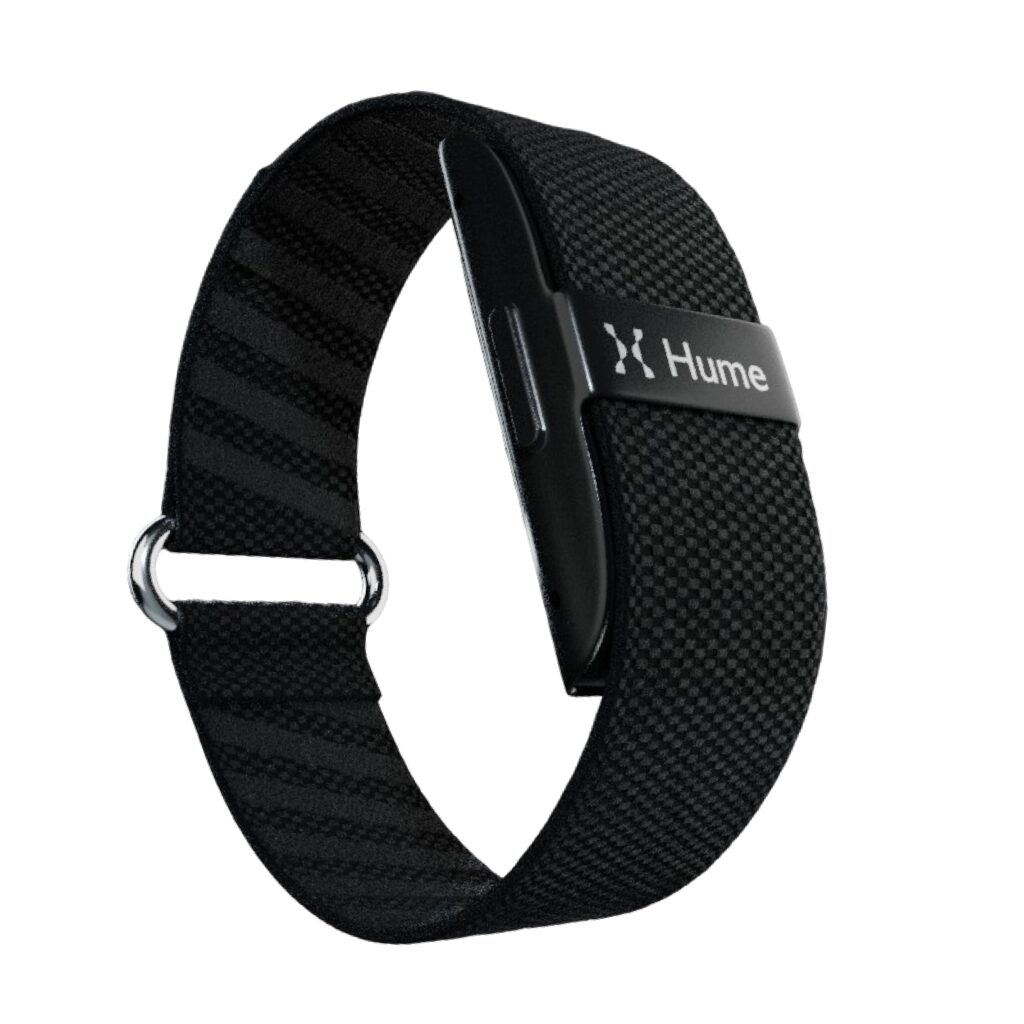
The Hume Band 2.0 is a screenless wristband from Hume Health built around long-term recovery data rather than real-time alerts. It tracks HRV continuously, maps sleep stages, and is the only device in this comparison that also follows blood pressure trends over time, which is a genuinely useful signal to catch early after 40.
Its biggest practical advantage is cost structure. You buy the band once and the core data is free in the app forever. Over three years that works out to roughly $199, versus $600 or more for WHOOP and around $560 for an Oura Ring with the annual plan. The 45-day return policy, which covers opened and used units, also makes it the lowest-risk of the three to try.
Where it gives ground: the coaching and analytics ecosystem is newer and smaller than WHOOP’s, and it does not have the polished app reputation Oura has built over four generations. For a full breakdown of the device on its own, see our Hume Band 2.0 review.
Hume Band 2.0 — one-time purchase, no subscription, 45-day guarantee
WHOOP 5.0: Best for Performance and Training Load

WHOOP is the most established name in recovery-focused wearables. The WHOOP 5.0 brought battery life up to about 14 days, matching the Hume Band, and it remains the strongest option for structured training. Its daily strain score, training-load guidance, and recovery model are more mature than anything the other two offer, and the coaching community around it is large.
The catch is the payment model. WHOOP is subscription-only: the band comes bundled with a membership that runs $199 to $359 per year, and the band stops working if the membership lapses. Over several years that adds up to far more than a one-time device. It also does not track blood pressure trends.
If you lift, run, or cycle seriously and want a device that tells you how hard to train each day, WHOOP earns its fee. If you mainly want to understand sleep and recovery, you are paying for an engine you will not fully use.
Oura Ring 4: Best for Comfort and Sleep Tracking
The Oura Ring 4 is the most comfortable and discreet device here. It is a titanium ring, so there is nothing on your wrist, which many people prefer for sleep. Its sleep and readiness app is polished and well regarded, now in its fourth generation, and it tracks HRV, temperature, activity, and SpO₂ well.
Downsides for the over-40 buyer: battery life is 5 to 8 days, noticeably shorter than the 14-day wristbands, so it needs charging roughly weekly. Most features sit behind a required membership of $5.99 per month or $69.99 per year, on top of a $349 device. And like WHOOP, it does not follow blood pressure trends. Ring sizing also means you order a sizing kit first, which adds a step.
Which Should You Buy After 40?
- You want the most data for the least money, with no ongoing fee: Hume Band 2.0.
- You want blood pressure trend awareness alongside HRV and sleep: Hume Band 2.0, the only one that offers it.
- You train hard and want daily strain and load coaching: WHOOP 5.0.
- You want the most comfortable fit and the best sleep app, and a subscription is fine: Oura Ring 4.
- You hate charging devices: Hume Band 2.0 or WHOOP 5.0, both about 14 days per charge.
For most readers of this site, the priority is recovery, sleep quality, and catching health trends early, not squeezing out training marginal gains. On that brief, the Hume Band 2.0 does the job for the lowest cost and the least friction.
Recovery data is one input, not the whole picture. See our guide to staying active after 40 for the movement and habit patterns that matter most regardless of which tracker you wear, and our roundup of the best fitness trackers for adults over 50 for options with screens.
Frequently Asked Questions
Is the Hume Band 2.0 better than WHOOP?
For adults over 40 focused on recovery, sleep, and blood pressure trends, yes, mainly on cost and simplicity. The Hume Band 2.0 is a one-time purchase with no required subscription, while WHOOP costs $199 to $359 per year on an ongoing basis. WHOOP is the better choice for serious athletes who want daily strain and training-load coaching, where its more mature ecosystem is worth the fee.
Is the Hume Band 2.0 better than the Oura Ring?
They suit different priorities. The Oura Ring 4 is more comfortable and discreet and has a more polished sleep app, but it costs $349 plus a required membership and lasts only 5 to 8 days per charge. The Hume Band 2.0 has a 14-day battery, no required subscription, and adds blood pressure trend tracking, which Oura does not offer.
Do any of these trackers replace a medical device?
No. The Hume Band 2.0, WHOOP, and Oura Ring are all wellness devices. They do not diagnose or monitor medical conditions. Blood pressure trend data from the Hume Band is useful for spotting a rising pattern to discuss with a doctor, not for clinical measurement.
Which has the best battery life?
The Hume Band 2.0 and WHOOP 5.0 are tied at about 14 days per charge. The Oura Ring 4 lasts 5 to 8 days, so it needs charging roughly once a week.
Which is cheapest over three years?
The Hume Band 2.0, by a wide margin. It costs roughly $199 over three years with no subscription, versus about $600 or more for WHOOP and around $560 for an Oura Ring 4 with the annual membership.
About the Author
Richard Hale writes about mobility, recovery, and evidence-based wellness strategies for adults over 40 at VitalMove40. His focus is on practical tools and habits that support joint health, sleep quality, and long-term physical independence. Content is educational and not a substitute for advice from a qualified healthcare provider.