Affiliate Disclosure: VitalMove40 earns a commission from purchases made through affiliate links on this page, at no extra cost to you. See our full Affiliate Disclosure Policy.
Last updated: October 12, 2026 | By Richard Hale
The best knee compression sleeve for arthritis is one that delivers consistent 15 to 25 mmHg graduated compression around the kneecap without shifting, overheating, or losing elasticity after a few weeks. After reviewing the leading options for 2026, RelievCore is the top pick for daily use: it ships as a pair (both knees covered by one purchase), uses zoned compression that concentrates support where patellofemoral pain originates, and comes with free US shipping and a 90-day money-back guarantee.
This content is for educational purposes only and is not medical advice. Consult a healthcare provider before using compression products if you have peripheral vascular disease, DVT, or circulatory conditions.
Table of Contents
- Quick Picks
- What to Look for in a Knee Sleeve
- Side-by-Side Comparison
- Product Reviews
- Frequently Asked Questions
Quick Picks
Best Knee Compression Sleeves for Arthritis, 2026
- #1 Best Overall: RelievCore Knee Compression Sleeve, sold as a pair, zoned compression, copper-infused, 90-day guarantee
- #2 Best Single-Knee / Budget Pick: KneeHero, neoprene, buyable as a single sleeve, lowest entry price, 3.7/5
What to Look for in a Knee Compression Sleeve
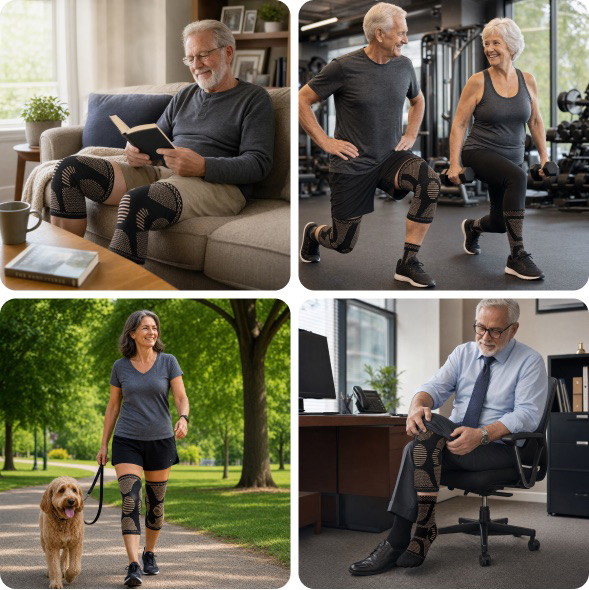
Compression level is the most important spec to check. The clinically relevant range for knee OA is 15 to 25 mmHg, high enough to reduce synovial swelling and improve proprioceptive feedback, low enough to wear throughout the day without restricting circulation. Below 10 mmHg provides little therapeutic benefit; above 30 mmHg is medical compression territory and requires physician guidance.
Zoned vs uniform compression matters more than most buyers realize. A sleeve with a denser knit pattern directly around the kneecap provides better patellar tracking support than one that compresses the leg uniformly from top to bottom. Uniform compression sleeves work for general venous support; for patellofemoral pain and knee OA, the kneecap zone matters most.
Sizing determines whether the sleeve works at all. A sleeve that is too large provides zero compression; one that is too small restricts circulation. Measure your thigh circumference at 6 inches above the kneecap and match it to the brand’s size chart, not your shoe size or general body size. If you are between sizes, size down for firmer support and size up for all-day comfort.
Retention over hours of wear separates quality sleeves from disposable ones. Silicone grip edges at the top and bottom prevent the sleeve from rolling or migrating during walking, standing, and stair use. Elastomer-core fabrics hold compression longer than plain nylon blends. Sleeves that lose their shape within weeks are the most common complaint in this category.
Side-by-Side Comparison
| Product | Compression | Zoned | Grip edges | Pair included | Price |
|---|---|---|---|---|---|
| RelievCore ★ | 15 to 25 mmHg | Yes ✓ | Yes ✓ | Yes ✓ (2 sleeves) | $62.96/pair ($24.99 per sleeve in the two-pair bundle) |
| KneeHero | Not disclosed | No | No (velcro strap) | Single or pair | Bundle pricing, ~$25-35/sleeve |
Product Reviews
#1, RelievCore Knee Compression Sleeve (Best Overall)
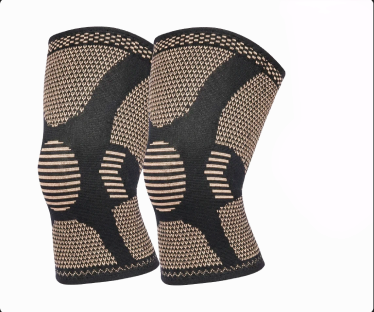
RelievCore is the best overall pick because its zoned StabilCore compression concentrates support exactly where patellofemoral pain originates, and one order covers both knees. The copper-infused EnduraWeave fabric provides genuine antimicrobial benefit for daily extended wear (not just a marketing claim), and the AirFlow Honeycomb ventilation pattern prevents the heat accumulation that makes cheaper sleeves unwearable after an hour. Silicone grip edges at both ends prevent sleeve migration during all-day standing and walking.
The standout feature is that it is sold as a pair, so one order covers both knees. On the official checkout, a pair was $31.48 per sleeve ($62.96 total) when we checked on October 12, 2026, and the two-pair bundle brought that down to $24.99 per sleeve, with free US shipping and a 90-day money-back guarantee. Prices and promotions change, so confirm the current price on the official page before you order. For bilateral knee OA (the most common presentation in adults 40 to 70) a pair is the practical place to start. Full RelievCore review →
Check Current Price, RelievCore →
Why compression helps at all: a 2009 clinical practice guideline published in Joint Bone Spine (Beaudreuil et al.) found that knee sleeves as a category decrease pain in knee OA, with subjective improvement, which is the mechanism RelievCore’s zoned compression is built around.
#2, KneeHero (Best Single-Knee / Budget Pick)
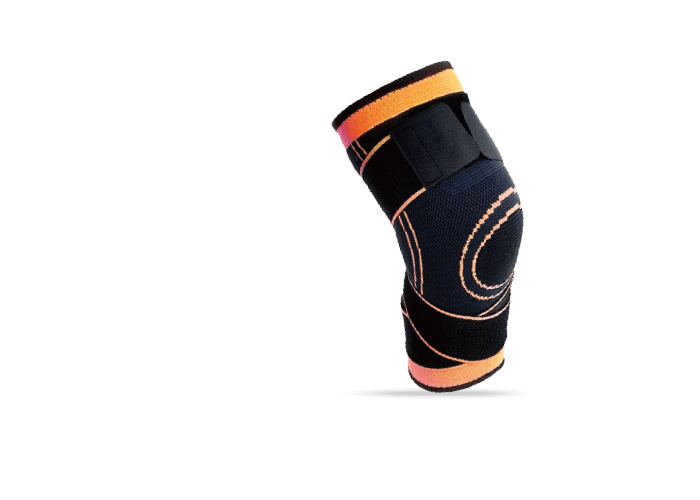
KneeHero is the best pick if budget or single-knee support matters most: it is the only sleeve in this comparison you can buy as one unit instead of a pair, and its neoprene construction adds extra warmth that helps with morning stiffness or cold-weather activity. The manufacturer does not disclose a compression level or publish a measurement-based sizing chart, so it is the least specified option here.
Best suited for adults who only need one sleeve, want the lowest entry price, or specifically want neoprene’s extra warmth. Full KneeHero review →
Check Current Price: KneeHero →
Frequently Asked Questions
Do knee compression sleeves actually help arthritis?
Yes, for mild to moderate knee OA. A 2009 clinical practice guideline published in Joint Bone Spine (Beaudreuil et al.) found that knee sleeves decrease pain in knee OA and are associated with subjective improvement, though evidence for broader disability improvement is less established. Compression in the 15 to 25 mmHg range reduces synovial swelling, improves proprioceptive feedback (which reduces instability and the muscle fatigue that follows), and provides enough thermal support to reduce morning stiffness during activity. Compression does not modify disease progression, it manages symptoms and supports function.
How tight should a knee compression sleeve be?
Snug but not restrictive. You should feel consistent pressure across the joint that does not worsen during movement or cause tingling, numbness, or discoloration below the sleeve. If you feel pulsing or the skin below the sleeve looks mottled, the sleeve is too tight or too small, size up immediately. A correctly fitted sleeve feels firm during the first few minutes of wear and normalizes within 10 to 15 minutes.
Can I wear a knee compression sleeve all day?
Yes, sleeves in the 15 to 25 mmHg range are designed for extended daily wear. Most adults with knee OA wear them during waking hours and remove them at night. If you develop skin irritation, reduce wear time and wash the sleeve more frequently. Copper-infused fabrics, like RelievCore’s EnduraWeave, reduce odor and bacterial buildup during extended daily use.
Should I wear a knee sleeve on both knees?
If you have bilateral knee OA (pain or stiffness in both knees) yes. The most common pattern of knee OA in adults over 50 is bilateral. Wearing a sleeve on only the more painful knee compensates with the other side, which increases stress on that joint over time. RelievCore is sold as a pair, so one order covers both knees.
Is a compression knee sleeve good for arthritis and osteoarthritis?
Yes, for the aching and stiffness side of it. A compression knee sleeve will not reverse osteoarthritis or rebuild cartilage, but the steady pressure helps control swelling, keeps the joint warm, and improves proprioception, which is your sense of where the knee is in space. In practice that means stairs and long standing feel more manageable. The limit is instability: if the knee gives way rather than simply hurting, a sleeve is not enough and you want a braced option instead. Our top pick, the RelievCore, is sold through its official store with a 90-day money-back guarantee, which is a long enough trial to judge whether daily wear actually helps your knee.