Last updated: September 10, 2026 | By Richard Hale
Availability note, updated September 4, 2026: the retailer link for Arthrovit is currently offline, so we have taken the buy buttons down rather than send you to a page that does not work. Nothing else in this article has changed. We will put a working link back as soon as Arthrovit is available through a retailer we can verify.
Disclosure: This post contains affiliate links. If you purchase through our links, we may earn a commission at no extra cost to you. We only review products we believe are worth your consideration. Full disclosure here.
Available in: Canada, Australia, New Zealand.
Most topical joint creams rely on one or two counterirritant ingredients, typically menthol for cooling or methyl salicylate for warming. Arthrovit uses three: menthol, methyl salicylate, and capsaicin. Each works through a distinct pain pathway, and combining them produces a more comprehensive effect than single-agent creams. For adults in Canada, Australia, and New Zealand managing arthritis pain or chronic joint stiffness, that multi-mechanism approach is worth examining closely.
This review covers the ingredient science, what the evidence supports, how Arthrovit compares to standard topical options, pricing, and who is most likely to benefit.
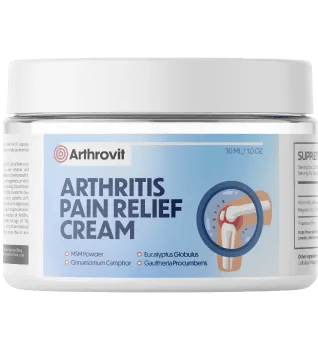
Arthrovit Cream, 4.3/5
A multi-ingredient topical cream combining menthol, capsaicin, MSM, and glucosamine for joint and muscle pain relief, applied directly to the affected area.
- Dual-action: menthol cooling + capsaicin warming for pain gate modulation
- MSM and glucosamine sulfate target local inflammation and cartilage support
- Fast-acting topical relief without systemic side effects
Buy link temporarily unavailable. See the availability note near the top of this article.
Table of Contents
- What Arthrovit Is and How It Works
- Ingredient Breakdown
- What the Evidence Shows
- Size, Format, and What’s in the Box
- Pricing and Guarantee
- Who It’s For, and Who Should Look Elsewhere
- Pros and Cons
- Frequently Asked Questions
What Arthrovit Is and How It Works
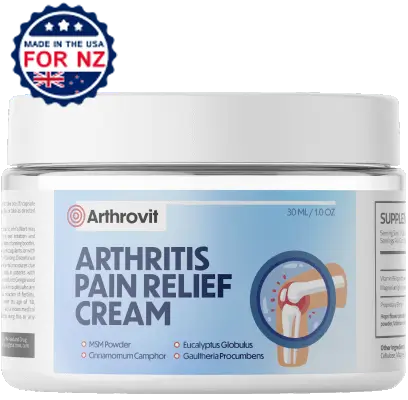
Arthrovit is a topical arthritis cream, a 30ml jar applied directly to the skin over painful joints. It does not work systemically like an oral supplement; instead, its active ingredients penetrate the upper skin layers to create local effects at the site of application. The mechanism is counterirritant analgesia: the cream stimulates nerve receptors in the skin that partially suppress the pain signals coming from the joint beneath.
What distinguishes Arthrovit from simpler topical options is its three-counterirritant design. Menthol activates cold receptors (TRPM8 channels), methyl salicylate activates warm receptors and inhibits local prostaglandin synthesis, and capsaicin works through a third mechanism, depleting substance P from local sensory nerves over repeated applications. These three pathways are additive in effect, which is why the combination is more comprehensive than single-agent creams. The formula also includes MSM, glucosamine sulfate, and a botanical support layer (camphor, eucalyptus, wintergreen oil, arnica, and aloe vera) for broader anti-inflammatory and soothing support.
Rating: 4.3 / 5, A well-formulated triple-mechanism counterirritant cream with a stronger active ingredient stack than most consumer topicals. The 60-day guarantee stands out positively in a category where 30 days is typical. The 30ml jar is smaller than competitors and CA/AU pricing is not shown upfront.
Arthrovit Cream Ingredients: Full Breakdown
Arthrovit’s formula combines three active counterirritants (menthol (2%), methyl salicylate (2%), and capsaicin) with two joint-support compounds (MSM and glucosamine sulfate) and a botanical blend of camphor, eucalyptus, arnica, and aloe vera. Below is what each ingredient does and what the evidence supports. Arthrovit also ships with a 60-day money-back guarantee (double the 30-day window most competitor creams offer) so testing the full ingredient stack for yourself carries little financial risk.
| Ingredient | Concentration | Type | What It Does |
|---|---|---|---|
| Menthol | 2% | Active | Cooling via TRPM8 receptors; fast-acting counterirritant effect |
| Methyl Salicylate | 2% | Active | Warming counterirritant with mild NSAID-like anti-inflammatory action |
| Capsaicin | Not disclosed by manufacturer | Active | Desensitizes TRPV1 pain receptors with consistent daily use |
| MSM (Methylsulfonylmethane) | Not disclosed by manufacturer | Supporting | Supports connective tissue; contributes local anti-inflammatory effect |
| Glucosamine Sulfate | Not disclosed by manufacturer | Supporting | Included for joint-health positioning; topical absorption is limited |
| Camphor, Eucalyptus, Arnica, Aloe Vera | Not disclosed by manufacturer | Botanical | Additional counterirritant stimulation and skin-soothing base |
Arthrovit’s official product listing does not disclose inactive ingredients or preservatives beyond the actives above. If you have known sensitivities or allergies, check the full label on the jar before first use.
Menthol (2%)
Menthol is a well-established topical analgesic. At 2%, it activates TRPM8 cold-sensitive receptors in the skin, producing the characteristic cooling sensation and triggering a pain-gating response, the counterirritant effect. This is the same mechanism as clinical topical products like BioFreeze. It provides fast-acting relief, typically within minutes of application, though the effect is temporary and requires reapplication.
Methyl Salicylate (2%)
Methyl salicylate (oil of wintergreen, from Gaultheria procumbens) produces a warming counterirritant effect. At the cellular level, it also has weak topical NSAID-like activity, inhibiting local prostaglandin synthesis to a modest degree, adding a mild anti-inflammatory component beyond the counterirritant sensation. The combination of menthol’s cooling effect and methyl salicylate’s warming effect creates the classic “first cool, then warm” sensation that most users find effective for muscle and joint discomfort.
Capsaicin
Capsaicin is the most pharmacologically distinct of the three counterirritants. It works by binding TRPV1 receptors on sensory nerve fibers and triggering repeated firing until the nerve fiber’s supply of substance P (a key pain neurotransmitter) is depleted. After repeated applications over 1–2 weeks, local pain signal transmission is substantially reduced, an effect that lasts beyond each application. Unlike menthol or methyl salicylate, capsaicin’s full effect requires consistent use; it is not a one-application relief agent. Some users experience an initial burning sensation before the desensitisation effect sets in.
MSM (Methylsulfonylmethane)
MSM is a sulphur-containing compound that supports connective tissue integrity and has anti-inflammatory properties at the cellular level. Topical MSM penetrates skin tissue and contributes to a local anti-inflammatory environment, complementing the surface-level counterirritant effect with a deeper tissue action. The evidence for topical MSM is less robust than for oral MSM, but its safety profile is excellent and its inclusion is rational. For a closer look at the research behind this ingredient, see our guide to MSM for joint pain.
Glucosamine Sulfate
Glucosamine is more commonly studied as an oral supplement for cartilage support, and its topical absorption into joint tissue is limited. That said, several topical formulas include it for potential surface-level anti-inflammatory effects and as a signal ingredient for joint-health positioning. Its inclusion adds to the formula’s breadth without being the primary driver of pain relief. For the oral-supplement evidence on this ingredient, see does glucosamine work for joint pain.
Botanical Support Layer
Cinnamomum camphora (camphor), Eucalyptus globulus, arnica extract, and aloe vera contribute additional counterirritant stimulation (camphor, eucalyptus), mild anti-inflammatory botanical activity (arnica), and a soothing skin conditioning base (aloe vera). These ingredients are well-established in topical analgesic formulations and their combination with the primary actives is a standard, rational approach.
What the Evidence Shows
The evidence base for Arthrovit’s key ingredients is solid, particularly for the two primary counterirritants:
Menthol topical analgesia: Multiple studies confirm menthol at 1–3% concentration produces clinically meaningful pain reduction for musculoskeletal pain. A 2016 systematic review in Regional Anesthesia and Pain Medicine found topical menthol effective for acute and chronic pain conditions with a favourable safety profile.
Methyl salicylate: FDA-approved as a topical analgesic at concentrations of 10–60%; the 2% concentration in Arthrovit is at the lower end of the clinical range, producing counterirritant effects reliably. Methyl salicylate-containing creams have a long safety record and are among the most-used topical analgesics globally.
Capsaicin: The best-evidenced of the three for chronic arthritis specifically. A systematic review of topical capsaicin for chronic pain found that it produces meaningful pain reduction compared to placebo after 4 weeks of consistent use in musculoskeletal conditions including osteoarthritis. The evidence is strongest for knee OA and hand OA, two of the most common complaint areas for adults over 40. The key qualifier is consistency: users who do not apply daily during the first 1–2 weeks will not see the full substance-P depletion effect.
No randomised trial exists for the specific Arthrovit formulation. The individual ingredient evidence, however, is among the strongest in the consumer topical category, particularly for the capsaicin component, which is backed by Cochrane-level evidence for arthritis pain specifically.
For more on how topical creams work and how they compare to other home interventions, see our guide to topical joint creams for arthritis pain.
Size, Format, and What’s in the Box
| Specification | Detail |
|---|---|
| Format | Cream in jar |
| Size | 30ml / 1.0 oz |
| Primary actives | Menthol 2%, Methyl Salicylate 2%, Capsaicin |
| Supporting actives | MSM, Glucosamine Sulfate, Camphor, Eucalyptus, Wintergreen Oil, Arnica, Aloe Vera |
| Application | Massage into skin over affected joint 1–2x daily |
| Guarantee | 60-day money-back |
| Markets | Canada, Australia, New Zealand |
The 30ml jar format is worth noting. Competitor creams typically ship in 50–100ml tubes. At 30ml, Arthrovit is a smaller format, appropriate for targeted use on one or two joints, but users applying to multiple areas simultaneously will go through the jar faster. Bundle purchasing is the practical solution for consistent users.
Pricing and Guarantee
Pricing for Canada and Australia is displayed in local currency at checkout. New Zealand pricing is listed in NZD on the product page, showing a per-bottle range from $73.95 NZD (in the best-value bundle) to $121.95 NZD (standard single purchase). Bundle options significantly reduce per-unit cost, meaningful for a cream intended for daily use over weeks.
The 60-day money-back guarantee is a standout in this product category. Most competitor topical creams offer 30 days, which is a tight window for capsaicin, the ingredient that requires the most consistent use to show its full effect. The 60-day window allows enough time for a proper assessment of all three active mechanisms, including the capsaicin substance-P depletion effect.

Buy link temporarily unavailable. See the availability note near the top of this article.
Who It’s For, and Who Should Look Elsewhere
Good fit for:
- Adults in Canada, Australia, or New Zealand with chronic arthritis or joint pain who have found single-ingredient topicals (menthol-only or salicylate-only) provide only partial relief, the triple-mechanism approach covers more pain pathways
- Adults with knee or hand OA specifically, these are the joint areas with the strongest capsaicin evidence for chronic arthritis pain
- Adults willing to commit to daily application for at least 2–4 weeks, the capsaicin component requires consistency; occasional users will not see its full benefit
- Adults who prefer not to take oral NSAIDs or supplements and want a topical-only management option
- Users who want a longer trial window, the 60-day guarantee is rare in this category and reduces the financial risk of assessment
Who should look elsewhere:
- Adults with sensitive skin or capsaicin intolerance, capsaicin causes a burning or stinging sensation in the first days of use before the desensitisation effect sets in. Adults with very sensitive skin or a known history of capsaicin reactions should test on a small area first, or consider a non-counterirritant option like our Veluflex review instead
- Adults in the US, Arthrovit is not available there; US readers should consider alternatives such as ArthroMD+, which is available in the US and has a comparable dual-mechanism formulation
- Adults looking for immediate, long-lasting structural joint support, topical creams manage pain and stiffness symptomatically; they do not contribute to cartilage repair or joint structure maintenance
- Adults with broken skin, open wounds, or active skin conditions over the joint, counterirritant creams should not be applied to damaged skin
Pros and Cons
| Pros | Cons |
|---|---|
| Triple counterirritant stack: Menthol + Methyl Salicylate + Capsaicin covers three distinct pain pathways | Small jar (30ml), goes through faster than 50–100ml competitors |
| 60-day guarantee, twice the industry standard; allows proper capsaicin assessment | Capsaicin requires 1–2 weeks daily application before full effect, not a one-and-done product |
| Capsaicin backed by Cochrane-level evidence for knee and hand OA specifically | CA and AU pricing not shown upfront, requires checkout visit |
| Available in Canada, Australia, and New Zealand | Not available in the US |
| Broad botanical support: MSM, Glucosamine, Arnica, Aloe Vera alongside actives | Initial capsaicin burning sensation may discourage first-time users |
Is Arthrovit Legit?
Yes. Arthrovit is a legitimate topical pain relief cream with disclosed active ingredients: menthol (2%), methyl salicylate (2%), capsaicin, MSM, glucosamine sulfate, and botanical extracts. These are recognized compounds used across many arthritis creams on pharmacy shelves, and their mechanisms are documented in clinical literature.
The question appears in search results because the product sells through affiliate channels rather than pharmacies, which leads buyers to check. The ingredients are real, and the product is a genuine topical cream. Whether it is the right topical for your specific situation depends on your response to the individual active ingredients, which is why the return window matters.
Frequently Asked Questions
Why does Arthrovit burn when I first apply it?
The burning sensation comes from capsaicin activating TRPV1 receptors on sensory nerve fibers, the same receptors that respond to heat. This is expected and is actually part of the mechanism: repeated activation depletes the nerve fibers’ supply of substance P, a key pain neurotransmitter. After 7–14 days of consistent daily application, most users find the burning sensation significantly reduced or absent, and the pain-reducing effect is at its strongest. Applying to a small test area first is advisable for users with very sensitive skin.
How long does one jar last?
At 30ml and applying twice daily to one joint area, a jar typically lasts 3–4 weeks. For users applying to multiple joints or using more generously, two weeks is realistic. The bundle options (buy 3 get 2, or buy 2 get 1) are the practical choice for daily users who want consistent supply through the capsaicin assessment period without running out before the 60-day guarantee window closes.
How does Arthrovit compare to ArthroMD+?
Both use menthol as a counterirritant and include MSM and glucosamine. The key differences: Arthrovit adds methyl salicylate and capsaicin for a three-counterirritant stack, while ArthroMD+ includes Boswellia and turmeric as deeper botanical anti-inflammatories. ArthroMD+ is available in the US; Arthrovit is available in Canada, Australia, and New Zealand. Arthrovit’s capsaicin gives it an advantage for long-term chronic arthritis pain management; ArthroMD+’s Boswellia and turmeric provide a different type of anti-inflammatory coverage. See our full topical joint creams guide for a broader comparison.
Is it safe to use Arthrovit with other medications?
Topical creams with counterirritant ingredients have minimal systemic absorption and generally have low interaction risk with oral medications. That said, if you are using warfarin (blood thinners) or other medications where even small salicylate absorption is a concern, consult your physician before using methyl salicylate-containing products regularly. Topical NSAIDs (diclofenac gel) and counterirritant creams should not be applied to the same skin area simultaneously.
Can I use Arthrovit on my back as well as my knees?
Yes, there is no joint-specific limitation on topical creams. The capsaicin evidence is strongest for knee and hand OA, but counterirritant creams are used for musculoskeletal pain across a range of body areas in clinical practice. For a large area like the lower back, a 30ml jar will go through more quickly than for a single smaller joint. Apply to the specific area of pain, not broadly across the entire back.
Is Arthrovit legit?
Yes, it’s legitimate. Arthrovit is sold through affiliate links rather than pharmacy shelves, which is usually what prompts this question, but the cream itself is a genuine product with real, disclosed ingredients.
What kind of cream is Arthrovit?
Arthrovit is an arthritis and joint pain relief cream combining counter-irritant ingredients (menthol and capsaicin) with structural support compounds (MSM and glucosamine sulfate) in topical form. It is applied directly to painful joints (knees, back, shoulders, hands) and works through local absorption and pain gate modulation rather than systemic absorption, making it suitable for targeted relief without the systemic effects of oral NSAIDs.
About the author: Richard Hale is an independent health writer focused on mobility, joint health, and active aging research. He is not a licensed medical professional. All content on VitalMove40 is for educational purposes only and is not a substitute for advice from a qualified healthcare provider.