Last updated: September 10, 2026 | By Richard Hale
Disclosure: This post contains affiliate links. If you purchase through our links, we may earn a commission at no extra cost to you. We only review products we believe are worth your consideration. Full disclosure here.
Veluflex is a topical joint cream positioning itself as an anti-inflammatory alternative to oral pain medications, built around hyaluronic acid, Boswellia, willow bark, and ginger. It focuses on sustained anti-inflammatory and joint-lubricating mechanisms rather than the fast-acting counterirritant approach taken by products like Icy Hot or ArthroMD+. If you have joint pain with an inflammatory and stiffness component and prefer a warming-free topical option, the formula logic holds up, with some important caveats.
This review covers the ingredients, what the evidence supports, the pricing and guarantee structure, and a clear-eyed assessment of who this product makes sense for. For a broader breakdown of how this whole category works, see our topical joint creams guide.
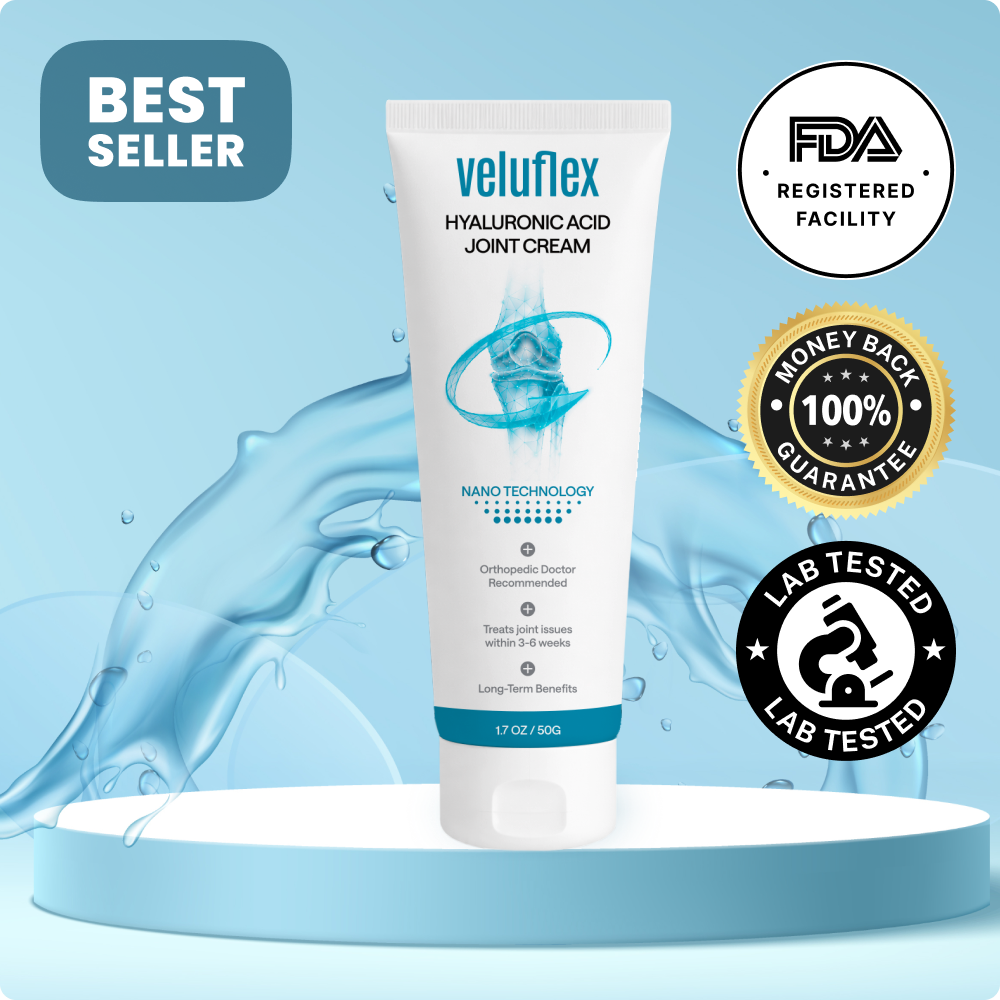
Table of Contents
- Formula Overview
- Ingredient Analysis
- What to Expect and When
- Pricing and Guarantee
- Pros and Cons
- Who Veluflex Is For (and Who Should Pass)
- Frequently Asked Questions
Formula Overview
Veluflex uses four core active ingredients: Hyaluronic Acid, Boswellia Extract, Willow Bark Extract, and Ginger Extract. This is a focused anti-inflammatory and joint-lubrication formula with no counterirritants (menthol, camphor), meaning it does not produce the familiar warming or cooling sensation most topical pain creams use. The result is a cream that works more quietly but, when used consistently, addresses the underlying inflammation rather than temporarily masking pain signals. If you’re weighing this against a glucosamine or MSM-based formula, our guide to MSM for joint pain breaks down how that mechanism compares.
The product is applied 2–3 times daily. Onset for anti-inflammatory effects is gradual, consistent with what the published literature shows for Boswellia and willow bark as a primary mechanism. This is not a “feel it working” product in the way that counterirritants are, which creates a compliance risk: users who stop after 1–2 weeks because they don’t notice immediate sensation may not give the formula time to show its actual anti-inflammatory benefit.
Rating: 3.5 / 5. A credible herbal anti-inflammatory topical formula with legitimate ingredient choices, limited by undisclosed concentrations, a 30-day guarantee that is short relative to anti-inflammatory timelines, and marketing language that overstates what topical hyaluronic acid can do at the joint level.
Ingredient Analysis
Hyaluronic Acid
Veluflex’s marketing describes hyaluronic acid as “flooding deep into damaged joints to restore lost cushion,” a claim that overstates what topical HA at standard consumer product molecular weights does. High-molecular-weight hyaluronic acid (the form in most creams) does not penetrate intact skin to the joint cavity. It remains primarily in the stratum corneum and provides surface hydration. Low-molecular-weight HA fragments show better penetration in research settings, but consumer products do not typically disclose molecular weight, making it difficult to assess.
The important context: injected hyaluronic acid (viscosupplementation) has a meaningful evidence base for knee OA lubrication. Topical HA at standard molecular weights does not replicate that mechanism. It is more accurately a skin conditioning agent over the joint area. Veluflex’s claims around this ingredient should be read with that distinction in mind.
Boswellia Extract
Boswellia serrata inhibits 5-lipoxygenase (5-LOX), reducing leukotriene production in inflamed tissue. Topical Boswellia penetration studies have shown boswellic acids can cross the skin barrier in lipid-based formulations, producing measurable anti-inflammatory effects in periarticular tissue. This is the most clinically credible anti-inflammatory ingredient in the Veluflex formula. The dose used clinically in topical Boswellia research varies; without concentration disclosure on this product, it is not possible to verify alignment with effective dose ranges. For more on how this ingredient performs across different products, see our guide to Boswellia for joint pain.
Willow Bark Extract
Willow bark contains salicin, which metabolizes to salicylic acid (the aspirin class) following absorption. As a topical, it provides mild analgesic and anti-inflammatory effects through the same pathway as aspirin-class compounds, but with slower onset and lower intensity than pharmaceutical-grade topical NSAIDs like diclofenac gel. It is a legitimate botanical analgesic with a long clinical record. Adults on anticoagulant therapy should note the salicylate content and discuss with their physician before using regularly.
Ginger Extract
Ginger’s active compounds (gingerols, shogaols) inhibit NF-κB and COX-2, providing anti-inflammatory activity complementary to Boswellia’s 5-LOX mechanism. A small RCT (Therkleson, 2014) found topical ginger application reduced knee OA pain meaningfully. The evidence base is smaller than for Boswellia, but the mechanism is pharmacologically sound and the warming sensation from ginger’s pungent compounds may provide mild counterirritant benefit without the intense heat of menthol or camphor-based products, potentially making Veluflex tolerable for users who are sensitive to strong counterirritant sensations.
What to Expect and When
Veluflex does not produce the strong immediate sensation of menthol-camphor counterirritant creams. The ginger extract may provide mild warmth, but the product’s primary mechanism, the Boswellia and willow bark anti-inflammatory activity, works gradually over 2–4 weeks of consistent use.
What users typically notice first (around days 3–7 with consistent 2–3x daily application) is a reduction in joint stiffness, particularly morning stiffness or stiffness after sitting. Pain reduction follows, and is typically more noticeable at weeks 2–4 as anti-inflammatory effect accumulates in periarticular tissue.
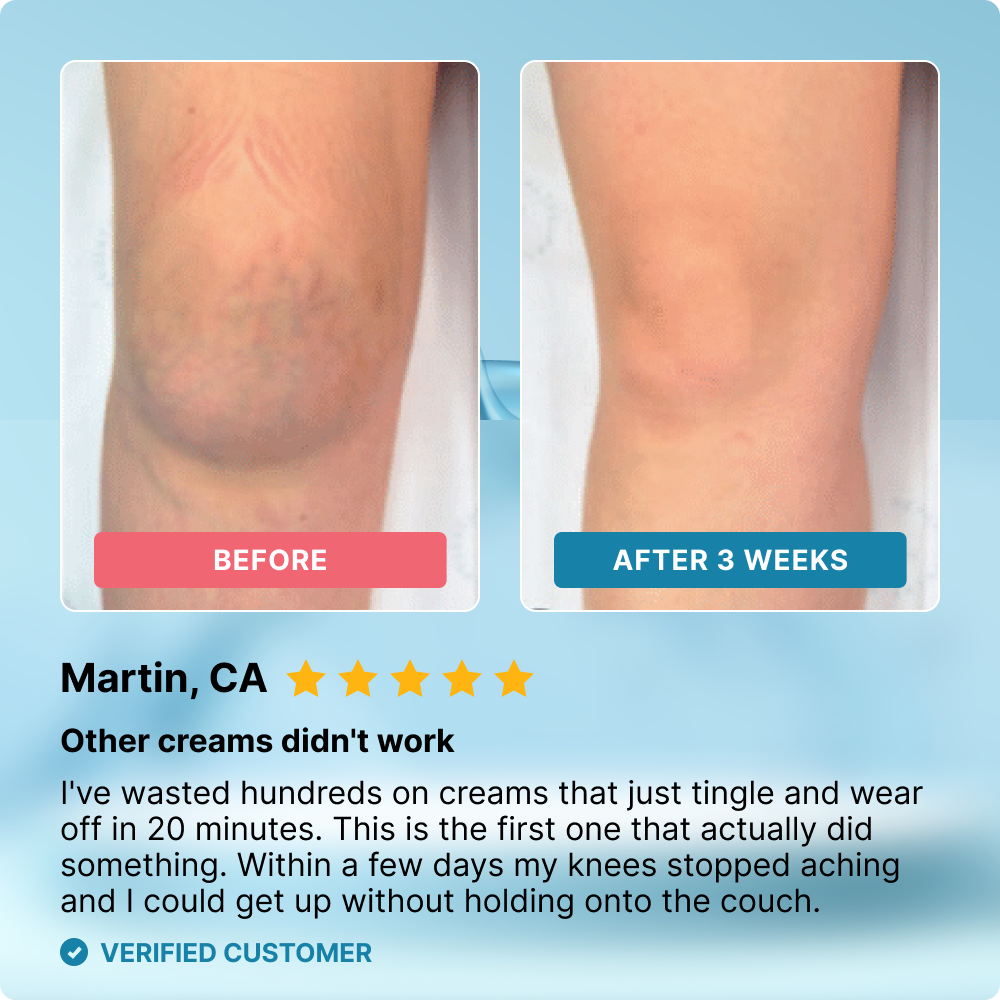
The Veluflex product page cites “8 in 10 users report visible results” and a 4.8-star rating from over 19,000 reviews. Notably, it also includes a disclaimer stating that “health claims on the website have not been proved scientifically or evaluated by doctors,” which makes the cited statistics and specific endorsements on the same page harder to take at face value. The ingredient science is solid; the marketing claims are more promotional than evidential.
Pricing and Guarantee
| Option | Promotional Price | Original Price | Savings |
|---|---|---|---|
| Single bottle | $39.95 | $75.50 | ~47% off |
The 30-day money-back guarantee is the most significant structural concern with Veluflex. For an herbal anti-inflammatory product where meaningful results typically develop at 2–4 weeks, a 30-day refund window gives very little buffer if results come at the slower end of that range. You may reach the guarantee deadline just as the formula starts producing meaningful effect. A 60-day guarantee (the standard for credible supplements) would better align with the clinical timeline for these ingredients.
See current Veluflex pricing →
Pros and Cons
| Pros | Cons |
|---|---|
| Credible herbal anti-inflammatory combination (Boswellia + willow bark) | Individual ingredient concentrations not disclosed |
| No strong counterirritant sensation, suitable for those sensitive to menthol/camphor | 30-day guarantee is misaligned with 2–4 week anti-inflammatory timelines |
| Ginger provides mild warming as a gentler alternative to menthol | Hyaluronic acid claims overstated, topical HA does not replicate injected viscosupplementation |
| Willow bark (salicylate pathway) complements Boswellia (5-LOX pathway) | On-page marketing claims include a disclaimer that claims are unproven |
| Significant promotional discount (~47% off) | Limited independent verification of product potency |
Who Veluflex Is For (and Who Should Pass)
Good fit for:
- Adults with superficial joint pain (knee, wrist, elbow) who want herbal anti-inflammatory topical support without strong counterirritant sensation
- Adults sensitive to strong menthol or camphor heat who still want a topical joint product
- Adults who prefer an herbal approach for daily anti-inflammatory maintenance alongside their existing oral supplement routine
- Post-activity joint stiffness: applying Veluflex after physical activity covers the anti-inflammatory phase of recovery
Who should look elsewhere:
- Adults who want fast-acting counterirritant relief as a primary benefit. Veluflex does not deliver the immediate sensation that menthol-based formulas provide. For a formula that combines both fast-acting and anti-inflammatory mechanisms, see our ArthroMD+ review.
- Adults on anticoagulant medication: willow bark’s salicylate content requires physician consultation before daily use with blood thinners
- Adults seeking joint lubrication through hyaluronic acid at the level of injected viscosupplementation: topical HA does not achieve intra-articular lubrication
- Adults with deep-joint pain (hip OA, lumbar spine): topical penetration limitations apply regardless of formula quality. If you want to compare formulas side by side, our ArthroVit cream review covers another option in this category.
Frequently Asked Questions
How long should I use Veluflex before expecting results?
Based on the clinical literature for Boswellia and willow bark, expect 2–4 weeks of consistent 2–3x daily application before meaningful reduction in baseline inflammation. Some users notice reduced stiffness earlier, within the first week, but the full anti-inflammatory benefit accumulates over time. Given the 30-day guarantee window, starting the trial promptly upon receipt is important if you want assessment time before the return window closes.
Does Veluflex feel warming or cooling on the skin?
Veluflex does not contain menthol or camphor, so it does not produce the strong cold-heat sensation of typical counterirritant creams. Ginger extract may produce mild warming on some skin types, but most users describe the application experience as neutral, more like a standard cream than an “active” pain relief product. This is intentional: the formula is anti-inflammatory by mechanism rather than counterirritant by sensation.
Can I use Veluflex with a blood thinner?
Veluflex contains willow bark, which is in the salicylate compound class, the same class as aspirin. For adults on anticoagulant medications (warfarin, heparin) or regular aspirin therapy, regular topical willow bark application could increase bleeding risk. Discuss with your prescribing physician before combining Veluflex with anticoagulant therapy. For daily low-dose aspirin users, the risk is lower but still worth mentioning to your doctor.
Is topical hyaluronic acid effective for joint lubrication?
Injected hyaluronic acid (viscosupplementation) has clinical evidence for knee OA lubrication. Topical hyaluronic acid at standard consumer product molecular weights does not penetrate intact skin to the joint space and does not replicate this effect. Topical HA primarily conditions the skin surface above the joint. Claims about topical HA “restoring joint cushion” overstate what the topical route can deliver.
About the author: Richard Hale is an independent health writer focused on mobility, joint health, and active aging research. He is not a licensed medical professional. All content on VitalMove40 is for educational purposes only and is not a substitute for advice from a qualified healthcare provider.