Last updated: September 14, 2026 | By Richard Hale
Standing desks are widely marketed as a solution to the back pain and health risks of sitting all day. The evidence is more nuanced: alternating between sitting and standing reduces low back discomfort and fatigue compared to sitting exclusively, but standing all day creates its own significant problems, and for some types of back conditions, it can make things worse. The research tells a more useful story than the marketing does.
This content is for educational purposes only and is not medical advice. If you have lumbar spinal stenosis, significant lower limb varicose veins, or have been advised against prolonged standing by a healthcare provider, this is particularly relevant guidance for your situation.
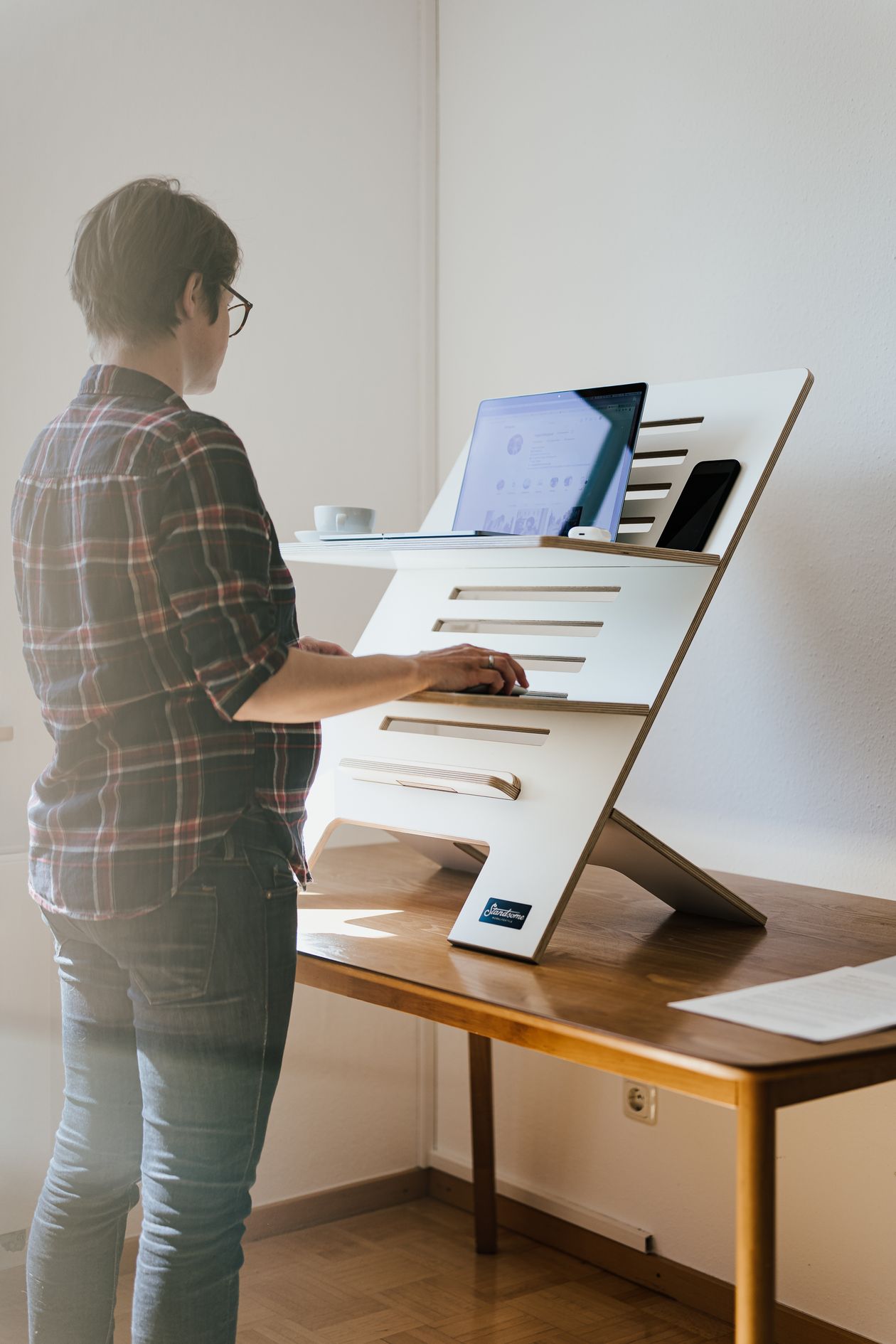
Table of Contents
- The Problem with Prolonged Sitting
- What the Evidence Shows on Standing Desks
- The Problems with Standing All Day
- The Optimal Pattern: Sit-Stand Cycling
- Setup: Getting It Right
- Specific Guidance for People with Back Pain
- Frequently Asked Questions
The Problem with Prolonged Sitting
Sustained sitting produces several specific musculoskeletal and metabolic problems. Intervertebral disc pressure in the lumbar spine is approximately 40% higher in sitting than in standing, making prolonged sitting a significant contributor to disc compression and associated back pain. The gluteal and hip extensor muscles become relatively inhibited in the seated position, and the hip flexors shorten, a combination that disrupts the muscle balance required for pain-free movement when you stand back up.
Beyond the lumbar spine, sustained sitting is independently associated with increased all-cause mortality, cardiovascular disease risk, and metabolic syndrome, associations that persist even when people exercise regularly. This is the population health finding that drove interest in standing desks: exercise after work does not fully offset the harms of 8 hours of continuous sitting during the workday.
What the Evidence Shows on Standing Desks
The research on sit-stand desks and back pain shows consistent but modest benefits. A 2016 RCT at Public Health England (the SMArT Work trial) found that providing sit-stand desks and behavioral coaching to office workers reduced sitting time by 1.28 hours per day at 12 months, and produced significant reductions in self-reported musculoskeletal pain, fatigue, and sickness absence. The key finding: pain reduction was associated with time spent alternating between positions, not specifically with standing time.
A 2018 Cochrane review of sit-stand desks trials was more cautious, noting that while most studies found reduced sitting time with standing desks, the evidence for specific back pain reduction was short-term and of low quality. The review concluded that the desks reduce sitting but that their effect on musculoskeletal outcomes specifically needs longer-term data.
The takeaway from the evidence: sit-stand desks reduce sedentary behavior and produce modest but real reductions in back discomfort, primarily through the movement they enable rather than through standing itself as a posture. A sit-stand desk that is used exclusively in the standing position provides little benefit and potentially creates new problems.
The Problems with Standing All Day
Standing in one place for hours creates its own set of problems that are well-documented in occupational health research:
Varicose veins and venous insufficiency: prolonged static standing is a primary risk factor for varicose vein development. When standing, venous blood must travel upward against gravity from the lower legs to the heart, the calf muscle pump (the contraction of calf muscles during walking) drives this circulation. Static standing without the muscle pump leads to venous pooling in the lower legs, increased hydrostatic pressure, and over time, venous wall damage and varicose vein formation. Adults who already have varicose veins are particularly susceptible to worsening with prolonged standing.
Lower limb fatigue and discomfort: most adults find that standing continuously for more than 1-2 hours produces significant lower leg fatigue, foot pain, and general discomfort. This fatigue causes people to adopt compensation postures (shifting weight to one leg, hyperextending the knee, locking out the hips) that create new musculoskeletal stresses.
Spinal stenosis worsening: lumbar spinal stenosis (the most common cause of leg pain in adults over 60) is characteristically worsened by standing and walking. The slight extension of the lumbar spine in standing narrows the spinal canal further, increasing nerve root compression. For adults with spinal stenosis, a standing desk may worsen their primary complaint rather than help it. These individuals benefit from increased sitting time and forward flexion positions, the opposite of what a standing desk provides.
No metabolic benefit from static standing: standing burns marginally more calories than sitting (around 8-10 extra calories per hour), but this is metabolically negligible. The health benefits of breaking up sitting come from movement, not from the standing posture itself, replacing sitting with standing does not produce meaningful cardiovascular or metabolic improvements compared to replacing sitting with short walking breaks.
The Optimal Pattern: Sit-Stand Cycling
The current evidence-based recommendation for desk workers is the 20-8-2 principle from research by Dr. Jack Callaghan at the University of Waterloo: for every 30 minutes, spend 20 minutes sitting, 8 minutes standing, and 2 minutes moving. This ratio was found to minimize musculoskeletal discomfort across the workday compared to sitting-only or standing-only protocols.
The critical element is the 2 minutes of movement, walking, calf raises, brief stretching. This is the component that drives the disc nutrition, venous circulation, and muscle reset that pure sit-stand cycling does not provide. A sit-stand desk that enables 8 minutes of standing per 30-minute block but includes 2 minutes of purposeful movement is significantly more beneficial than one used for hours of standing without movement.
Setting a 30-minute timer (phone, computer calendar reminder, or dedicated apps like Stand Up! or Stretchly) and using it consistently produces the position cycling that research supports. The habit, not the desk itself, is the active ingredient.
Setup: Getting It Right
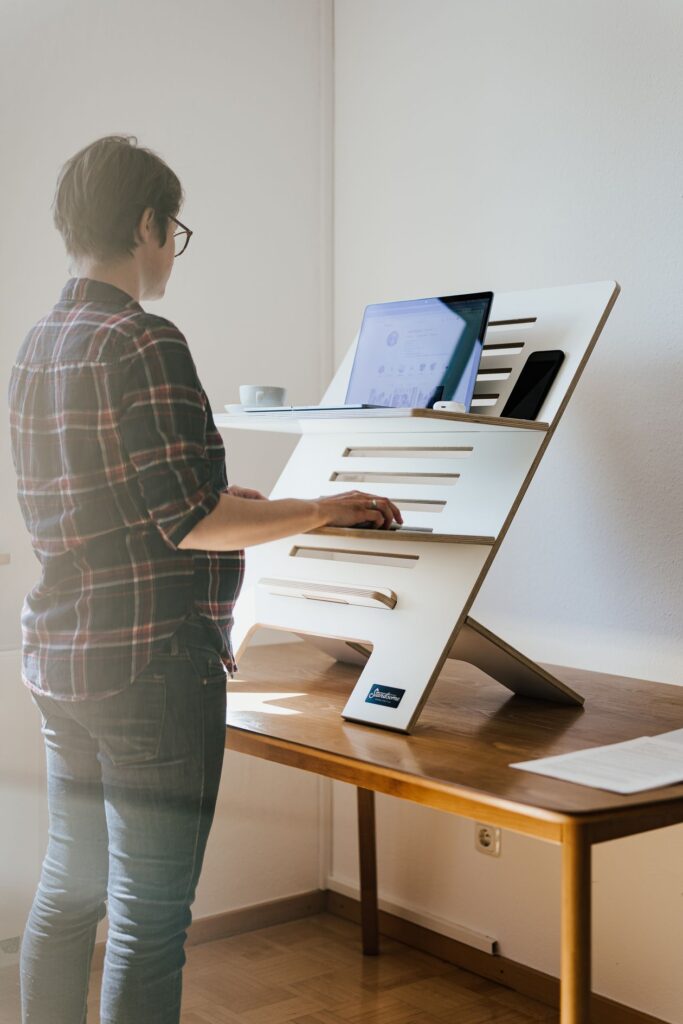
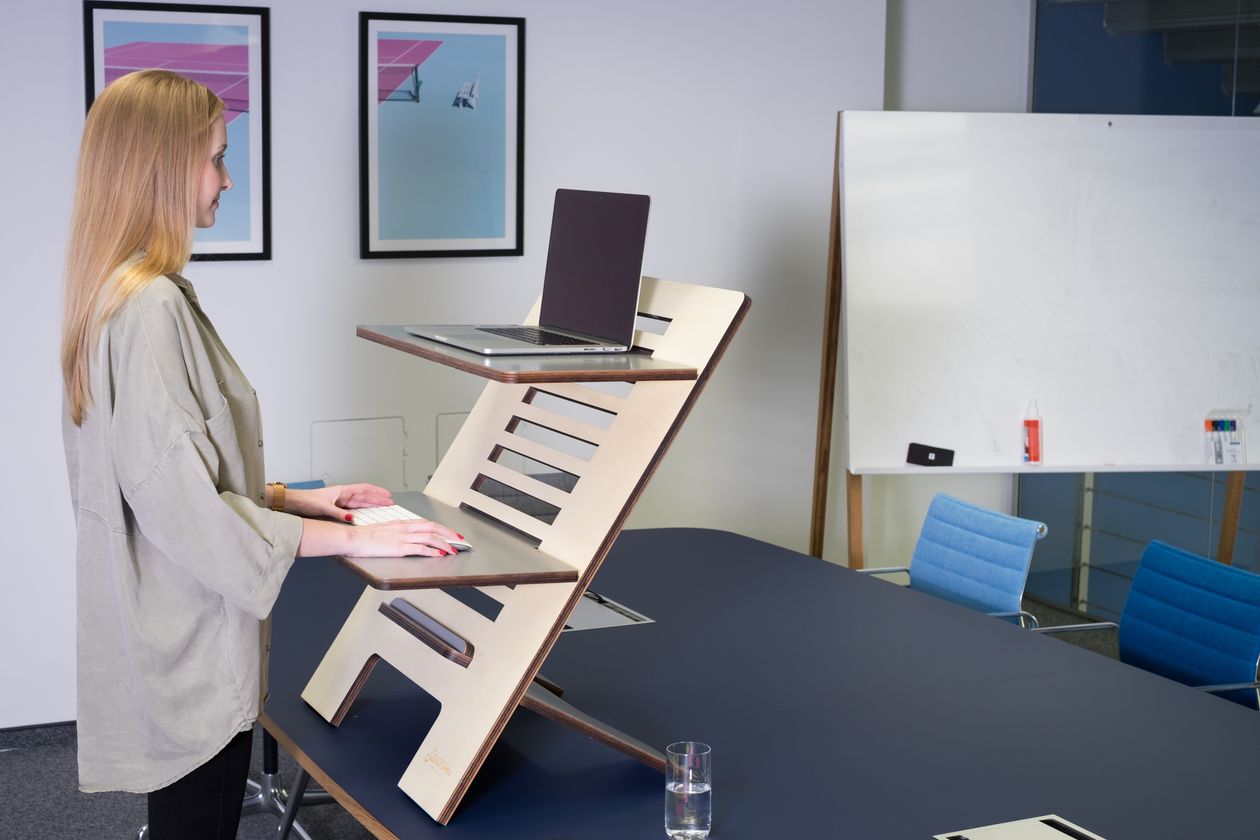
Standing height: when standing at the desk, elbows should be at 90-100 degrees with shoulders relaxed, the same principle as seated work. The monitor should remain at the same eye level in both positions (a dual-position monitor arm that raises and lowers with the desk surface is ideal; otherwise the monitor must be readjusted when switching positions).
Anti-fatigue mat: a quality anti-fatigue mat (50mm or thicker gel or foam) significantly reduces lower leg fatigue during standing periods. The slight instability the mat creates causes subtle muscle contractions in the calves and feet, these small contractions improve venous return and reduce the static loading that causes fatigue. This is not a trivial accessory, many people find standing intolerable without one, comfortable with one.
Footwear: supportive footwear with adequate arch support and heel cushioning is important during standing periods. Bare feet or flat, unsupportive footwear significantly worsens foot and plantar fascia discomfort during sustained standing. For people with plantar fasciitis, standing periods may need to be shorter and shoe selection is particularly important.
One-foot prop: placing one foot on a small footrest or box edge while standing (alternating feet) reduces lumbar lordosis and static gluteal contraction, reducing lower back fatigue during standing periods. Workbenches in factories and kitchen counters have used footrails for this reason for centuries, the ergonomics principle translates directly to home office standing desks.
Specific Guidance for People with Back Pain
Disc-related back pain (herniation, DDD): a sit-stand desk is beneficial. Disc pressure is significantly higher in sitting, and breaking up prolonged sitting reduces cumulative disc load. Alternating positions and avoiding prolonged sitting in any one session is the primary goal. Standing relieves disc pressure but should not be sustained long enough to cause lower extremity fatigue.
For the sitting portions of a sit-stand day, a contoured seat cushion with a tailbone cutout can make the seated intervals more tolerable by offloading the coccyx and supporting the lumbar curve. Our Hewelth LumboCare Pro review looks at one option. The desk itself is only one piece of the setup, see our full desk ergonomics after 40 guide for chair height, monitor position, and keyboard placement.
Facet joint pain: mixed. Standing in slight extension loads the facet joints more than sitting in slight flexion. People with significant facet arthropathy may find prolonged standing more painful than moderate sitting. Alternating positions and ensuring the standing position does not hyperextend the lumbar spine (avoid jutting the hips forward while standing) is important for this group.
Spinal stenosis: standing desks are generally not beneficial and may worsen the primary complaint. These individuals benefit from maintaining a slight forward lean in standing (which opens the spinal canal) and incorporating more sitting time, not less. A standing desk used with a tall stool that allows a forward-leaning sit-stand position may be appropriate, but a desk primarily used in a standing position is not indicated for spinal stenosis.
General chronic low back pain (non-specific): sit-stand cycling with movement breaks is beneficial for most adults in this category. The reduction in sitting time and the addition of regular movement are the active ingredients, the standing desk is the infrastructure that enables them.
Frequently Asked Questions
Are standing desks worth the cost?
If you are an office worker who sits for 6+ hours per day and can use the desk to genuinely alternate positions with movement breaks, yes, the evidence supports meaningful reductions in back discomfort and musculoskeletal fatigue. If you would use the desk exclusively in standing mode all day, or primarily in sitting mode, the benefit is significantly diminished. The desk is worth the cost when combined with the habit of position cycling and movement breaks. Without that habit change, it is an expensive way to maintain the same static loading problem.
Do standing desks burn more calories?
Marginally, approximately 8-10 additional calories per hour of standing compared to sitting. Over an 8-hour workday with 3 hours of standing, that is approximately 25-30 additional calories. This is metabolically negligible. The health benefits of breaking up sitting come from the movement components, walking breaks burn approximately 3-4 times more calories than standing and provide the cardiovascular and muscular benefits that static standing does not. Standing desks should not be evaluated on calorie burning, that is the wrong metric.
About the author: Richard Hale is an independent health writer focused on mobility, joint health, and active aging research. He is not a licensed medical professional. All content on VitalMove40 is for educational purposes only and is not a substitute for advice from a qualified healthcare provider.