Last updated: September 14, 2026 | By Richard Hale
Tight hips are one of the most common mobility complaints after 40, and one of the most fixable. Years of sitting (at desks, in cars, on sofas) progressively shorten the hip flexors and reduce the range of motion that the hip joint was designed for. The result shows up as low back pain, hip stiffness in the morning, and a gait that looks and feels more restricted than it used to.
The stretches in this guide work. But they work better when you understand which muscles you are actually targeting and why the hip has become restricted in the first place.
This content is for educational purposes only and is not medical advice. If you have hip arthritis, a labral tear, or recent hip replacement, consult with a physical therapist before beginning a new stretching program.
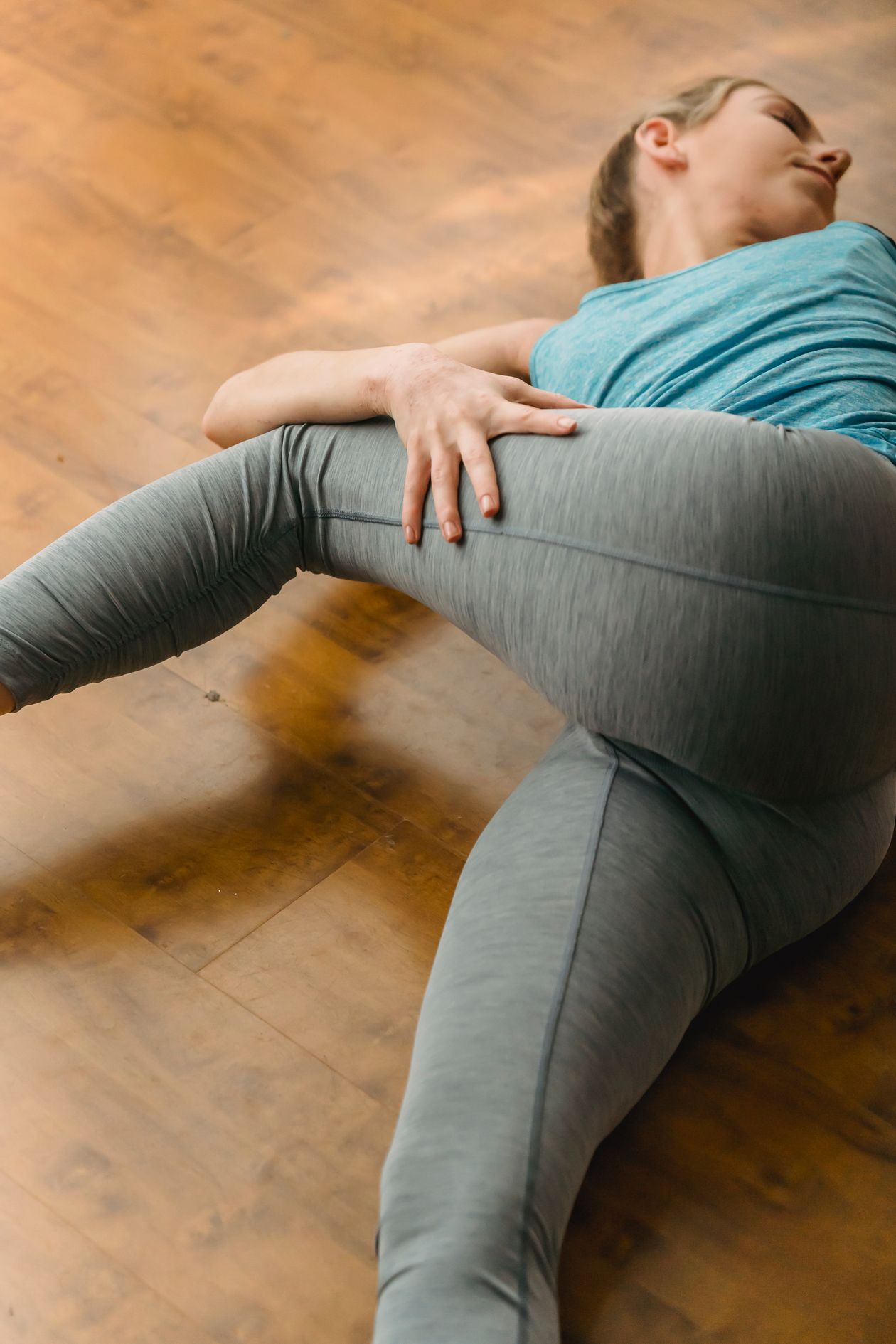
Table of Contents
- Why Hips Get Tight After 40
- What Hip Tightness Actually Causes
- The Best Hip Stretches After 40
- Dynamic vs. Static Stretching: What to Use When
- How Often and How Long
- Frequently Asked Questions
Why Hips Get Tight After 40
Hip tightness after 40 has two main drivers that usually work together. The first is sustained posture, specifically, sitting with the hip in 90 degrees of flexion for hours each day. The iliopsoas (the primary hip flexor) adapts to the position it spends the most time in. Over years of mostly-sitting, it shortens and loses its capacity for full extension at the hip.
The second driver is reduced activity variety. The hip joint is built for movement in multiple planes (forward, backward, sideways, rotating) but most people’s daily movement after 40 is almost entirely forward-walking with a short stride. Muscles and connective tissue around the hip that are not regularly moved through their full range become progressively shorter and stiffer.
After 40, connective tissue also becomes less elastic due to changes in collagen cross-linking and reduced hydration. This means the same stretching stimulus that produced quick results at 25 now requires more consistent effort and longer holds to achieve the same adaptation. When tightness has progressed into actual pain at the front of the hip, see our guide on hip flexor pain after 40.
What Hip Tightness Actually Causes
Tight hip flexors do more than make the front of your hip feel stiff. When the iliopsoas is shortened, it pulls the pelvis into an anterior tilt, rotating the top of the pelvis forward, which increases the lumbar curve (arch in the lower back). This pelvic tilt is a major driver of low back pain in people who sit a lot, and it does not show up on imaging because it is not a structural problem, it is a postural and muscular one.
Tight hip external rotators (the piriformis and deep hip rotators) contribute differently: they reduce the hip’s internal rotation range of motion, which changes the way the knee tracks during walking and stair climbing. Reduced hip internal rotation is consistently associated with patellofemoral knee pain and IT band syndrome.
The Best Hip Stretches After 40
1. Kneeling Hip Flexor Stretch (Iliopsoas)
Kneel on one knee with the other foot forward, knee at 90 degrees. Shift your hips forward until you feel a stretch through the front of the hip of the kneeling leg. Keep your trunk upright, do not lean forward, which reduces the stretch on the hip flexor. For a deeper stretch, raise the same arm as the kneeling leg and gently lean away. Hold 45-60 seconds per side. This is the most effective single stretch for addressing anterior pelvic tilt from tight hip flexors.
2. 90/90 Hip Stretch
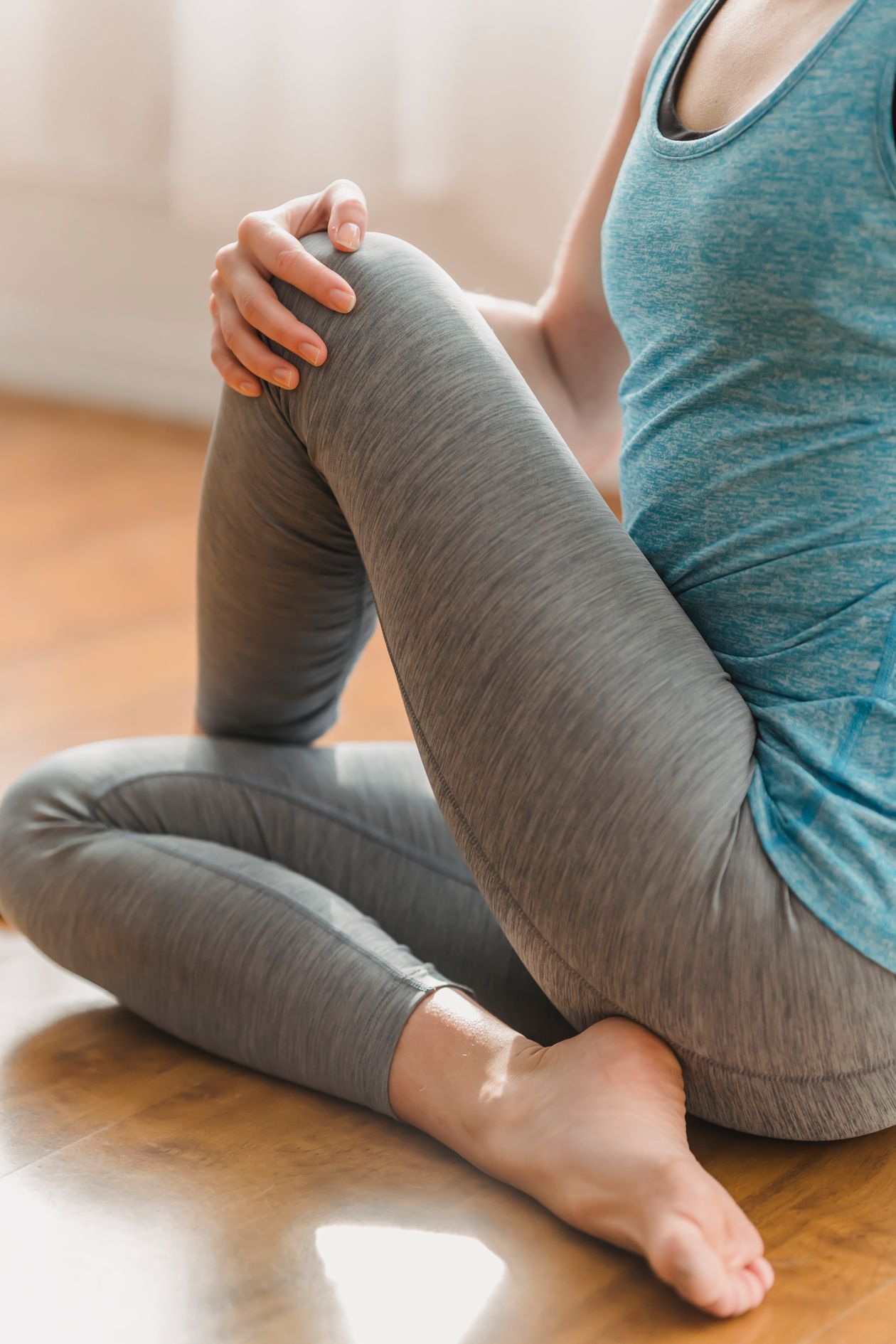
Sit on the floor with both knees bent at 90 degrees, one leg in front (external rotation) and one behind (internal rotation). Sit tall and let both knees drop toward the floor. To target the front hip’s external rotators, lean gently over the front leg; to target the back hip’s internal rotators and hip flexors, lean back slightly. This stretch addresses both external and internal rotation in a single position. Hold 60 seconds each direction per side.
3. Supine Figure-4 Stretch (Piriformis)
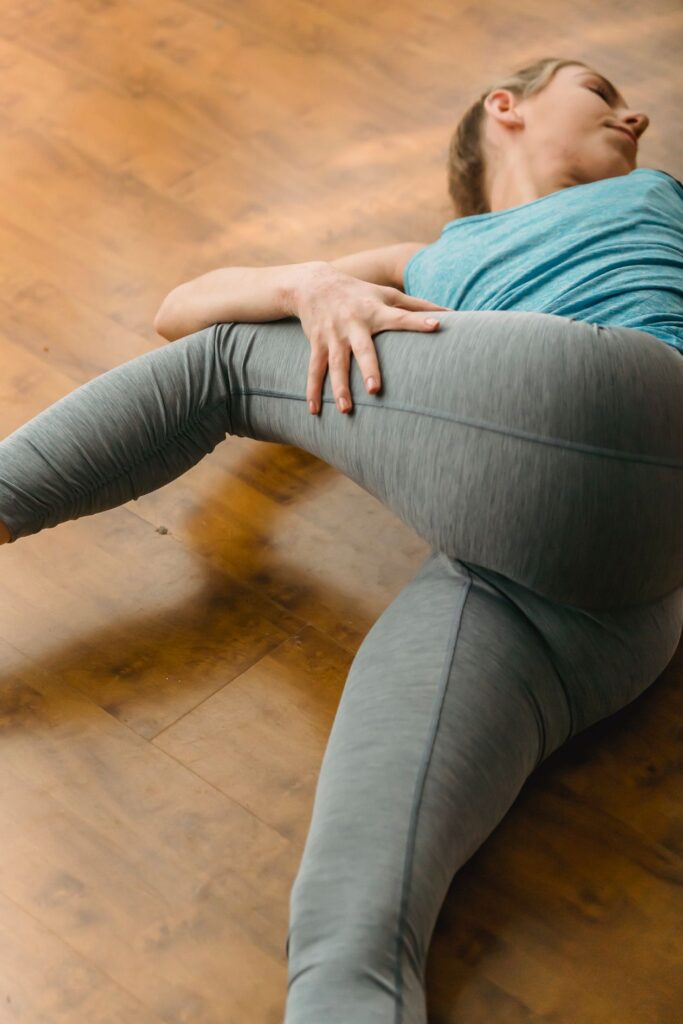
Lie on your back with both knees bent, feet flat. Cross one ankle over the opposite knee to form a figure-4 shape. Either stay in this position for a gentle stretch, or pull the bottom leg toward your chest to deepen it. This targets the piriformis and deep hip external rotators, particularly relevant for people with hip pain that radiates into the buttock (which can be piriformis-related). Hold 45-60 seconds per side.
4. Deep Squat Hold (Hip Mobility)
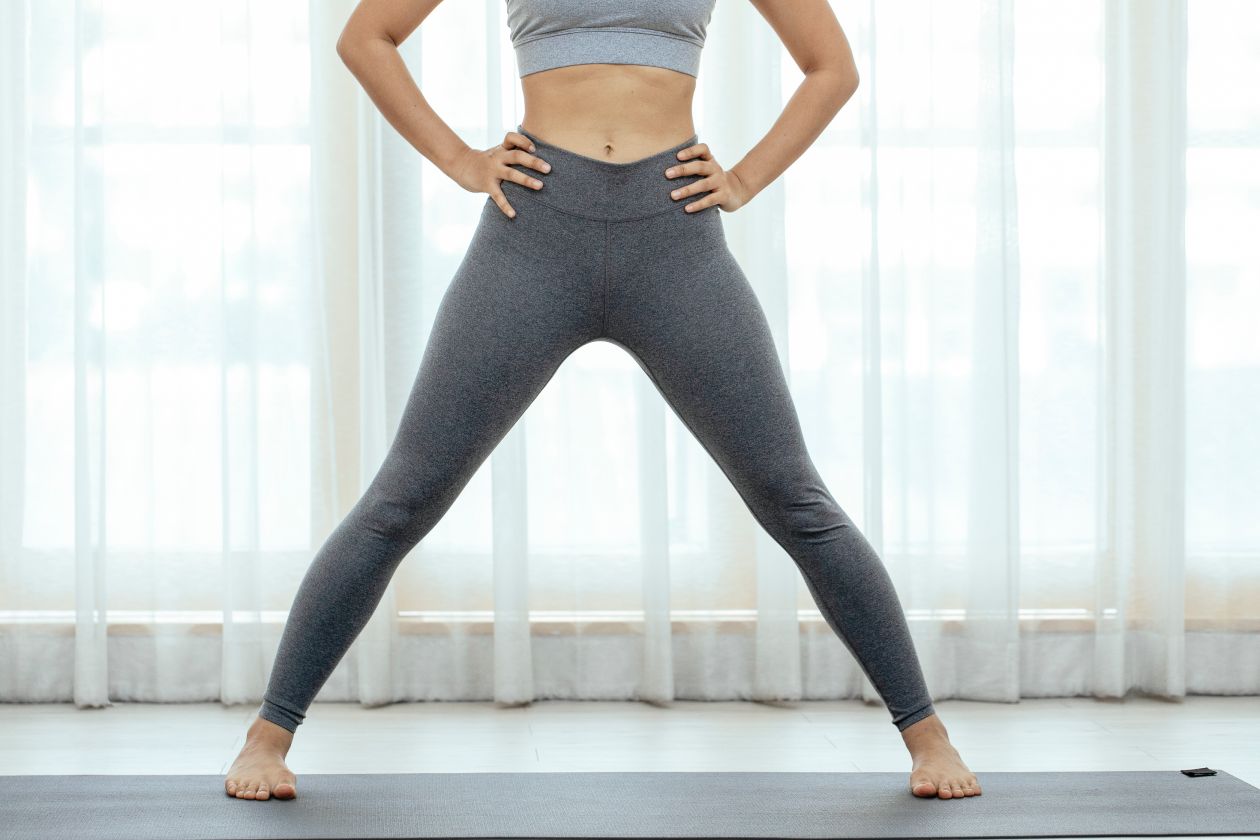
Stand with feet slightly wider than shoulder-width, toes slightly turned out. Lower yourself into a deep squat, letting your hips descend below knee height if possible. Use a support (doorframe, TRX strap) if needed to maintain the position comfortably. This is a comprehensive hip opener that trains multiple hip muscles simultaneously through the end range of motion. Start with 20-30 second holds and progress as mobility improves.
5. Hip Extension (Glute Bridge Hold)
Lie on your back with knees bent, feet flat on the floor. Lift your hips into a bridge position and hold at the top for 5-10 seconds, squeezing the glutes. This is not a traditional stretch, it is a strengthening exercise that creates reciprocal inhibition of the hip flexors. Tight hip flexors often coexist with weak glutes, and the combination creates the anterior tilt pattern described above. Addressing both is more effective than stretching alone.
Dynamic vs. Static Stretching: What to Use When
Dynamic stretching (controlled movement through range of motion) is most appropriate before activity, before a walk, workout, or anything that requires hip mobility. It prepares the joint without the temporary strength reduction that prolonged static holds can cause. Leg swings, hip circles, and walking lunges with rotation are all useful dynamic hip movements.
Static stretching (held positions) is most effective after activity or as a standalone practice. This is when the muscles are warm and when sustained holds (45-60 seconds or longer) produce the most tissue change. The research consistently shows that short holds (10-15 seconds) produce minimal lasting change, 45 seconds minimum, with 60-90 seconds being more effective for adults over 40 whose connective tissue is less responsive to shorter stretching stimuli.
How Often and How Long
To produce genuine, lasting improvement in hip mobility after 40, consistency matters more than duration per session. Twenty minutes of hip stretching done 5 days per week will produce more change over 8 weeks than 60-minute sessions twice a week.
A practical approach: 10-15 minutes of hip stretching daily, focused on the kneeling hip flexor stretch and the supine figure-4 as the two highest-priority stretches for most people. Add the 90/90 and deep squat hold as capacity allows. Measurable improvement in range of motion typically becomes noticeable within 3-4 weeks of consistent daily practice.
Frequently Asked Questions
Why do my hips feel tight even when I exercise regularly?
Exercise that does not include the full range of hip extension and rotation can maintain or even worsen tightness. Cycling, for example, keeps the hip in a flexed position throughout the pedal stroke, it provides cardiovascular conditioning but does not stretch the hip flexors. Even people who exercise regularly often have tight hips if their exercise does not include movements that take the hip into full extension (like deep lunges or step-ups with a long stride). Stretching and mobility work must be added separately if the exercise activity does not include it.
Can tight hips cause knee pain?
Yes, through altered mechanics. Reduced hip external rotation and hip abductor weakness (often accompanying hip tightness) allow the femur to internally rotate during walking and squatting, which changes the angle at which the kneecap tracks in its groove. This is a primary mechanism in patellofemoral pain syndrome (runner’s knee). Hip stretching and strengthening that improves hip control consistently reduces patellofemoral knee pain in research settings, even without any direct knee treatment.
How long does it take to notice improvement from hip stretching?
Most people notice a reduction in morning stiffness and a slight improvement in range of motion within 2-3 weeks of daily stretching. Meaningful, measured increases in hip mobility typically appear at 4-6 weeks. The connective tissue changes that produce lasting structural improvement take 3-4 months of consistent practice. Stopping a stretching program tends to cause gradual regression, hip mobility requires maintenance, not just a temporary fix.
How long should I hold hip stretches?
Research supports holding static stretches for 30 to 60 seconds for connective tissue length changes. Shorter holds of 10 to 15 seconds provide temporary neurological relaxation but insufficient time for the fascial and connective tissue adaptations that produce lasting mobility gains. For adults over 40 where connective tissue is less extensible, consistent daily practice over weeks produces more reliable results than longer infrequent sessions. Contract-relax stretching, briefly contracting the muscle being stretched before relaxing into a deeper position, is more effective than passive holding and typically requires shorter hold times to achieve the same adaptation.
Can hip tightness cause knee or back pain?
Yes, hip muscle tightness is a major and often underdiagnosed contributor to both knee and lower back pain. Tight hip flexors pull the pelvis into anterior tilt, increasing lumbar extension and compression on the posterior disc and facet joints. Weak hip abductors allow the knee to drop inward during walking and running, a primary contributor to IT band syndrome and patellofemoral pain. Addressing hip mobility and strength resolves a significant proportion of knee and back complaints that appear to have a purely local cause, many successful rehabilitation programmes for knee and back pain target the hip without directly loading the painful area.
About the author: Richard Hale is an independent health writer focused on mobility, joint health, and active aging research. He is not a licensed medical professional. All content on VitalMove40 is for educational purposes only and is not a substitute for advice from a qualified healthcare provider.