Last updated: September 8, 2026 | By Richard Hale
Sleep tracking after 40 is useful for one job: showing you whether your sleep duration and consistency are holding steady or slipping over weeks. It is far less useful as a nightly report card. The stage breakdown into light, deep, and REM is a rough estimate, the single “sleep score” is a blunt summary, and one bad night tells you nothing. Read the trend, ignore most of the detail.
This guide covers what sleep trackers actually measure, which numbers are worth watching after 40, which ones to take lightly, and the handful of patterns that are worth raising with a doctor.

What Sleep Trackers Actually Measure
No consumer wearable measures sleep directly. Brain-wave monitoring, the clinical standard, needs electrodes on the scalp. Instead, a watch, band, or ring records movement, heart rate, heart rate variability, skin temperature, and breathing rate, then uses an algorithm to infer when you fell asleep, when you woke, and roughly which sleep stage you were in.
That inference is reasonably good at some things and weak at others. Modern devices are fairly accurate at detecting total time asleep and your sleep and wake times. They are much less reliable at splitting the night into light, deep, and REM sleep, where they disagree with lab measurement and with each other. So the top-line “you slept 7 hours 10 minutes” is trustworthy as a trend. The “you got 48 minutes of deep sleep” is an educated guess.
The Sleep Data Worth Watching After 40
Total sleep time, as a trend
The American Academy of Sleep Medicine recommends at least 7 hours a night for adults. What matters on a tracker is not whether you hit exactly 7 last night, but whether your seven-day average is drifting down over a month. A slow decline is worth acting on before it becomes a habit.
Sleep consistency
Going to bed and waking at roughly the same times every day, weekends included, is one of the strongest sleep habits you can build. If your tracker shows bed and wake times scattered across a three-hour window, tightening that is usually higher impact than chasing any stage number.
Time awake after falling asleep
Brief awakenings are normal and increase with age. But a rising amount of time awake in the middle of the night, tracked over weeks, points to something worth investigating: alcohol, room temperature, stress, needing the bathroom, or a breathing issue.
Overnight resting heart rate and HRV
These are among the most reliable signals a wearable produces overnight. A resting heart rate that climbs and an HRV that falls across several nights usually means your body is under load from training, stress, illness, or alcohol. For how to read those two numbers, see our guide to resting heart rate and HRV after 40.
Breathing rate and oxygen dips
Some devices track breathing rate and blood oxygen through the night. Repeated oxygen dips, especially alongside loud snoring and daytime tiredness, can be an early hint of sleep apnea and are worth mentioning to a doctor. Treat this as a screening prompt, not a diagnosis.
What to Take With a Grain of Salt
- Exact deep sleep minutes. The number moves a lot between devices and nights. Watch the broad trend over weeks, not the nightly figure.
- REM percentages. Same problem. Useful only as a rough direction over time.
- The single sleep score. It blends several estimates into one grade and can read “poor” on a night you felt fine, or “excellent” on a night you felt terrible.
- One bad night. Sleep varies naturally. A single rough night is noise. A pattern across a week or two is a signal.

Sleep Changes That Are Normal After 40
A tracker will often show sleep looking “worse” with age even when nothing is wrong. Several shifts are a normal part of getting older:
- Lighter sleep and more awakenings. Deep sleep declines gradually from your 30s onward, and brief wake-ups become more frequent.
- An earlier body clock. Many people start feeling sleepy earlier in the evening and waking earlier in the morning.
- Less tolerance for disruption. Alcohol, late meals, and a warm room hit sleep quality harder than they used to.
Seeing less deep sleep on your tracker at 55 than a 25-year-old would is expected. It is not a problem to solve, and it is not a reason to take a supplement or lie in bed longer. Compare your numbers to your own baseline from a few months ago, not to a younger person’s.
Patterns Worth a Doctor’s Attention
Sleep trackers screen; they do not diagnose. But some patterns are worth a medical conversation rather than a lifestyle tweak:
- Loud snoring plus gasping or choking noises, plus daytime sleepiness, which together suggest possible sleep apnea.
- Repeated overnight oxygen dips flagged by the device, particularly with the pattern above.
- Trouble falling or staying asleep most nights for a month or more, with real daytime impact.
- An unexplained, sustained rise in overnight resting heart rate over weeks.
- Strong, regular leg movements or an urge to move the legs at night that disrupts sleep.
Bring the trend data to the appointment. A month of weekly averages moving the wrong way is exactly the kind of early information a doctor can use.
How to Use Sleep Data Without Losing Sleep Over It
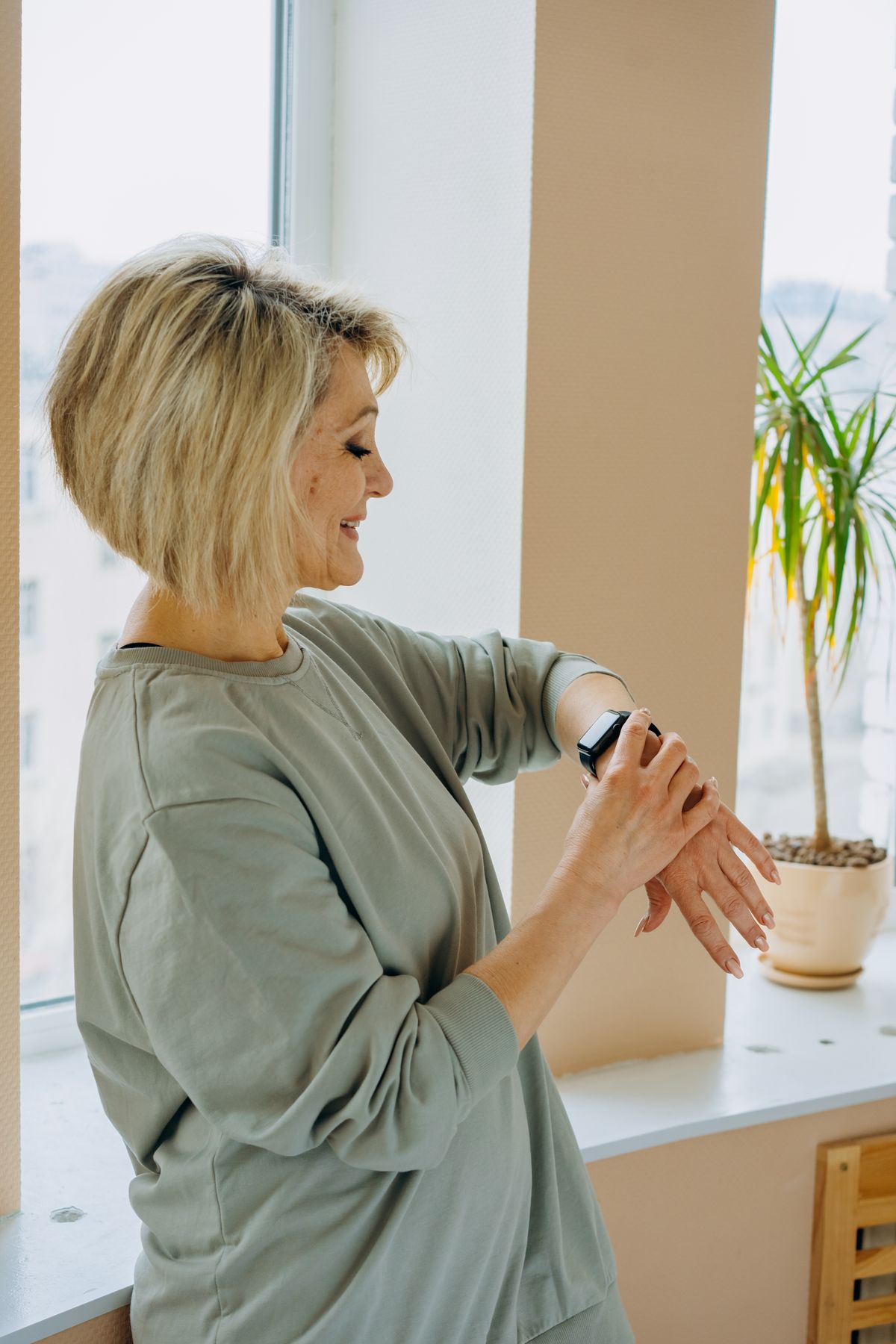
A 2017 paper in the Journal of Clinical Sleep Medicine described “orthosomnia,” where people become anxious and preoccupied with achieving perfect tracker sleep scores, and the worry itself makes their sleep worse. The data is a tool, not a test to pass. A few rules keep it useful:
- Check weekly, not first thing every morning. Looking at last night’s score before you are fully awake sets the tone for the day based on an estimate.
- Use seven-day and thirty-day averages. The nightly dot is mostly noise; the line is the information.
- Change one thing at a time. Earlier last meal, cooler room, no alcohol, consistent wake time. Give each two weeks and watch the trend.
- Act on sustained shifts only. One or two odd nights mean nothing. Two weeks in one direction is worth a response.
- If the tracking makes you anxious, stop for a while. How you feel and function during the day is still the most important measure of your sleep.
Sleep data is one input among several. See our guides to muscle recovery after 40, the best sleep positions for joint and back pain, and whether you need a fitness tracker after 40 for the habits that move these numbers. Our Hume Band 2.0 review covers one screenless option built around overnight data.
Frequently Asked Questions
Are sleep trackers accurate?
They are accurate enough for tracking total sleep time and your sleep schedule as a trend, and not accurate enough for precise sleep-stage breakdowns. Consumer wearables reliably detect when you are asleep versus awake, but they disagree with lab measurement and with each other on how much light, deep, and REM sleep you got. Use the top-line duration and consistency; treat the stage minutes as estimates.
How much deep sleep should a 50-year-old get?
There is no exact target, and deep sleep naturally declines with age, so a 50-year-old will typically show less than a younger adult. Rather than aiming for a number, watch whether your own deep sleep trend is stable over months and whether you feel rested during the day. A gradual decline that matches your age is normal; a sudden drop alongside poor daytime function is worth looking into.
Can a smartwatch detect sleep apnea?
Not diagnose it, but it can flag warning signs. Repeated overnight drops in blood oxygen, an irregular breathing rate, and frequent brief awakenings, especially with loud snoring and daytime sleepiness, are patterns worth taking to a doctor for a proper assessment. A sleep study is what actually diagnoses apnea.
Why is my sleep score low when I feel fine?
The score blends several estimated inputs, including sleep-stage guesses that are not very precise, so it can misjudge a night you actually slept well. How you feel and function during the day is a more reliable measure than the score. If you feel rested, a low score is not a reason for concern.
Is it bad to check your sleep score every morning?
For some people, yes. Research on “orthosomnia” found that fixating on perfect tracker scores can create anxiety that worsens sleep. Checking a weekly average is more useful than reacting to each morning’s number, and if the habit is making you tense about sleep, taking a break from tracking is reasonable.
About the Author
Richard Hale writes about mobility, recovery, and evidence-based wellness strategies for adults over 40 at VitalMove40. He is an independent health writer, not a licensed medical professional. Content is educational and not a substitute for advice from a qualified healthcare provider.