Affiliate Disclosure: VitalMove40 earns a commission from purchases made through affiliate links on this page, at no extra cost to you. See our full Affiliate Disclosure Policy.
Last updated: September 10, 2026 | By Richard Hale
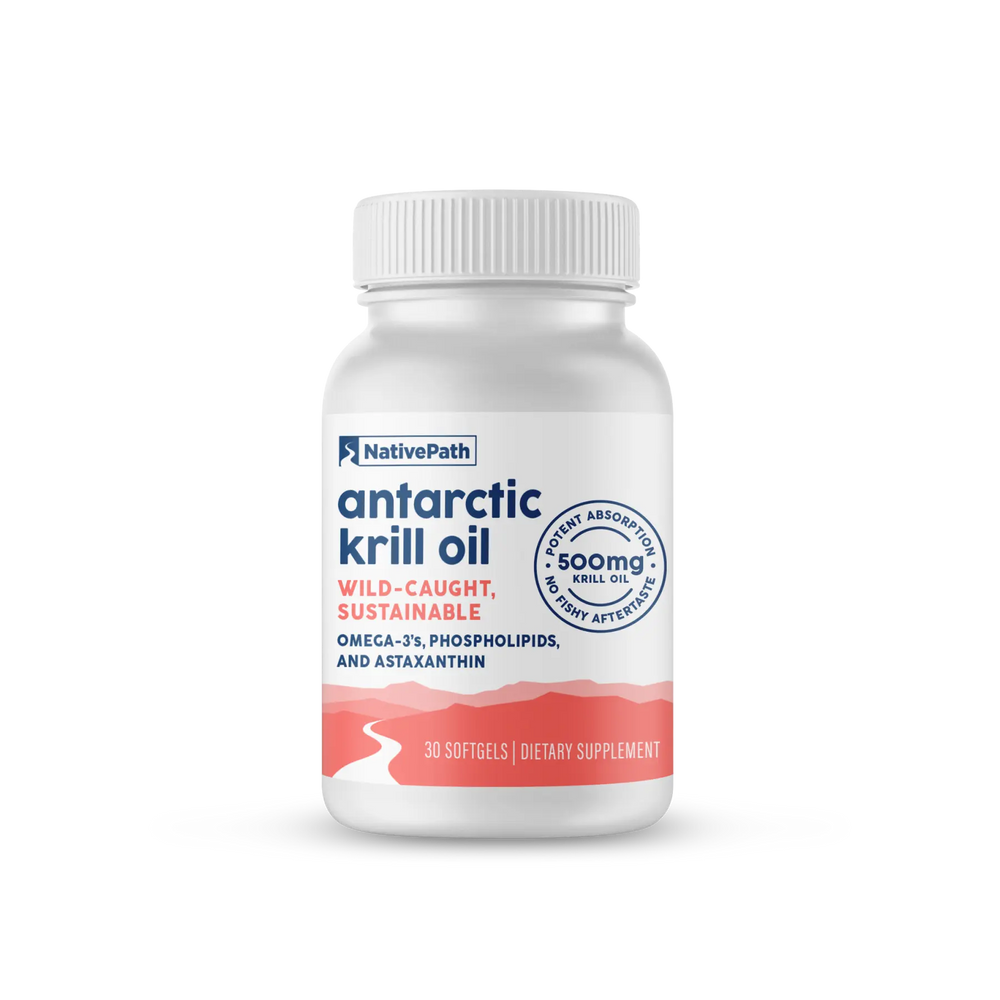
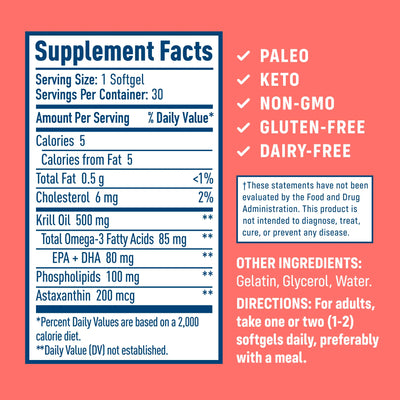
Yes, krill oil is genuinely better than regular fish oil for joint pain after 40, and the reason is biology, not marketing. The omega-3s in krill oil are bound to phospholipids, the same carrier molecules your cell membranes are made of, which means they absorb directly into joint tissue without the extra processing step fish oil requires. NativePath Antarctic Krill Oil is one of the few krill oil products I have reviewed that adds astaxanthin (a potent anti-inflammatory carotenoid) to an already strong base formula. This review covers exactly what it does, who it is for, and whether the premium price is justified.
This content is for educational purposes only and is not medical advice. Consult a healthcare provider before starting any new supplement, particularly if you take blood thinners or have a shellfish allergy.
Table of Contents
- Quick Verdict
- What Is NativePath Antarctic Krill Oil?
- Krill Oil vs Fish Oil for Joint Pain After 40
- Ingredient Breakdown
- How NativePath Compares to Other Krill Oil Brands
- Who Is It For?
- Pros and Cons
- Pricing and the 365-Day Guarantee
- My Rating
- Where to Buy
- Frequently Asked Questions
Quick Verdict
NativePath Antarctic Krill Oil
4.7 / 5
The phospholipid delivery form sets this above standard fish oil for joint absorption. The 200 mcg of astaxanthin adds real anti-inflammatory support that most omega-3 supplements skip entirely. The 365-day guarantee removes every reason to hesitate. This is the omega-3 I recommend first for adults over 40 with joint pain.
What Is NativePath Antarctic Krill Oil?
NativePath Antarctic Krill Oil is a single-softgel daily omega-3 supplement sourced from Antarctic krill (Euphausia superba), harvested from some of the most pristine cold-water fisheries on the planet. NativePath is a US-based supplement brand founded by Chad Walding, DPT (a physical therapist turned functional health researcher) with Dr. Jesse A. Morse, MD, MBA, CAQSM serving as Clinical Advisor for this formula.
The supplement is manufactured in Texas in a GMP-compliant facility, free of soy, gluten, artificial colouring, and added sugar.
| Spec | Detail |
|---|---|
| Format | Softgel (1 per day) |
| Krill Oil per serving | 500 mg |
| EPA + DHA (Omega-3) | 85 mg (phospholipid-bound) |
| Astaxanthin | 200 mcg |
| Allergen note | Contains crustacean shellfish |
| Guarantee | 365 days, full refund |
| Made in | Texas, USA (GMP facility) |
Krill Oil vs Fish Oil for Joint Pain After 40
This is the core question driving most searches for krill oil supplements, and it deserves a direct answer: krill oil delivers its omega-3s in a fundamentally different molecular form than fish oil, and that difference matters for joint tissue specifically.
Standard fish oil omega-3s (EPA and DHA) are packaged as triglycerides. To reach your cells (including joint cartilage and synovial membranes) they must first be converted by the liver into a usable form. This conversion is inefficient and varies significantly with age. Multiple peer-reviewed studies have shown that krill oil omega-3s, bound to phospholipids, are absorbed 2 to 3 times more efficiently than triglyceride-form fish oil omega-3s at equivalent doses, according to a 2024 network meta-analysis of 26 bioavailability studies.
After 40, this gap becomes more meaningful. The body’s ability to process triglyceride fats declines gradually from the fourth decade onward. Phospholipid-bound omega-3s bypass this processing bottleneck and integrate directly into cell membranes, including the membranes of chondrocytes (the cells that maintain joint cartilage) and the synovial cells that produce joint-lubricating fluid.
| Feature | NativePath Krill Oil | Standard Fish Oil |
|---|---|---|
| Omega-3 form | Phospholipid-bound ✓ | Triglyceride |
| Absorption efficiency | High (bypasses liver conversion) | Variable (requires conversion) |
| Astaxanthin | Naturally present ✓ | Not present |
| Oxidation risk | Lower (astaxanthin stabilises) | Higher |
| Fishy aftertaste | None reported | Common |
| Dose needed | 1 softgel/day | Typically 2 to 4 capsules/day |
For a deeper look at how omega-3s in general support joint health, see our guide on omega-3 and joint inflammation after 40.
Ingredient Breakdown
Antarctic Krill Oil, 500 mg
The entire 500 mg dose is Antarctic krill oil, sourced from Euphausia superba harvested in certified pristine waters. Antarctic krill are at the very bottom of the food chain, they accumulate virtually no mercury, PCBs, or other contaminants that concentrate in larger fish species. This is a meaningful quality advantage over many fish oil products.
EPA + DHA Omega-3s, 85 mg (phospholipid-bound)
The 85 mg of combined EPA and DHA in phospholipid form delivers more effective omega-3 activity than a much larger dose of standard triglyceride fish oil. EPA is the primary anti-inflammatory omega-3 that reduces prostaglandin production, one of the key chemical drivers of joint inflammation. DHA supports cell membrane integrity in cartilage and joint tissue.
Astaxanthin, 200 mcg
Astaxanthin is estimated to be up to 6,000 times more powerful than vitamin C by some measures of free radical quenching capacity, and a peer-reviewed review of astaxanthin’s biological activity confirms its antioxidant activity far outperforms other common carotenoids and vitamin E. For joints specifically, astaxanthin reduces oxidative damage to cartilage collagen and directly inhibits NF-kB, a transcription factor that drives inflammatory cytokine production in joint tissue. The 200 mcg dose also acts as a natural preservative for the omega-3s, reducing oxidation during storage.
How NativePath Compares to Other Krill Oil Brands
If you are searching for the best krill oil brand and comparing options, here is how NativePath stacks up against the most commonly reviewed krill oil supplements.
| Brand | Krill Oil / serving | EPA+DHA form | Astaxanthin | Guarantee |
|---|---|---|---|---|
| NativePath Antarctic | 500 mg | Phospholipid ✓ | 200 mcg ✓ | 365 days ✓ |
| Krill Oil (generic pharmacy brand) | 500 mg | Phospholipid ✓ | Trace amounts | 30 to 60 days |
| Sports Research Krill Oil | 1,000 mg | Phospholipid ✓ | Included | 90 days |
| Viva Naturals Krill Oil | 1,000 mg | Phospholipid ✓ | Included | 60 days |
| Standard fish oil (1,000 mg) | N/A | Triglyceride | None | 30 to 60 days |
What makes NativePath stand out in this comparison: The 365-day guarantee is genuinely unique in this category, no other krill oil brand reviewed here comes close. This matters because joint supplements take 8 to 12 weeks to show results, which means a 30 or 60-day window expires before you can properly evaluate the product. NativePath also has the joint pain focus built into the brand’s clinical advisory structure, which shows in how the formula is positioned and explained. Some competitors offer higher krill oil per serving (1,000 mg vs 500 mg), but the phospholipid absorption advantage means that 500 mg of NativePath krill oil delivers bioavailable omega-3s that compete with the effective content of much larger doses from triglyceride fish oil.
Who Is It For?
NativePath Antarctic Krill Oil is the right choice for adults over 40 who:
- Are currently taking a standard fish oil and not seeing the joint results they expected
- Experience joint stiffness, inflammation, or swelling, particularly in the legs, ankles, or knees
- Want to reduce their daily supplement count (one softgel covers omega-3, astaxanthin, and phospholipid support)
- Have trouble with fish oil burps or aftertaste
- Want a supplement with a long enough guarantee to actually evaluate its effectiveness
It is not appropriate for adults with confirmed shellfish allergies. Adults taking warfarin or other anticoagulants should discuss omega-3 supplementation with their prescribing physician before starting.
Pros and Cons
| Pros | Cons |
|---|---|
| Phospholipid form, significantly better absorbed than triglyceride fish oil | Not suitable for shellfish allergy |
| 200 mcg astaxanthin, active anti-inflammatory and antioxidant not found in fish oil | Only available online, not in pharmacies |
| 365-day money-back guarantee, the longest in the supplement category | Best per-bottle price requires 6-bottle order upfront |
| Zero fishy taste or burping | Lower total EPA+DHA per serving than high-dose fish oils (offset by superior absorption) |
| Antarctic source, naturally very low in heavy metals and contaminants | 85mg of EPA+DHA per dose is a modest amount compared to general omega-3 intake recommendations. Those wanting a higher daily dose may want to pair this with another source. |
Pricing and the 365-Day Guarantee
| Pack | Per Bottle | Total | Savings |
|---|---|---|---|
| 1 bottle (30 days) | $37.00 | $37.00 | 35% off retail |
| 3 bottles (90 days) | $30.00 | $90.00 | 47% off retail |
| 6 bottles (180 days) ★ Best value | $23.00 | $138.00 | 60% off retail |
All orders include free shipping.
The 365-Day Guarantee, What It Actually Means
Most supplement companies offer 30 or 60-day guarantees. Those windows close before most joint supplements have had time to produce meaningful results. NativePath’s 365-day guarantee covers a full year, you can complete a proper 90-day evaluation, assess your joint response, and still have 9 months of coverage remaining. This is genuinely risk-free in a way that most supplement guarantees are not.
My Rating
NativePath Antarctic Krill Oil
4.7 / 5
| Ingredient quality | 5 / 5 |
| Absorption advantage over fish oil | 5 / 5 |
| Guarantee | 5 / 5 |
| Value for money | 4 / 5 |
| Availability | 4 / 5 |
Where to Buy
NativePath Antarctic Krill Oil is available exclusively through the NativePath website. The 6-bottle bundle at $23 per bottle provides enough supply for a proper 90-day evaluation with plenty left over, backed by the full 365-day guarantee throughout.
Frequently Asked Questions
Is krill oil actually better than fish oil for joint pain?
For most adults over 40, yes. The omega-3s in krill oil are bound to phospholipids, the same structural molecules that make up your cell membranes, which allows them to be absorbed 2 to 3 times more efficiently than the triglyceride-form omega-3s in standard fish oil. Krill oil also naturally contains astaxanthin, a carotenoid antioxidant with direct anti-inflammatory activity that fish oil lacks entirely. If you have been taking fish oil without meaningful joint improvement, switching to a phospholipid krill oil is the logical next step.
What is the best krill oil brand for joint pain?
For joint pain specifically, the most important factors are phospholipid form (all quality krill oils have this), the presence of astaxanthin, and a guarantee long enough to actually evaluate the product, joint supplements need at least 8 to 12 weeks to show results. NativePath Antarctic Krill Oil stands out on the guarantee (365 days versus the industry standard of 30 to 60 days) and includes 200 mcg of astaxanthin per serving, which most pharmacy-brand krill oils have only in trace amounts.
NativePath vs Onnit Krill Oil: How Do They Compare?
Onnit Krill Oil is another widely available option: a 1,000 mg per-serving softgel with phospholipid-bound EPA and DHA, astaxanthin, and Marine Stewardship Council (MSC) certification for sustainable Antarctic sourcing, similar sourcing standards to NativePath. The practical differences worth weighing: Onnit’s total krill oil dose per softgel is double NativePath’s (1,000 mg vs 500 mg), while NativePath backs its formula with a 365-day money-back guarantee, longer than what most competitors publish. If guarantee length matters most for evaluating joint-specific results over the typical 8 to 12-week window, NativePath currently offers the longer runway; if a higher total krill oil dose per softgel is the priority, compare Onnit’s current listing directly for its latest specs and return terms.
Is Antarctic krill oil better than regular krill oil?
Yes, in practice. Antarctic krill (Euphausia superba) are harvested from some of the most pristine, pollution-free waters on earth. Because they sit at the very bottom of the marine food chain, they accumulate virtually no mercury, PCBs, or microplastics that concentrate in larger fish. The Antarctic Marine Stewardship Council (MSC) certification on the fishery also ensures sustainable harvesting. Most reputable krill oil brands, including NativePath, source from this region specifically because of these advantages.
How long does NativePath krill oil take to work for joint pain?
Most users who respond notice initial changes (reduced morning stiffness, less joint swelling by end of day) within 3 to 6 weeks of consistent daily use. Full anti-inflammatory benefit typically develops over 8 to 12 weeks. The 365-day guarantee from NativePath covers the full evaluation period without time pressure.
Is krill oil worth the extra cost compared to fish oil?
If you are taking omega-3s specifically for joint inflammation, the absorption advantage of phospholipid-bound krill oil justifies the cost difference for most people. The effective omega-3 delivery per dollar is comparable to fish oil once you account for the 2 to 3x bioavailability advantage. Add the astaxanthin content (which you would otherwise need to buy separately) and the cost gap narrows further. For general cardiovascular omega-3 supplementation without joint pain focus, standard fish oil remains a cost-effective option.
Can you take NativePath krill oil with other supplements?
Generally yes. Krill oil pairs well with collagen, hyaluronic acid, and glucosamine for a comprehensive joint support stack. The main interaction to watch is with blood thinners (warfarin, aspirin therapy), omega-3s have mild anticoagulant properties and can potentiate these medications. Consult your prescribing physician before combining with any anticoagulant therapy. See our guides on collagen for joint health and hyaluronic acid for joint pain for the full supplement context.
About the author: Richard Hale is an independent health writer focused on mobility, joint health, and active aging research. He is not a licensed medical professional. All content on VitalMove40 is for educational purposes only and is not a substitute for advice from a qualified healthcare provider.