Last updated: September 10, 2026 | By Richard Hale
Disclosure: This post contains affiliate links. If you purchase through our links, we may earn a commission at no extra cost to you. We only review products we believe are worth your consideration. Full disclosure here.
Available in: Australia, United Kingdom, Germany and Austria.
Poor posture is rarely about effort. It is almost always about the structural position your body defaults to when unsupported, and a posture corrector like True Form is built to interrupt that default position directly. For adults who spend hours at a desk, the shoulders round forward, the upper back rounds, and the head shifts forward of the centre of gravity, a pattern we cover in more depth in our guide to posture problems after 40. Over time, the muscles that should hold the shoulders back weaken from disuse. True Form works by physically repositioning the shoulders and upper back, reducing the load on fatigued postural muscles and prompting the neuromuscular system to re-register what upright alignment feels like.
This review covers how True Form works, the evidence behind posture correction devices, what the adjustable vest format offers, pricing, and who benefits most.
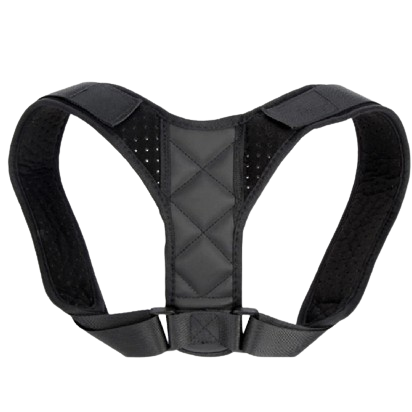
Table of Contents
- What True Form Is and How It Works
- What the Evidence Shows for Posture Correctors
- Specs and Fit
- Pricing and Guarantee
- Who It’s For (and Who Should Pass)
- Pros and Cons
- Frequently Asked Questions
What True Form Is and How It Works
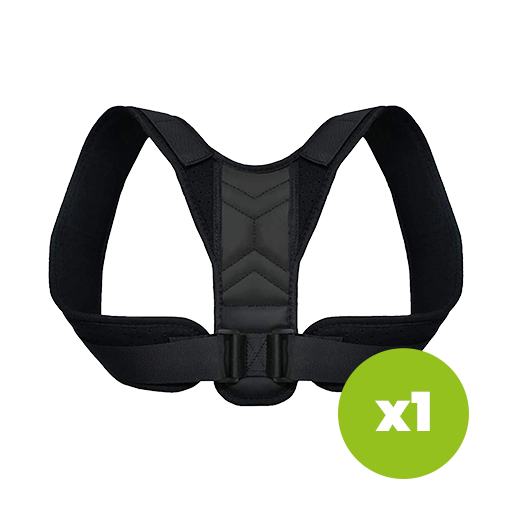
True Form is a wearable posture corrector, a back brace that wraps around the upper torso with shoulder straps that gently pull the shoulders back and down, drawing the upper spine into a more upright alignment. It is designed to be worn under clothing, making it compatible with daily work or activity without being visible.
The mechanism is primarily proprioceptive and mechanical. By holding the shoulders in a retracted position, the brace reduces the forward rounded posture that develops from sustained desk work or screen use. The sensory feedback from the straps against the shoulders also serves as a passive reminder to maintain upright alignment, similar to the way taping the upper back creates a sensory cue for posture awareness. The adjustable velcro straps allow the user to dial in the degree of correction: firmer for more aggressive repositioning, lighter for a cue-based approach that relies more on the user’s own muscle activation.
Rating: 3.6 / 5. A well-constructed adjustable posture corrector in a breathable format that fits under clothing. The product does what posture correctors are designed to do. Main limitation: posture correction devices work best as part of a routine that includes active strengthening, not as a standalone passive fix. Available in AU, UK, and DE/AT, a practical choice for markets where similar products are less accessible.
What the Evidence Shows for Posture Correctors
The evidence for posture correction devices is directionally positive but with important caveats about how they are used. A 2025 systematic review in Applied Sciences examined randomized and quasi-experimental studies on wearable posture devices and found that they can produce measurable short-term improvements in thoracic posture and reduce upper trapezius muscle activity while worn. The review also found no solid evidence that these changes translate into lasting benefit once the device is removed. Passive correction alone does not rebuild the muscle strength that sustained good posture requires.
The most effective protocol from the literature is a combined approach: wearing the corrector for 1–2 hours per day during habitual poor-posture activities (desk work, screen use), combined with active exercises targeting the deep cervical flexors, rhomboids, and lower trapezius. Used this way, posture correctors provide a scaffold while the underlying muscular support is being rebuilt. Used as a passive substitute for exercise, benefits plateau at the wearing period.
For more on the evidence behind posture devices and a framework for evaluating them, see our guide on do posture correctors actually work.
Specs and Fit
| Specification | Detail |
|---|---|
| Type | Adjustable posture corrector vest |
| Frame compatibility | 32 to 48 inches chest/torso circumference |
| Material | Breathable fabric with velcro adjustment straps |
| Design | Wearable under clothing |
| Target area | Upper back, shoulders, thoracic spine |
| Adjustment | Dual velcro straps, bilateral |
| Guarantee | 30-day money-back |
| Markets | Australia, United Kingdom, Germany, Austria |
The 32–48 inch range is broad. It covers most adult body frames without requiring specific sizing, which simplifies ordering. The breathable fabric is a practical choice for extended wear; non-breathable materials trap heat and discourage consistent use, which undermines the habit-building effect. Pairing the brace with better workstation habits also helps; see our guide to desk ergonomics after 40 for practical setup adjustments.
Pricing and Guarantee
| Package | Per unit | Saving |
|---|---|---|
| 1 unit | $84.95 | 50% off |
| 2 units | $76.45 | 55% off |
| 3 units | $66.26 | 60% off (recommended) |
| 4 units | $50.97 | 70% off |
Pricing for Australia, UK, Germany, and Austria is displayed in local currency at checkout. True Form is a higher-price-point posture corrector. At $84.95 for a single unit, it is positioned above budget options. The 3-unit deal at $66.26/unit offers meaningful per-unit saving and is worth considering for households where more than one person wants to trial the device.
The 30-day guarantee provides a basic evaluation window. Building a posture correction habit and assessing its benefit to pain and alignment takes consistent daily use. Starting from day one of receipt is advisable.
Australia: See current AU pricing →
UK: See current UK pricing →
Germany / Austria: See current DE/AT pricing →
Who It’s For (and Who Should Pass)
Good fit for:
- Adults in Australia, UK, Germany, and Austria with desk-work-related upper back pain or rounding who want a structured, adjustable correction tool
- Adults who know their posture is poor and want a tangible physical cue to work against: the strap resistance creates immediate proprioceptive feedback that abstract exercises don’t provide
- Adults combining posture correction with active strengthening, since the combination of passive repositioning and active exercise produces the most durable improvement
- Adults with mild to moderate forward head posture or thoracic kyphosis related to prolonged desk or screen time
Who should pass:
- Adults with diagnosed spinal conditions, including scoliosis, disc herniation, or significant kyphosis, should consult a physiotherapist before using a posture corrector, as improper use may aggravate structural issues
- Adults looking for a passive fix without any active component. Posture correctors used without accompanying strengthening exercises produce limited lasting change
- US-based readers: True Form is not available in the US. For US readers, our review of the WellaBack Posture Corrector covers a comparable product available in the US market
Pros and Cons
| Pros | Cons |
|---|---|
| Adjustable for both correction intensity and body frame (32–48 in) | 30-day guarantee short for habit-formation evaluation |
| Designed to wear under clothing, compatible with daily work use | Higher price point ($84.95 single) than basic posture correctors |
| Breathable fabric reduces heat buildup during extended wear | Passive correction only, does not rebuild muscle strength |
| Available in AU, UK, DE, AT, markets underserved by US-centric brands | Not available in the US |
| Good bundle discounts at 3x and 4x units | N/A |
Frequently Asked Questions
How long should I wear True Form each day?
The standard recommendation from posture research is 1–2 hours per day of consistent wear during habitual poor-posture activities: desk work, screen time, driving. Wearing for longer does not proportionally improve outcomes and may reduce the stimulus for active muscle engagement, as the muscles start to rely on the external support rather than maintaining alignment themselves. Build toward this duration gradually if the brace is new to you.
Will it work if I just wear it without exercising?
It will improve posture during the wearing period. The straps physically reposition the shoulders regardless of muscle activity. However, the improvement in resting posture when not wearing the device is limited without accompanying strengthening. The postural muscles (deep cervical flexors, rhomboids, lower trapezius) need to be actively trained to maintain the corrected position independently. The corrector is most effective as a scaffold while those muscles develop, not as a substitute for them.
Can I wear True Form while exercising?
Light exercise and walking are fine. High-intensity exercise or activities requiring significant upper body range of motion are less compatible with the shoulder strap design. The corrector is primarily designed for sedentary and light-activity contexts.
Is this different from a back brace?
Yes. A back brace typically supports the lumbar spine (the lower back) and addresses lower back pain. True Form is a posture corrector that works on the upper back and shoulder positioning. It does not provide lumbar support and is not designed for lower back pain management. For lower back-specific support, a lumbar brace is the relevant category.
About the author: Richard Hale is an independent health writer focused on mobility, joint health, and active aging research. He is not a licensed medical professional. All content on VitalMove40 is for educational purposes only and is not a substitute for advice from a qualified healthcare provider.