Last updated: August 12, 2026 | By Richard Hale
Massage guns have become one of the most popular recovery tools of the past five years, and the evidence for them is more straightforward than the marketing suggests. They reduce delayed onset muscle soreness (DOMS) and improve short-term range of motion, effects that are real but modest. How you use them matters significantly, and there are specific situations where they should not be used regardless of the marketing copy on the box.
This content is for educational purposes only and is not medical advice. Avoid using massage guns on acute injuries, inflamed joints, areas with reduced sensation, areas with blood clots or clotting disorders, or immediately after surgery without medical clearance.
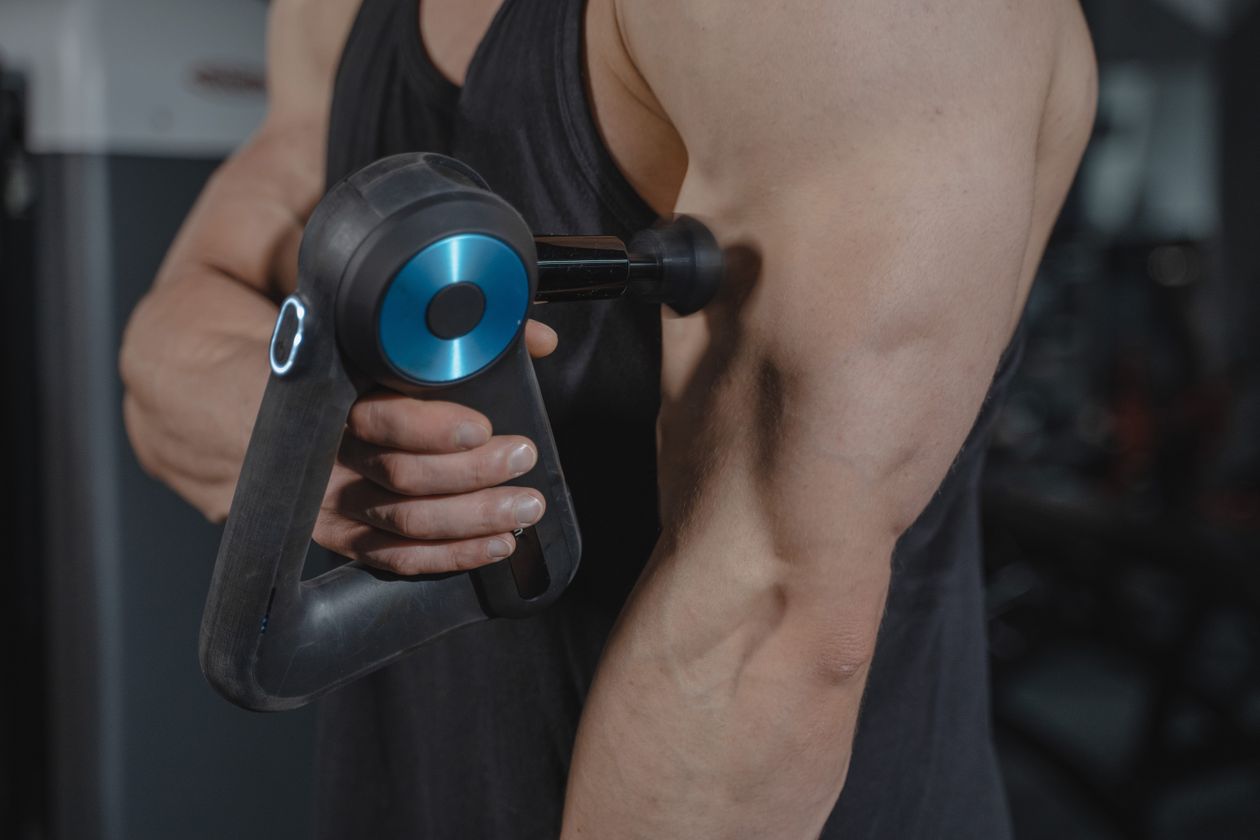
Table of Contents
- What Massage Guns Actually Do
- What the Evidence Shows
- How to Use a Massage Gun Correctly
- Best Areas and Techniques
- What to Avoid
- Does Price Matter? Choosing a Device
- Frequently Asked Questions
What Massage Guns Actually Do
Massage guns (percussion massagers) use a rapid reciprocating motion, typically between 1,200 and 3,200 percussions per minute (PPM), to apply mechanical pressure to soft tissue. The head of the device moves in and out (amplitude, typically 10-16mm) while oscillating at high speed, producing a combination of pressure and vibration in the tissue.
The mechanisms by which this produces the observed effects include: increased local blood flow and lymphatic drainage; mechanoreceptor stimulation that reduces muscle tone via Golgi tendon organ activation (similar to the mechanism of manual massage); and vibration-induced changes in pain perception through gate control mechanisms (the same pathways that TENS uses). The relative contribution of each mechanism is still being studied, but the net effect is reduced tissue tension and improved local circulation.
What the Evidence Shows
DOMS reduction: the most consistently supported application. A 2021 systematic review in the Journal of Strength and Conditioning Research analyzed 11 studies of percussive therapy and found statistically significant reductions in DOMS, with effects measurable at 24, 48, and 72 hours post-exercise. The effect size was moderate, roughly equivalent to low-level massage and better than no intervention, but smaller than the reduction from non-steroidal anti-inflammatory medications.
Range of motion improvement: multiple studies confirm short-term (30-90 minutes) improvements in joint range of motion following percussive therapy. A 2019 study found similar ROM improvements from percussive therapy and from static stretching, with the advantage that percussive therapy did not reduce muscle force production the way acute static stretching does. This makes it preferable to static stretching as a pre-exercise ROM intervention.
Performance: limited and mixed evidence. Some studies show modest improvements in vertical jump and sprint times following percussive therapy; others show no effect. The performance effects are inconsistent and likely not clinically meaningful for recreational athletes. The recovery and pain benefits are better established.
What it does not do: break up scar tissue to a significant degree, permanently restructure fascia, or eliminate the source of chronic pain from structural issues. Massage guns address acute tissue tension and soreness, not the underlying mechanical or structural causes of chronic pain.
How to Use a Massage Gun Correctly
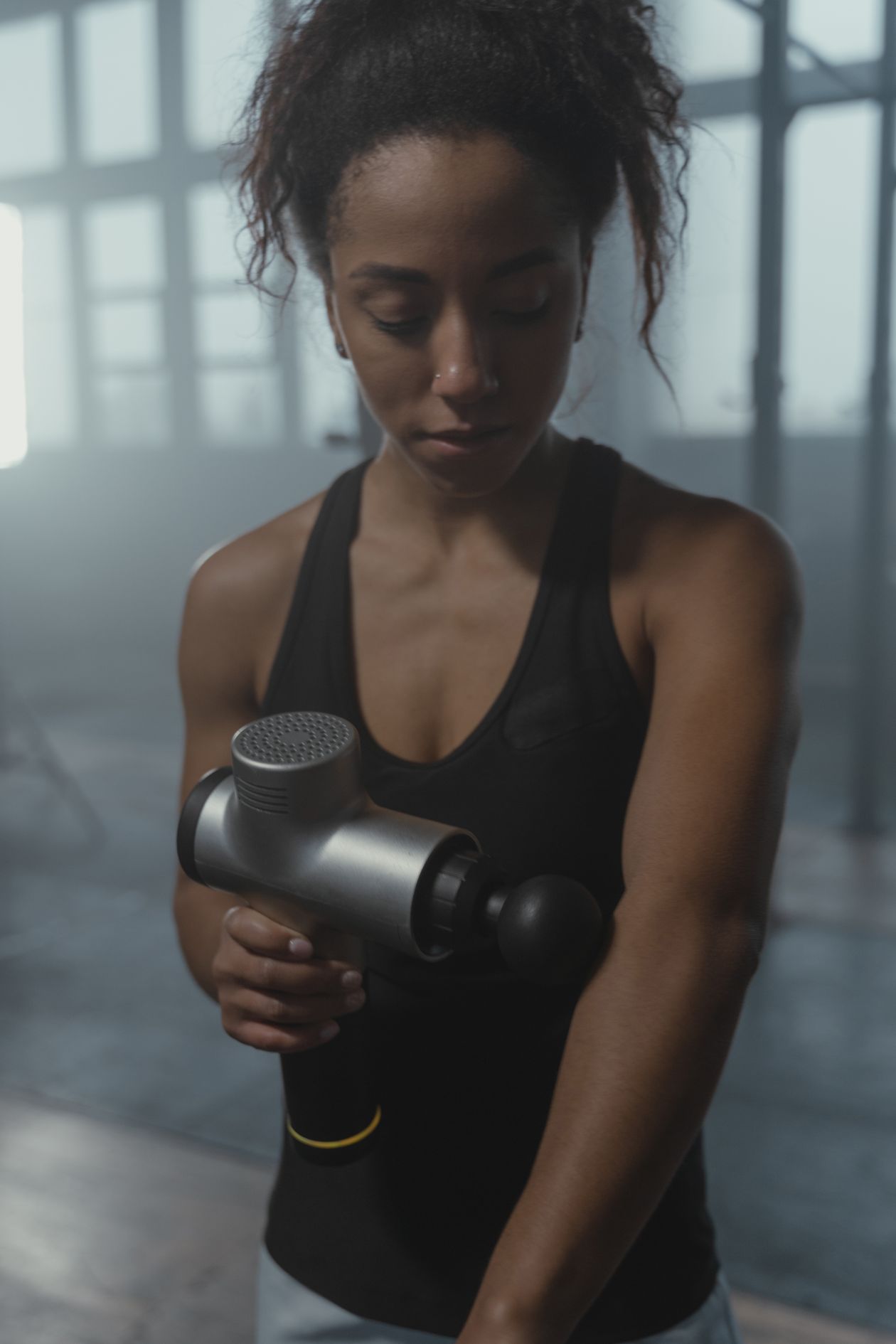
Speed setting: for DOMS recovery and general muscle tension, a medium speed (1,800-2,400 PPM) is appropriate. Lower speeds (1,200-1,800 PPM) are better for sensitive areas and for pre-workout activation. Higher speeds (2,400+ PPM) are not consistently more effective than medium speeds and can cause discomfort and tissue bruising in less tolerant areas.
Pressure: let the weight of the device do the work, avoid pressing the gun hard into the tissue. The percussive motion requires minimal additional manual pressure to be effective. Pressing hard does not increase depth of effect significantly and reduces the speed of the head, changing the mechanical input. Float the device gently on the muscle surface while the percussions do the work.
Duration per area: 60-90 seconds per muscle group is the evidence-supported duration for recovery effects. Extended sessions beyond 2 minutes per area produce diminishing returns and can cause tissue inflammation from over-stimulation. For a full recovery session, 10-15 minutes covering all major muscles used in the workout is appropriate.
Movement vs. stationary: slowly moving the gun along the muscle belly (1-2 inches per second) distributes the effect more evenly than holding it stationary. Pausing briefly on particularly tight spots (tender points) for 10-20 seconds before moving on is appropriate and comfortable, but do not remain stationary at full intensity on the same point for the entire session.
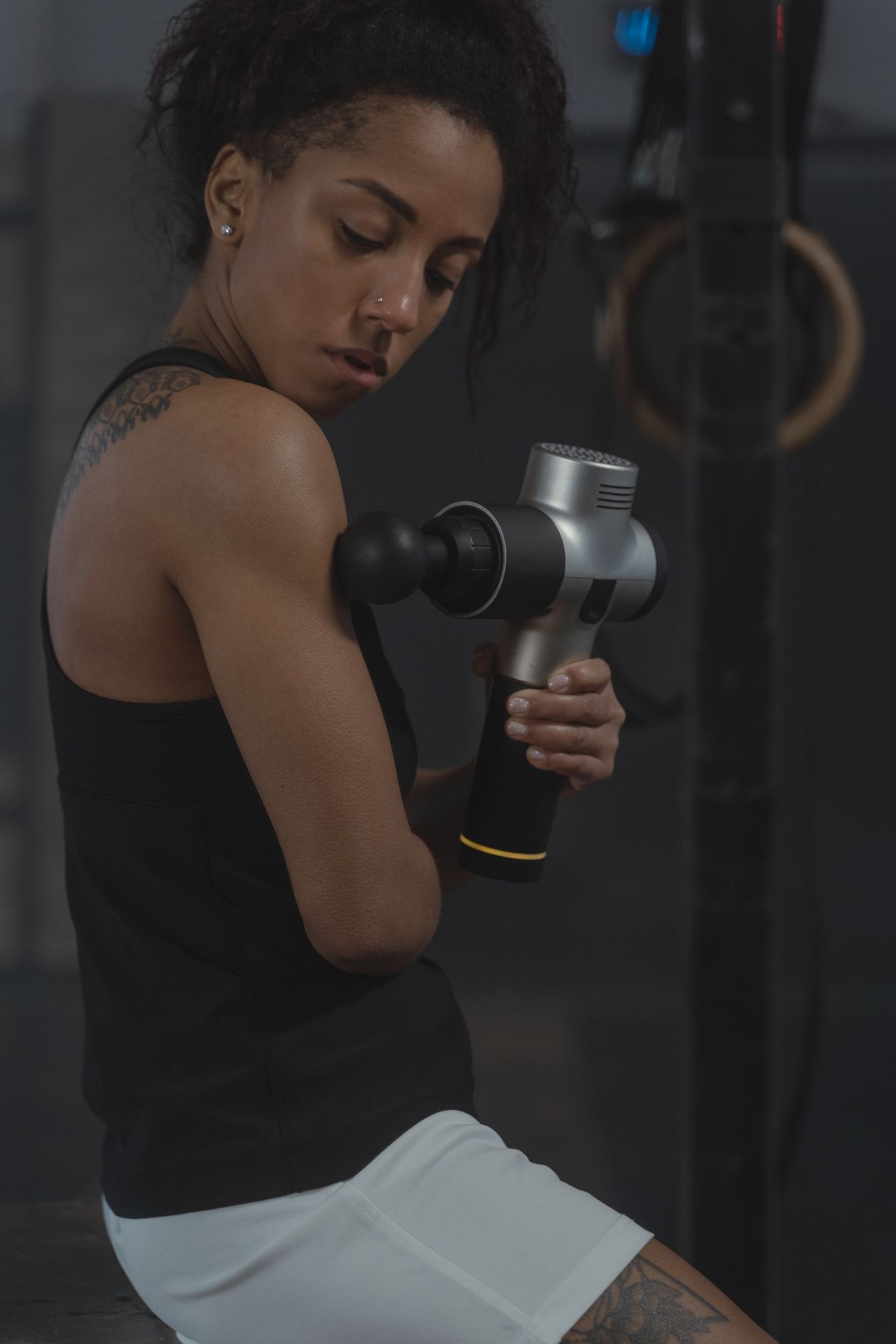
Attachment heads: the ball head (round, large) is the general-purpose attachment for large muscle groups. The flat head is for denser muscle groups (glutes, chest). Bullet/point heads are for smaller areas and targeted tender points, and require more care to avoid bone prominences. The fork head is designed for the spine area, straddling the spinous processes, use it parallel to the spine, never directly on the vertebrae.
Best Areas and Techniques
Quadriceps: with the ball head at medium speed, work from the hip crease to just above the knee along the anterior thigh. Avoid the medial thigh where the femoral artery is more superficial. This area responds well to percussion and is a primary target for post-leg-day recovery.
Hamstrings: work from just below the gluteal fold down to just above the back of the knee. As with the quads, avoid the popliteal fossa (back of the knee) where blood vessels are superficial.
Glutes: one of the densest and most accepting areas for percussive therapy. Work with the flat or ball head throughout the gluteal region. Particularly useful for desk workers with chronic glute tightness and for runners with piriformis tension.
Calves: medium speed from just above the Achilles insertion to the knee. The soleus (deeper calf muscle) requires more sustained pressure than the gastrocnemius to reach effectively, slow, deliberate passes with moderate pressure.
Upper trapezius and neck (with care): use the ball head at lowest speed settings in this area. The upper traps respond well to percussive therapy for tension and headache relief. Stay on the muscle belly, avoid the cervical vertebrae and the lateral neck where the carotid artery is accessible, and keep the speed low given the sensitivity of the area.
What to Avoid
- Joints directly: never use the massage gun directly over a joint space (knee joint line, elbow, ankle, shoulder joint). Apply to the surrounding muscle, not the joint itself.
- Bones and bony prominences: the lateral knee, medial ankle, spine, and skull are all examples of areas where the percussion is transmitted to bone rather than absorbed by tissue, this is painful and not therapeutic.
- Acute injuries: do not use over bruises, strains in the acute phase (first 48-72 hours), or recently injured tissue. The increased blood flow and mechanical force can worsen acute inflammation.
- Inflamed joints: using a massage gun around an acutely inflamed arthritic joint can worsen the flare. During periods of stable OA or between flares, the surrounding muscles are appropriate to treat.
- Varicose veins: avoid using over prominent varicose veins, the percussion can cause local tissue trauma.
- Areas with reduced sensation: people with diabetic neuropathy or other conditions causing reduced skin sensation should be very cautious, as they cannot feel if the pressure is causing damage.
Does Price Matter? Choosing a Device
The honest answer: yes, to a point. The primary differences between budget devices ($50-100) and premium devices ($200-400) are amplitude (depth of percussion), battery life, noise level, and attachment variety. Amplitude matters therapeutically, deeper percussion (16mm vs. 10mm) reaches denser tissue more effectively. Budget guns with shorter amplitude are suitable for superficial muscles and general tension; premium guns with full amplitude are more effective for deep muscle groups like the glutes and quadriceps.
Beyond $300-400, you are primarily paying for brand recognition rather than additional therapeutic performance. A mid-range device ($150-200) with 12-16mm amplitude, multiple speed settings, and 2+ hours of battery life provides clinically adequate performance for most users. Brands with consistently positive reviews and validated performance include Hypervolt, Theragun, and Ekrin, though several reliable alternatives exist at lower price points.
Frequently Asked Questions
How often should I use a massage gun?
Daily use is appropriate if you are using it for ongoing muscle recovery and tension management. There is no contraindication to daily use on muscle bellies when technique is correct. Post-workout use 3-5 times per week (after the training sessions that produce the most DOMS) and daily morning use for general tension are both reasonable approaches. Rest the device from any single area for 24 hours if you notice increased soreness or skin irritation after a session.
Can a massage gun replace massage therapy?
A massage gun provides some of the circulatory and neurological effects of manual massage, but not all. A skilled massage therapist identifies and treats specific dysfunctional patterns, adjusts techniques based on tissue response, and can address structures a percussion device cannot access (visceral fascia, joint capsules, peripheral nerve tension). For general muscle tension and DOMS recovery, a massage gun is an adequate and cost-effective substitute for regular massage. For clinical conditions requiring skilled manual therapy, it is a complement, not a replacement.
About the author: Richard Hale is an independent health writer focused on mobility, joint health, and active aging research. He is not a licensed medical professional. All content on VitalMove40 is for educational purposes only and is not a substitute for advice from a qualified healthcare provider.