
Last updated: July 14, 2026 | By Richard Hale
Protein after 40 is not just about building muscle for aesthetics. It is about maintaining the muscle mass, tendon strength, and connective tissue integrity that allow you to stay active, protect your joints, and remain physically independent through your 50s, 60s, and beyond.
The biology changes after 40 in ways that make adequate protein intake more important, not less. Most adults eat less protein than the evidence supports for their age, and the consequences compound quietly over years.
This content is for educational purposes only and is not medical advice. People with kidney disease should consult a nephrologist before increasing protein intake, as higher protein may not be appropriate for reduced kidney function.

Table of Contents
- What Changes After 40: Anabolic Resistance
- How Much Protein You Actually Need
- The Per-Meal Consideration
- Best Protein Sources for Joint and Muscle Health
- Timing: Does It Matter?
- The Direct Connection to Joint Health
- Frequently Asked Questions
What Changes After 40: Anabolic Resistance
Muscle protein synthesis (MPS), the process by which the body builds and repairs muscle tissue, becomes less responsive to dietary protein with age. This phenomenon, called anabolic resistance, means that older muscle requires a higher protein stimulus (both from diet and from exercise) to produce the same rate of MPS that younger muscle achieves with a smaller stimulus.
The practical consequence: the protein intake that maintained muscle mass at 30 does not maintain it at 50. On a fixed diet without adjustments, adults after 40 will gradually lose muscle mass (sarcopenia) at a rate of 3-8% per decade, accelerating after 60. This muscle loss is not purely cosmetic. Muscle is the primary metabolic and mechanical support system for joints, it absorbs load, contributes to joint stability, and maintains the movement patterns that protect cartilage.
The good news: anabolic resistance is responsive to intervention. Adequate protein intake combined with resistance exercise (even in adults over 70) produces meaningful increases in muscle protein synthesis and can reverse sarcopenic muscle loss.
How Much Protein You Actually Need
The US Recommended Dietary Allowance for protein is 0.8g per kilogram of body weight per day. This is the minimum to prevent deficiency, calculated for young adults. It is not the optimal intake for adults over 40 who want to maintain muscle mass, joint health, and physical function.
Current evidence from multiple research groups and clinical guidelines for older adults supports:
- Sedentary or lightly active adults 40-65: 1.0-1.2g per kilogram per day
- Moderately to actively exercising adults 40-65: 1.2-1.6g per kilogram per day
- Adults with confirmed sarcopenia or significant joint conditions limiting activity: up to 1.6-2.0g per kilogram per day, under nutritional guidance
For a 75kg (165lb) adult, this translates to roughly 90-120g of protein per day at the active end of the moderate range, significantly more than the 56-60g that the standard RDA calculates for that body weight.
The Per-Meal Consideration
Total daily protein matters, but so does distribution across meals. Muscle protein synthesis requires a sufficient leucine concentration at each meal to trigger the anabolic response, leucine is the primary amino acid that signals MPS initiation. Older adults require a higher leucine threshold than younger adults to stimulate MPS: approximately 2.5-3g of leucine per meal, compared to 1.5-2g in young adults.
For practical purposes, this means each main meal should contain approximately 25-40g of protein, not the pattern of eating 10g at breakfast, 20g at lunch, and 50g at dinner that many adults fall into. Distributing protein evenly across 3-4 meals throughout the day maximizes the number of MPS stimulation events and produces better muscle outcomes than the same total protein skewed toward one large meal.
Best Protein Sources for Joint and Muscle Health
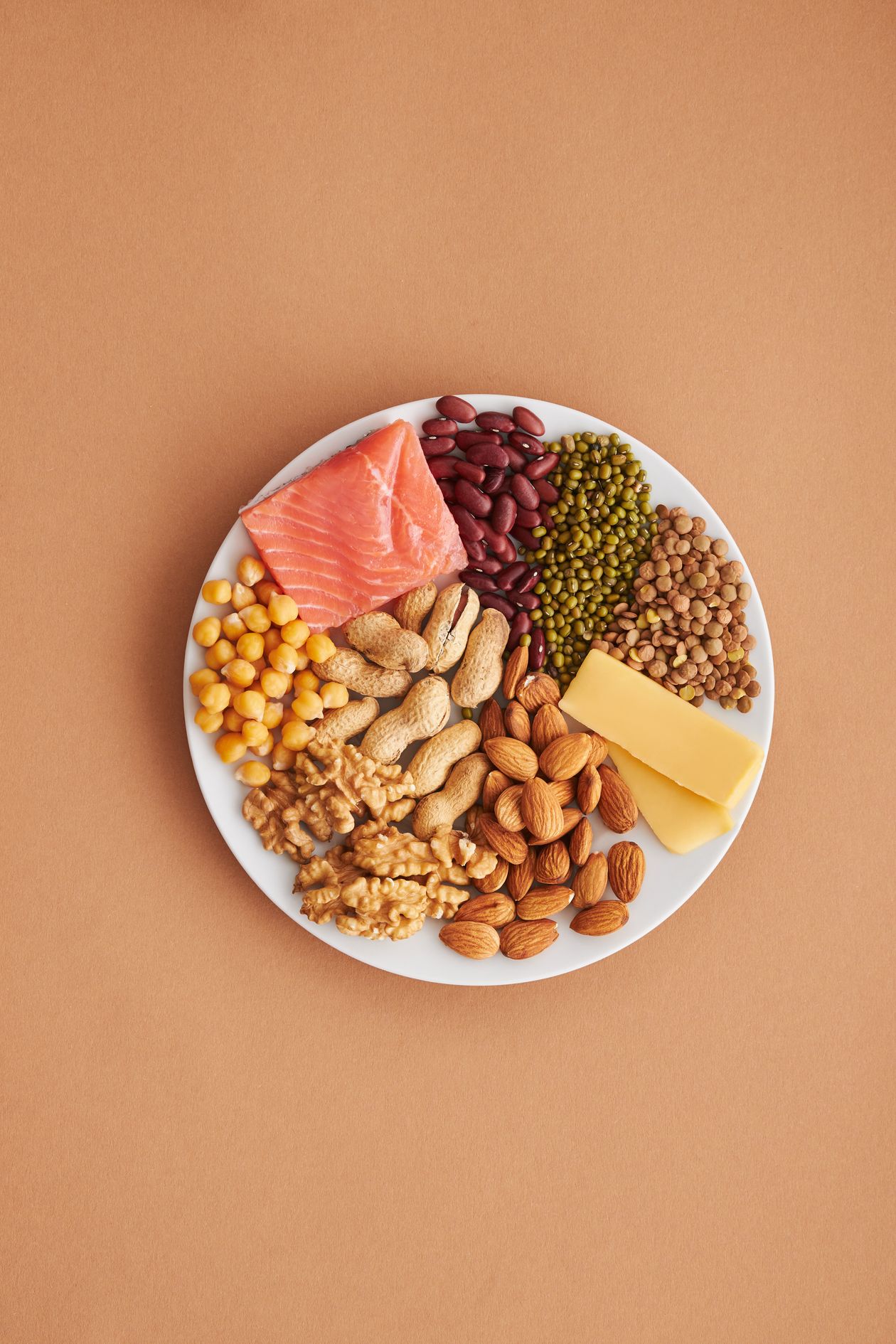
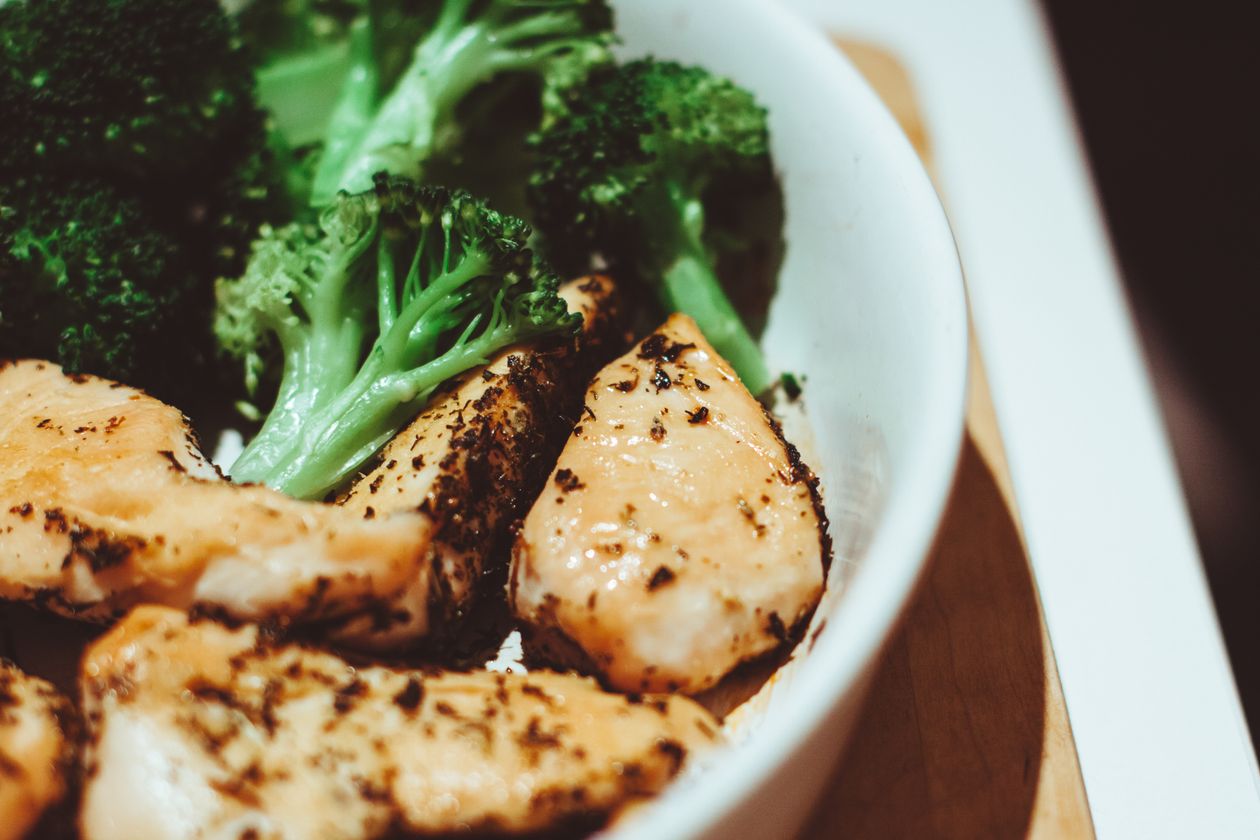
Animal proteins (complete, high leucine): chicken, turkey, fish (salmon, tuna, cod), eggs, Greek yogurt, cottage cheese, and lean red meat all provide complete amino acid profiles with high leucine content. Fish provides the additional benefit of omega-3 fatty acids (anti-inflammatory), making fatty fish (salmon, mackerel, sardines) particularly valuable for adults managing joint inflammation. Eggs are one of the most bioavailable protein sources and are rich in leucine.
Plant proteins: soy (edamame, tofu, tempeh) is a complete protein with adequate leucine content. Legumes (lentils, chickpeas, black beans) combined with whole grains provide a complete amino acid profile. Plant proteins generally have lower leucine concentrations per gram of total protein than animal sources, which means slightly higher total protein intake is needed from plant sources to meet the leucine threshold per meal. A plant-based adult over 40 targeting 1.4g/kg protein needs to be deliberate about sources.
Whey protein (as supplement): whey is rapidly digested with high leucine content and has the strongest evidence base among protein supplements for MPS stimulation in older adults. A 25-40g serving of whey post-exercise is well-supported in research for augmenting resistance exercise adaptations after 40. Casein (slower digestion) has evidence for maintaining overnight protein synthesis if taken before sleep.
Timing: Does It Matter?
Yes, modestly. For adults who do resistance exercise, consuming 25-40g of protein within the 2-4 hours following a training session captures the exercise-induced increase in muscle sensitivity to protein. The evidence for a precise 30-minute “anabolic window” has weakened in recent research, total daily protein and per-meal distribution appear more important. But deliberately including a protein-rich meal or snack in the post-exercise period is a straightforward habit that costs nothing.
Pre-sleep protein has emerged as a separate consideration. Research groups at Maastricht University have published multiple studies showing that casein protein consumed 30 minutes before sleep increases overnight muscle protein synthesis, particularly in older adults. 30-40g of casein (found in cottage cheese, Greek yogurt, or casein powder) before sleep is a practical application of this research for adults focused on muscle maintenance.
The Direct Connection to Joint Health
Protein and joint health are more directly connected than most people realize:
- Cartilage composition: articular cartilage is primarily composed of collagen (Type II) and proteoglycans, both protein-based structures that require adequate amino acid supply for synthesis and repair
- Tendon and ligament integrity: tendons and ligaments are almost entirely collagen; their repair and maintenance are directly dependent on protein (and vitamin C, which is required for collagen hydroxylation)
- Muscle support for joints: adequate muscle mass is the primary mechanical protection for cartilage, muscles absorb and distribute load before it reaches joint surfaces. Sarcopenic muscle loss directly increases cartilage loading per step
- Recovery from injury or surgery: protein requirements increase during healing; inadequate protein intake significantly slows recovery from joint surgeries and injuries in older adults
Frequently Asked Questions
How much protein per day for a 60-year-old?
For a moderately active 60-year-old, the evidence-based range is 1.2-1.6g per kilogram of body weight per day. For a 75kg (165lb) person, this is approximately 90-120g per day. This is higher than the standard RDA of 0.8g/kg, which is calculated for young adults and represents the minimum to prevent deficiency rather than the optimal intake for muscle maintenance in older adults. Divide intake across 3-4 meals of 25-40g each.
Is it hard to get enough protein after 40 on a plant-based diet?
It requires deliberate planning but is achievable. Key adjustments: rely primarily on complete plant proteins (soy, quinoa, buckwheat) or combine complementary proteins at each meal (legumes + whole grains); aim for slightly higher total protein than omnivores (1.4-1.6g/kg) to compensate for the lower leucine content of most plant proteins per gram; consider a plant-based protein supplement (pea protein is reasonably leucine-rich for a plant source) to bridge gaps if needed. It is harder, but it is not impossible with attention to sources.
Can too much protein hurt your kidneys?
For people with healthy kidney function, there is no evidence that higher protein intakes (up to 2g/kg) cause kidney damage. Protein metabolism does increase kidney workload, and people with existing chronic kidney disease (CKD) should follow their nephrologist’s guidance on protein intake, as higher protein can accelerate CKD progression in some cases. For healthy adults over 40 without kidney disease, the protein intakes recommended for muscle maintenance are safe.
How much protein do adults over 40 need per day?
Adults over 40 benefit from higher protein intake than younger adults due to anabolic resistance, older muscle requires more protein to trigger the same degree of muscle protein synthesis. Current research supports 1.6 to 2.2 grams of protein per kilogram of bodyweight per day for active adults over 40. Distribution matters as much as total intake: spreading protein across 3 to 4 meals of at least 30 to 40 grams each is more effective than concentrating most protein in one or two large meals. The upper end (closer to 2.2g/kg) is most relevant for adults doing resistance training or in a calorie deficit.
Are protein supplements necessary after 40?
Protein supplements are not necessary if dietary protein intake is adequate. They are a practical tool for adults who struggle to meet protein targets through whole foods, typically those with small appetites, demanding schedules, or dietary restrictions. Whey protein has the highest leucine content per gram and the fastest absorption kinetics, making it effective for post-exercise recovery. Plant-based alternatives such as pea and rice protein blends are comparable when leucine content is matched. Whole food protein sources provide micronutrients alongside protein that supplements do not replicate. Use supplements to bridge gaps, not as the foundation of protein intake.
About the author: Richard Hale is an independent health writer focused on mobility, joint health, and active aging research. He is not a licensed medical professional. All content on VitalMove40 is for educational purposes only and is not a substitute for advice from a qualified healthcare provider.