Last updated: July 14, 2026 | By Richard Hale
A home gym for adults over 40 with joint health in mind does not look like the YouTube version, full of racks, barbells, and complicated setups. It is significantly simpler: a few versatile pieces of equipment, enough floor space to move freely, and a focus on movement patterns that build functional strength without unnecessary joint stress.
This guide covers exactly what to get, what to skip, how to set it up, and how to use it, with the specific considerations that matter after 40.
This content is for educational purposes only and is not medical advice. If you have a specific joint condition, unstable cardiac history, or have been told to avoid particular exercises, consult your physician or physiotherapist before starting a new home training program.
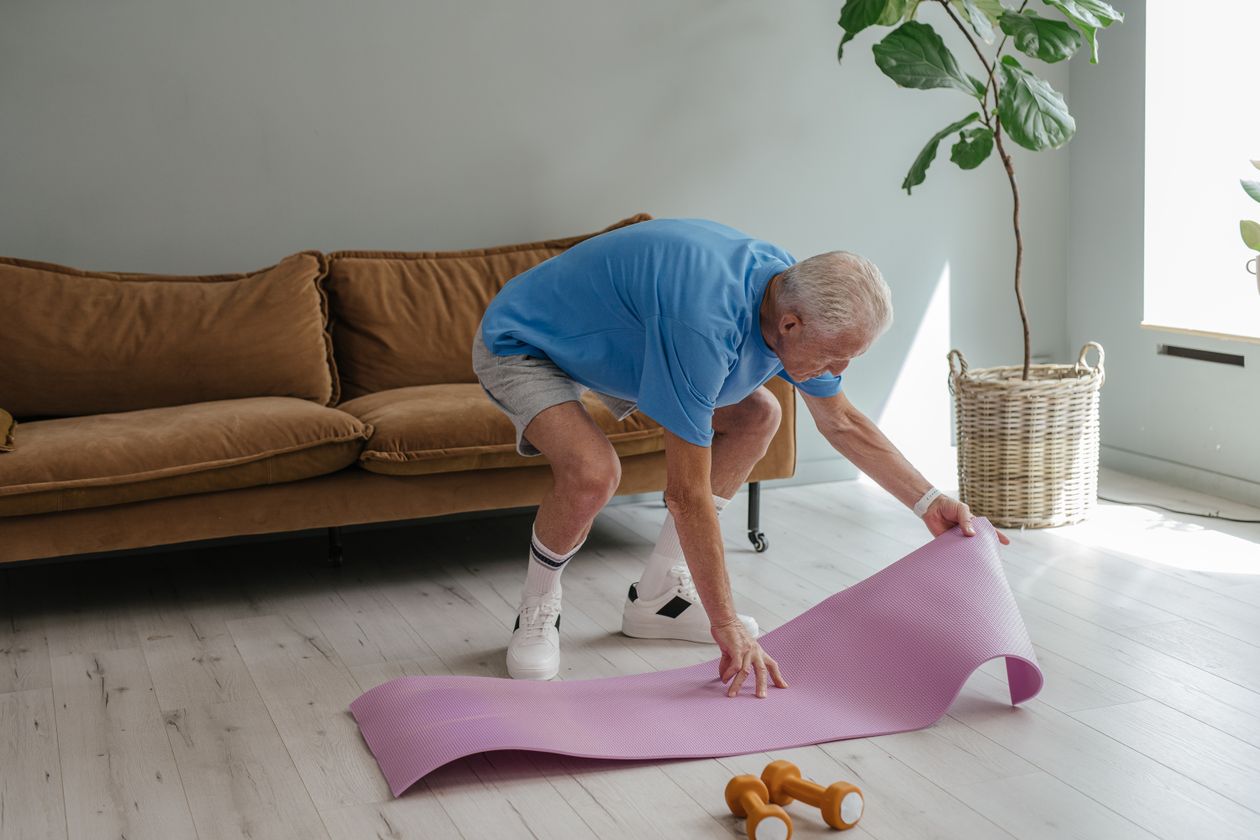
Table of Contents
- The Essential Equipment List
- Space and Setup
- The Movement Patterns That Matter
- Joint-Friendly Principles for Programming
- A Simple Starting Schedule
- Frequently Asked Questions
The Essential Equipment List
The minimum effective equipment for a joint-friendly home gym after 40:
Resistance bands, the single best investment: a set of loop bands (for lower body work) and a set of long resistance bands with handles (for upper body pulling and rotator cuff work) covers the majority of exercises that matter for joint health. Bands provide progressive resistance that is lighter at the beginning of the range of motion and heavier at the end, which tends to be more joint-friendly than fixed-weight resistance at both extremes. A complete set costs $20-40 and takes zero storage space.
Adjustable dumbbells or a set of fixed dumbbells (5-30 lbs): for loaded compound movements that bands cannot replicate as effectively, goblet squats, Romanian deadlifts, single-arm rows. A set of fixed dumbbells in 3-4 weight ranges (5, 10, 15, 25 lbs for most adults) or adjustable dumbbells that span the same range covers everything needed.
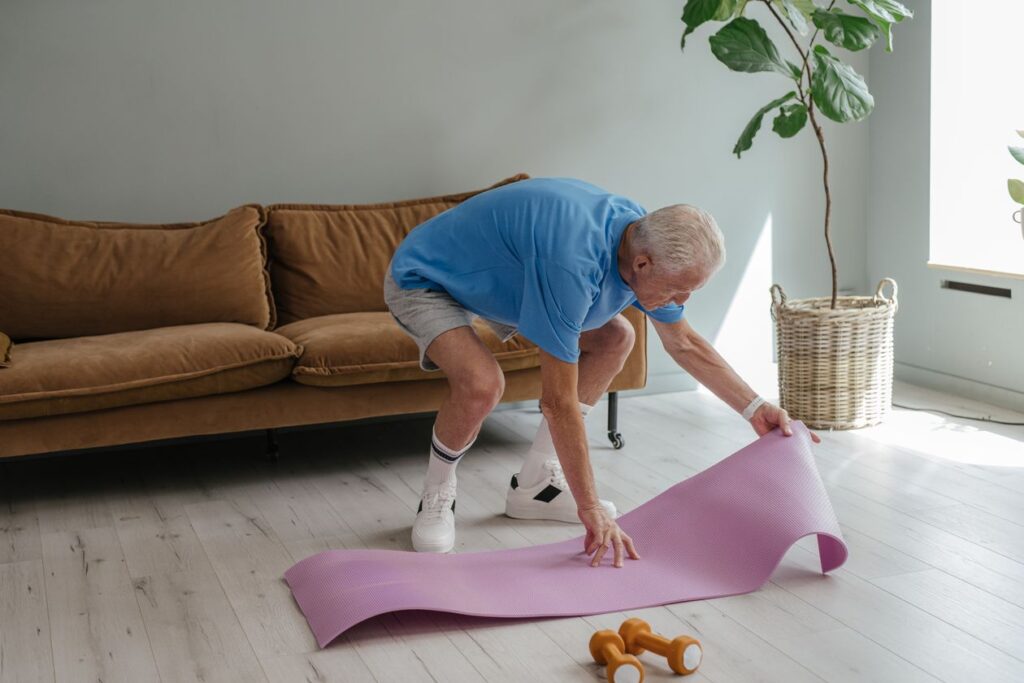
Yoga mat: floor-based mobility work, stretching, and core exercises require a mat to make them sustainable. A quality mat (8-10mm thick) also provides enough cushioning for older adults’ joints during floor work.
Foam roller: for soft tissue work on the calves, quads, IT band, thoracic spine, and lats. Regular foam rolling as a warm-up and recovery tool reduces tissue restriction that limits movement quality during exercise. Takes 5 minutes and a $25-35 foam roller.
That is the core list. Optional additions that earn their place:
- A TRX suspension trainer ($150-200), enables a huge range of assisted bodyweight exercises that are particularly joint-friendly because load can be adjusted by changing body angle
- A single adjustable kettlebell (16-24kg for most adults), for hip hinge patterns and carries that build real-world functional strength
What to skip: pull-up bars that require unassisted pull-ups (most adults over 40 need assistance for pull-ups; a TRX covers this better), heavy barbells and plates (excessive compression loading for home use without coaching), and any machine that locks you into a fixed movement path (which restricts natural joint movement).
Space and Setup
The minimum functional space is approximately 2 meters x 2 meters (about 6 feet square), enough room to lie down with arms extended and to perform a lateral lunge without hitting furniture. A spare bedroom, garage corner, or cleared living room space all work.
The practical setup considerations that matter: rubber flooring or a thick mat protects hardwood floors and your joints during jumping or step activities. Adequate lighting prevents postural compensation from eye strain. A mirror is genuinely useful, not for vanity, but for movement quality feedback, particularly for exercises like the Romanian deadlift where you cannot feel a back rounding unless you can see it.
The Movement Patterns That Matter
The most important movement patterns for functional strength and joint health after 40, in order of priority:
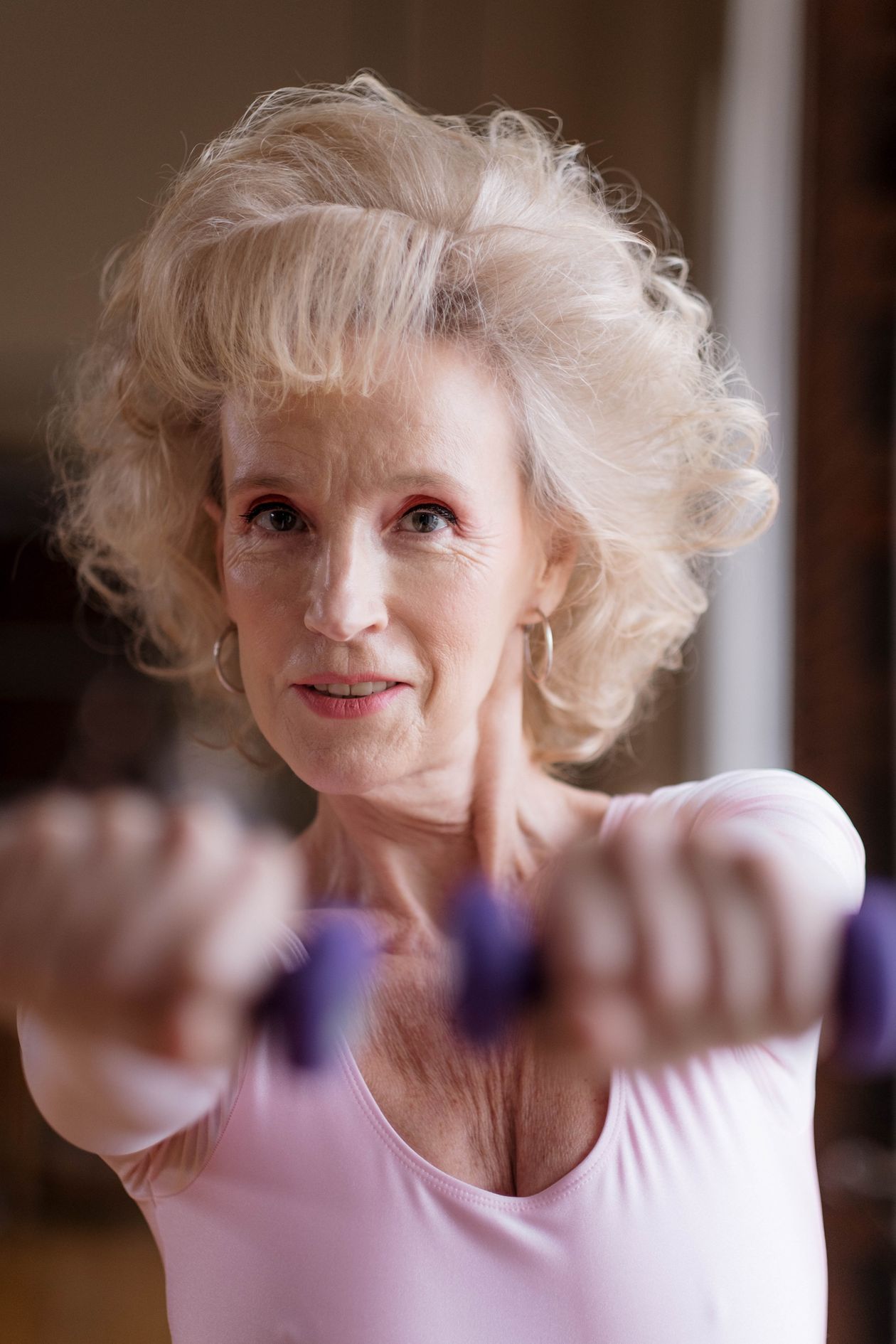
Hip hinge (deadlift pattern): loading the posterior chain (glutes, hamstrings, erector spinae) through a hip hinge is the most important movement pattern for low back health and hip function. A goblet deadlift with a dumbbell or band-resisted hip hinge covers this without barbell loading. Three sets of 10-12 repetitions, progressing weight as form allows.
Squat: the goblet squat (holding a single dumbbell at chest height) loads the quads, glutes, and hip stabilizers in a balanced way that is more joint-friendly than back-loaded barbell squats for most people. The counterbalance of the dumbbell allows a more upright torso and deeper hip flexion with less compressive loading. Box squats (squatting to a chair or bench) are appropriate for people with knee pain, providing a defined end range and reducing tendon loading in the bottom position.
Row (pulling): single-arm dumbbell rows or band rows counteract the forward-rounded posture that sitting and daily activities reinforce. Strengthening the rhomboids, mid-trapezius, and lats directly supports shoulder and neck health. Most adults over 40 are undertrained in pulling compared to pushing, prioritize it.
Push (pressing): push-up progressions (from incline on a bench to flat floor, to feet-elevated) train the chest, shoulder, and triceps without the shoulder impingement risk of overhead pressing for people with existing shoulder issues. Dumbbell bench press is the alternative for people who cannot perform push-ups comfortably.
Core anti-rotation: plank variations, pallof press with a band, and bird-dog build spinal stability without the spinal flexion loading of sit-ups and crunches, which are associated with disc loading and are generally not recommended for adults with any history of low back pain.
Rotator cuff work: external rotation with a light resistance band (as described in the shoulder pain guide) should be included as prehabilitation for anyone over 40, particularly those with sedentary occupations. Takes 5 minutes and is one of the most protective exercises for shoulder health.
Joint-Friendly Principles for Programming
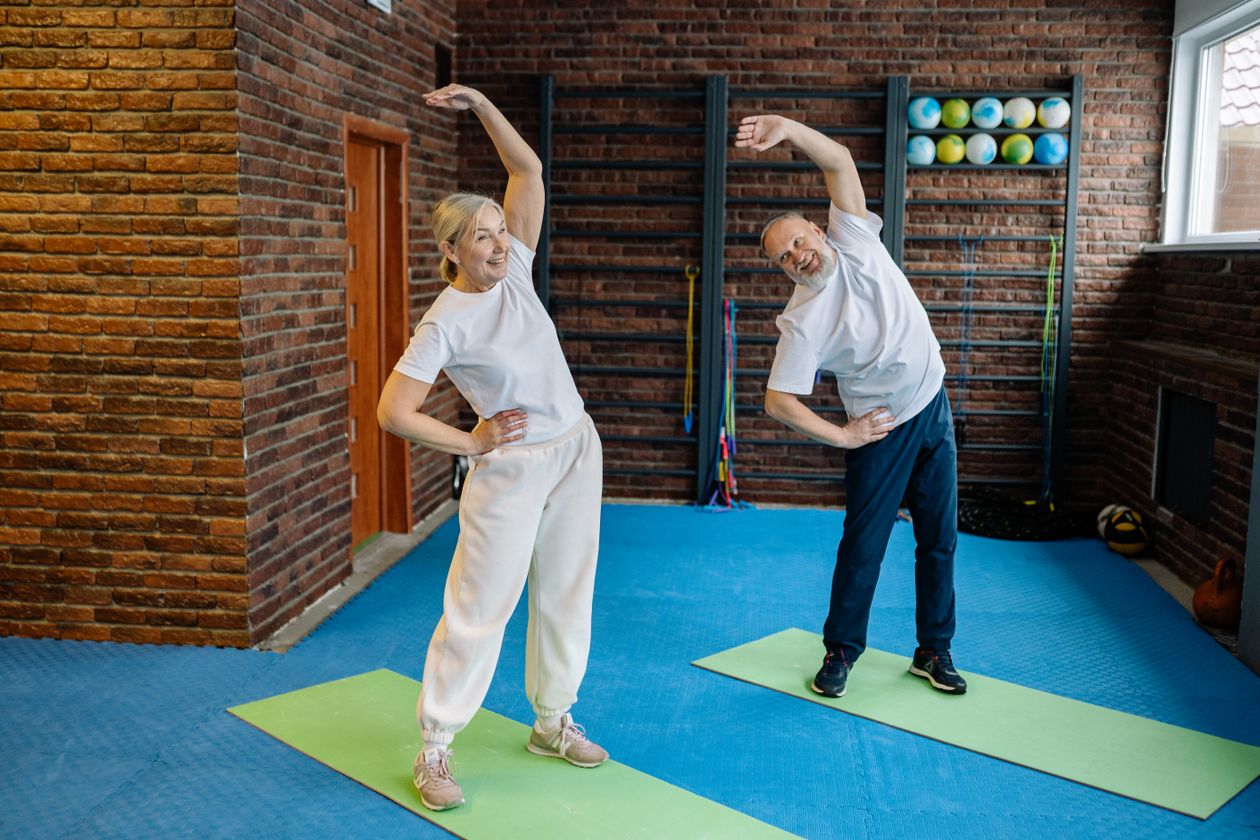
Warm-up is non-negotiable after 40: connective tissue is less vascular and more rigid at rest than in young adults. Five to ten minutes of light movement (foam rolling, joint circles, band pull-aparts, leg swings) before strength work significantly reduces injury risk and improves the quality of the training session. Skipping the warm-up is the single most common cause of unnecessary injury in older adults training at home.
Control is more important than load: the rate of perceived exertion on the eccentric (lowering) phase should be 3-4 seconds per repetition. Slowing down the lowering phase reduces joint impact and increases the training stimulus per repetition, which means you can get comparable strength benefits with lighter weight.
Pain signals are information: a working muscle burn (burning in the belly of the muscle) is appropriate training feedback. Sharp pain at a joint during an exercise means that exercise or that load is wrong for today. Modify the range of motion, reduce the load, or substitute a different movement pattern that achieves the same goal without the painful range.
Recovery is longer after 40: most adults over 40 respond better to 3 strength sessions per week with at least one rest day between sessions than to higher frequency. The protein synthesis response to resistance exercise peaks more slowly and takes longer to complete than in young adults. More frequent training does not produce proportionally more adaptation.
A Simple Starting Schedule
| Day | Session | Duration |
|---|---|---|
| Monday | Strength (full body: squat, row, hinge, push) | 35-40 min |
| Tuesday | Mobility (hip stretches, ankle work, thoracic rotation) | 15-20 min |
| Wednesday | Walk (30-45 min) or active rest | N/A |
| Thursday | Strength (full body, different exercise variations) | 35-40 min |
| Friday | Mobility or Nordic walking | 20-40 min |
| Saturday | Strength (full body) or longer walk | 35-40 min |
| Sunday | Rest or very light activity | N/A |
Frequently Asked Questions
How much should I spend on a home gym for joint-friendly exercise?
A functional home gym for joint-health-focused training after 40 can be set up for $100-200: resistance bands ($25-40), a set of light to medium dumbbells ($40-80), a yoga mat ($20-30), and a foam roller ($20-30). The TRX and kettlebell are genuinely useful additions but are not necessary to start. Effectiveness comes from using equipment consistently, not from expensive equipment used occasionally.
Is home exercise as effective as gym training?
For the movement patterns that matter most for joint health and functional strength after 40 (hip hinge, squat, row, push, core stability) home-based resistance training with bands and moderate-weight dumbbells produces equivalent strength and functional gains to gym-based machine training when performed consistently. The advantage of home training is removing the friction of gym attendance, which has a significant effect on long-term consistency.
Can I train every day at home?
Daily training is feasible if it alternates between high-intensity strength sessions and low-intensity mobility or walking days. Training the same muscle groups with resistance loading every day without rest periods between sessions leads to accumulated fatigue and increases injury risk after 40. The schedule above (3 strength + 2-3 mobility/walking + 1-2 rest) works well for most adults over 40 as a starting point.
What home gym equipment is most useful for adults with joint pain?
Resistance bands are the most versatile starting point for a joint-friendly home gym. They allow progressive resistance in multiple planes of movement with less joint compression than free weights, and can be anchored at various heights for shoulder, hip, and knee exercises. An adjustable bench expands exercise options. A set of adjustable dumbbells covers remaining strength training needs. For cardiovascular work, a recumbent bike is the most joint-friendly option. A foam roller for soft tissue work rounds out a practical home setup. These items cover the majority of what adults over 40 need for joint health and functional fitness.
Can I build real strength at home for joint health after 40?
Yes. Progressive overload, gradually increasing the resistance or difficulty of an exercise over time, produces real strength gains regardless of setting. The key elements are: resistance that provides a genuine challenge, consistent progression, and adequate protein. Bodyweight exercises become insufficient when they no longer provide enough resistance to challenge the muscle meaningfully, which is when resistance bands or weights become necessary. For joint health specifically, the goal is functional strength sufficient to support daily movement and reduce joint loading during activity, not maximum strength output.
About the author: Richard Hale is an independent health writer focused on mobility, joint health, and active aging research. He is not a licensed medical professional. All content on VitalMove40 is for educational purposes only and is not a substitute for advice from a qualified healthcare provider.