Affiliate Disclosure: VitalMove40 earns a commission from purchases made through affiliate links on this page, at no extra cost to you. See our full Affiliate Disclosure Policy.
Last updated: August 12, 2026 | By Richard Hale
If your knee pain is interrupting walks, stairs, or the activities that keep you moving, the Dr. Flexa Knee Brace is one of the more widely discussed options in the compression-plus-stabilizer category. This review covers what the brace is designed to do, what the design actually offers, who it is best suited for, and where its limitations are, so you can decide whether it fits your situation before spending money.
This content is for educational purposes only and is not medical advice. For significant knee injuries, post-surgical recovery, or conditions involving ligament instability, consult an orthopedist or physical therapist before selecting a brace.
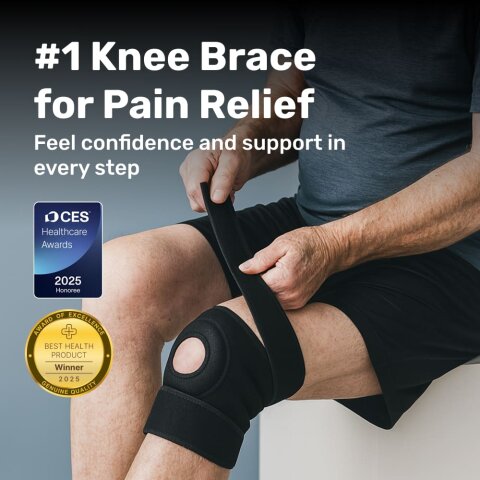
Dr. Flexa Knee Brace, 4.4/5
A well-constructed compression knee brace with lateral stabilizers for adults over 40 with arthritis or general knee stiffness.
- Open-patella design relieves kneecap pressure during extended wear
- Four AxisControl stabilizers support medial and lateral joint stability
- Anti-slip construction prevents migration during activity
Table of Contents
- Who the Dr. Flexa Is For
- Design and Construction
- How It Works
- What It Does Well
- Where It Falls Short
- Overall Verdict
- Frequently Asked Questions
Who the Dr. Flexa Is For
The Dr. Flexa is designed for adults dealing with everyday knee discomfort, arthritis flare-ups, general joint stiffness, post-minor-injury sensitivity, and the kind of ache that comes from years of use. It sits in the compression-plus-stabilizer category: more structured than a basic neoprene sleeve, less rigid than a full hinged brace. That middle ground serves most people with osteoarthritis or general wear-related knee pain better than either extreme.
It is not designed for acute ligament injuries (MCL, ACL) that require the structural hold of a hinged brace, and it is not the right tool for post-surgical recovery where range-of-motion control is prescribed by a physician. For those situations, see the full knee brace guide to understand what type of support is actually needed.
Design and Construction
The Dr. Flexa uses a tri-weave neoprene fabric with an open-patella cutout and four AxisControl stabilizers, two on each side of the knee. The stabilizers run parallel to the lateral and medial ligaments, providing resistance to sideways forces without the bulk or rigidity of rigid side bars. The Velcro straps above and below the patella allow compression to be adjusted independently from the stabilizer position.
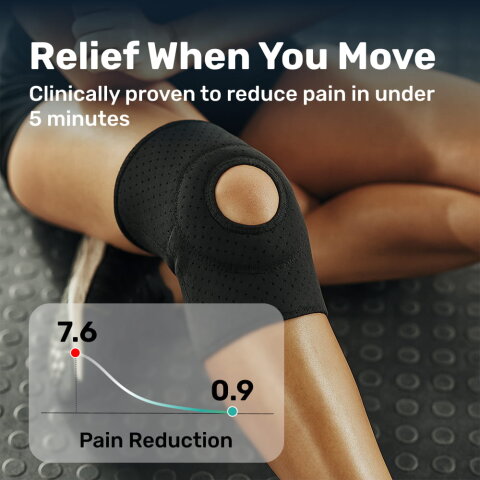
The neoprene is breathable relative to older designs, though it does generate heat during extended wear, which is partly a feature (warmth promotes circulation) and partly a consideration for people who run hot or wear the brace in warm environments. The anti-slip silicone band at the top edge addresses one of the most common complaints about compression sleeves: migration during activity.
How It Works
The brace operates through three mechanisms in combination:
- Compression: reduces swelling, improves proprioception (joint position awareness), and promotes circulation to the joint tissues
- Lateral stabilization: the AxisControl stabilizers resist valgus (inward) and varus (outward) forces that stress the medial and lateral collateral ligaments during walking and standing activities
- Patellar relief: the open-patella cutout reduces direct pressure on the kneecap, which is particularly useful for people with patellofemoral pain or kneecap tracking issues
None of these mechanisms repair underlying joint damage. What they do is create better mechanical conditions for the joint to function during activity, which reduces the pain load and allows people to stay more active, which itself supports joint health over time.
What It Does Well
For day-to-day use with arthritis or general knee stiffness, the Dr. Flexa handles three things well:

Wearability through activity. The anti-slip construction keeps it from migrating during a walk or errand run, which is the failure mode of most consumer sleeves. This matters because a brace that shifts out of position after 20 minutes is providing almost no benefit during the back half of the activity.
Adjustable compression. The independent straps allow you to set the compression tighter around the joint and looser above or below, useful when one area is more swollen or sensitive than another. Most off-the-shelf sleeves do not offer this granularity.
Open-patella design. For people with kneecap sensitivity, the cutout makes a meaningful difference in comfort during prolonged wear compared to closed sleeves that apply direct pressure over the patella.
Where It Falls Short
The Dr. Flexa is marketed broadly, and some of the use cases in the marketing stretch beyond what this category of brace can deliver.
It is not a ligament brace. The AxisControl stabilizers provide resistance, not structural hold. For a knee with significant instability from ligament damage, this brace will not prevent the joint from moving into harmful positions under load. A rigid hinged brace is the appropriate tool for that situation.
Heat during extended wear. Neoprene retains heat, and the Dr. Flexa is no exception. For warm-weather use or people who tend to run warm, this may limit how long comfortable continuous wear is.
One-size-fits-all with limitations. The adjustable straps allow a range of fit, but for people at the extreme ends of leg circumference (very slim or very large legs), the adjustability range may not compensate fully for what a size-specific brace would provide.
Overall Verdict
For adults over 40 managing osteoarthritis, general knee stiffness, or the mild-to-moderate pain that comes from years of activity, the Dr. Flexa is a well-designed compression-plus-stabilizer brace. It performs reliably at what it is built for: keeping the joint warm, supported, and proprioceptively engaged during daily activity and moderate exercise.
It is not a substitute for physical therapy, and it does not address the muscle strengthening that provides the most durable protection for arthritic joints. But as a tool for managing day-to-day discomfort while you build that strength, it is a practical and reasonably designed option.
Check current price and availability →
Pros and Cons at a Glance
| Pros | Cons |
|---|---|
| Compression + warmth reduces pain during activity without medication | Provides symptomatic relief only, does not slow cartilage deterioration or treat the underlying condition |
| Lateral stabilizer bars address medial and lateral instability | Correct sizing is critical, wrong size undermines the compression benefit |
| Fits left or right knee, adjustable for custom compression level | Not suitable for acute post-surgical recovery without physiotherapy guidance |
| Discreet enough to wear under most clothing | Neoprene may cause discomfort in heat for extended wear |
| Ships to US, Australia, Canada, UK, and most of Europe |
Is Dr. Flexa Legit?
Yes. Dr. Flexa is a real knee brace sold through direct-to-consumer channels. It is a physical device using neoprene construction with adjustable straps, open-patella cutout, and four lateral stabilizers. These are verifiable design features, not vague marketing claims. The brace manufactures and ships from real fulfillment infrastructure.
Like most direct-to-consumer joint products, it sells through affiliate channels rather than physical retail, which leads some buyers to search for legitimacy confirmation. The money-back guarantee through the retailer provides a genuine return window if the brace does not deliver for your situation.
Frequently Asked Questions
Is the Dr. Flexa good for arthritis?
Yes, within the limits of what a compression brace can do for arthritis. It reduces pain during activity through compression, warmth, and lateral support, and the open-patella design is comfortable for extended wear. It does not slow cartilage loss or address the underlying condition, it manages the symptomatic discomfort of arthritis during activity.
How tight should the Dr. Flexa be?
Firm compression but not tourniquet-tight. The brace should feel snug throughout movement without restricting circulation. Signs it is too tight: numbness, tingling, or skin discoloration below the brace. Signs it is too loose: it migrates during activity or provides no perceptible support.
Can I wear the Dr. Flexa all day?
For most people, wearing it during active periods and removing it during rest is the better approach. All-day wear reduces the proprioceptive challenge that helps maintain muscle coordination around the joint. A few hours during high-activity periods is more beneficial than continuous passive wear.
Is it useful for running or sports?
For low to moderate intensity activity (walking, hiking, cycling, and similar) yes. For high-impact sports or activities with significant lateral cutting movements, the Dr. Flexa does not provide the structural support that a dedicated sports functional brace (with rigid hinges) offers. For those activities, the brace type matters as much as the specific product.
Is Dr. Flexa a knee sleeve or a knee brace?
The Dr. Flexa is a knee brace, not a compression sleeve. The difference: it includes four AxisControl lateral stabilizers and independently adjustable Velcro straps above and below the patella. A sleeve provides uniform compression; the Dr. Flexa adds targeted lateral support and adjustable compression control. If you searched “flexa knee sleeve,” this is the correct product.
Is Dr. Flexa worth buying?
For adults over 40 with osteoarthritis, general knee stiffness, or activity-related knee pain, yes with realistic expectations. The Dr. Flexa manages symptomatic discomfort during activity through compression, warmth, and lateral support. It does not repair cartilage or reverse arthritis. The open-patella design and anti-slip construction make it more practical for all-day use than most consumer alternatives in the same price range.
About the author: Richard Hale is an independent health writer focused on mobility, joint health, and active aging research. He is not a licensed medical professional. All content on VitalMove40 is for educational purposes only and is not a substitute for advice from a qualified healthcare provider.