Disclosure: VitalMove40 earns a commission if you buy through links on our site, at no extra cost to you. See our full affiliate disclosure.
Last updated: November 12, 2026 | By Richard Hale
This content is educational and is not medical advice. A meniscus tear should be diagnosed by a doctor; use a sleeve as part of the plan they give you.
After 40, a meniscus tear often does not come from a big sports injury. It shows up slowly: a knee that aches after a long walk, swells a little by evening and feels less sure on the stairs. If your doctor has told you it is a meniscus tear and that you can keep moving, a good compression sleeve is one of the simplest things that helps you do exactly that.
Short answer: yes, a knee compression sleeve can help with a meniscus tear. It does not repair the tear, but its even compression and warmth help with swelling and stiffness and make the knee feel more stable, so you can keep up the walking and exercises that do the real work. Our pick is the RelievCore Knee Compression Sleeve, sold in pairs from $31.48 per sleeve with a 90-day money-back guarantee.
When you need more than a sleeve: if your knee locks, catches or gives way, see your doctor before relying on any sleeve.
RelievCore: from $24.99 per sleeve in the 2-pair pack, free US shipping, 90 days to try it.
Prices as shown on the official checkout on October 22, 2026. The store runs promotions often, so the final amount is the one you see at checkout.
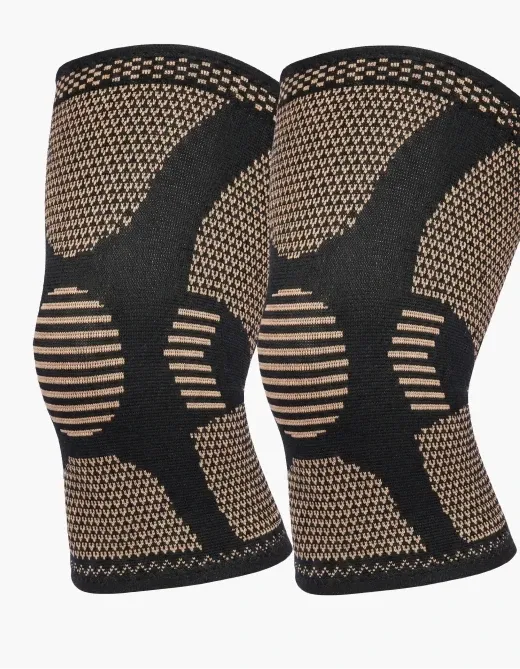
Table of Contents
- Does a Knee Sleeve Help a Meniscus Tear?
- Why Meniscus Tears Are So Common After 40
- Knee Sleeve or Knee Brace for a Torn Meniscus?
- Best Knee Sleeve for a Meniscus Tear: RelievCore
- How to Wear a Knee Sleeve With a Meniscus Tear
- Frequently Asked Questions
Does a Knee Sleeve Help a Meniscus Tear?
Yes, as support for daily movement and exercise. A compression sleeve wraps the joint in light, even pressure. People with meniscus pain use it for three reasons:
- Swelling: gentle compression helps the knee feel less puffy and tight after activity.
- Warmth: the fabric keeps the joint warm, which many people find eases morning stiffness.
- Confidence: the snug fit gives you a better sense of where your knee is, so steps and stairs feel steadier.
What a sleeve does not do is fix the tear itself. That is not a weakness of the sleeve. For the kind of tear most common after 40, the real treatment is exercise, and the sleeve’s job is to make that exercise easier to stick with.
Why Meniscus Tears Are So Common After 40
The meniscus is the rubbery cushion between your thigh bone and shin bone. With age it becomes less elastic, and a tear can happen from something as ordinary as twisting while you stand up. These are called degenerative tears.
The encouraging part is how well they respond to exercise. In a Norwegian trial of 140 adults with an average age of about 50 and a degenerative meniscus tear, 12 weeks of supervised exercise therapy gave results that were not meaningfully different from arthroscopic surgery after two years, and the exercise group gained more thigh strength in the short term (Kise et al., 2016). That is why so many doctors start with physical therapy, and why a sleeve that helps you keep training is worth having.
Knee Sleeve or Knee Brace for a Torn Meniscus?
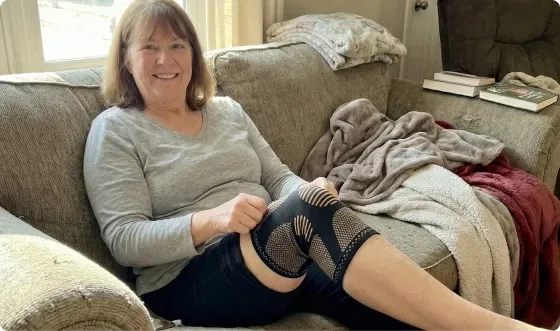
For most degenerative tears, a sleeve is the better everyday choice. It is light, it bends with you, and it fits under clothes, so you will actually wear it on walks and during exercises.
A hinged brace is a different tool. Doctors use it to limit movement after an acute injury or surgery, or when the knee is unstable. If your knee locks, catches or gives way, or if you cannot fully straighten it, that is a reason to see your doctor about a brace or other treatment rather than choosing a sleeve on your own.
Best Knee Sleeve for a Meniscus Tear: RelievCore
The RelievCore Knee Compression Sleeve is our pick because it is built for the way a meniscus knee feels day to day, and because the pair pricing makes it easy to cover both knees or keep a spare in the wash.
- Zoned compression: the knit is denser around and below the kneecap and lighter toward the top and bottom edges, so the joint gets support while the sleeve still bends comfortably.
- Copper-infused knit: a soft, breathable fabric you can wear for hours.
- Sold in pairs: one sleeve for the sore knee, one for the other side or to rotate while the first is washed.
- 90 days to try it: send it back in the original packaging for a full refund or a replacement, less shipping and handling.
Pricing on the official checkout on October 22, 2026:
| Pack | Price per sleeve | Total |
|---|---|---|
| 1 sleeve | $39.95 | $39.95 |
| 1 pair (most popular) | $31.48 | $62.96 |
| 2 pairs (best value) | $24.99 | $99.96 |
All packs ship free in the US. The 2-pair pack is the one I would choose for a meniscus knee: you always have a clean sleeve ready, which makes it far easier to wear it every day.
Keep moving on a meniscus knee. RelievCore pairs start at $31.48 per sleeve, with 90 days to try them.
Prices on the official checkout on October 22, 2026; the final amount is confirmed at checkout.
For the full breakdown of fit, sizing and the guarantee, read our RelievCore review.
How to Wear a Knee Sleeve With a Meniscus Tear
- Get the size right. Measure around your thigh 5 inches above your kneecap and match it to the official chart (S/M or L/XL). Between sizes, the store suggests the larger one for comfort or the smaller one for firmer compression.
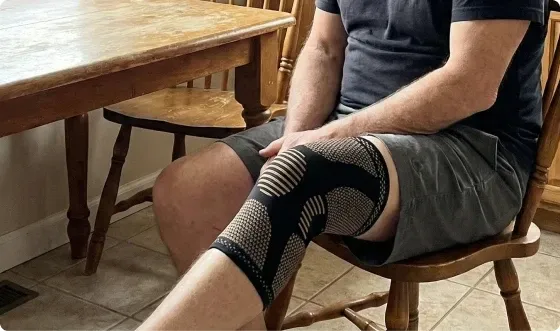
- Wear it for activity. Put it on for walks, chores, stairs and your physical therapy exercises, when support helps most.
- Take it off to rest and to sleep. Give your skin a break overnight unless your doctor or therapist tells you otherwise.
- Keep doing the exercises. Strengthening your thigh and hip muscles is what protects the meniscus long term. The sleeve helps you get the sessions done.
Frequently Asked Questions
Does a knee sleeve help a meniscus tear?
Yes, as day-to-day support. A compression sleeve helps with swelling, warmth and the feeling of stability, which makes it easier to keep walking and doing your exercises. It does not repair the tear itself.
Is a knee sleeve or a brace better for a torn meniscus?
For most degenerative tears after 40, a sleeve is the better everyday option because it is light and bends with you. A hinged brace is usually for acute injuries, after surgery or for a knee that locks or gives way, and your doctor should guide that choice.
Can I walk with a meniscus tear?
Many people with a degenerative tear can and should keep walking, often with a sleeve for support. If walking makes your knee lock, catch or give way, stop and see your doctor.
Should I wear a knee sleeve all day with a meniscus tear?
Wear it during activity, when support helps most, and take it off to rest and to sleep. If your doctor or physical therapist gives you a different schedule, follow theirs.
Can a meniscus tear heal without surgery?
Degenerative tears often improve without surgery. In a trial of 140 middle-aged adults, 12 weeks of supervised exercise did as well as surgery after two years. Your doctor will tell you which treatment fits your tear.
What is the best knee sleeve for a meniscus tear?
Our pick is the RelievCore Knee Compression Sleeve: zoned compression around the kneecap, a breathable copper-infused knit, pairs from $31.48 per sleeve and a 90-day money-back guarantee.
Try RelievCore for 90 days. The 2-pair pack brings it down to $24.99 per sleeve, with free US shipping.
Prices on the official checkout on October 22, 2026; the final amount is confirmed at checkout.
Good to Know
- See a doctor first if your knee locks, catches, gives way, swells quickly after an injury or will not straighten fully.
- Skin and circulation: do not wear a compression sleeve over broken skin, and ask your doctor first if you have circulation problems, diabetes-related nerve damage or a history of blood clots.
- Returns: the 90-day guarantee asks you to send the item back in the original packaging; the refund or replacement is less shipping and handling.
About the Author
Richard Hale writes about mobility, recovery, and evidence-based wellness strategies for adults over 40 at VitalMove40, with a focus on at-home health tracking devices. He is an independent health writer, not a licensed medical professional. Content is educational and not a substitute for advice from a qualified healthcare provider.