
Last updated: July 14, 2026 | By Richard Hale
Hip flexor pain is one of the more frustrating joint problems after 40, partly because it tends to develop quietly. You spend years sitting at a desk, the hip flexors gradually tighten and weaken, and one day you notice a pull at the front of the hip when you walk up stairs, get out of a car, or try to stretch.
The good news is that hip flexor pain is almost always mechanical. It is caused by patterns of use and disuse, not structural damage, which means it responds well to the right approach. This guide explains what the hip flexors actually are, why problems develop after 40, and what reliably helps.
This content is for educational purposes only and is not medical advice. Hip pain that is severe, radiating down the leg, or accompanied by swelling should be evaluated by a healthcare provider.
Table of Contents
- What the Hip Flexors Are and Why They Matter
- Why Hip Flexor Problems Are So Common After 40
- Signs It Is Your Hip Flexors
- What Actually Helps
- Common Mistakes That Make It Worse
- When to See a Doctor
- Frequently Asked Questions
What the Hip Flexors Are and Why They Matter
The hip flexors are a group of muscles that connect the lower spine and pelvis to the thighbone. Their job is to lift the thigh toward the body, which happens in almost every movement you make: walking, climbing stairs, getting up from a chair, bending forward.
The most important of these muscles is the iliopsoas, which is actually two muscles (the iliacus and the psoas major) that merge into a single tendon. When people talk about hip flexor pain or tightness, this is usually what they mean. The rectus femoris, part of the quadriceps, also acts as a hip flexor and can contribute to hip front pain.
Because these muscles cross both the hip and the spine, tightness or weakness in the hip flexors affects not just the hip but also the lower back, the pelvis alignment, and the knee. That is why hip flexor dysfunction rarely stays localized to one area.
Why Hip Flexor Problems Are So Common After 40
The single biggest driver is time spent sitting. When you sit, the hip flexors are in a shortened position for hours at a time. Over months and years, the muscles adapt to that shortened length, becoming tighter and less able to move through their full range. This is called adaptive shortening.
Sitting and Adaptive Shortening
A muscle held in a shortened position long enough begins to structurally adapt. It produces more sarcomeres (the units of muscle contraction) at a shorter length and fewer at longer lengths, reducing its flexibility and the force it can generate at full extension. For hip flexors, this means that after years of predominantly sitting, even normal walking and standing can feel tight or produce discomfort at the front of the hip.
The Mayo Clinic notes that prolonged sitting affects multiple muscle groups and contributes to postural and joint problems that accumulate with age.
Muscle Imbalances
Tight hip flexors are almost always paired with weak glutes. The glutes and hip flexors work as opposing muscle groups around the pelvis. When hip flexors tighten, they pull the pelvis forward (anterior pelvic tilt). The glutes, which normally counterbalance this pull, tend to become inhibited and underactive in people who sit for most of the day. The result is a pelvis that tips forward, compresses the lower back, and puts abnormal stress on the hip joint itself.
Reduced Activity and Loss of Range of Motion
After 40, most adults become less likely to regularly move through the full range of hip extension, the position where the hip flexors are stretched to their longest. Activities that require full hip extension, like lunging, walking fast, or sprinting, become less common. Without regular movement through that range, flexibility narrows further and the cycle compounds.
Signs It Is Your Hip Flexors
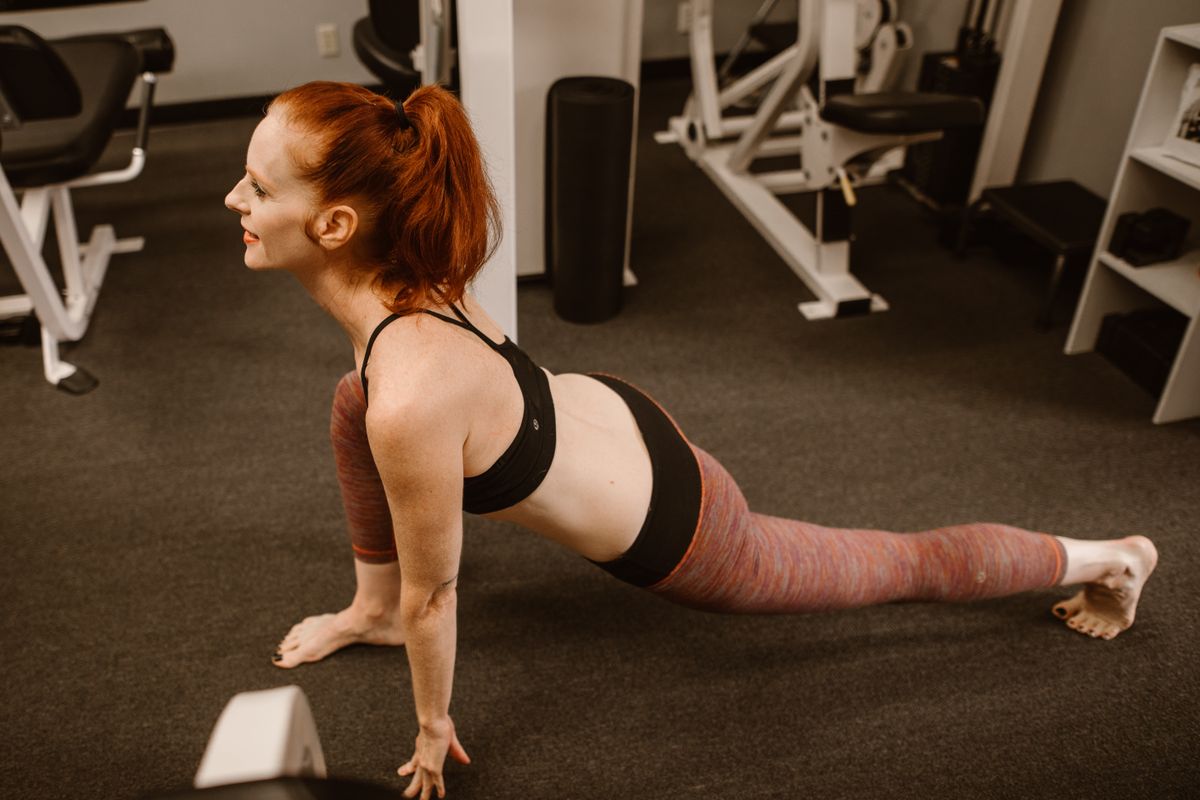
Hip flexor pain has a fairly consistent presentation. Common signs include:
- A pulling or aching sensation at the front of the hip or groin, particularly when lifting the leg, walking uphill, or climbing stairs
- Stiffness or tightness at the front of the hip in the morning or after sitting for a long period
- Lower back discomfort that seems to come and go along with hip tightness
- A sense of restriction or pinching at the front of the hip at the end of a stride when walking fast
- Pain that worsens with prolonged sitting and eases with movement, then returns after activity
Hip flexor issues can mimic hip impingement, groin strain, and occasionally referred pain from the lower back. If the location or character of your pain is unclear, a clinical assessment is the most reliable approach.
What Actually Helps
The two-part approach that works for most hip flexor problems is stretching to restore length and strengthening to restore function. Both are necessary. Stretching alone tends to produce temporary improvement that does not hold.
Stretching: Restoring Resting Length
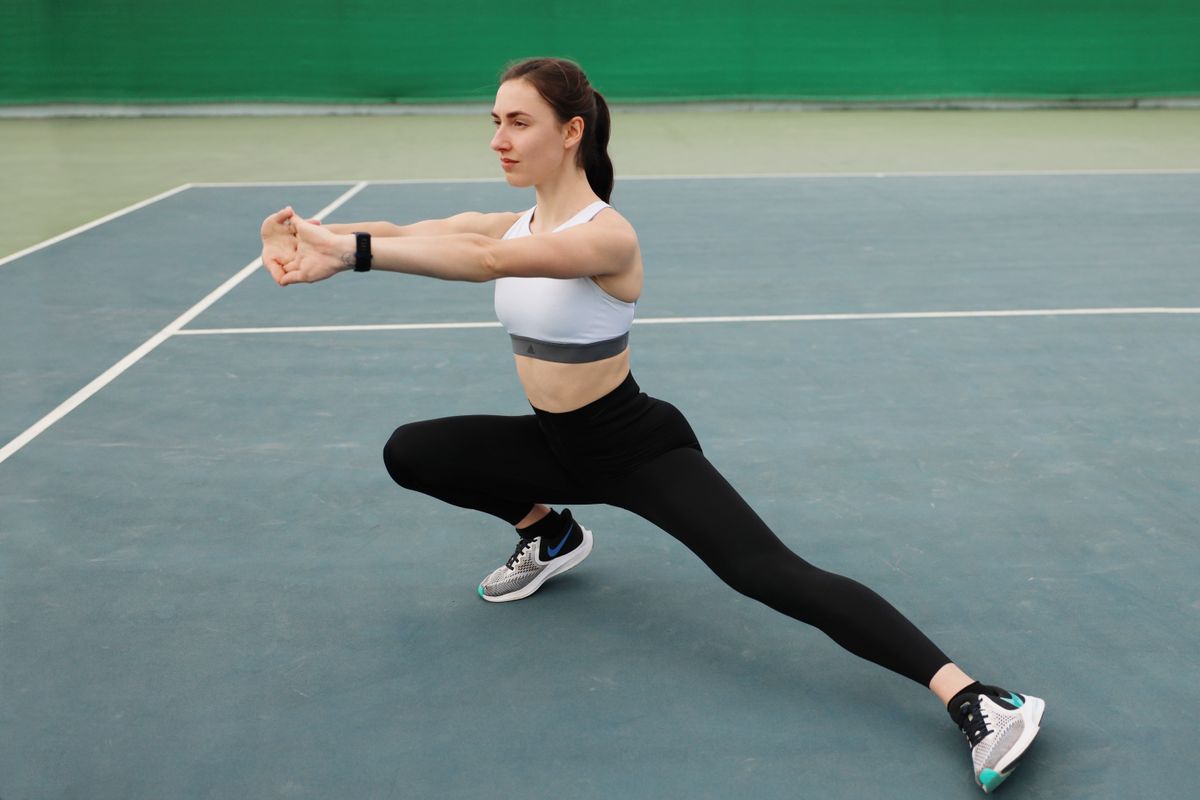
The most effective stretch for the hip flexors is the kneeling hip flexor stretch (also called the half-kneeling lunge stretch). Performed correctly, it places the iliopsoas under a sustained stretch through its full range.
How to do it: Kneel on one knee with the other foot forward in a lunge position. Keep the torso upright. Tuck the pelvis slightly (do not let the lower back arch). Push the hips gently forward until you feel a stretch at the front of the kneeling hip. Hold for 30 to 60 seconds. Repeat two to three times per side.
For the stretch to reach the iliopsoas rather than just the rectus femoris, the pelvis tuck is essential. Without it, most people end up arching the lower back and bypassing the deeper hip flexor muscles entirely.
Strengthening: Building Active Control
Paradoxically, tight hip flexors are often also weak hip flexors. A muscle that has been held in a shortened position loses strength through its full range. Strengthening exercises that work the hip flexors through their full range, combined with glute work to correct the anterior pelvic tilt, address both sides of the problem.
Useful exercises include:
- Psoas marches: standing hip flexion against resistance, building strength through the range where the hip flexors most commonly fail
- Glute bridges: directly strengthen the glutes and teach the pelvis to stabilize in neutral
- Dead bugs: train coordinated hip flexor and core control without aggravating the hip
- Walking lunges: combine hip flexor lengthening (rear leg) with hip extension strength (front leg), making them one of the most efficient exercises for this problem when tolerable
Movement Habits
No amount of stretching compensates for ten hours of sitting. The most durable improvement comes from changing the pattern that caused the problem. Practical changes include: standing up and walking for two to three minutes every 30 to 45 minutes, taking walking meetings where possible, and incorporating activities that require full hip extension (hiking, cycling, swimming) regularly.
Common Mistakes That Make It Worse
Stretching while the hip flexor is acutely inflamed. If there is an acute strain or tendinitis rather than simple tightness, aggressive stretching in the early days can worsen the irritation. Wait for acute pain to settle before resuming full-range stretching.
Stretching without addressing posture. If the anterior pelvic tilt remains unchanged, the hip flexors return to a shortened position as soon as you stand up. Pairing stretching with glute activation work and postural awareness produces more lasting results. See the full guide on posture problems after 40 for more detail.
Sitting right after stretching. Getting back into a chair immediately after hip flexor stretches reduces the benefit significantly. Standing for ten to fifteen minutes after stretching, or going for a short walk, helps consolidate the mobility gained.
When to See a Doctor
Hip flexor tightness and mild to moderate pain from the patterns described above can usually be addressed through stretching, strengthening, and movement habit changes. See a healthcare provider if:
- Pain radiates down the leg or into the groin significantly
- You had a specific incident (a fall, a sudden movement) that preceded the pain
- There is visible swelling or bruising around the hip
- Pain is severe enough to affect walking normally
- Symptoms are not improving after six to eight weeks of consistent self-management
Frequently Asked Questions
How do I know if it’s my hip flexor or my hip joint?
Hip flexor pain typically presents at the front of the hip and groin, worsens with hip flexion activities like stair climbing or sitting for long periods, and improves with stretching. Hip joint pain (from osteoarthritis or impingement, for example) often presents deeper in the hip, may radiate into the thigh, and is associated with a loss of range of motion in multiple directions. A clinical assessment distinguishes these reliably.
Can I keep exercising with hip flexor pain?
Usually yes, with modifications. Low-impact activities like cycling and swimming that do not involve full hip extension are typically well tolerated. Activities that stress the hip flexor through its full range (running, lunging, steep stair climbing) may need to be temporarily reduced. Complete rest is rarely the right answer and tends to worsen the underlying tightness.
How long does hip flexor recovery take?
Mild tightness without acute strain typically improves meaningfully within three to six weeks of consistent stretching and strengthening. If there is an actual strain (a micro-tear from overexertion), recovery takes four to eight weeks. Chronic tightness that has developed over years may take two to three months of consistent effort before substantial improvement is felt.
Does sitting cause permanent hip flexor damage?
No. The adaptive shortening caused by prolonged sitting is reversible with consistent stretching, strengthening, and movement habit changes. Even people who have spent decades in desk jobs see meaningful improvements with a deliberate hip health program.
Is hip flexor pain related to lower back pain?
Often yes. The iliopsoas attaches directly to the lumbar vertebrae, and tightness in the hip flexors contributes to anterior pelvic tilt, which compresses the lower back. Many people with hip flexor tightness have concurrent lower back tension, and addressing the hip flexors often reduces lower back symptoms as well.
About the author: Richard Hale is an independent health writer focused on mobility, joint health, and active aging research. He is not a licensed medical professional. All content on VitalMove40 is for educational purposes only and is not a substitute for advice from a qualified healthcare provider.