Disclosure: VitalMove40 earns a commission if you buy through links on our site, at no extra cost to you. See our full affiliate disclosure.
Last updated: November 2, 2026 | By Richard Hale
This content is educational and is not medical advice. Tirzepatide and other GLP-1 medications are prescription only; talk to your physician about your own plan.
Tirzepatide works. People lose a lot of weight on it, and that is exactly why the next question matters: how much of that weight is fat, and how much is muscle you would rather keep? After 40, muscle is what carries your knees up the stairs and keeps your balance steady. The good news is that muscle loss on GLP-1 medication is not fixed. It responds to what you do, and you can measure it every week.
Short answer: yes, tirzepatide can cause some muscle loss, because part of any large weight loss comes from lean tissue. In GLP-1 studies, lean mass ranged from about 15% or less to 40 to 60% of the weight lost. Strength training, protein first at meals and weekly body composition tracking move you to the low end.
The simplest way to stay on the right side of it: HumeCare+, the GLP-1 program from Hume Health, measures your fat and muscle every week with a Hume Pod included in the plan, so your clinician adjusts before muscle loss adds up.
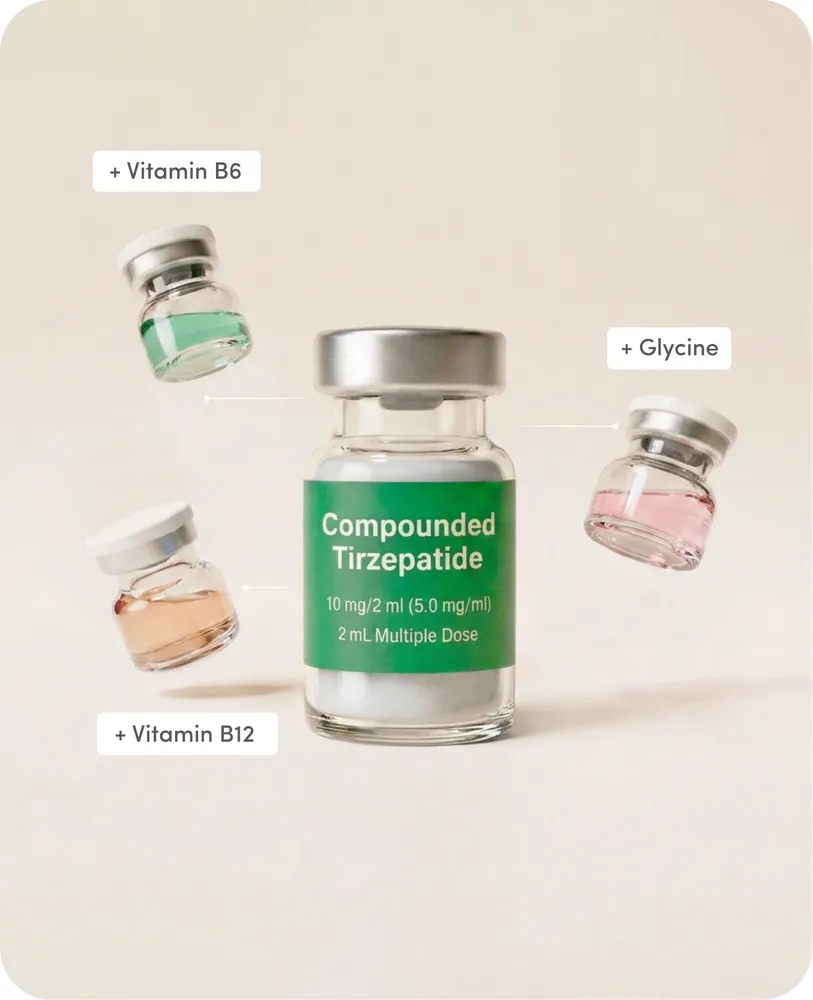
Table of Contents
- Why Does Tirzepatide Cause Muscle Loss?
- How Much Muscle Do People Lose on GLP-1 Medication?
- Tirzepatide vs Semaglutide: Which Causes More Muscle Loss?
- How Do You Keep Muscle on Tirzepatide After 40?
- Why Track Body Composition, Not Just Weight, on a GLP-1?
- What Is HumeCare+ and How Does It Help You Keep Muscle?
- Tirzepatide and GLP-1 Muscle Loss: FAQ
Why Does Tirzepatide Cause Muscle Loss?
Tirzepatide causes muscle loss indirectly: it lowers your appetite, you eat less, and when the body runs on a large energy deficit it draws on both fat and lean tissue. That happens with any big weight loss, whether it comes from medication, surgery or a strict diet.
Tirzepatide is the active ingredient in Zepbound and Mounjaro. In the SURMOUNT-1 trial, adults with obesity on the highest weekly dose lost an average of 20.9% of their body weight over 72 weeks, compared with 3.1% on placebo (Jastreboff et al., 2022). When you lose a fifth of your body weight, even a modest share of lean tissue adds up to pounds of muscle.
Two habits drive it after 40. Appetite drops so much that protein intake often falls with it, and many people stop lifting anything heavy while they focus on the scale. Both are easy to fix once you see them.
How Much Muscle Do People Lose on GLP-1 Medication?
On GLP-1 medication, lean mass makes up anywhere from about 15% or less to 40 to 60% of the weight lost, depending on the study. That range comes from a 2024 review in Diabetes, Obesity and Metabolism (Neeland et al., 2024). The spread is the important part: it tells you the outcome is shaped by what you do, not set by the drug alone.
Research on weight loss in middle-aged and older adults points the same way. A systematic review of 52 studies found that 81% of diet-only groups lost at least 15% of their weight as fat-free mass, compared with 39% of groups that combined the diet with exercise (Weinheimer et al., 2010). Same weight loss goal, very different body at the end.
Tirzepatide vs Semaglutide: Which Causes More Muscle Loss?
Tirzepatide and semaglutide both lead to some lean mass loss, and your habits decide how much far more than the choice of molecule. The studies that measured it used different people, doses and scanning methods, which is why the published range is so wide and why no head-to-head ranking exists yet.
What the research agrees on is more useful: how much muscle you keep depends on your protein, your training and how closely your progress is tracked. Your physician picks the medication. You control the rest.
How Do You Keep Muscle on Tirzepatide After 40?
You keep muscle on tirzepatide and other GLP-1s with four habits: strength training two or three times a week, protein first at every meal, a dose increase you can eat on, and weekly body composition tracking. A 2025 joint advisory from the American College of Lifestyle Medicine, the American Society for Nutrition, the Obesity Medicine Association and The Obesity Society lists preserving muscle and bone through resistance training and an appropriate diet as a core priority during GLP-1 treatment (Mozaffarian et al., 2025). Here is how each habit works:
- Lift something two or three times a week. In a trial of dieting adults over 65, lean mass fell 2 to 3% in the groups that did resistance training, against 5% in the aerobic-only group (Villareal et al., 2017). Bands, machines or bodyweight all count.
- Eat protein first. When appetite is low, start each meal with the protein so it does not get skipped. Your physician or a dietitian can set a target for your size.
- Raise the dose at a pace you can eat on. A gradual increase that keeps you eating full meals protects muscle better than a fast one that leaves you too nauseous to eat.
- Measure fat and muscle, not just weight. This is the step that tells you whether the first three are working.
Why Track Body Composition, Not Just Weight, on a GLP-1?
Tracking body composition shows whether the pounds you lose on a GLP-1 are fat or muscle, which a regular bathroom scale cannot tell you. A bathroom scale shows 10 pounds gone and stops there. If 4 of those pounds were muscle, you would find out only when climbing stairs got harder.
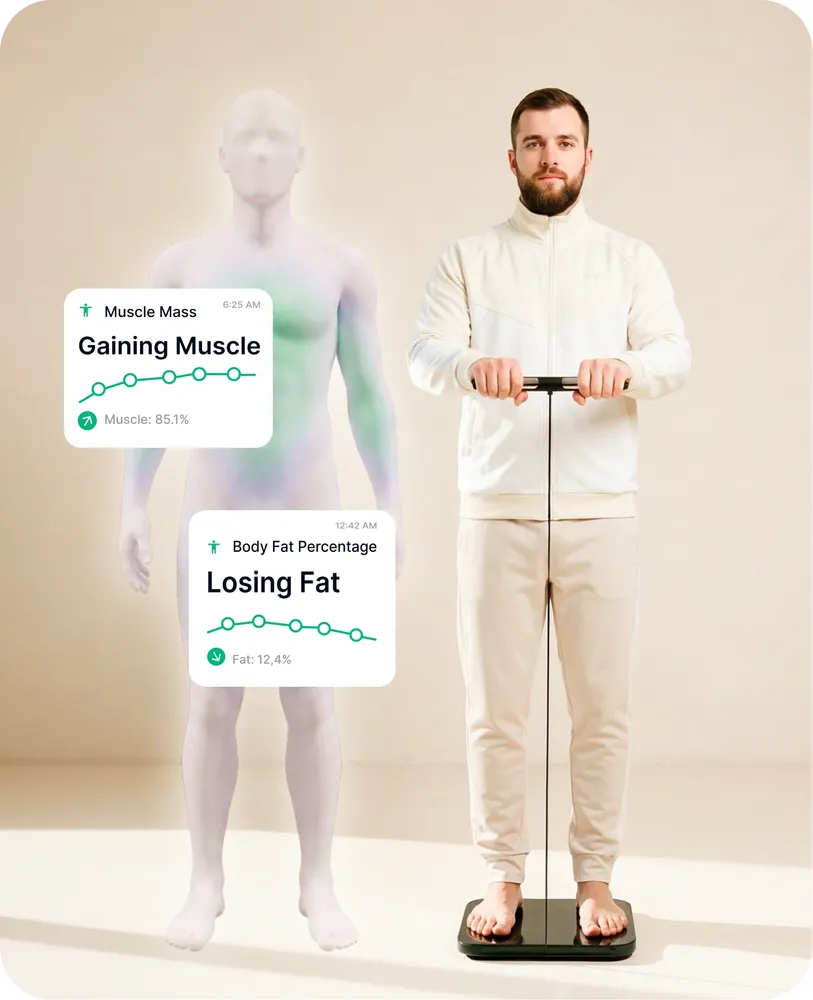
A body composition scale reads fat mass and muscle mass every time you step on it. Weekly readings turn muscle loss from a surprise at month six into a trend you catch in week three, while there is still time to add protein, add a training day or slow the dose.
Hume Health’s current scale, the Hume Pod 2.0, uses 8 hand and foot sensors to read your arms, legs and trunk separately, with dual-frequency body fat sensing and 45 metrics in all, including lean mass, skeletal muscle mass, body fat and visceral fat. Hume reports 97% lean-mass accuracy compared with clinical-grade scanning and 99% body-fat accuracy compared with DEXA. Bought on its own, the Hume Pod 2.0 is $249 (list $384) at the time of writing, November 2026. In HumeCare+, a Hume Pod comes included in the plan.
Hume Health also published an internal analysis of 6,990 of its members on GLP-1 therapy who weighed in at least three times a week. On average, lean mass made up 16.9% of the weight they lost, and 12.7% of members kept or gained lean mass. That sits near the low end of the research range above, the side that weekly tracking and adjusting aims for.
What Is HumeCare+ and How Does It Help You Keep Muscle?
HumeCare+ is the GLP-1 program from Hume Health, and it includes a Hume Pod body composition scale in the plan, so your fat and muscle are measured every week and your clinician adjusts your protocol from there. If you are starting tirzepatide, it is the easiest way to put all four habits above in one place.
- A licensed US physician can prescribe tirzepatide or semaglutide, compounded or brand-name, based on your assessment.
- Glycine, vitamin B12 and vitamin B6 are built into the protocol, which Hume says help protect muscle and ease side effects.
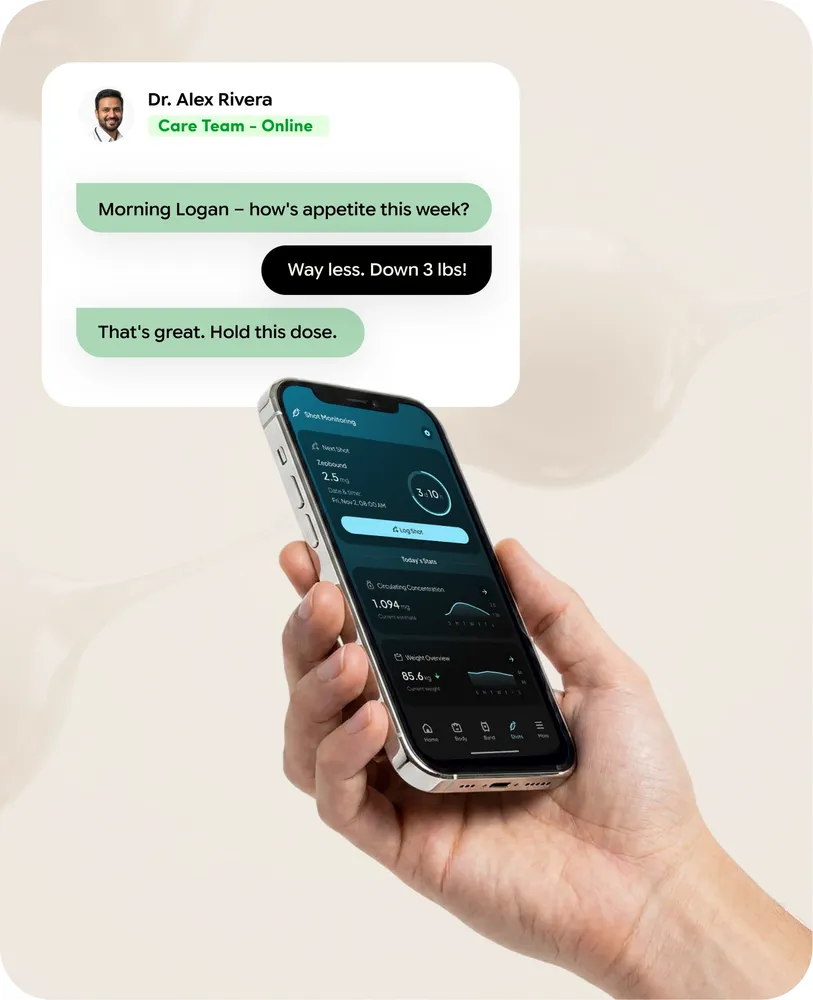
- Clinicians are available at any hour in the Hume app, with 1:1 doctor support and free next-day delivery.
- At the time of writing, November 2026, plans start at $199 a month (regular $299, with a $100 welcome credit) on a 3-month plan shipped monthly, with the medical consultation, the app and the Hume Pod included.
- FSA/HSA eligible, and you can cancel anytime.
Want to lose fat on tirzepatide and keep your muscle? HumeCare+ measures both every week with the Hume Pod that comes in your plan.
From $199 a month at the time of writing, November 2026, with the consultation, 1:1 doctor support and the Hume Pod included. FSA/HSA eligible, cancel anytime.
For everything the plan includes, the price and who qualifies, read our full HumeCare+ review.
Tirzepatide and GLP-1 Muscle Loss: FAQ
Does tirzepatide cause muscle loss?
Yes, tirzepatide can cause some muscle loss, because any large weight loss includes lean tissue. Across GLP-1 studies, lean mass has ranged from about 15% or less to 40 to 60% of the weight lost. Strength training, enough protein and weekly body composition tracking push you toward the low end.
How much muscle do you lose on tirzepatide?
Studies put lean mass at about 15% or less up to 40 to 60% of the weight lost on GLP-1 medication. Your own share depends on how much weight you lose, how much protein you eat, whether you strength train and how fast the dose rises. Measuring fat and muscle weekly shows you your own number.
Can you keep or gain muscle on tirzepatide?
Yes, some people do. In Hume Health’s internal analysis of 6,990 members on GLP-1 therapy who weighed in at least three times a week, 12.7% kept or gained lean mass. Strength training, protein first at meals and weekly body composition tracking give you the best chance.
Does tirzepatide cause more muscle loss than semaglutide?
Both lead to some lean mass loss, and current studies do not rank one above the other. Protein, strength training and weekly tracking matter more than the molecule, and your physician chooses the medication that fits you.
How can I prevent muscle loss on GLP-1 medication?
Strength train two or three times a week, eat protein first at every meal, increase the dose at a pace you can eat on, and track fat and muscle rather than just weight. A program that includes a body composition scale, like HumeCare+, builds that tracking in.
What are the signs of muscle loss on tirzepatide?
Feeling weaker on stairs or when carrying groceries, losing grip strength, or seeing your weight drop faster than your waist are common clues. A body composition scale shows it directly as falling muscle mass, usually before you feel it.
Can I get tirzepatide through HumeCare+?
Yes, if the physician finds you eligible. After the free assessment, a licensed US physician can prescribe tirzepatide or semaglutide, compounded or brand-name, with glycine, B12 and B6 in the protocol, which Hume says help protect muscle. If you are not eligible, Hume refunds you automatically.
How much does HumeCare+ cost?
HumeCare+ starts at $199 a month at the time of writing, November 2026 (regular $299, with a $100 welcome credit), on a 3-month plan shipped monthly. That includes the consultation, 1:1 doctor support, the app, a Hume Pod and free next-day delivery. It is FSA/HSA eligible and you can cancel anytime.
Does HumeCare+ include a body composition scale?
Yes. The current HumeCare+ plan includes a Hume Pod, listed at $352, which measures fat, muscle and 40-plus other metrics. Your clinician uses those weekly readings to adjust your protocol.
Start with the free one-minute assessment. A US physician, your medication and a Hume Pod in one plan.
From $199 a month at the time of writing, November 2026, with free next-day delivery and an automatic refund if the physician finds you are not eligible.
Good to Know Before You Start
- Prescription only: tirzepatide and semaglutide are prescription medications. Compounded versions are prepared by licensed compounding pharmacies and are not FDA-approved products.
- Side effects: nausea and digestive discomfort are common when starting or raising a dose. GLP-1 medications are not for people with a personal or family history of medullary thyroid carcinoma or MEN 2.
- Availability: HumeCare+ is not available in Louisiana or Mississippi.
- Exercise: if you have heart, joint or balance problems, ask your physician which kind of strength training is right for you before you start.
About the Author
Richard Hale writes about mobility, recovery, and evidence-based wellness strategies for adults over 40 at VitalMove40, with a focus on at-home health tracking devices. He is an independent health writer, not a licensed medical professional. Content is educational and not a substitute for advice from a qualified healthcare provider.