Last updated: July 14, 2026 | By Richard Hale
Balance declines from around age 40, and by 65, falls are the leading cause of injury-related death in the US. The reassuring part: balance is among the most trainable physical capacities at any age. Studies show measurable improvements within 4-8 weeks in adults well into their 70s and 80s. Starting training earlier means fewer years of accumulated deficit to recover from.
This content is for educational purposes only and is not medical advice. If you have significant inner ear problems, neurological conditions affecting balance, or severe osteoporosis that raises fracture risk from a minor fall, consult a physiotherapist before beginning unsupported balance exercises.
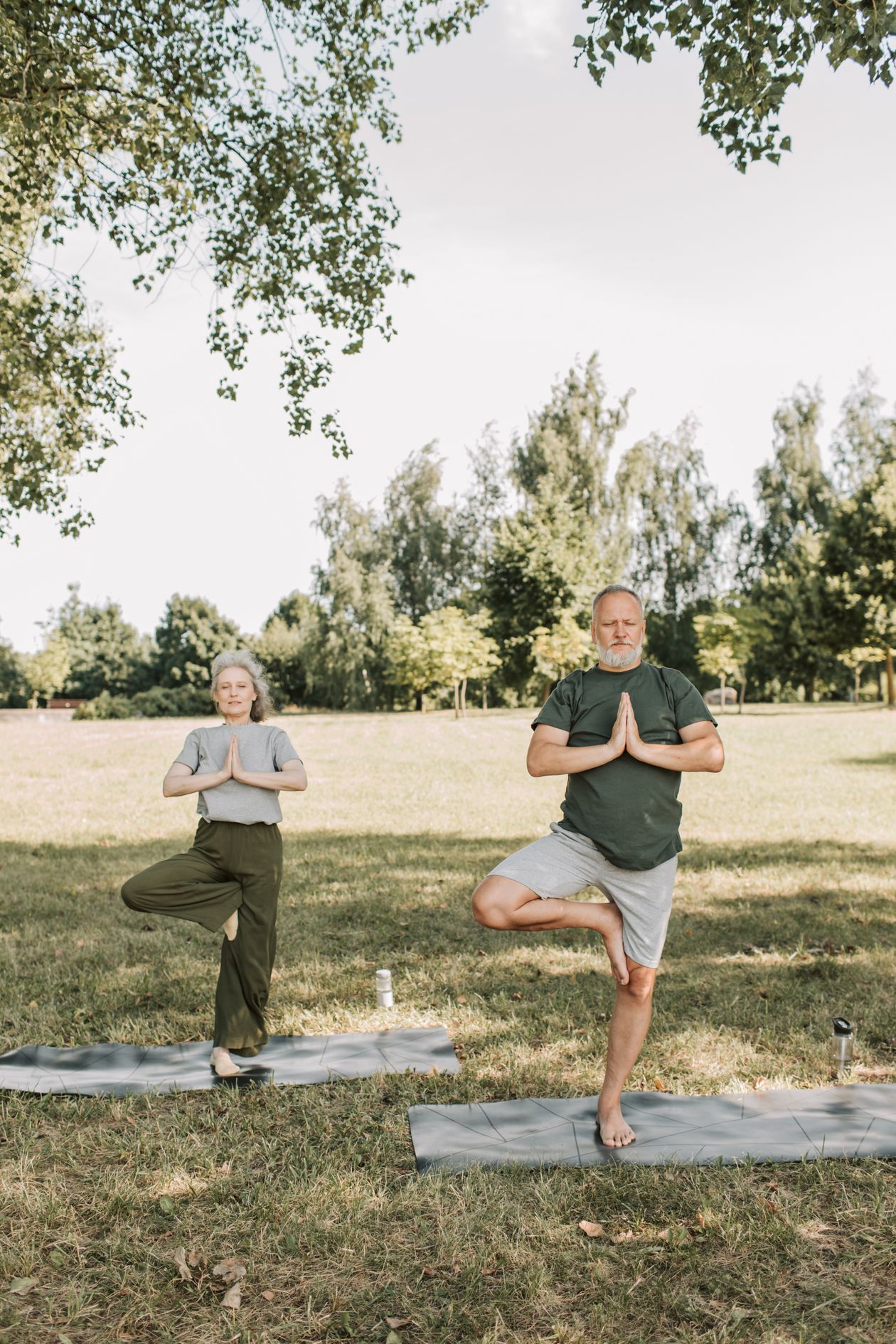
Table of Contents
- Why Balance Declines After 40
- Why It Matters More Than Most People Realize
- Balance Is Highly Trainable
- The Progression: From Supported to Challenged
- Key Exercises and Activities
- Frequency and Format
- Frequently Asked Questions
Why Balance Declines After 40
Balance relies on three sensory systems working together: the visual system (what you see), the vestibular system (the inner ear’s detection of head movement and position), and the proprioceptive system (receptors in muscles, tendons, and joint capsules that report body position). All three decline with age, though at different rates.
Proprioception (the most relevant for balance during everyday movement) begins to decline noticeably after 40. Mechanoreceptors in the joint capsules, particularly in the ankles and knees, become less sensitive and slower to fire. The time from sensing an imbalance to initiating a corrective muscle response (called the proprioceptive reaction time) increases. When surfaces are uneven or when attention is divided (the “dual-task” challenge of walking while talking), these slower responses become the limiting factor.
Reduced activity compounds the decline: mechanoreceptors require regular stimulation through varied movement to maintain sensitivity. Adults with sedentary routines, walking primarily on flat surfaces, avoiding irregular terrain, are not providing the proprioceptive challenge that maintains receptor sensitivity.
Why It Matters More Than Most People Realize
Falls are not just an elderly problem. Falls and their consequences begin accumulating in the 40s and 50s, well before the ages typically associated with fall risk. The relevant statistics:
- Falls are the leading cause of injury-related death in adults over 65 in the US, ahead of motor vehicle accidents
- Hip fractures (the most serious common fall consequence) have a 20-30% mortality rate in the first year in adults over 70
- Fear of falling is itself a risk factor: adults who become fearful restrict activity, which accelerates balance decline through deconditioning
- Balance impairment at 40-50 predicts fall risk at 60-70, the decline is gradual and the window to intervene is now, not later
Balance training at 40 is not alarmism, it is the same logic as starting to save for retirement before you need the money. The return on investment is significantly better when started early.
Balance Is Highly Trainable
The evidence on balance training across age groups is consistently positive:
- A 2019 Cochrane review of 81 RCTs with 19,684 participants found that exercise programs focused on balance and functional training reduced falls by 24% and fall-related injuries by 32% in community-dwelling older adults
- Tai chi specifically has among the strongest evidence of any single intervention, multiple large trials show 20-45% fall rate reductions in older adults
- Balance improvements from training programs are measurable within 4-8 weeks and continue to accumulate over months
- The improvements are not just test-score improvements, they transfer to real-world tasks (stair descending, recovering from unexpected perturbation, dual-task walking)
The critical point from this research: improvement is dose-dependent. Programs providing at least 3 hours of balance-specific training per week show the strongest effects. This does not mean 3 hours of dedicated balance exercise, it means accumulating balance challenge across daily activity and dedicated training together.
The Progression: From Supported to Challenged
Effective balance training follows a logical progression:
- Supported: bilateral stance with fingertip support (touching a wall, counter, or chair). Starting point for people with significant balance concerns.
- Semi-supported: bilateral stance without support, hands at ready position near a support. Focus on feeling the micro-adjustments the body makes.
- Unsupported single-leg stance: standing on one leg without support for 10-30 second holds. This is where most adults should start focused balance training.
- Eyes closed: same exercises performed with eyes closed, removing visual compensation. This requires vestibular and proprioceptive systems to work harder.
- Unstable surface: balance exercises on a foam pad, balance disc, or BOSU ball, reducing proprioceptive certainty and increasing the difficulty of corrections.
- Dual-task: performing balance tasks while doing something else simultaneously (counting backwards, catching a ball, carrying objects). This replicates the real-world condition where most falls occur.
The key principle: training at the edge of current ability, not so difficult that falls are likely, but challenging enough that the balance system is genuinely stressed. Easy balance exercises with perfect performance every time do not produce adaptation.
Key Exercises and Activities
Single-leg stand: the foundation of balance training. Stand near a wall for safety, lift one foot a few inches off the floor, and hold for 10-30 seconds. Progress through the sequence above, eyes open, eyes closed, on foam. Three sets of 30 seconds per side daily is a robust starting protocol.
Tandem stand and walk: stand with one foot directly in front of the other (heel to toe). Maintain this position for 30 seconds, then progress to tandem walking (heel-to-toe walking in a straight line). Tandem stance removes the wide base of support that bilateral standing allows, making it significantly harder than it looks.
Single-leg calf raise: standing on one foot, raise up onto the ball of the foot and lower slowly. This combines balance training with calf strengthening and ankle proprioception work, three key elements in one exercise. Progress to eyes closed once 3 sets of 15 are comfortable.
Lateral stepping and side steps: stepping to the side against light resistance (resistance band around ankles) trains hip abductor strength alongside lateral balance, a combination that is particularly protective against the lateral ankle roll that causes many falls.
Tai chi: the most evidence-supported group activity for balance improvement after 40. The slow, controlled weight transfers, single-leg positions, and coordinated arm-leg movements provide comprehensive multi-directional balance training. A Yang-style tai chi class for beginners is an ideal starting point, most community centers, YMCAs, and senior centers offer them at low cost.
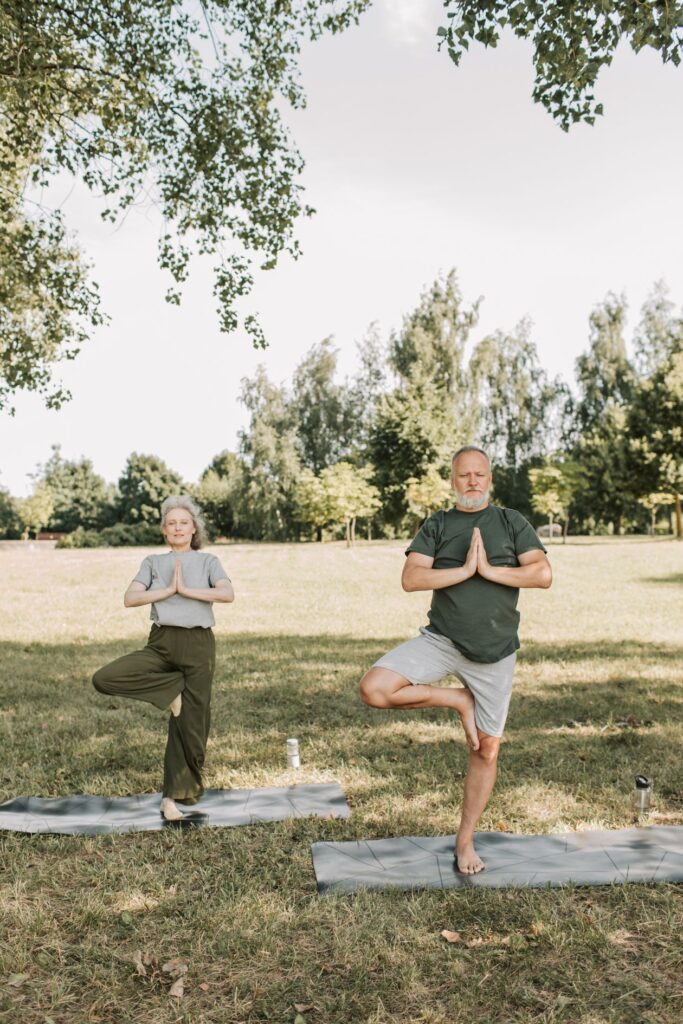
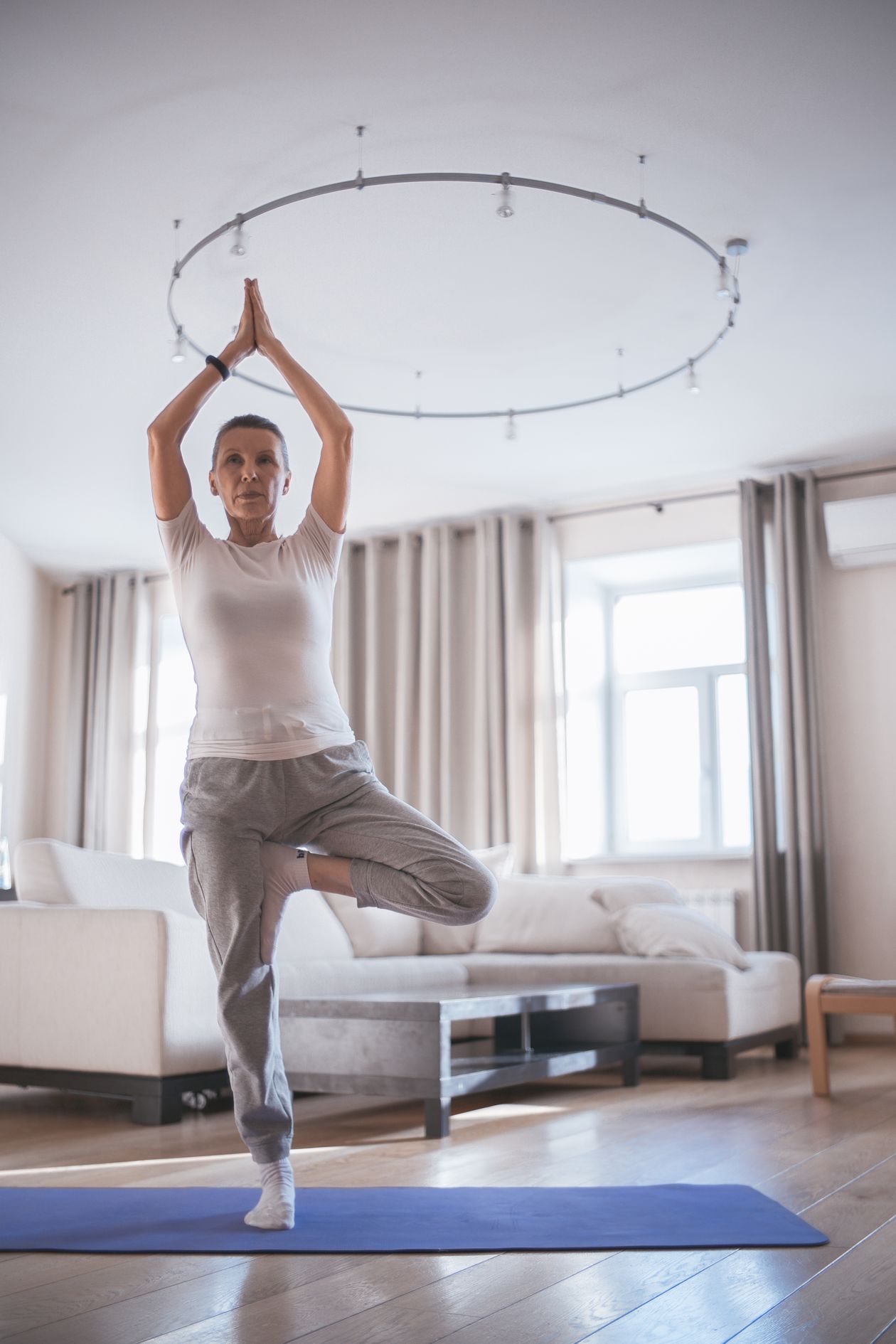
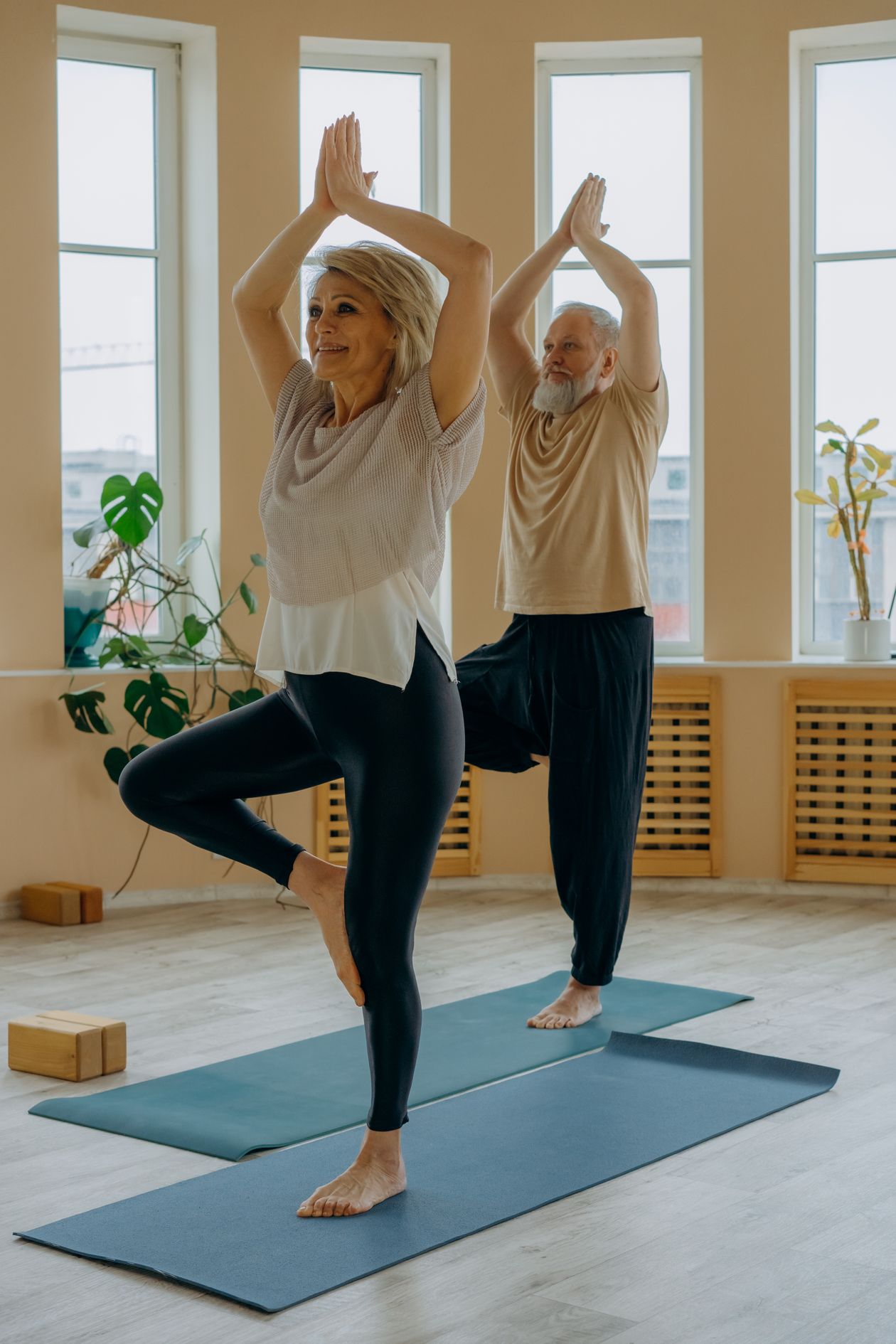
Yoga: particularly balancing postures (tree pose, warrior III, eagle pose at various levels of difficulty) provide balance challenge alongside flexibility and strength. Has good but not as extensive fall-prevention evidence as tai chi.
Frequency and Format
Daily short sessions outperform infrequent long sessions for balance training. The proprioceptive system adapts best with frequent, repeated stimulation. Five to ten minutes of balance exercises daily, integrated into existing activities (standing on one leg while brushing teeth, tandem standing while waiting for coffee), is more effective than a dedicated one-hour balance workout once a week.
The Cochrane review evidence suggests a minimum of 3 dedicated balance training sessions per week for fall prevention benefit. Combining this with daily incidental balance challenges provides the most comprehensive stimulus for adaptation.
Frequently Asked Questions
How do I know if my balance is declining?
Several simple self-tests: stand on one leg without support, eyes open, 30 seconds is normal for a healthy 40-year-old; less than 10 seconds suggests a deficit worth addressing. Try the same test with eyes closed, most people find this dramatically harder. Another indicator: do you need to hold onto something when putting on shoes or pants? That low-level balance task that used to be automatic is a real early indicator. Age-normative tables for single-leg stand time are available online for comparison.
Does yoga count as balance training?
Yes. Yoga includes significant balance challenge through its standing postures, and multiple trials confirm improvements in balance and reduced fall risk in older adults who practice regularly. It is not quite as extensively studied for fall prevention as tai chi, but the evidence is solid and yoga offers additional benefits (flexibility, core strength, stress reduction) that make it a worthwhile component of a fall prevention approach.
Can you improve balance at 70?
Yes, unambiguously. The Cochrane reviews of balance training include adults up to age 90+, and the effect sizes in the oldest groups are just as strong as in middle-aged adults. The proprioceptive system retains its training response throughout life. Starting earlier means less accumulated deficit, but starting at any age produces meaningful improvement within weeks.
How often should adults over 40 do balance training?
Three times per week for 10 to 20 minutes per session is the most-studied frequency for balance improvement in adults over 40. Balance training does not require a dedicated gym session, exercises such as single-leg standing, tandem stance, and slow step transfers can be integrated into daily routines. The key is progression: once standing on one leg for 30 seconds becomes easy, add challenge by closing the eyes, standing on a less stable surface, or adding a small arm movement. Falls risk reduction from balance training is well-documented and begins showing measurable improvement within 6 to 8 weeks of consistent practice.
What is the most effective balance exercise for adults over 40?
Single-leg standing is the most practical and well-evidenced balance exercise for adults over 40 because it isolates proprioceptive challenge without equipment. Start with 10 to 30 seconds per side with eyes open, then progress to eyes closed, then add a small arm movement. Tai chi has the strongest evidence base among structured programmes for fall prevention and balance improvement in older adults. Bosu ball and wobble board exercises increase surface instability and are appropriate as a progression once basic floor balance is solid, starting on an unstable surface before building single-leg floor balance often leads to compensatory strategy substitution rather than true balance improvement.
About the author: Richard Hale is an independent health writer focused on mobility, joint health, and active aging research. He is not a licensed medical professional. All content on VitalMove40 is for educational purposes only and is not a substitute for advice from a qualified healthcare provider.