

Last updated: July 14, 2026 | By Richard Hale
Posture does not deteriorate overnight. It shifts gradually over years and decades, shaped by the positions we repeat most, and for most adults over 40, that means hours of sitting, looking at screens, and carrying tension in the upper body.
By the time posture problems become painful, the patterns driving them have usually been present for a long time. The encouraging part is that posture is not fixed. Muscles and connective tissue adapt to the demands placed on them, which means they can be gradually redirected. This guide explains what posture changes occur after 40, why they happen, and what the most effective approaches are for addressing each one.
This content is for educational purposes only and is not medical advice. Back or neck pain that radiates into the limbs, is severe, or accompanies other neurological symptoms should be evaluated by a healthcare provider.

Table of Contents
- What Posture Changes Actually Occur After 40
- Forward Head Posture
- Rounded Shoulders and Upper Back
- Anterior Pelvic Tilt and Lower Back
- Daily Habits That Drive the Change
- What Actually Fixes Posture Problems
- Frequently Asked Questions
What Posture Changes Actually Occur After 40
The three most common postural patterns that develop or worsen after 40 are forward head posture, rounded shoulders with a forward-curved upper back (thoracic kyphosis), and anterior pelvic tilt. They often appear together, because each one is connected to the others through the body’s fascial and muscular chains.
These changes happen because of muscle imbalances: certain muscles become tight and overactive from being held in shortened positions, while opposing muscles become weak and underactive from rarely being used. Over time, the joints that those muscles cross begin to load asymmetrically, which is where chronic pain and restricted movement come from.
Forward Head Posture
Forward head posture is when the head sits in front of the shoulders rather than balanced over the spine. For every inch the head moves forward from neutral, the effective weight it places on the cervical spine roughly doubles. At two inches forward, a head that weighs ten to twelve pounds functionally loads the neck with twenty to twenty-four pounds.
Why It Develops
Screen use is the primary driver. Reading from a laptop or phone held below eye level, combined with sitting in a reclined position, consistently pulls the head forward. This shortens the suboccipital muscles at the base of the skull and the pectoral minor, while weakening the deep neck flexors and the lower trapezius.
What Helps
The most effective exercises for forward head posture are chin tucks (cervical retraction) (gently drawing the head back to stack over the shoulders) and deep neck flexor strengthening. Done consistently, these exercises re-train the muscles to hold the head in a neutral position. Adjusting screen height so the top of the monitor is at or just below eye level removes the ongoing stimulus for the posture to revert.
Rounded Shoulders and Upper Back
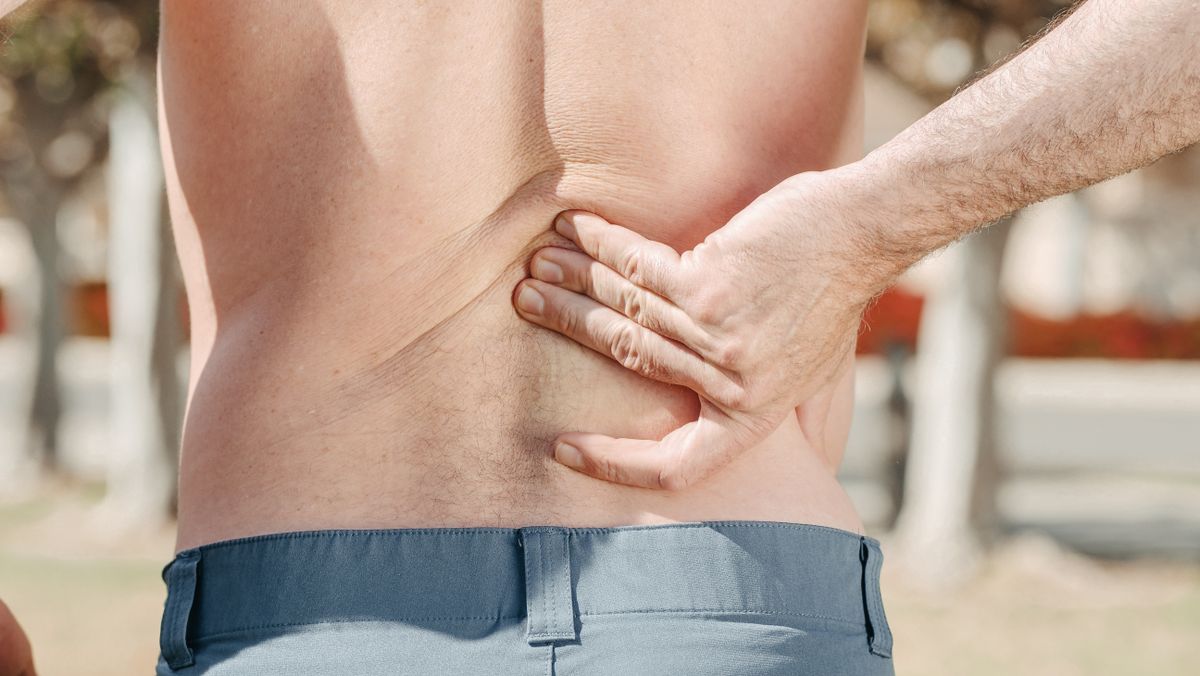
Rounded shoulders occur when the shoulder blades wing outward and the upper back rounds forward. The pectorals shorten, the thoracic spine loses extension mobility, and the muscles between the shoulder blades (the rhomboids and middle trapezius) become overstretched and weak.
Why It Develops
Years of desk work with the arms reaching forward, combined with common exercise patterns that favor pushing movements (bench press, push-ups) over pulling movements (rows, face pulls), create a systematic imbalance. The anterior shoulder muscles become dominant; the posterior shoulder and mid-back muscles become underactive.
What Helps
The ratio of pulling to pushing movements in exercise should be at least 2:1, and ideally closer to 3:1, for people with rounded shoulders. Band pull-aparts, face pulls, rows, and prone “W” exercises directly strengthen the muscles that pull the shoulder blades together. Pectoral stretching in a doorway addresses the shortened anterior chain.
Thoracic extension mobility work, using a foam roller under the mid-back or doing supported thoracic extensions over the edge of a chair, addresses the loss of extension in the upper spine that is central to this pattern.
Anterior Pelvic Tilt and Lower Back
Anterior pelvic tilt is when the front of the pelvis tips downward, increasing the lumbar curve. It produces a characteristic posture: the abdomen pushes forward, the lower back arches, and the glutes appear to protrude. The hip flexors and lumbar erectors are shortened and overactive; the glutes and abdominals are underactive and weak.
Why It Develops
Prolonged sitting is the primary cause. The hip flexors shorten from being held in a contracted position for hours. The glutes, which should counterbalance this, become inhibited from being compressed and unused during sitting. The cycle reinforces itself: the tighter the hip flexors, the harder it is for the glutes to activate properly.
What Helps
The combination of hip flexor stretching (kneeling lunge stretch with a posterior pelvic tuck) and glute activation work (bridges, single-leg deadlifts, clamshells) is consistently the most effective approach. Abdominal strengthening, particularly exercises that teach the pelvis to stay neutral under load (dead bugs, pallof press), completes the correction. See the full guide on hip flexor pain after 40 for the detailed stretching protocol.
Daily Habits That Drive the Change
Exercises alone will not fix postural problems if the habits that caused them remain unchanged. The daily behaviors that have the most impact:
- Screen height: raise the monitor or laptop to eye level. A screen below eye level pulls the head forward for every hour of use
- Chair and desk setup: hips and knees at roughly 90 degrees, feet flat on the floor, lower back supported without forcing an exaggerated arch
- Movement breaks: standing up and moving every 30 to 45 minutes disrupts the postural loading pattern more effectively than any ergonomic chair
- Phone use: holding the phone higher reduces neck load significantly. Looking down at a phone held at chest level for 30 minutes places the same load on the cervical spine as an entire hour of light resistance training
- Sleeping position: side sleeping with a pillow that keeps the head in neutral (not forced up or down) reduces the overnight postural load on the cervical spine
What Actually Fixes Posture Problems
The honest answer is: consistent, deliberate effort over months. Posture does not change from a week of stretching. It changes from months of changing movement patterns, strengthening weak muscles, and modifying the daily habits that drive the problem.
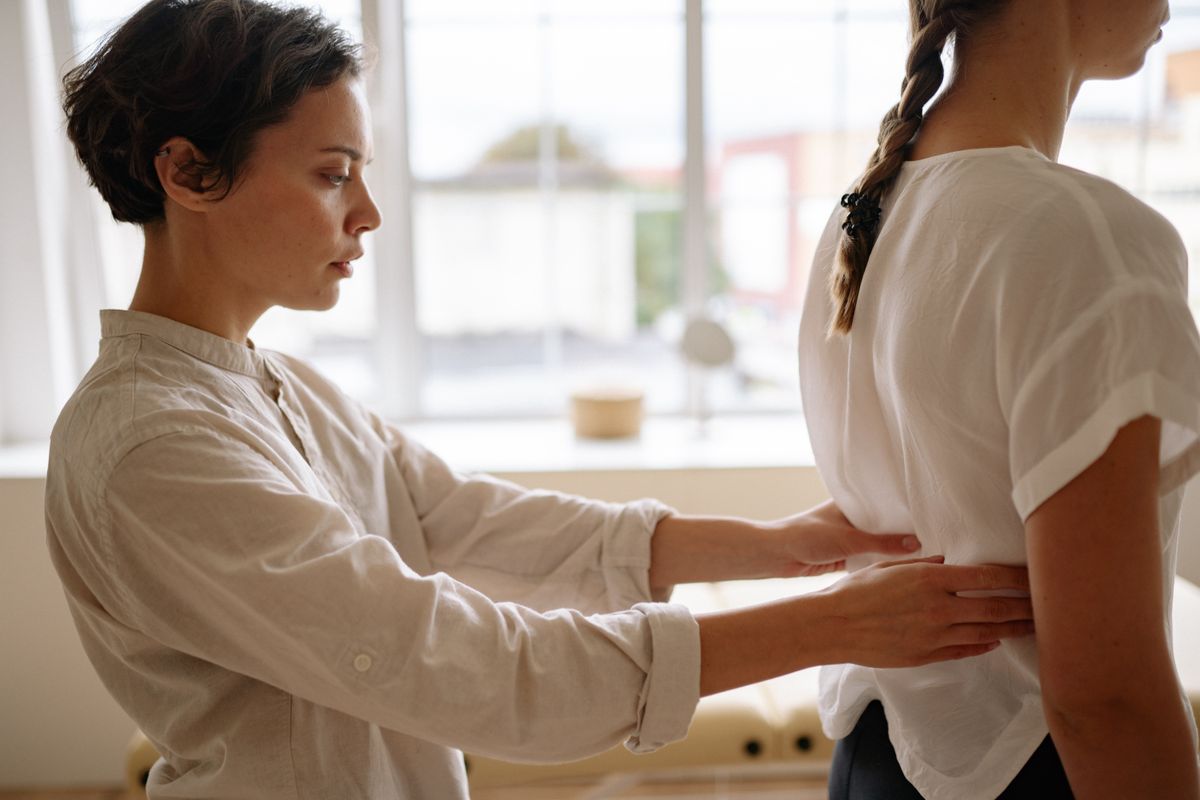
A practical starting routine for most postural problems:
- Daily: chin tucks (2 sets of 10), hip flexor stretch (2 minutes per side), glute bridges (2 sets of 15)
- 3x per week: thoracic extension on a foam roller, band pull-aparts or face pulls (3 sets of 15), rows in a pulling ratio of at least 2:1 vs pressing
- Every 30-45 minutes: stand up, walk briefly, reset posture consciously
Most people notice reduced tension and improved range of motion within two to four weeks. Structural postural change (the kind that holds without constant conscious effort) takes three to six months of consistent work.
Frequently Asked Questions
Can posture be corrected after 40?
Yes. The muscle imbalances and soft tissue adaptations that drive most postural problems are reversible at any age. Adults in their 50s and 60s show meaningful postural improvement through consistent exercise and movement habit changes. The process takes longer than it would have at 25, but the same mechanisms apply.
Does a posture corrector brace actually work?
Posture braces provide proprioceptive feedback, they remind you when you are rounding. Used as a training tool for brief periods, they can help build body awareness. Used as a passive support worn all day, they can actually weaken the postural muscles over time by doing the work for them. Short-term use for awareness, combined with active strengthening, is the appropriate approach.
Is back pain always caused by poor posture?
Not always, but postural loading patterns are a significant contributing factor in most chronic lower back pain and neck pain in adults over 40. Acute injuries (herniated discs, fractures) have different drivers. For persistent, non-specific back or neck pain, addressing the underlying postural patterns is part of most effective treatment approaches.
How long does it take to correct forward head posture?
With daily chin tuck exercises and adjustments to screen height, most people notice reduced neck tension within two to four weeks. Meaningful positional change (where the head default position is more neutral) takes three to six months of consistent effort. The more years the pattern has been established, the longer the correction takes.
Should I see a physiotherapist for posture problems?
For significant pain or restricted movement, yes. A physiotherapist can assess which specific muscles are tight and weak, identify the pattern driving your symptoms, and provide a targeted program. For general postural improvement without significant pain, the exercises and habits described in this guide are a reasonable starting point.
About the author: Richard Hale is an independent health writer focused on mobility, joint health, and active aging research. He is not a licensed medical professional. All content on VitalMove40 is for educational purposes only and is not a substitute for advice from a qualified healthcare provider.