Last updated: September 10, 2026 | By Richard Hale
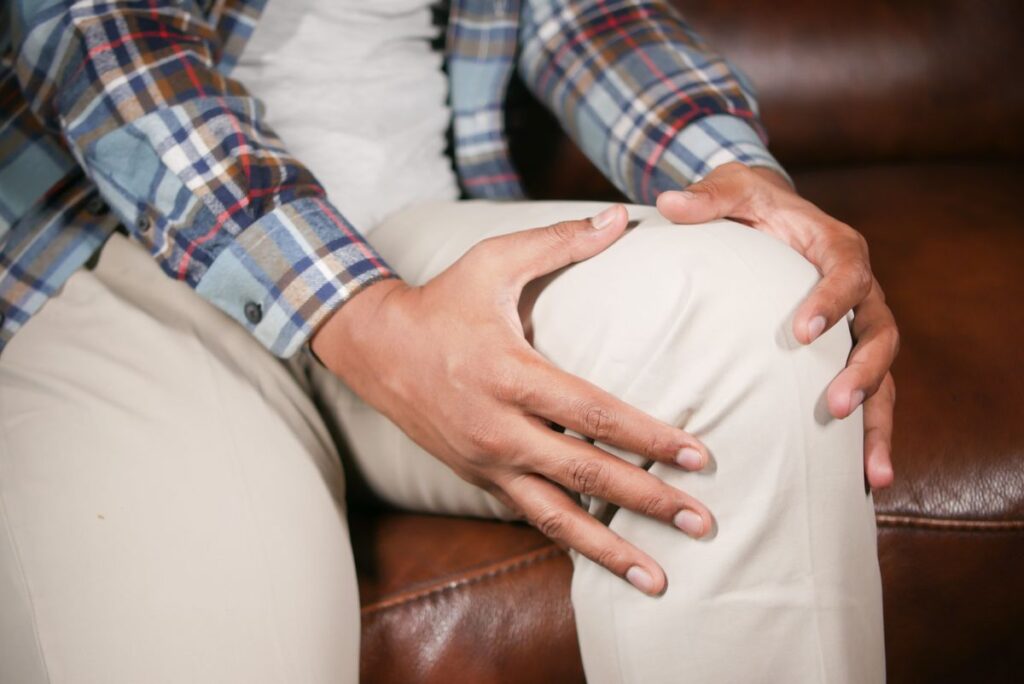
Knee pain on stairs is one of the most common complaints among adults in their 40s and 50s. Flat ground feels fine, but the moment you climb a flight of stairs, something protests. Sometimes it is a dull ache under the kneecap. Sometimes it is a sharper pain that makes you grip the railing.
The good news: stair-related knee pain is rarely a sign of anything irreversible. Most of the time, it points to one of a small number of identifiable causes, most of which respond well to the right approach. This article explains why stairs are harder on knees than flat ground, what the most common causes are after 40, and what actually helps.
This content is for educational purposes only and is not medical advice. Knee pain that is severe, sudden, or accompanied by significant swelling warrants evaluation by a healthcare provider.
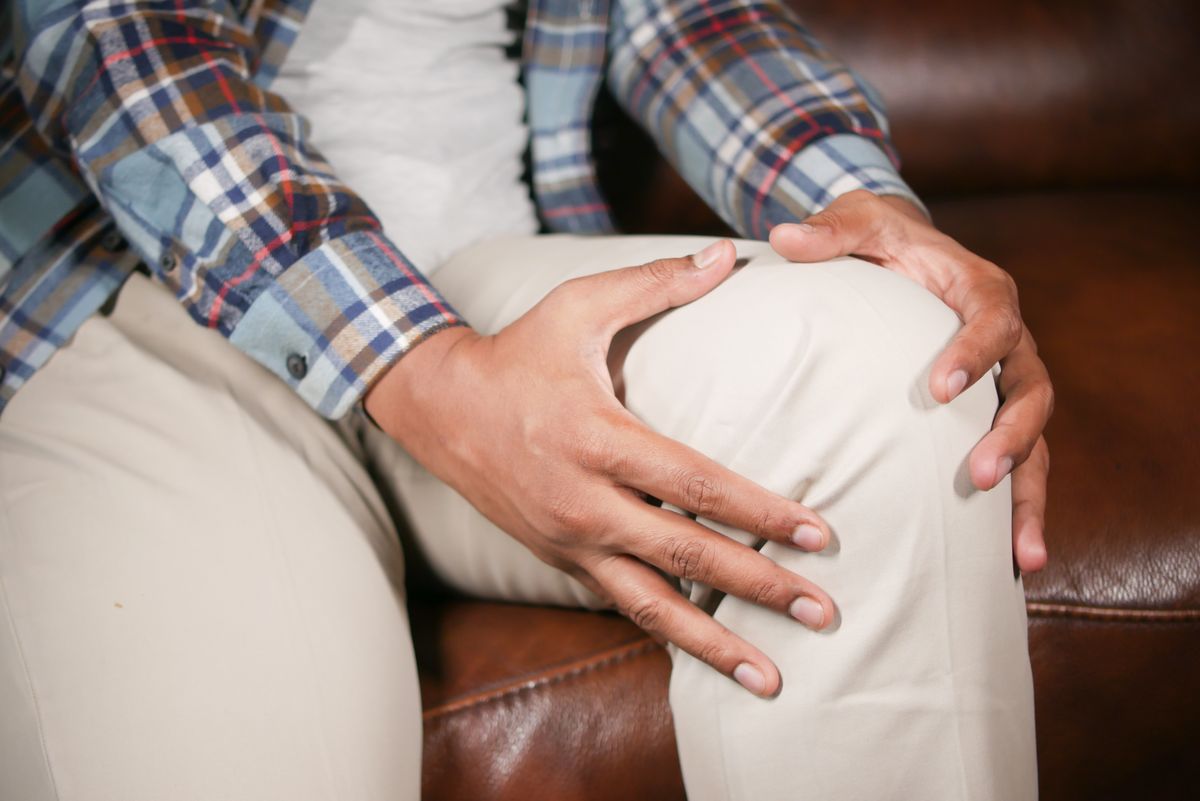
Table of Contents
- Why Stairs Are Harder on Knees Than Flat Ground
- The Most Common Causes After 40
- How to Identify Which Cause You Have
- What Actually Helps
- When to See a Doctor
- Frequently Asked Questions
Why Stairs Are Harder on Knees Than Flat Ground
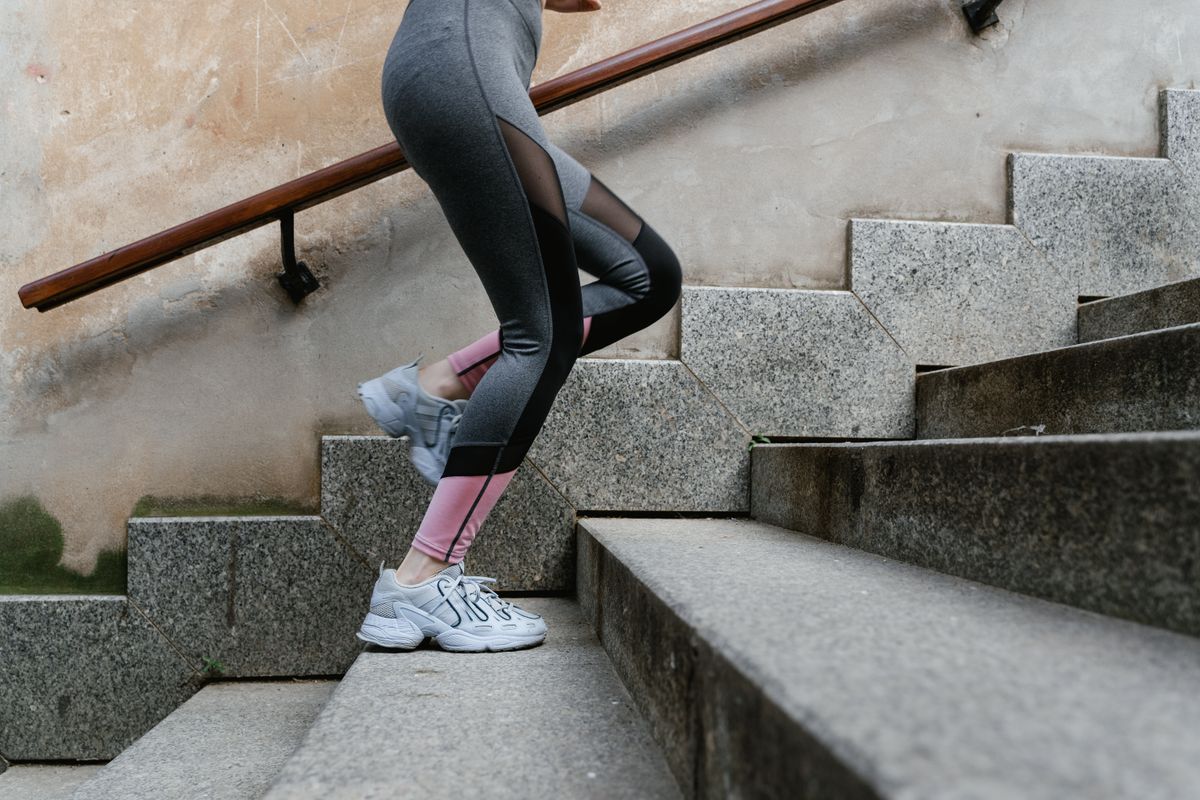
Walking on a flat surface puts roughly 1.5 times your body weight through each knee with each step. Climbing stairs increases that to somewhere between 3 and 4 times your body weight, depending on the step height and your pace.
This happens because stair climbing requires a deeper knee bend. The further the knee bends, the more force the quadriceps must generate to control the movement, and the more load passes through the patellofemoral joint, which is the joint between the kneecap and the thighbone. If there is any underlying weakness, inflammation, or structural change in that area, stairs reveal it in a way that flat ground does not.
The Most Common Causes After 40
Most stair-related knee pain in adults over 40 comes from one of four places.
Patellofemoral Pain Syndrome
This is pain at the front of the knee, under or around the kneecap, caused by the kneecap tracking slightly off its optimal path as the knee bends and straightens. It is sometimes called runner’s knee, though it is equally common in people who do not run at all.
After 40, patellofemoral issues often develop or worsen due to muscle imbalances, particularly weakness in the hip abductors and quadriceps, which affects how the kneecap moves. Stairs, squatting, and sitting for long periods with the knee bent are the activities that typically aggravate it most.
Early Osteoarthritis
Osteoarthritis is the gradual wearing of cartilage in the knee joint. It does not cause pain for most people in its early stages on flat ground, but the increased load on stairs can bring discomfort to the surface. According to the National Institute of Arthritis and Musculoskeletal and Skin Diseases, osteoarthritis affects roughly 30 percent of adults over 45.
Pain from early osteoarthritis on stairs tends to be a diffuse ache rather than a sharp point, and it is often worse going down than going up, because descending stairs requires the quadriceps to work eccentrically to control the load.
Weak Muscles Around the Knee
The quadriceps, hamstrings, and hip muscles share the load on the knee. When these muscles are weak, especially after a period of reduced activity, the joint itself takes on more of the load it would normally share with the surrounding muscle. This can produce stair pain even in knees with no structural damage.
Muscle weakness as a cause of stair pain is more common after 40 than most people realize, and it is also among the most treatable causes.
Patellar Tendinitis
The patellar tendon connects the kneecap to the shinbone. Overuse or a sudden increase in activity can irritate this tendon, producing pain just below the kneecap that worsens with stairs, jumping, and kneeling. Patellar tendinitis tends to be more localized and sharper than patellofemoral pain or arthritis.
How to Identify Which Cause You Have
You cannot reliably self-diagnose knee pain, and for anything significant, a clinical assessment is the right approach. That said, the location and character of the pain offers useful clues.
- Pain directly under or around the kneecap, worse going up, and associated with prolonged sitting: points toward patellofemoral syndrome
- Diffuse ache inside the knee, worse going down than up, with some morning stiffness: consistent with osteoarthritis
- General knee discomfort that improves as you warm up and worsens after rest, with no clear point of pain: often muscle weakness-related
- Sharp pain just below the kneecap, tender to touch on the tendon itself: suggests patellar tendinitis
These patterns overlap. A combination of causes is common, particularly after 40.
What Actually Helps
The approach depends on the cause, but several strategies benefit most of the conditions above.
Strengthen the Quadriceps and Hips
This is the most broadly effective intervention for knee pain on stairs, regardless of the underlying cause. Stronger muscles reduce the load the joint itself must bear. The exercises with the most evidence behind them are:
- Straight leg raises: build quad strength without bending the knee significantly
- Terminal knee extensions: strengthen the last few degrees of knee straightening, which is where the quad matters most for stair control
- Step-downs: controlled lowering on one leg, building the eccentric quad strength needed for descending stairs safely
- Hip abductor exercises (clamshells, side-lying leg raises), improve patellar tracking by strengthening the hip muscles that control how the knee aligns
Start with low load and high control. Pain that worsens during or after an exercise is a signal to reduce range of motion or load, not to push through.
Modify Load in the Short Term
If stair climbing is causing significant pain, reducing stair frequency temporarily while building muscle is appropriate. This is not permanent avoidance. It is load management: reducing stress on the joint while improving its capacity to handle that stress. Using a railing for support, leading with the stronger leg going up and the weaker leg going down, and shortening step height all reduce knee load during this period.
Address Technique and Footwear
Common technique errors on stairs that increase knee stress include leaning forward excessively, letting the knee track inward (knee collapse), and using a very short stride that puts all load on the knee rather than sharing it with the hip. Conscious attention to keeping the knee in line with the second toe and driving through the hip rather than just the knee helps some people immediately.
Worn-out footwear with no lateral support also contributes to knee collapse. Footwear with appropriate support for your foot type makes a difference on stairs, particularly if you are dealing with patellofemoral issues.
Heat for Stiffness, Cold for Acute Flares
For chronic stiffness and the general ache associated with early arthritis, heat before stair activity can reduce discomfort by loosening the joint. For acute pain following overexertion, cold in the first 24 to 48 hours can reduce inflammation. The two are not interchangeable: see the detailed guide on heat vs ice for joint pain.
Weight
Each extra pound of body weight adds roughly four pounds of force on the knee during stair climbing. Weight reduction, where relevant, is one of the highest-leverage changes for stair-related knee pain because its effects are felt on every single step.
When to See a Doctor
The approaches above are appropriate for the common, gradual causes of stair-related knee pain. See a healthcare provider if:
- The pain came on suddenly after a specific incident (a step, a twist, a fall)
- The knee is visibly swollen, warm, or red
- You cannot straighten the knee fully or it locks in position
- The pain is severe enough to significantly limit daily activity
- Pain is not improving after four to six weeks of consistent self-management
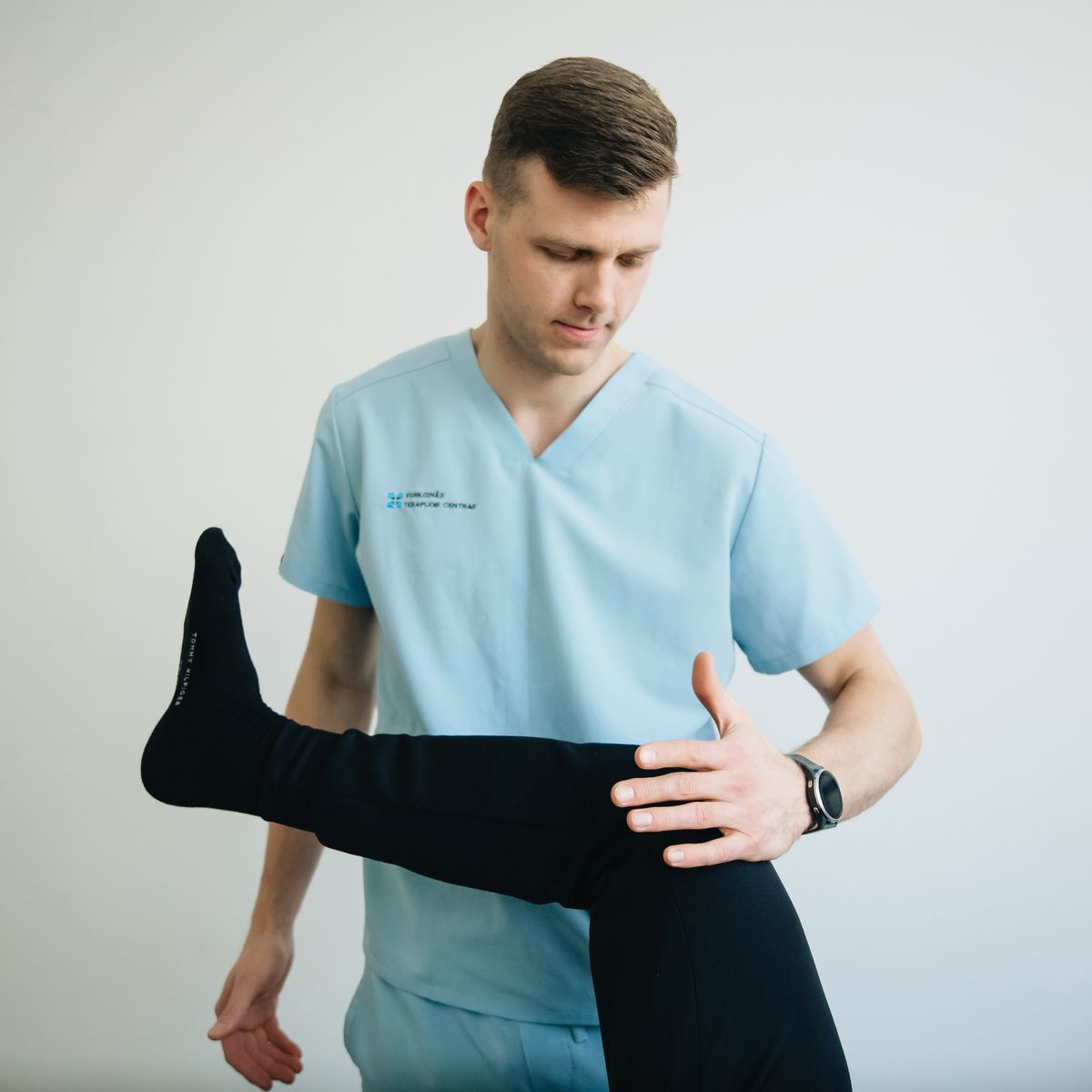
A physiotherapist can assess knee mechanics, identify the specific pattern, and provide a targeted exercise program. For significant structural findings, an orthopedic assessment may follow.
For short-term comfort on a sore knee, a menthol massage gel can help take the edge off. Our Kinzeno massage gel review explains where it fits and where it does not.
Frequently Asked Questions
Is knee pain on stairs a sign of arthritis?
It can be, but it is not the only cause. Patellofemoral syndrome, muscle weakness, and tendinitis are equally common causes of stair pain in adults over 40 and do not involve significant cartilage damage. A clinical assessment is the most reliable way to distinguish between them.
Why does my knee hurt more going down stairs than up?
Going down stairs requires the quadriceps to work eccentrically (contracting while lengthening) to control your descent. This type of muscle work places more stress on the patellofemoral joint than concentric contraction going up. Osteoarthritis and quad weakness both tend to produce more pain on the descent for this reason.
Should I avoid stairs if my knees hurt?
Partial avoidance while building strength is reasonable for the short term. Permanent avoidance is not helpful and tends to worsen the underlying muscle weakness. The goal is to build capacity so that stairs become manageable, not to avoid the activity indefinitely.
Can stretching help knee pain on stairs?
Stretching alone is generally less effective than strengthening for stair-related knee pain. Tight hip flexors and calves do contribute to knee mechanics, and addressing them through stretching can help, but building quad and hip strength is the primary driver of improvement for most people.
How long does it take for knee pain on stairs to improve?
With consistent strengthening work, most people with muscle weakness or patellofemoral syndrome notice meaningful improvement within four to eight weeks. Osteoarthritis-related stair pain improves more gradually, though regular exercise consistently reduces symptoms over months of sustained effort.
About the author: Richard Hale is an independent health writer focused on mobility, joint health, and active aging research. He is not a licensed medical professional. All content on VitalMove40 is for educational purposes only and is not a substitute for advice from a qualified healthcare provider.