Last updated: November 5, 2026 | By Richard Hale
This content is educational and is not medical advice. Wearable health readings are wellness information, not a diagnosis.
The Hume Band 2.0 beats a Garmin for adults over 40 who want to track their health: it shows blood pressure trends with no cuff, runs up to 14 days per charge and costs $249 with no subscription. A Garmin is a training computer for your wrist. The Hume Band 2.0 is a screenless health tracker that watches your recovery, sleep and blood pressure trends around the clock, which is what staying healthy after 40 calls for.
Short answer: for health after 40, the Hume Band 2.0 wins. It costs $249 with no subscription, runs up to 14 days per charge, tracks sleep, recovery and HRV, and shows blood pressure trends in the free app with no cuff. A Garmin vívoactive 6 costs $299.99, runs up to 11 days and needs a $199.99 cuff for blood pressure.
Hume Band 2.0: $249, no subscription. Our Hume Band 2.0 review has the full breakdown and the link to the official Hume store, where the 45-day refund applies.
Price note: the price when we wrote this was $249. Hume runs promotions often, so the amount you see today may be different. Check the current price on the official store through the button below.
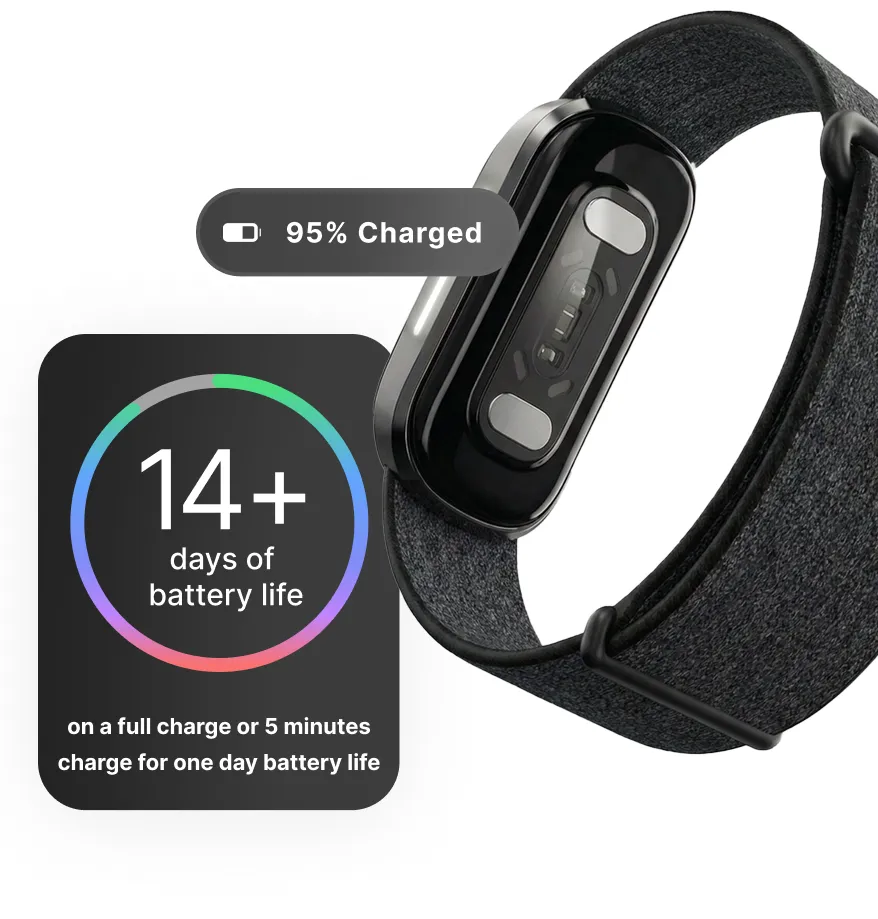
Table of Contents
- How Does the Hume Band 2.0 Compare With Garmin?
- Which Garmin Should You Compare?
- Which Tracks Blood Pressure Without a Cuff?
- Which Is Better for Sleep and Recovery?
- Which Lasts Longer and Costs Less?
- Is the Hume Band 2.0 a Good Garmin Alternative Without a Screen?
- Which Should You Buy After 40?
- Frequently Asked Questions
- What Should You Know Before You Order?
How Does the Hume Band 2.0 Compare With Garmin?
The Hume Band 2.0 comes out ahead of both Garmin options on battery, blood pressure and total cost for 24/7 health tracking. Hume figures come from Hume’s official Band page and Garmin figures from Garmin’s US site, both checked in October 2026.
| Hume Band 2.0 | Garmin vívoactive 6 | Garmin Index Sleep Monitor | |
|---|---|---|---|
| Cost for 24/7 health tracking | $249, one device | $299.99, or $499.98 with the Index BPM cuff for blood pressure | $169.99 for nights; $469.98 with a vívoactive 6 for the day |
| Type | Screenless wrist band, worn day and night | Smartwatch with a screen | Upper-arm band, sleep only |
| Battery | Up to 14 days | Up to 11 days (5 with always-on display) | Up to 7 nights |
| Blood pressure | Trends in the free app, no cuff | Needs the Index BPM cuff ($199.99) | Sleep tracking only |
| Subscription | None required, free Hume Health app | Connect+ add-on, $6.99/month | None required |
Which Garmin Should You Compare With the Hume Band 2.0?
The Hume Band 2.0 has no direct twin in Garmin’s lineup, so two Garmin models cover the comparison:
- Garmin vívoactive 6 is Garmin’s mainstream health and fitness smartwatch, the model most people mean when they say “a Garmin” for everyday health.
- Garmin Index Sleep Monitor is Garmin’s screenless band, worn on the upper arm and only for sleep, so you still need a watch for the daytime.
The Hume Band 2.0 does both jobs in one device: screenless, on your wrist, day and night.
Which Tracks Blood Pressure Without a Cuff: Hume Band or Garmin?
The Hume Band 2.0 is the one that tracks blood pressure without a cuff, and for adults over 40 that is the biggest practical difference. It shows blood pressure trends in the free Hume Health app, so you can see how your numbers shift across days, sleep and habits without strapping anything to your arm.
Garmin’s watches do not estimate blood pressure. To track it with Garmin, you buy the Index BPM, a separate cuff monitor that costs $199.99 on Garmin’s US site. That is a second device, and $499.98 in total with a vívoactive 6.
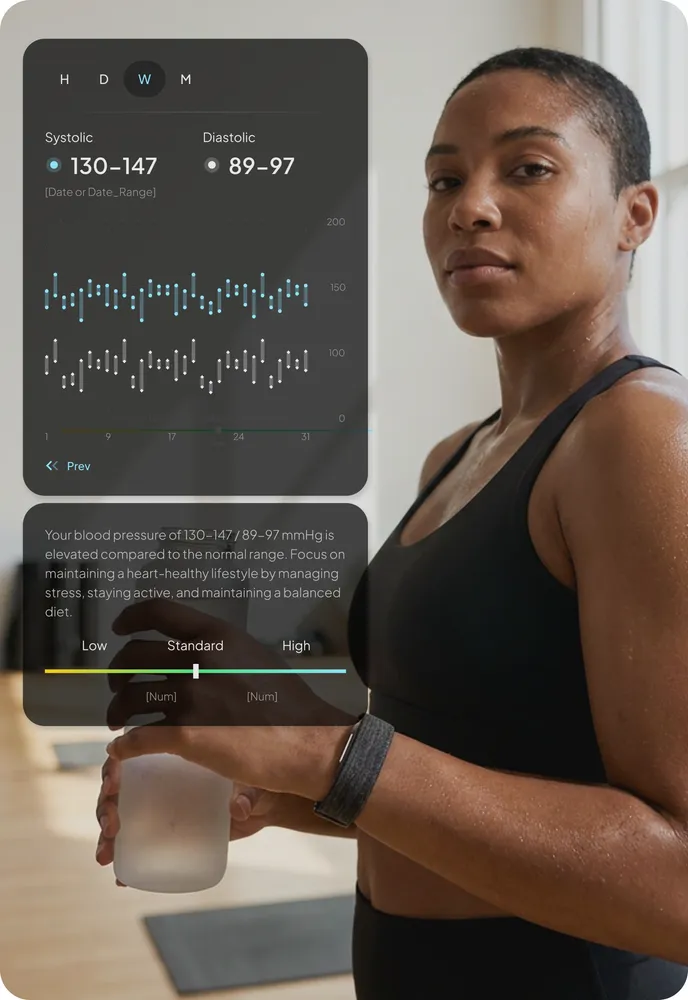
For how the feature works, see does the Hume Band track blood pressure.
Which Is Better for Sleep and Recovery: Hume Band or Garmin?
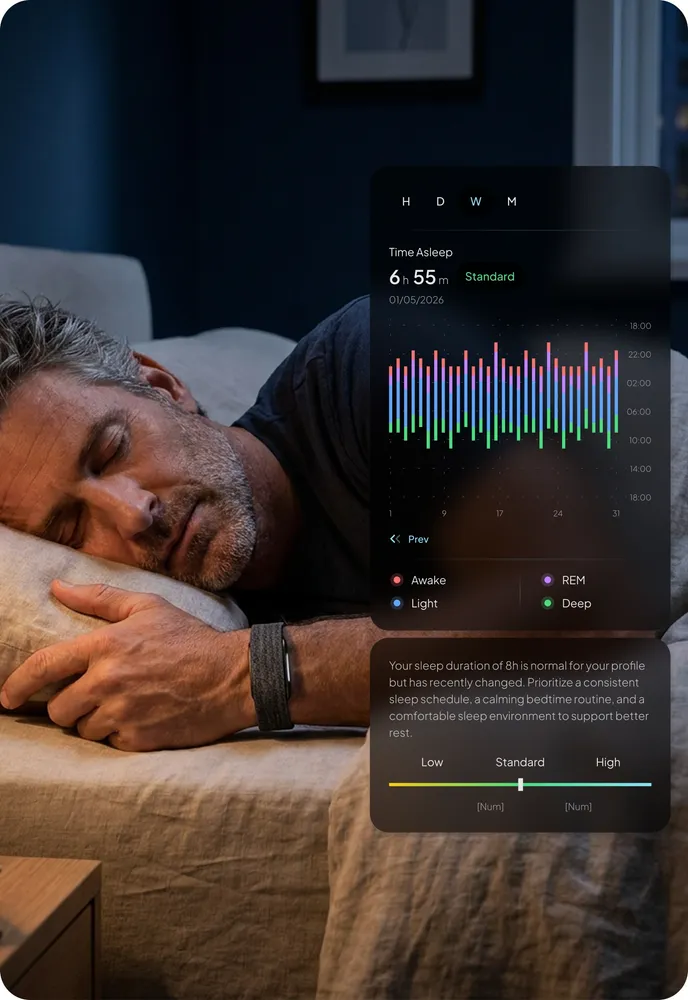
The Hume Band 2.0 is better for sleep and recovery because it is designed around them. A band with no screen is easy to forget you are wearing at night, and it tracks sleep stages, HRV, resting heart rate, blood oxygen and skin temperature, then turns them into recovery and health scores in the free app.
That makes the Band a recovery tracker without a subscription: the scores live in the free Hume Health app. A Garmin tracks sleep from a watch with a screen on your wrist all night, and Garmin’s own answer for people who dislike sleeping in a watch is the Index Sleep Monitor, a second device at $169.99.
Which Lasts Longer and Costs Less: Hume Band or Garmin?
The Hume Band 2.0 lasts longer and costs less: up to 14 days per charge for $249, against up to 11 days for the $299.99 Garmin vívoactive 6.
- Battery: the Hume Band 2.0 runs up to 14 days per charge. The vívoactive 6 runs up to 11 days in smartwatch mode, or about 5 with the always-on display.
- Comfort: the Band is a soft, screenless strap. No buzzing screen, no notifications to pull your attention.
- Cost: $249 for the Band, against $299.99 for the vívoactive 6, or $499.98 for the vívoactive 6 plus the Index BPM if you want blood pressure from Garmin.
- Subscription: the Band needs none, and the Hume Health app is free for Band owners. Garmin’s Connect+ is a $6.99 monthly add-on.
Is the Hume Band 2.0 a Good Garmin Alternative Without a Screen?
Yes. The Hume Band 2.0 is a Garmin alternative without a screen that tracks sleep, recovery, HRV, steps and activity around the clock and adds cuff-free blood pressure trends.
With no screen, there is nothing to buzz, glow or pull you into notifications, so the Band is easy to wear through the workday and overnight. You open the free app when it suits you and see your trends in one place.
A Garmin puts a screen and phone notifications on your wrist, which suits training sessions. For staying healthy after 40, the numbers that matter most are the ones the Band tracks day and night: sleep, recovery, HRV and blood pressure trends.
Hume Band 2.0 Review Verdict: Which Should You Buy After 40?
Buy the Hume Band 2.0. It gives you blood pressure trends, sleep, recovery and HRV in one comfortable band that lasts up to 14 days per charge, for $249 with no subscription. A Garmin vívoactive 6 costs $299.99 and needs a $199.99 cuff to add blood pressure. For health tracking after 40, the Band does more for less.
Ready to choose the Hume Band 2.0? Our Hume Band 2.0 review has the full breakdown, the $249 price and the link to the official Hume store, where the 45-day refund applies.
Price note: the price when we wrote this was $249. Hume runs promotions often, so the amount you see today may be different. Check the current price on the official store through the button below.
Frequently Asked Questions
Is the Hume Band better than a Garmin?
Yes, for everyday health tracking after 40. The Hume Band 2.0 adds cuff-free blood pressure trends, lasts up to 14 days per charge and costs $249 with no subscription, against $299.99 and up to 11 days for the Garmin vívoactive 6.
Is the Hume Band 2.0 worth it?
Yes. For $249 with no subscription, the Hume Band 2.0 tracks sleep, recovery, HRV, resting heart rate, blood oxygen, skin temperature and blood pressure trends from one screenless band, and the official Hume store backs it with a 45-day refund. Our Hume Band 2.0 review has the full breakdown.
Does Garmin track blood pressure?
Garmin’s watches do not estimate blood pressure; Garmin sells a separate cuff, the Index BPM, for $199.99 on its US site. The Hume Band 2.0 shows blood pressure trends in its free app with no cuff.
What is a good Garmin alternative without a screen?
The Hume Band 2.0 is a screenless wrist band worn day and night that tracks sleep, recovery, HRV and activity and shows blood pressure trends, for $249 with no subscription. Garmin’s own screenless option, the Index Sleep Monitor, is worn on the upper arm for sleep only.
Is there a recovery tracker without a subscription?
Yes. The Hume Band 2.0 turns sleep stages, HRV, resting heart rate, blood oxygen and skin temperature into recovery and health scores in the free Hume Health app. You pay $249 once, Premium is optional, and Garmin’s Connect+ add-on costs $6.99 a month.
Is the Hume Band better than the Garmin Index Sleep Monitor?
Yes. The Hume Band 2.0 tracks sleep and your whole day from the wrist, adds blood pressure trends and lasts up to 14 days. The Index Sleep Monitor is worn on the upper arm for sleep only and lasts up to 7 nights.
Does the Hume Band work with Garmin?
The Hume Health app connects with Apple Health and Google Fit. Hume does not list a direct Garmin Connect integration, so many people use Apple Health or Google Fit as the hub for data from different devices.
Does the Hume Band have GPS?
The Hume Band 2.0 counts steps and activity automatically. Hume does not list built-in GPS for it; the Band puts its focus on sleep, recovery, HRV and blood pressure trends, with up to 14 days per charge.
What Should You Know Before You Order the Hume Band 2.0?
Two things: the Band’s blood pressure readings are trends, and the 45-day refund applies when you buy from the official Hume store.
- Blood pressure: Hume presents the Band’s blood pressure readings as trends and insights, not a diagnosis. Treatment decisions stay with your doctor.
- Where to buy: order from the official Hume store, linked in our Hume Band 2.0 review, so the 45-day refund covers your order.
About the Author
Richard Hale writes about mobility, recovery, and evidence-based wellness strategies for adults over 40 at VitalMove40, with a focus on at-home health tracking devices. He is an independent health writer, not a licensed medical professional. Content is educational and not a substitute for advice from a qualified healthcare provider.