Disclosure: VitalMove40 earns a commission if you buy through links on our site, at no extra cost to you. See our full affiliate disclosure.
Last updated: November 5, 2026 | By Richard Hale
This content is for educational purposes only and is not medical advice.
The Hume Band 2.0 is the screenless fitness tracker to choose over the Google Fitbit Air if you are over 40 and want a daily blood pressure trend without a monthly bill. It costs $249 once, keeps its core features in the free Hume Health app and runs up to 14 days per charge. Here is the full Hume Band vs Fitbit Air comparison, with every figure checked in October 2026.
Quick answer: the Hume Band 2.0 wins. It shows Blood Pressure Insights today in the free app, lasts up to 14 days per charge, is rated IP68 and has no required subscription. On the Fitbit Air, Google lists blood pressure trends as a Google Health Premium feature still “coming later 2026”, at $9.99 a month after the included 3 months.
In one line: the Hume Band 2.0 is a fitness tracker without a subscription. You pay $249 once and every core feature stays yours.
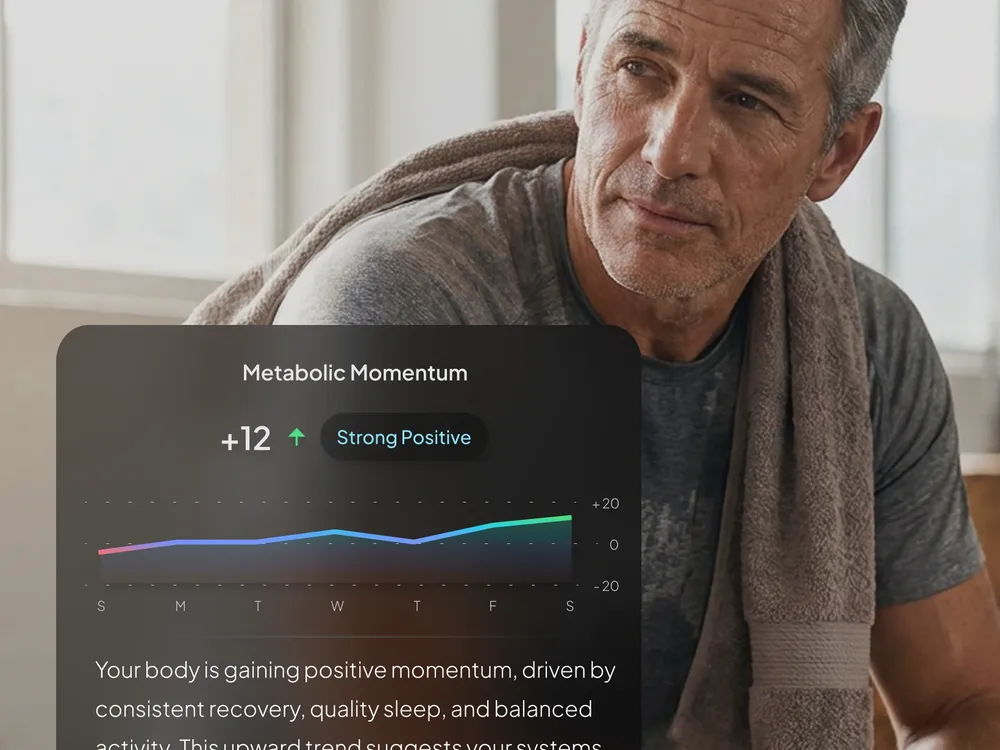
Table of Contents
- How Do the Hume Band 2.0 and Fitbit Air Compare?
- Which Band Tracks Blood Pressure Today?
- Which Costs Less Over 3 Years?
- Which Has Longer Battery Life?
- Which Is Better for Showers and Swimming?
- Hume Band 2.0 Review: What Does $249 Get You?
- Which Should You Buy After 40?
- Hume Band vs Fitbit Air: FAQ
How Do the Hume Band 2.0 and Fitbit Air Compare?
The Hume Band 2.0 leads on blood pressure, battery, water rating, phone support and 3-year cost. Fitbit Air figures come from the Google Store product and tech specs pages, and Hume figures from Hume’s own pages, all checked in October 2026.
| Hume Band 2.0 | Google Fitbit Air | |
|---|---|---|
| Blood pressure trends | Yes, Blood Pressure Insights in the free app | Listed as “coming later 2026”, Premium feature |
| Cost over 3 years | $249, paid once | About $430 ($99.99 band plus Premium at $9.99/month after 3 months) |
| Subscription | None required. Optional Premium from $8.99/month | 3 months of Google Health Premium included, then $9.99/month |
| Battery | Up to 14 days | Up to 7 days |
| Sleep, HRV, SpO2, skin temperature | Yes, all in the free app | Yes, with coaching and advanced health features in Premium |
| Water rating | IP68 | Water resistant to 50 m, by a surface coating Google says is not permanent |
| Phones | iPhone (iOS 14+) and Android 8.0+ | iPhone (iOS 16.4+) and Android 11+, Google Account required |
Which Band Tracks Blood Pressure Today?
The Hume Band 2.0 tracks blood pressure trends today, and the Fitbit Air does not. For most readers over 40, this is the feature that decides the comparison.
Blood Pressure Insights on the Hume Band 2.0 is daily monitoring with no cuff, shown as a trend next to your sleep, stress and recovery. It is part of the free Hume Health app, and Hume states that no subscription is required to use the band or to access your data.
On the Fitbit Air page, Google lists “blood pressure and insulin resistance trends” under a banner that reads “Coming Later 2026”. In Google’s own feature table, blood pressure trends sit under Advanced Health Guardian features, which are part of Google Health Premium. So the Fitbit Air shows no blood pressure trend today, and when the feature arrives, it is planned as a paid one.
Our guide on whether the Hume Band tracks blood pressure shows how to read the daily trend and get the most out of it.
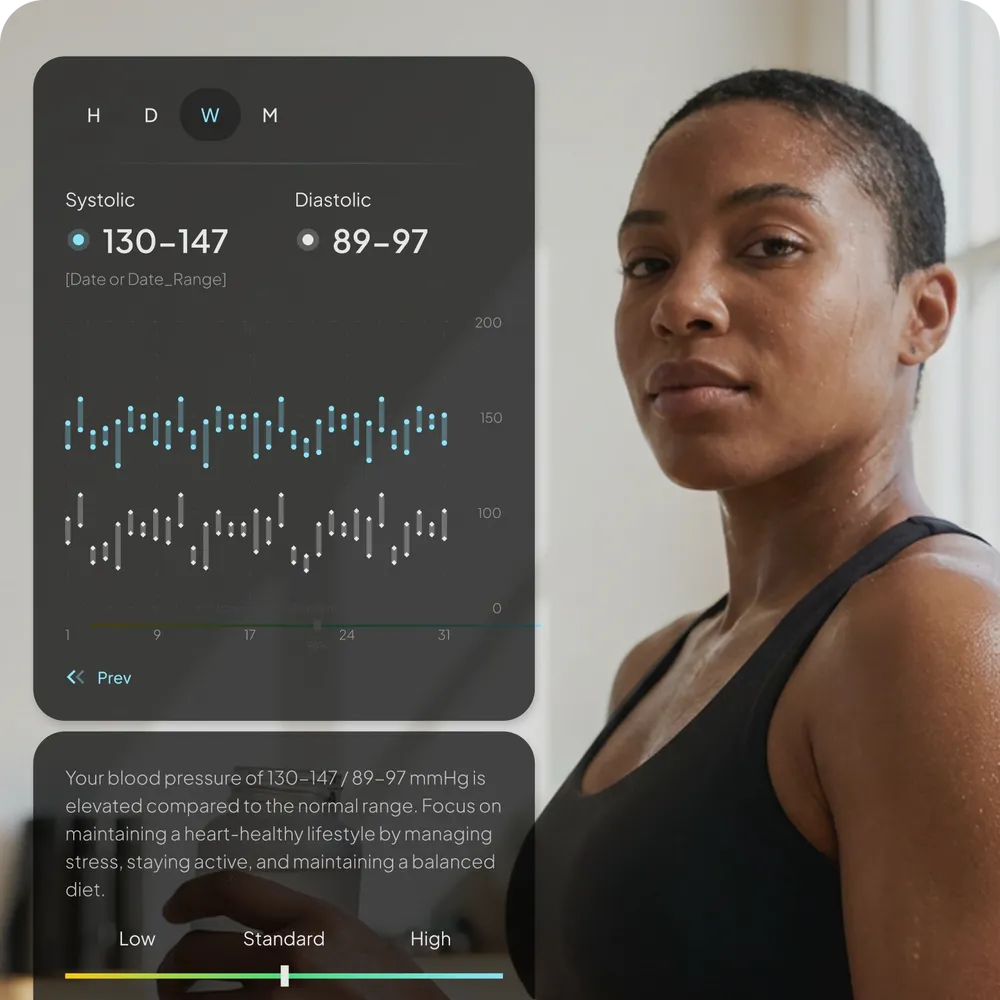
Want blood pressure trends without a monthly bill? Our Hume Band 2.0 review has the full breakdown of every feature. The official Hume store has the $249 price and 45 days to try it.
Price note: the price when we wrote this was $249. Hume runs promotions often, so the amount you see today may be different. Check the current price on the official store through the button below.
Which Costs Less Over 3 Years?
The Hume Band 2.0 costs less over 3 years: $249 once, against about $430 for a Fitbit Air kept on Google Health Premium. Here is the math, with prices checked in October 2026.
- Hume Band 2.0: $249, paid once. Blood pressure trends, sleep, HRV and recovery are in the free app. Total over 3 years: $249.
- Fitbit Air: $99.99 for the band. Every Air includes 3 months of Google Health Premium, and Google’s terms say it then renews automatically at $9.99 a month. Over 3 years that is 33 paid months, or $329.67, for a total of about $430.
Drop Premium and the Fitbit Air keeps basic tracking only, with no blood pressure trend at all. With the Hume Band 2.0, the feature you bought it for stays in the free app for good.
Which Has Longer Battery Life?
The Hume Band 2.0 has twice the battery life: up to 14 days per charge, against up to 7 days for the Fitbit Air. That means about two charges a month instead of four or more, and Google even recommends charging the Air every few days.
Long battery life keeps your data complete. Every charge is a chance to leave the band on the counter overnight, and overnight is when resting heart rate, HRV and sleep stages are measured. Fewer charges mean fewer gaps in the data that tells you how you are recovering.
Which Is Better for Showers and Swimming?
The Hume Band 2.0 is the better pick for water: it is rated IP68, and Hume says it is made for showers, swimming and workouts. That covers daily life after 40: the shower, the pool and the sweaty workout.
Google lists the Fitbit Air as water resistant up to 50 meters, and its fine print says that resistance comes from a surface coating that is not permanent, may wear off over time and is not guaranteed for the life of the product. See is the Hume Band waterproof for what IP68 means in practice.
Hume Band 2.0 Review: What Does $249 Get You?
For $249 paid once, the Hume Band 2.0 gives you a screenless fitness tracker with blood pressure, sleep and recovery data in one free app. Here is what is included:
- Blood Pressure Insights. A daily cuffless trend shown next to your sleep, stress and recovery.
- Sleep and recovery. Sleep, HRV, SpO2 and skin temperature, all in the free app.
- Up to 14 days per charge. About two charges a month.
- IP68. Made for showers, swimming and workouts.
- Wide phone support. iPhone (iOS 14+) and Android 8.0+.
- Pay once. Every core feature is in the free app; Hume Premium, from $8.99 a month, is an optional extra.
- 45 days to try it. Opened and used bands are accepted for a full refund.
Our full Hume Band 2.0 review covers each feature in depth and links to the official Hume store.
Which Should You Buy After 40?
Buy the Hume Band 2.0. It is the right choice if you see yourself here:
- You want a daily blood pressure trend now, not later in the year.
- You do not want another monthly subscription.
- You want to charge your band twice a month, not every few days.
- You want 45 days to try it, with opened and used bands accepted for a full refund.
After 40, the most useful thing a band can do is show you early when something is drifting: blood pressure creeping up, sleep getting worse, recovery slipping. The Hume Band 2.0 does that today, for one price. That is why it is the one I recommend.
Ready for the Hume Band 2.0? Our full review has the complete breakdown and the link to the official Hume store: $249 once, no subscription required, 45 days to try it.
Price note: the price when we wrote this was $249. Hume runs promotions often, so the amount you see today may be different. Check the current price on the official store through the button below.
Still comparing? See Hume Band 2.0 vs WHOOP vs Oura Ring and Hume Band vs Apple Watch.
Hume Band vs Fitbit Air: FAQ
Is the Hume Band 2.0 better than the Fitbit Air?
For health tracking after 40, yes. The Hume Band 2.0 shows blood pressure trends today in the free Hume Health app and lasts up to 14 days per charge. On the Fitbit Air, Google lists blood pressure trends as a Premium feature coming later in 2026, and the battery lasts up to 7 days.
Is the Hume Band 2.0 worth it?
Yes, for adults over 40 who want health data without a monthly bill. For $249 paid once, the Hume Band 2.0 tracks blood pressure trends, sleep, HRV, SpO2, skin temperature and recovery in the free app, lasts up to 14 days per charge, is rated IP68 and comes with a 45-day return window.
Is the Hume Band 2.0 a fitness tracker without a subscription?
Yes. Hume states that no subscription is required to use the band or to access your data, and blood pressure trends, sleep, HRV and recovery are all in the free app. Hume Premium, from $8.99 a month, is an optional extra.
Which has better battery life, the Hume Band or the Fitbit Air?
The Hume Band 2.0. Hume lists up to 14 days per charge, about two charges a month. Google lists up to 7 days for the Fitbit Air and recommends charging it every few days.
Does the Fitbit Air track blood pressure?
Blood pressure trends for the Fitbit Air are listed by Google as “coming later 2026” and placed under Advanced Health Guardian features in Google Health Premium, which renews at $9.99 a month after the included 3 months. The Hume Band 2.0 shows blood pressure trends today in its free app.
Does the Fitbit Air need a subscription?
Coaching and the advanced health features on the Fitbit Air need Google Health Premium. Every Fitbit Air includes 3 months of Premium, which then renews automatically at $9.99 a month. The Hume Band 2.0 keeps its core features in the free app.
Does the Hume Band 2.0 come with a return window?
Yes. Hume gives you 45 days to try the Hume Band 2.0, and opened and used bands are accepted for a full refund. Our Hume Band 2.0 review links to the official Hume store, where that 45-day window applies.
What Should You Know Before You Order?
- Trends, not diagnoses. Hume states that its insights are not a diagnosis and do not replace a blood pressure cuff. Confirm any reading that concerns you with a cuff and your doctor.
- Heart rhythm. Hume does not list an atrial fibrillation (AFib) feature for the Band, while Google lists an AFib signs check for the Fitbit Air. If your doctor wants your heart rhythm watched, ask which device or test they prefer.
- Prices. All prices on this page were checked in October 2026. The official Hume store shows the current price.
About the Author
Richard Hale writes about mobility, recovery, and evidence-based wellness strategies for adults over 40 at VitalMove40. His focus is on practical tools and habits that support joint health, sleep quality, and long-term physical independence. Content is educational and not a substitute for advice from a qualified healthcare provider.